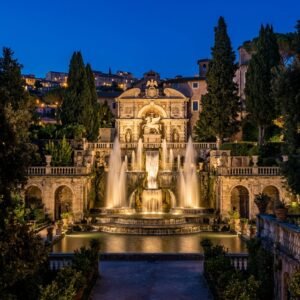
Orsini Palace in Monterotondo: Renaissance Courtyard and Views of the Roman Countryside

Orsini Palace in Monterotondo is a Renaissance castle just a few kilometers from Rome, perfect for a cultural day trip. It overlooks the historic center of the village and offers an authentic atmosphere away from the more crowded tourist circuits.

  • Renaissance porticoed courtyard with peperino stone arches, a timeless corner of tranquility.
  • Main tower with a 360-degree panorama of the Roman countryside and the hills of Rome.
  • Visitable interior halls with coffered ceilings, monumental fireplaces, and fragments of frescoes.
  • Living history from medieval fortress to noble residence, now home to the Monterotondo Town Hall.


Events nearby

Copertina itinerario Orsini Palace in Monterotondo: Renaissance Courtyard and Views of the Roman Countryside
Orsini Palace in Monterotondo: A Renaissance castle featuring a peperino stone porticoed courtyard, a panoramic tower, and frescoed halls. Now the town hall, it’s ideal for cultural excursions near Rome.

Good to know


Introduction

Just outside the hustle and bustle of Rome, Palazzo Orsini di Monterotondo stands out with its imposing Renaissance structure, offering a dive into history without having to travel long distances. This castle, which overlooks the historic center from atop a hill, immediately impresses with its severe architecture and porticoed courtyard, a quiet corner that seems suspended in time. It is not just a monument, but the beating heart of the village, perfect for those seeking an authentic, human-scale cultural outing, away from the crowds of major tourist circuits.

Historical Overview

The history of Palazzo Orsini is closely tied to the powerful family that gives it its name. Built as a defensive fortress in the Middle Ages, it was transformed into a Renaissance noble residence between the 15th and 16th centuries, when the Orsini family made it a center of power and culture. In 1799, it was the site of a siege during the Roman Republic. Later passing to the Borghese family, it now serves as the town hall, yet it retains intact traces of its noble and turbulent past.

  • Middle Ages: Originates as a defensive fortress.
  • 15th-16th centuries: Transformation into a Renaissance palace under the Orsini.
  • 1799: Siege during the Roman Republic.
  • Today: Headquarters of the Municipality of Monterotondo.

The Courtyard and the Tower

Upon entering the palace, the porticoed courtyard is the first surprise: a perfect square surrounded by peperino stone arches, the local stone, creating an intimate and solemn atmosphere. It is here that you truly breathe the air of the Renaissance. Climbing up to the main tower, you enjoy a 360-degree panorama stretching from the Sabina countryside to the hills of Rome in the distance. The view, especially on clear days, amply rewards the climb and offers a unique glimpse of the territory, helping to understand the strategic importance of this outpost.

The interior halls and frescoes

Although it serves as the town hall, some representative halls of the palace are open to visitors and house small treasures. You can admire coffered ceilings, monumental fireplaces, and fragments of frescoes that tell mythological stories or depict members of the Orsini family. Don’t expect a lavish museum, but rather authentic spaces that show how life was lived in a noble border residence. The atmosphere is intimate and allows you to imagine the meetings, banquets, and decisions that shaped local history here.

Why Visit It

Visiting Palazzo Orsini is worthwhile for three concrete reasons. First, it’s a perfect example of transitional architecture from fortress to palace, all concentrated in a single building. Second, it offers a privileged and free view over beautiful territory directly from its tower. Third, it’s a living and integrated place in the community: not a closed relic, but the administrative heart of the city, making it an authentic experience beyond just tourism.

When to Visit

The most evocative time for a visit is undoubtedly the late afternoon of a spring or autumn day. The low-angled sunlight highlights the volumes of the peperino stone facade and the warm hues of the stone, while the cool air makes lingering in the courtyard pleasant. During these seasons, you also avoid peak hours and the summer heat, allowing you to enjoy the palace and the village in a more tranquil and intimate setting.

In the Surroundings

Complete your visit by exploring the historic center of Monterotondo, a well-preserved maze of alleys winding around the palace, with small shops and ancient churches. For a thematically connected experience, head to the nearby Nomentum Nature Reserve, a protected area perfect for short walks through Mediterranean scrubland, ideal for unwinding after your cultural immersion.

Itineraries nearby


💡 Did You Know…?

A curiosity that makes the visit even more special concerns the Hall of Coats of Arms. Here, in addition to the emblems of the powerful families that succeeded one another (Orsini, Barberini, Grillo), you can notice a particular coat of arms, almost erased. According to a local legend, it would be that of a family member who committed a serious betrayal, and for this reason his memory was deliberately obscured. Another ultra-realistic detail is the original terracotta floor in some rooms, which shows clearly visible signs of wear, concrete testimony to centuries of life within these walls.