Antonini Maseri Palace in Udine: Gino Valle’s Modern Architecture in the Historic Center

Antonini Maseri Palace is a university building designed by architect Gino Valle, blending rationalist architecture with educational functionality. Located in Udine’s city center, it offers a unique visual experience with its bright spaces and contemporary design.

  • Gino Valle’s architecture featuring exposed reinforced concrete and large windows
  • Free-plan structure without internal pillars and concrete brise-soleil
  • Active building, home to the University of Udine’s Faculty of Engineering
  • Photogenic views and contrast with the surrounding historic center
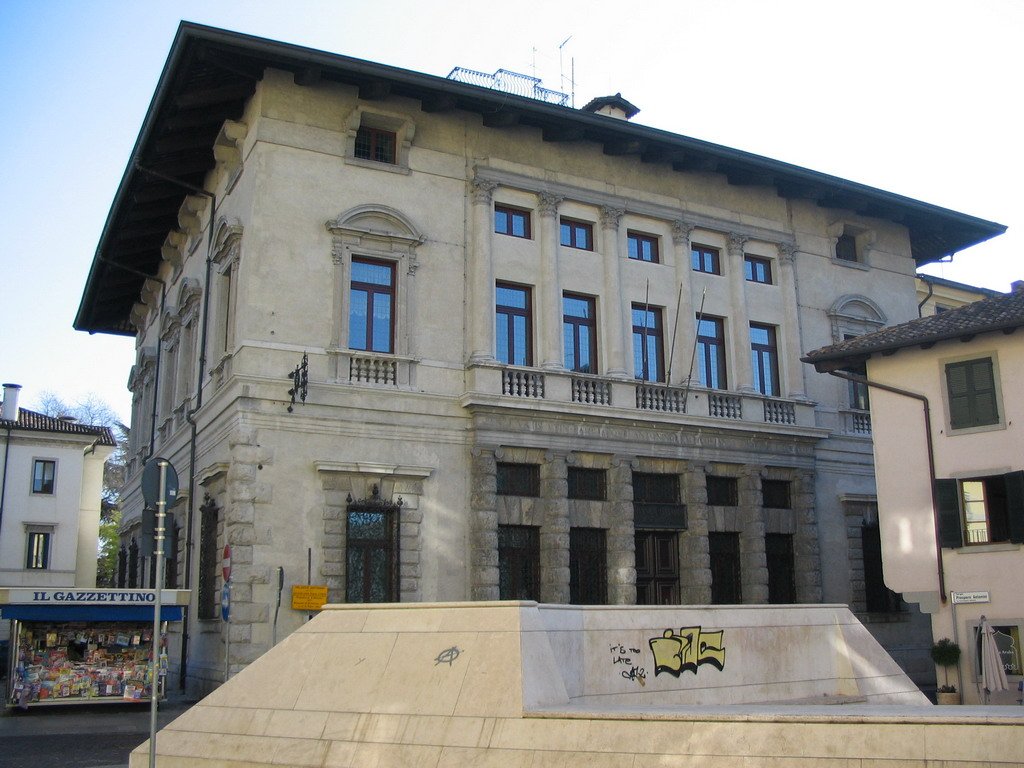
Copertina itinerario Antonini Maseri Palace in Udine: Gino Valle's Modern Architecture in the Historic Center
Antonini Maseri Palace houses the Faculty of Engineering, designed by Gino Valle in 1976. Admire the free-plan structure, concrete brise-soleil, and its contrast with Udine’s historic architecture.

Good to know


Introduction

In the heart of Udine, just steps away from the Castle and the historic center, Palazzo Antonini Maseri stands out as an island of contemporary architecture that engages in a dialogue with the past. This building, home to the Faculty of Engineering at the University of Udine, is not only a place of study but a true urban landmark that captures the eye with its clean lines and interplay of volumes. Designed by architect Gino Valle, one of the masters of Italian rationalism, the building impresses with the bold contrast between exposed reinforced concrete and large glass windows, creating a surprising effect of lightness. Visiting it means immersing yourself in a unique visual experience, where the functionality of the university building merges with refined aesthetics, offering an unexpected glimpse into modern and creative Udine.

Historical Overview

The history of Palazzo Antonini Maseri is tied to the growth of the University of Udine and the vision of architect Gino Valle. Commissioned to house the Faculty of Engineering, the project was developed in the 1970s and completed in 1976, quickly becoming a symbol of architectural innovation in Friuli. Valle, a native of Udine, conceived the building as a modern response to educational needs, using materials like reinforced concrete and glass to create bright, functional spaces. The palace is named after the Antonini and Maseri families, who are connected to local history. After the 1976 earthquake, its solid structure also became a reference point in reconstruction, demonstrating how architecture can unite utility and beauty.

  • 1970s: Design by Gino Valle
  • 1976: Completion of the building
  • Since 1976: Home to the Faculty of Engineering at the University of Udine

The Architecture That Speaks

What makes Palazzo Antonini Maseri special is its free-plan structure, which eliminates internal pillars to create spacious and flexible classrooms and laboratories. As you walk inside, you’ll notice how natural light filters through the large ribbon windows, evenly illuminating the long corridors and common areas. Outside, the main facade features a rhythm of brise-soleil in concrete, horizontal elements that not only decorate but also protect from excessive sunlight, reducing the need for air conditioning. This technical detail, typical of Valle’s architecture, shows attention to the local climate and sustainability, anticipating themes that are central today. Even the internal courtyard, with its geometric design, invites a moment of tranquility, away from the city noise.

A Living Place

Palazzo Antonini Maseri is not a museum, but a living and frequented building used daily by students and faculty. This gives it a dynamic and authentic atmosphere: during your visit, you can observe university life in action, perhaps encountering groups of students discussing in the hallways or researchers at work. Sometimes, the atrium hosts temporary exhibitions or cultural events open to the public, enriching the experience. If you’re interested in architecture, note how the materials—from raw concrete to linoleum floors—were chosen to last over time while maintaining a sober and elegant appearance. It’s a place where the art of construction meets everyday life, offering a glimpse into how a modern building can integrate seamlessly into the life of a historic city like Udine.

Why Visit It

Visiting Palazzo Antonini Maseri is worthwhile for at least three concrete reasons. First, it’s a unique opportunity to admire the work of Gino Valle in an accessible setting: unlike many historical buildings, here you can freely explore the interior spaces (during opening hours), experiencing the genius of the design firsthand. Second, it offers a different perspective on Udine, showing how the city has evolved in the 20th century without denying its roots. Third, it’s perfect for design and photography enthusiasts: the geometric lines, play of light, and contrasts between old and new provide photogenic views at every corner, ideal for creative shots without the crowds of more famous tourist spots.

When to Visit

The best time to visit Palazzo Antonini Maseri is on a sunny morning, when the slanting light enhances the concrete textures and creates sharp shadows on the brise-soleil, accentuating the rationalist design. Avoid rainy days, as much of the charm lies in the interplay between architecture and natural light. If you prefer a quieter atmosphere, try visiting outside class hours (such as early afternoon), when the spaces are less crowded and you can enjoy them at your leisure. In spring or autumn, the mild weather allows you to linger in the outdoor courtyard as well, appreciating the relative quiet compared to the nearby historic center.

In the Surroundings

After your visit, take the opportunity to explore two nearby locations that complete the Udine experience. Just a few minutes’ walk away, the Castle of Udine offers a perfect contrast: here you’ll find medieval history, museums, and a panoramic view of the city from its terraces. For a dive into contemporary creativity, head to the Friulian Museum of Natural History, which hosts interactive exhibitions on science and the environment, ideal for families or the curious. Both sites are reachable with a short walk through the city center streets, allowing you to capture the different souls of Udine in a single walking itinerary.

💡 Did You Know…?

Built in the 1990s based on a design by architect Gino Valle, Palazzo Antonini Maseri represents a turning point in Udine’s urban planning. Valle, originally from Friuli, aimed to create a building that respected the scale of the historic city while using a contemporary language. The materials – concrete, glass, and steel – were chosen to last in the local climate, resisting the typical humidity of the area. Fun fact: the palace houses offices and professional studios, but its lobby is occasionally accessible during city cultural events, offering a rare glimpse of the interiors. Residents consider it a symbol of post-earthquake rebirth, having been built after the 1976 earthquake that struck Friuli.