
Piazza Anfiteatro in Lucca is a perfect oval built on the ruins of a 2nd-century AD Roman amphitheater, surrounded by colorful houses and shops. Enter through one of the four narrow archways to discover a quiet and evocative space in the historic center, just steps from Lucca’s Walls.
- Unique oval shape built on the ruins of a 2nd-century AD Roman amphitheater.
- Colorful houses and shops surrounding the square create an intimate atmosphere.
- Quiet space away from the hustle and bustle, ideal for a coffee break or photography.
- Close to Lucca’s Walls, perfect for combining the visit with a bike ride.
Events nearby

10/09/2026 - 04/01/2027
03/06/2026 - 10/06/2026
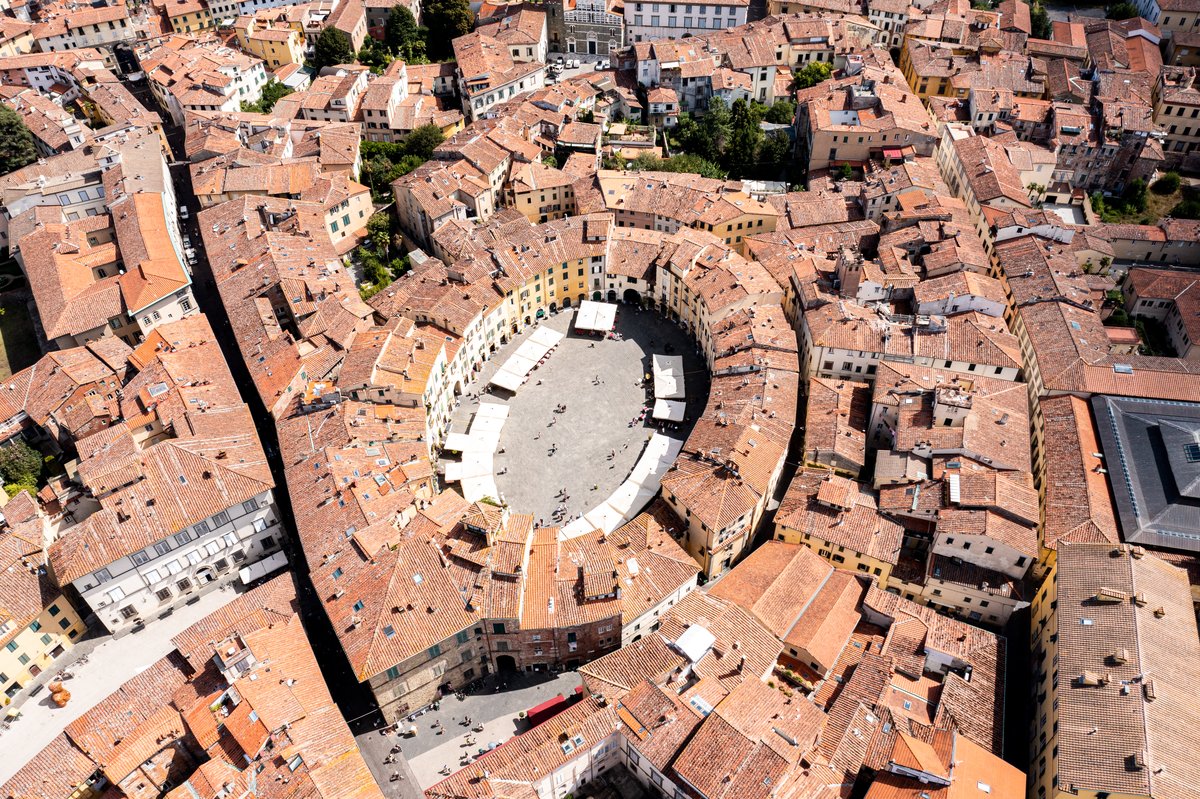
Piazza Anfiteatro in Lucca: Unique oval shape built on the ruins of a 2nd-century AD Roman amphitheater, surrounded by colorful houses and shops. Intimate atmosphere, ideal for coffee, photography, and close to the Walls for bike rides.
- Piazza Anfiteatro, Lucca (LU)
- Open in Google Maps
- View on Google Images Piazza Anfiteatro a Lucca
Good to know
Introduction
Piazza Anfiteatro in Lucca is one of those places that makes you stop in your tracks. It’s not just any square: it’s a perfect oval, an architectural gem that seems to have sprung from a dream. The colorful houses that surround it, each one different from the next, create a hypnotic visual effect. Walking inside gives you the strange sensation of being in a theater without a stage, where daily life is the show. The first time I saw it, I was left speechless: I didn’t expect such harmony, such peace in the heart of the historic center. It’s the perfect spot for a coffee break, or simply to sit on a bench and observe. The atmosphere is unique, suspended between past and present, and it immediately makes you understand why Lucca is special.
Historical Background
This square was not originally conceived as a square, but as a Roman arena. Yes, indeed a 1st-century AD amphitheatre, where gladiatorial games were held. Over time, it transformed: in the Middle Ages, the arena’s stones were repurposed to build houses and shops, turning the space into a bustling neighbourhood. It was only in the 19th century that architect Lorenzo Nottolini had the brilliant idea to restore its original form, creating the square we see today. A story of continuous transformation, showcasing how Lucca reinvents itself without losing its soul. Timeline summary:
- 1st century AD: construction of the Roman amphitheatre
- Middle Ages: stones reused for housing
- 1830: restoration project by Lorenzo Nottolini
- Today: pedestrian space and social hub
The Game of Perspectives
Something few mention: Piazza Anfiteatro is a labyrinth of shifting perspectives with every step. Stand in the center, and you’ll see the curved houses draw near as if in an embrace, but walk along the perimeter and you’ll notice each building has a different height and color. I spent an hour photographing the details: green shutters beside windows with geraniums, wrought-iron shop signs, worn wooden doors. The afternoon light, too, plays with shadows, creating almost surreal effects. It’s not just a square; it’s a visual experience that forces you to see with new eyes. And if you look up, you’ll spot Lucca’s towers peeking over the rooftops, a reminder that you’re in the heart of the city.
Life in the Square
Here, it’s not just about architecture—it’s about life. Early in the morning, the square comes alive with locals shopping at the fruit and vegetable market (yes, there’s a permanent stall at the entrance), while tourists are still asleep. Then, around noon, the aromas from restaurants fill the air: try the warm focaccia from a historic bakery—it’s a delight. The afternoon is for cyclists passing by after a ride along the walls, and for families with children running freely. In the evening, when the lights come on, the atmosphere becomes magical: the bar tables fill up, and the square transforms into an open-air living room. I was there on a summer evening, and there was a street musician playing the violin: it felt like a scene from a movie.
Why Visit It
Three practical reasons not to miss it: first, it’s a unique example of successful urban reuse – it’s not a museum, it’s a lived-in place. Second, it offers incredible photographic views without the need for special equipment: a smartphone is enough to capture its essence. Third, it’s the perfect starting point to explore the historic center on foot or by bike, because from here you can reach the walls, the Guinigi Tower, and the main churches in just a few minutes. And there’s a fourth, personal reason: here you understand the slow and authentic rhythm of Lucca, away from the more chaotic crowds of other Tuscan squares.
When to Go
The best time? Late afternoon in autumn, when the light is warm and tourists begin to thin out. The atmosphere becomes intimate, almost cozy, and you can enjoy the square without the crowds. In winter, on sunny days, it’s equally charming: the crisp air and the soft hues of the houses have their own allure. I’d avoid the midday hours in summer, as it can get a bit muggy and crowded – but if you pass by early in the morning, you’ll find a rare peace. A secret: after a spring downpour, the shiny cobblestones reflect the lights, creating a breathtaking effect.
In the Surroundings
From Piazza Anfiteatro, you can do two wonderful things: climb the Guinigi Tower for a panoramic view of the city and its walls (the tower with trees on top, impossible to miss), or get lost in the maze of alleys in the San Frediano district, where you’ll find artisan workshops and authentic taverns. If you’re in the mood for a themed experience, look for the ancient Renaissance cellars beneath some of the city center’s palaces – some organize tastings of local wines in historic settings. It’s a way to discover another side of Lucca, underground and fascinating.
Itineraries nearby

💡 Did You Know…?
Look closely at the houses: some still preserve the arches of the Roman amphitheater as foundations. Until the 19th century, the square was an inner courtyard used as a storage area and slaughterhouse, then architect Lorenzo Nottolini redeveloped it, creating the public space you see today. If you’re looking for the exact center of the arena, look for the stone cross in the middle: it marks the focal point of the original oval.