Piazza Bra in Verona: Roman Arena, Porticoes and Historic Cafés in the Heart of the City

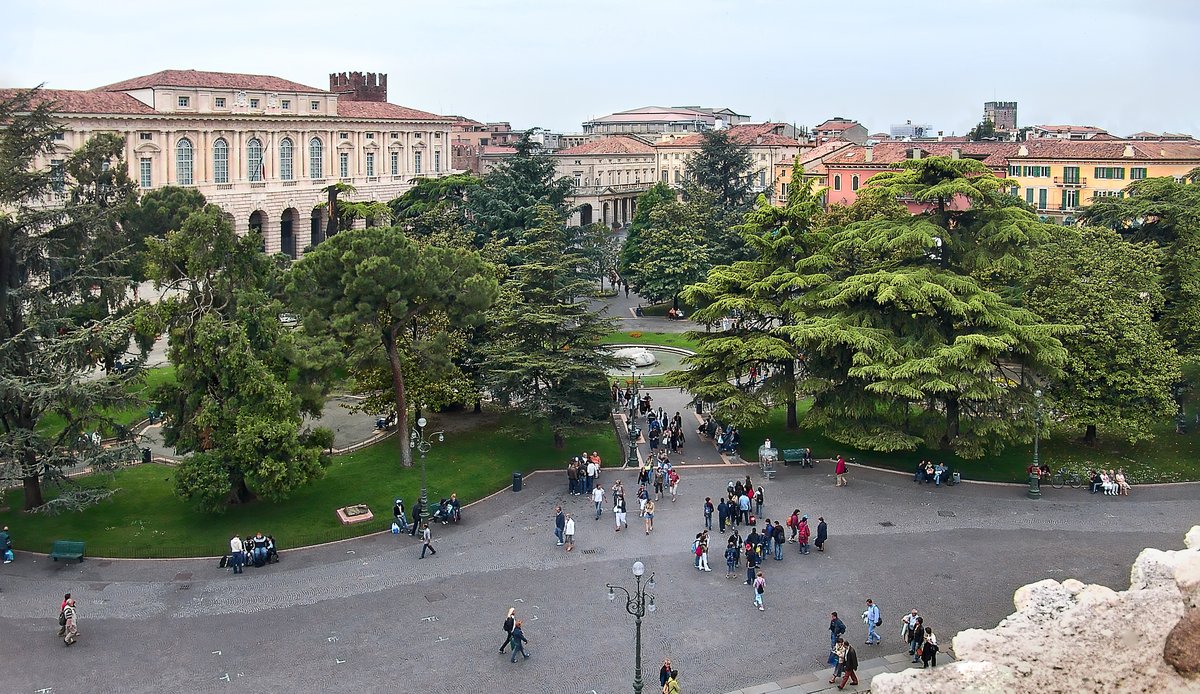
Piazza Bra, with its 12,000 m², is the vibrant heart of Verona and the perfect starting point for exploring the city. Here, the 1st-century AD Roman Arena, still used for concerts and operas, dominates the scene alongside 19th-century porticoes and historic cafés. The Liston, the red marble pavement, is the traditional meeting point.

  • Verona Arena: A 1st-century AD Roman amphitheatre, perfectly preserved, now a stage for international opera performances and concerts.
  • 18th-century porticoes and historic cafés: Under the arcades designed by Giuseppe Barbieri, establishments like Caffè Ristorante Filippini (since 1906) offer a period atmosphere.
  • Piazza Bra Gardens: A green oasis with well-kept flowerbeds and benches at the foot of the Arena, perfect for a break.
  • Liston: The wide red marble pavement of Verona, a historic meeting and strolling point.
Copertina itinerario Piazza Bra in Verona: Roman Arena, Porticoes and Historic Cafés in the Heart of the City
Piazza Bra is Italy’s largest square, featuring the perfectly preserved Roman Arena, 18th-century porticoes, and historic cafés like Filippini. The ideal starting point for visiting Verona.

Good to know


Introduction

As soon as you arrive at Piazza Bra, you immediately understand why it’s considered the beating heart of Verona. With its 12,000 square meters, it’s the largest square in Italy and welcomes you with a unique blend of history, architecture, and daily life. At its center, the Liston, the wide marble sidewalk in Verona’s signature red, serves as the meeting point for locals and tourists alike, while your gaze inevitably drifts toward the imposing Arena, the remarkably well-preserved Roman amphitheater. The 18th-century porticoes, historic cafés like Caffè Ristorante Filippini and Gran Caffè Roxy, and the meticulously maintained greenery of the gardens create an elegant and vibrant atmosphere. Here, you’re not just in a square, but in a true open-air living room where past and present blend harmoniously.

Historical Background

The history of Piazza Bra is closely intertwined with that of Verona. Originally, it was an area outside the Roman walls, used for fairs and markets. The name “Bra” likely derives from the Lombard term “braida,” meaning a wide grassy expanse. The square took on its current form in the 18th century, when the porticoes and the Liston were built, becoming the center of the city’s social life. The Arena, constructed in the 1st century AD, has survived earthquakes and transformations, and today hosts famous opera performances and concerts. An interesting fact: in 1883, the city’s first horse-drawn tram was inaugurated here, a sign of its role as a vital hub.

  • 1st century AD: Construction of the Roman Arena.
  • 18th century: Creation of the porticoes and the red marble Liston.
  • 1883: Inauguration of the first horse-drawn tram in the square.
  • Today: Center of cultural events and social life.

The Porticoes and Historic Cafés

Walking beneath the 18th-century porticoes of Piazza Bra immerses you in the elegant atmosphere of Habsburg-era Verona. These arcades, designed by architect Giuseppe Barbieri, are not merely architectural features but house historic establishments steeped in tradition. Caffè Ristorante Filippini, opened in 1906, preserves its period furnishings and is renowned for its pastries, while Gran Caffè Roxy, with its vintage sign, is a landmark for an aperitif with a view of the Arena. Here, time seems to have stood still: you can sit at a small table, order a coffee or a glass of Valpolicella wine, and watch the comings and goings in the square, just as the Veronese did a century ago. It’s the perfect spot for a refreshing break during your visit.

The Arena and its Gardens

The Arena of Verona dominates Piazza Bra with its majestic presence in stone and pink marble. Built outside the Roman walls to host gladiatorial shows, today it is an exceptional stage for opera and international concerts. But don’t just look at it from the outside: entering means discovering perfect acoustics and a capacity of over 15,000 spectators. At its feet, the Gardens of Piazza Bra offer a green oasis with well-kept flowerbeds, benches, and the statue of Vittorio Emanuele II. It’s the perfect place for a rest in the shade, perhaps admiring the Alps fountain or simply enjoying the contrast between the ancient stone and the freshness of the lawns. In the evening, when the Arena is illuminated, the effect is even more suggestive.

Why Visit It

Visiting Piazza Bra is a must for three concrete reasons. First, it’s an ideal starting point for exploring Verona: from here, you can reach Juliet’s House, Piazza delle Erbe, and Castelvecchio on foot in just a few minutes. Second, it offers a concentration of history and life: at a single glance, you see the Roman Arena, 18th-century porticoes, and the contemporary liveliness of the cafés. Third, it’s easily accessible: it’s just a short walk from Porta Nuova train station and well-served by public transport, perfect even for a quick visit. Plus, its wide expanse makes it pleasant even during crowded times, allowing you to always find a quiet corner.

When to Go

The most enchanting time to visit Piazza Bra is undoubtedly at sunset, when the warm sunlight bathes the Arena’s stone in pink hues and the arcades light up, creating a magical atmosphere. In summer, evenings come alive with Arena performances and bustling café life, while spring and autumn offer a more tranquil setting, perfect for a leisurely stroll. Avoid the midday hours during the hottest summer days when the sun can be intense. In winter, the festive atmosphere with Christmas lights and markets adds a special touch. In short, each season has its charm, but twilight always delivers unique emotions.

In the Surroundings

From Piazza Bra, you can enrich your visit with two nearby thematic experiences. Just a few minutes’ walk away is Piazza delle Erbe, the ancient Roman forum transformed into a lively daily market of fruit, vegetables, and souvenirs, surrounded by historic buildings like the Domus Mercatorum. For a more romantic experience, head to Juliet’s House, where you can see the famous balcony and leave a love note on the message wall. Both places are easily accessible on foot and perfectly complement the discovery of Verona’s historic center, blending history, tradition, and legend.

💡 Did You Know…?

Did you know that the name ‘Bra’ comes from the Lombard term ‘braida’, meaning meadow or open space? Until the 18th century, this area was indeed a large meadow outside the city walls. Another interesting detail: the Liston, the wide red marble pavement along one side of the square, was where Verona’s high society would promenade during evening walks in the 19th century. Even today, walking along the Liston at sunset, with the illuminated Arena in the background, is an experience that makes you feel part of a centuries-old tradition. And if you look carefully at the facade of Palazzo della Gran Guardia, you’ll notice bullet holes from World War II, intentionally left as historical testimony.