The Portoferraio Lighthouse is a symbol of the Island of Elba, perched on the walls of Forte Stella in Portoferraio. Built by the House of Lorraine in 1789 and renovated in 1915, it offers breathtaking views of the Tyrrhenian Sea. Today, it attracts hikers and curious visitors thanks to the ‘Trail of Lighthouses’ path linking the island’s lighthouses.
– Unique panorama from the 25-meter tower with views of Portoferraio and the sea
– Medici history of Forte Stella, a fortress from 1548 commissioned by Cosimo I de’ Medici
– Trail of Lighthouses: a hiking route through nature and maritime architecture
– Keeper Francesca Fabrizi, who lovingly tends the lighthouse’s light
Introduction
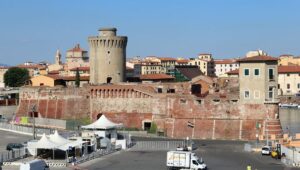
Reaching the Portoferraio Lighthouse means climbing up to the bastion of Forte Stella, a star-shaped Medici fortress overlooking the port. From up there, the view stretches over the Tyrrhenian Sea and the pastel-colored houses of Portoferraio. The lighthouse, a circular tower 25 meters high, stands out with its white lantern. It’s a place that captures you: the contrast between the red bricks of the fort and the blue of the sea is pure poetry. It’s not just a landmark for sailors, but a place that tells centuries of history, from the Grand Duchy of Tuscany to the present day.
Introduction
Reaching the Portoferraio Lighthouse means climbing up to the bastion of Forte Stella, a star-shaped Medici fortress overlooking the port. From up there, the view stretches over the Tyrrhenian Sea and the pastel-colored houses of Portoferraio. The lighthouse, a circular tower 25 meters high, stands out with its white lantern. It’s a place that captures you: the contrast between the red bricks of the fort and the blue of the sea is pure poetry. It’s not just a landmark for sailors, but a place that tells centuries of history, from the Grand Duchy of Tuscany to the present day.
Historical Background
The Portoferraio Lighthouse was built by the
Lorraine between 1788 and 1789 to illuminate the strategic coast of Elba. It stands on Forte Stella, erected in
1548 by Cosimo I de’ Medici with a star-shaped layout. In 1915 the lighthouse was renovated, taking on its current appearance. Napoleon visited the fort during his exile in 1814. From 1557 to 1781, the fort housed the bronze bust of Cosimo I by Benvenuto Cellini, now in the Uffizi.
- 1548: Construction of Forte Stella by the Medici
- 1788-1789: Building of the lighthouse by the Lorraine
- 1915: Renovation of the lighthouse
- 1814: Napoleon visits the fort
Historical Background
The Portoferraio Lighthouse was built by the
Lorraine between 1788 and 1789 to illuminate the strategic coast of Elba. It stands on Forte Stella, erected in
1548 by Cosimo I de’ Medici with a star-shaped layout. In 1915 the lighthouse was renovated, taking on its current appearance. Napoleon visited the fort during his exile in 1814. From 1557 to 1781, the fort housed the bronze bust of Cosimo I by Benvenuto Cellini, now in the Uffizi.
- 1548: Construction of Forte Stella by the Medici
- 1788-1789: Building of the lighthouse by the Lorraine
- 1915: Renovation of the lighthouse
- 1814: Napoleon visits the fort
The Tower and the Light
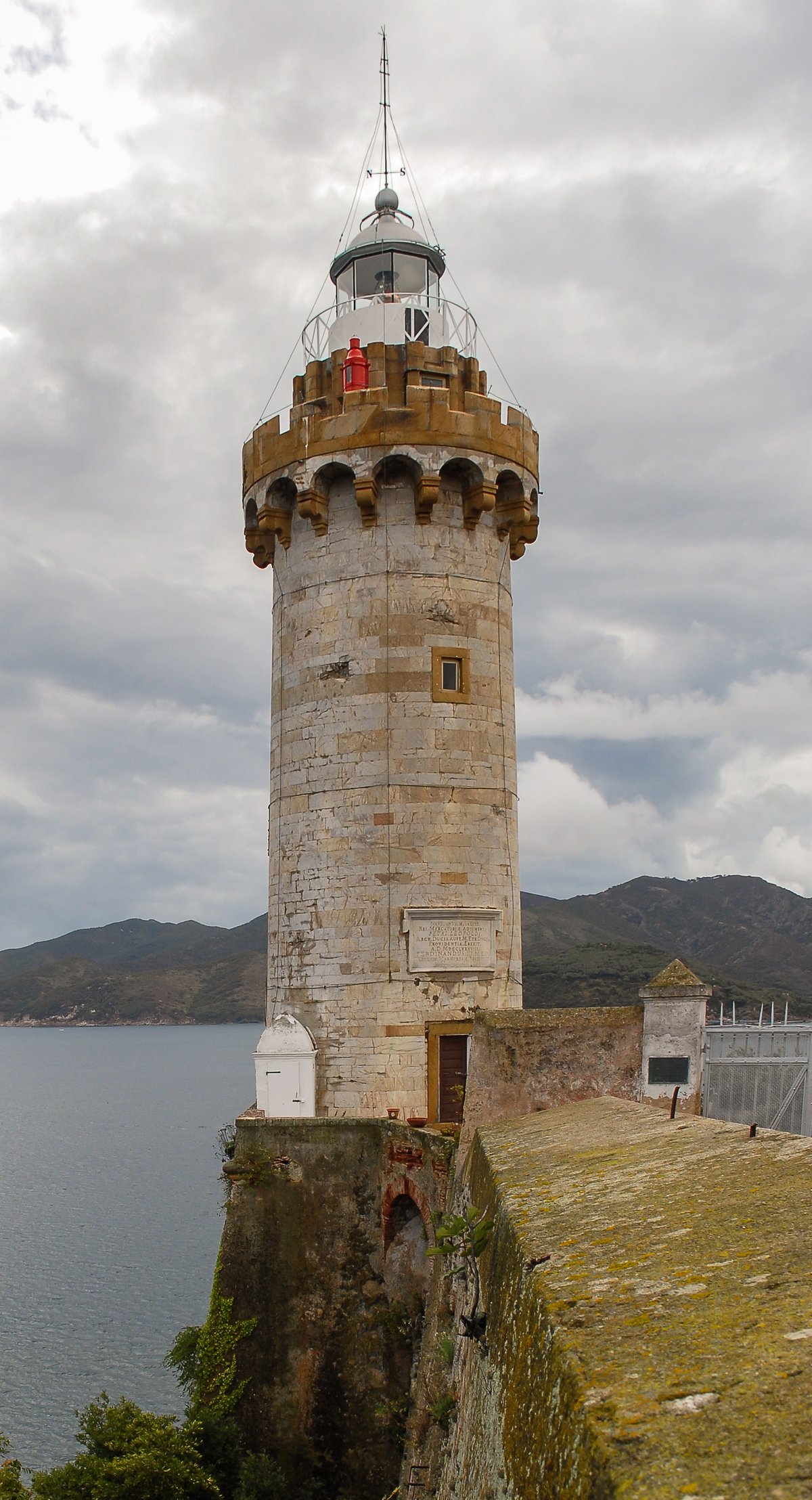
The lighthouse is a circular stone tower with a double internal gallery. Standing 25 meters tall, it rises 63 meters above sea level. Its 1000-watt halogen lamp emits three white flashes every 14 seconds, visible up to 16 nautical miles. Today it is automated, but it has a keeper: Francesca Fabrizi, a former forestry officer, now a civilian with the Italian Navy, who takes care of all the lighthouses on the island. Climbing to the top offers a breathtaking view: on one side, the historic center of Portoferraio; on the other, the open sea.
The Tower and the Light
The lighthouse is a circular stone tower with a double internal gallery. Standing 25 meters tall, it rises 63 meters above sea level. Its 1000-watt halogen lamp emits three white flashes every 14 seconds, visible up to 16 nautical miles. Today it is automated, but it has a keeper: Francesca Fabrizi, a former forestry officer, now a civilian with the Italian Navy, who takes care of all the lighthouses on the island. Climbing to the top offers a breathtaking view: on one side, the historic center of Portoferraio; on the other, the open sea.
A Trail Through the Lighthouses of Elba
The Portoferraio Lighthouse is a stop on the Cammino dei Fari, a hiking itinerary connecting the lighthouses and signaling stations of Elba Island. This trek blends nature, history, and breathtaking views. Each lighthouse has its own story: Portoferraio’s is one of the most fascinating, perched on the bastion of Forte Stella. The CAI Elba and the association ‘Il mondo dei fari’ organize guided excursions. If you love walking and discovering places off the beaten path, this is the trail for you.
A Trail Through the Lighthouses of Elba
The Portoferraio Lighthouse is a stop on the Cammino dei Fari, a hiking itinerary connecting the lighthouses and signaling stations of Elba Island. This trek blends nature, history, and breathtaking views. Each lighthouse has its own story: Portoferraio’s is one of the most fascinating, perched on the bastion of Forte Stella. The CAI Elba and the association ‘Il mondo dei fari’ organize guided excursions. If you love walking and discovering places off the beaten path, this is the trail for you.
Why Visit It
Have you ever felt the need for a place that combines history, views, and a touch of romance? Here’s why the Portoferraio Lighthouse is worth a visit: unique historical layering – Medici, Lorraine, Napoleon – all meet in one spot; sunset photography – the golden light on the tower and the sea is postcard-worthy; and meeting the keeper – if you’re lucky, Francesca will tell you about her passion for light.
Why Visit It
Have you ever felt the need for a place that combines history, views, and a touch of romance? Here’s why the Portoferraio Lighthouse is worth a visit: unique historical layering – Medici, Lorraine, Napoleon – all meet in one spot; sunset photography – the golden light on the tower and the sea is postcard-worthy; and meeting the keeper – if you’re lucky, Francesca will tell you about her passion for light.
When to go
The best time? Late afternoon, just before sunset. The warm light caresses the fort’s stone, and the sea becomes a copper mirror. To avoid crowds, choose a weekday in spring or autumn. In summer, evening guided tours (organized by the municipality) offer a magical atmosphere. Keep an eye on the calendar: in May 2026 tours were sold out, a sign that the place is popular.
When to go
The best time? Late afternoon, just before sunset. The warm light caresses the fort’s stone, and the sea becomes a copper mirror. To avoid crowds, choose a weekday in spring or autumn. In summer, evening guided tours (organized by the municipality) offer a magical atmosphere. Keep an eye on the calendar: in May 2026 tours were sold out, a sign that the place is popular.
Nearby
Don’t stop at the lighthouse. Nearby, the Faro dello Scoglietto (on a small island) is another gem, although less accessible. Then there is the historic center of Portoferraio, with its narrow streets and Medici fortifications. If you have time, follow the Lighthouse Trail to other lighthouses on the island: each stop is a discovery.
Nearby
Don’t stop at the lighthouse. Nearby, the Faro dello Scoglietto (on a small island) is another gem, although less accessible. Then there is the historic center of Portoferraio, with its narrow streets and Medici fortifications. If you have time, follow the Lighthouse Trail to other lighthouses on the island: each stop is a discovery.