
Few know that Ventimiglia preserves one of the oldest Roman theatres in Liguria. Dating back to the 1st century BC, the Roman Theatre of Albintimilium offers a fascinating spectacle among ruins and nature. Here’s what to see:
– Theatre carved into the rock with a capacity of about 2,000 spectators
– Well-preserved remains of the stage and orchestra
– Free entry and parking available
– Educational path among archaeological finds
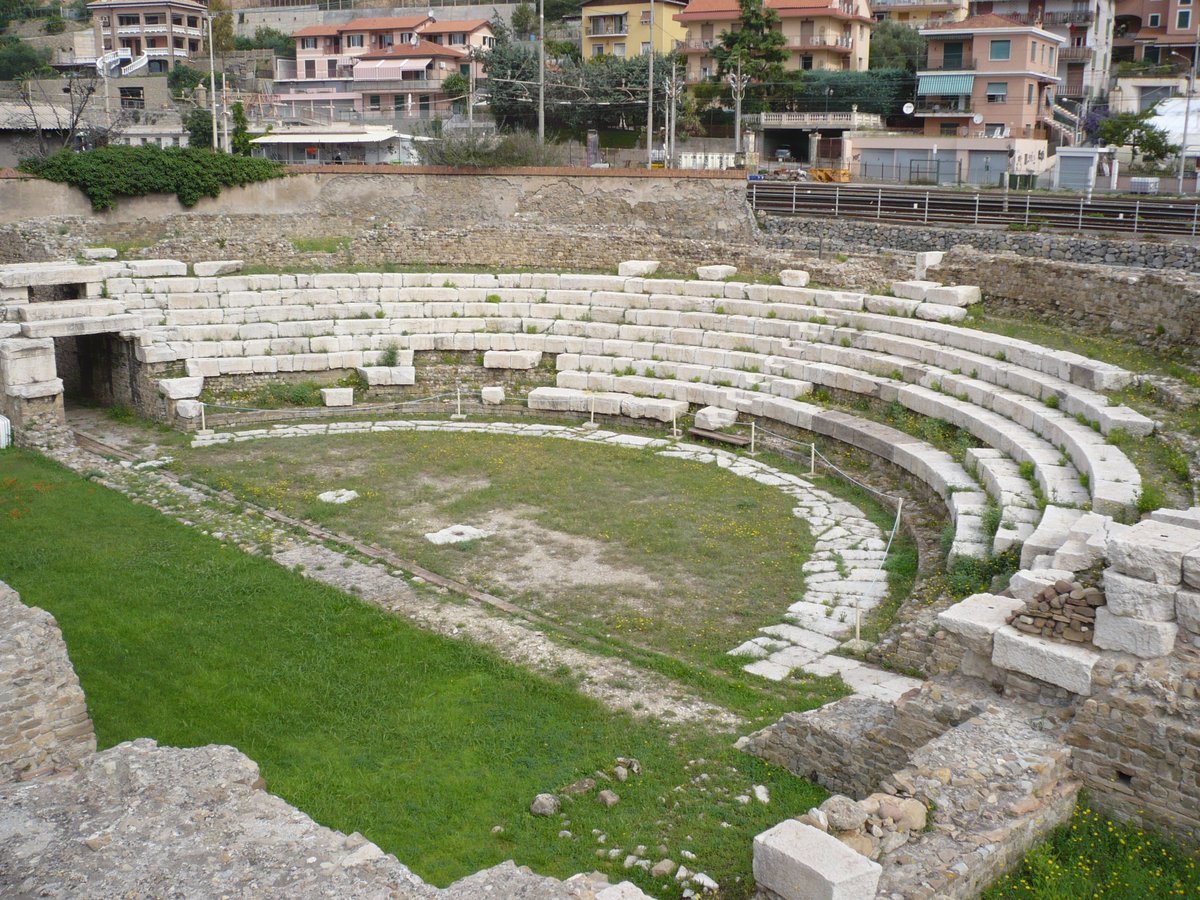
The Roman theatre of Albintimilium in Ventimiglia is an ancient building from the Augustan era, part of the Roman city of Albintimilium. Discover its history, excavations, and how to visit it.
Good to know
A plunge into the past among Roman stones
It’s not every day you get to sit where Roman spectators settled in two thousand years ago. The Roman Theatre of Albintimilium, in Ventimiglia, is one of those places that hits you with history, no frills. You arrive, and at first, it seems like a quiet corner among olive trees. Then you see the semicircular steps, the ruined stage, and you realize they were already performing here in the time of Augustus. It feels genuine—no crowds, no sky-high ticket prices. Just you, the wind, and a few geckos slipping between the stones. For me, it was a real surprise, one of those discoveries that make you say, ‘This is the beauty of lesser-known Italy.’
Historical Notes
Let’s take a step back. We are in the 1st century AD, during the Augustan age. The city of Albintimilium (today Ventimiglia) was a thriving center on the Via Aurelia, and the theater was its social hub. It could accommodate about 2,000 spectators, with a cavea partially carved into the rock. Over time, neglect and earthquakes buried it. Systematic excavations, begun in the 1930s and continued after the war, have brought much of the structure back to light. Today, you can admire the orchestra, the stage, and the remains of the lower seating rows. The theater is part of the Museo Civico Archeologico of Ventimiglia, which preserves artifacts from the Roman city, including statues and mosaics. Here is a brief timeline:
- 1st century BC – Construction of the theater
- 2nd-3rd century AD – Renovations and expansions
- 5th-6th century – Abandonment and burial
- 1930-1960 – First excavation campaigns
- Today – Visitable site, integrated into the archaeological itinerary
Architecture and Unique Features of the Theater
What makes it different from other Roman theaters? For starters, the size: it’s not the Colosseum, but it has an intimate charm. The cavea is divided into three sections (ima, media, summa cavea), though only the first is well preserved. The steps are limestone, with signs of numbered seats. The stage (scaenae frons) had three niches for statues, and the bases are still visible. The drainage system is lovely: channels carved into the rock to carry away rainwater. A little gem? Near the orchestra, there’s an inscription recalling a certain M. Vettius Valens, perhaps the financier. As you stroll, you’ll notice the holes for the poles of the velarium, the awning that provided shade. In short, details that speak of an already complex stage machinery.
The Landscape Context and Urban Integration
The theater is not isolated: it is part of the Albintimilium Archaeological Park, which also includes the baths, the amphitheater (barely visible), and the Via Aurelia. But the surprise is the greenery around: centuries-old olive trees, rosemary bushes, and the sound of the nearby Nervia stream. The site is on a small hill, and from the highest steps you can see the sea. There is almost a dialogue between nature and history. A few steps away, the Municipal Archaeological Museum displays artifacts such as the statue of Jupiter and floor mosaics. Personally, I enjoyed the walk among the excavations: no intrusive barriers, you walk on the same stones as the Romans. Only drawback? The signage is a bit sparse, but the atmosphere makes up for it.
Why Visit It
Three practical reasons to add it to your itinerary:
1. Authenticity without museumification. Here you won’t find sterile reconstructions: the theater is a living ruin, with weeds sprouting between the stones. It feels like discovering something personal.
2. Almost symbolic price. Admission costs just a few euros (sometimes free). You can sit on the steps and read a book without any rush.
3. Perfect for a cultural break. If you’re heading towards the French Riviera or exploring the Riviera di Ponente, it’s a quick stop that gives you a piece of authentic history. And honestly, when was the last time you saw a Roman theater almost empty?
1. Authenticity without museumification. Here you won’t find sterile reconstructions: the theater is a living ruin, with weeds sprouting between the stones. It feels like discovering something personal.
2. Almost symbolic price. Admission costs just a few euros (sometimes free). You can sit on the steps and read a book without any rush.
3. Perfect for a cultural break. If you’re heading towards the French Riviera or exploring the Riviera di Ponente, it’s a quick stop that gives you a piece of authentic history. And honestly, when was the last time you saw a Roman theater almost empty?
When to Go
Let me tell you, spring is the magical time: the olive trees are in bloom, the air smells of salt, and the low afternoon light lights up the stones. If you arrive around 5 p.m. (an hour before sunset), the warm color of the light on the steps is spectacular. Avoid mid-August: the heat becomes torrid and the theater is in full sun. Autumn, on the other hand, offers clear skies and fewer tourists. In winter, the wind can be annoying, but if you’re in the area, it’s worth it even for a quick visit.
Nearby Attractions
Two suggestions nearby:
1. The Civic Archaeological Museum of Ventimiglia: 300 meters from the theater, it houses unique artifacts like the cuirassed statue of Emperor Trajan. Worth half an hour.
2. The Old Town of Ventimiglia (15 minutes on foot): a maze of medieval alleys, with the Cathedral of Santa Maria Assunta and Porta Nizza. Perfect for a gelato after the visit. If you have time, head down to the mouth of the Roia to see the remains of the Roman port (underappreciated but evocative).
1. The Civic Archaeological Museum of Ventimiglia: 300 meters from the theater, it houses unique artifacts like the cuirassed statue of Emperor Trajan. Worth half an hour.
2. The Old Town of Ventimiglia (15 minutes on foot): a maze of medieval alleys, with the Cathedral of Santa Maria Assunta and Porta Nizza. Perfect for a gelato after the visit. If you have time, head down to the mouth of the Roia to see the remains of the Roman port (underappreciated but evocative).
Itineraries nearby

💡 Did You Know…?
During excavations in the 1930s, archaeologists found a marble statue of a deity, now displayed at the Archaeological Museum of Ventimiglia. It is said that the theatre was also used for public assemblies, making it a gathering place for the Roman community.