
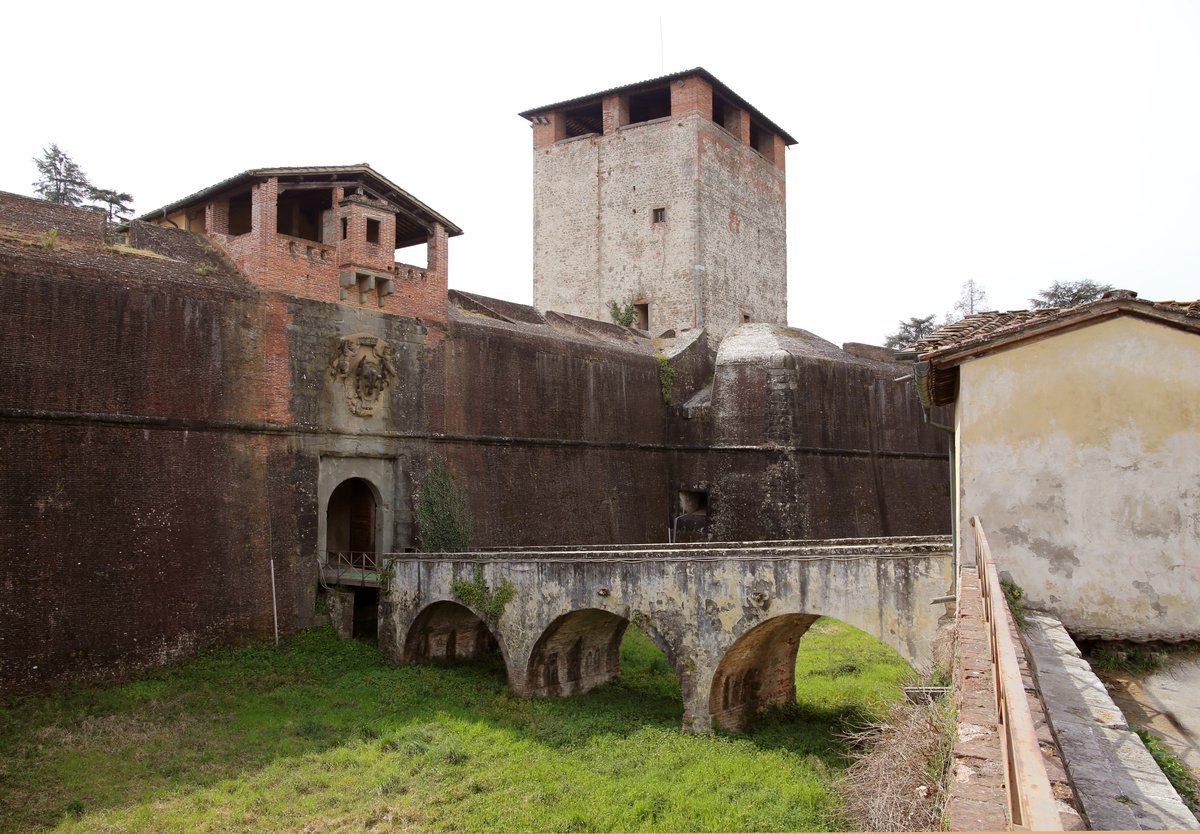
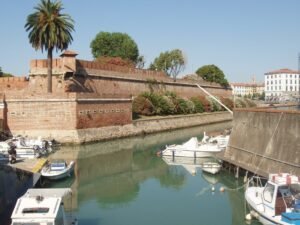
The Santa Barbara Fortress is an impressive example of 16th-century military architecture located in Pistoia. Inside, the permanent exhibition ‘Fortezza d’acqua’ explores the relationship between humans and hydraulic energy. Admission is free and visits take place in the morning.
Risorgimento graffiti in the central tower, left by imprisoned patriots.
‘Fortezza d’acqua’ exhibition on the use of hydraulic energy.
Panoramic ramps with views of Pistoia and the countryside.
Free admission and partially accessible.
Events nearby
10/09/2026 - 04/01/2027
03/06/2026 - 10/06/2026
Visit the Santa Barbara Fortress in Pistoia, a gem of 16th-century military architecture featuring an exhibition on water and historical graffiti by patriots.
- https://www.polomusealetoscana.beniculturali.it/index.php?it/214/pistoia-fortezza-di-santa-barbara
- Pista ciclabile Arcadia, Pistoia (PT)
- +39 0573 24212
- Open in Google Maps
- View on Google Images Fortezza Santa Barbara a Pistoia
Good to know
Introduction
Entering the Santa Barbara Fortress is like stepping back in time, but without the usual dusty museum atmosphere. Walking along its ramparts, touching the dark bricks, and feeling surrounded by centuries of history is an experience that grabs you immediately. It’s not just a monument: it’s a living piece of Pistoia, with walls that have witnessed rebellions, imprisonments, and even executions. And then there’s that wild air, with the patriots’ graffiti still visible in the tower, making you feel the weight of the stories lived. If you’re passing through, don’t miss it: it’s free, and it’s one of those visits that stays with you.
Historical Notes
The Fortezza Santa Barbara was built on a previous 14th-century fortification, constructed by the Florentines in 1331 and destroyed by rebel Pistoians in 1343. What we see today, however, is a 16th-century creation: in 1543, Cosimo I de’ Medici entrusted Nanni Unghero with the design of a new fortress, later completed by Giovanni Battista Bellucci (known as Sanmarino) and enlarged by Bernardo Buontalenti. For centuries, it instilled fear in enemies but underwent only one real siege, in 1643, which it repelled. Starting in the 18th century, it began to decline: it became a barracks, a prison, and during the Risorgimento, a jail for Pistoian patriots. The central tower still preserves their charcoal and sanguine graffiti. In 1849, Attilio Frosini was executed there, and in 1944, four other young men lost their lives. Restored between the 1970s and 1980s, it is now managed by the Ministry of Culture.
Historical Timeline
- 1331 – Construction of the medieval fortification of San Barnaba by the Florentines.
- 1343 – Destruction of the fortification by the revolting Pistoiesi.
- 1543 – Beginning of the new fortress commissioned by Cosimo I, designed by Nanni Unghero.
- 1643 – Only siege: Barberini troops repelled by the defenses.
- 1774 – Disarmament of the fortress by order of Grand Duke Pietro Leopoldo.
- 1848-1850 – The central tower used as a prison for patriots, who left graffiti.
- 1849 – Execution of Attilio Frosini (June 29).
- 1944 – Execution of four young Pistoiesi by the Germans.
- 1970-1980 – Complete restoration by the Superintendence of Florence.
The Patriots’ Graffiti
As you climb the central tower, you’re left speechless: the walls are covered with writings and drawings made by political prisoners between 1848 and 1850. You can clearly see black charcoal and red sanguine, with names, dates, symbols, and a few more elaborate sketches. This isn’t a curated exhibit; it’s the real thing, left behind by men who knew they were risking their lives. Among them, Attilio Frosini, executed by the Austrians in 1849: a plaque commemorates him. It’s moving to think that those hands, now silent, traced signs of resistance while awaiting trial. A piece of history that speaks for itself, without need for captions.
Exhibition ‘Fortress of Water’
Inside the fortress, a free permanent exhibition titled ‘Fortress of Water: Hydraulic Energy in Human History’ explains how water shaped the Pistoia territory. It’s not the usual boring exhibit: illustrated panels and a few installations help you understand the connection between the plain, the canals, and the city’s development. I’m no hydraulics expert, but I found it interesting because it links the fortress’s history to the surrounding landscape. Plus, it’s a good way to spend half an hour in the shade if the sun is beating down.
Why Visit It
First: it’s free, so even if you’re in a hurry you can pop in without a second thought. Second: the Risorgimento graffiti are unique, few fortresses in Italy can tell you about them. Third: the fortress offers a beautiful view of Pistoia and the countryside, especially from the Buontalenti ramps. Bring your camera, because the late afternoon light on the walls is stunning. No reservation needed, but check the hours as it’s open only in the morning and early afternoon, with some Sundays.
When to Go
The best time? Early morning, right when it opens at 8:30, when there are few people and the light is still soft. If possible, choose a spring or autumn day: the climate is mild and pleasant for walking along the ramparts. Avoid the central hours of summer because it’s hot inside and there isn’t much shade. On Sunday it opens only a few times a month (usually the first and second, but better to check), so if you’re in town on the weekend, check beforehand.
In the Surroundings
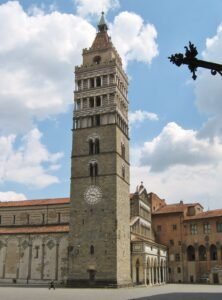
Just a few steps away in the city center, you’ll find the Duomo di San Zeno with its splendid Romanesque facade and the nearby Battistero di San Giovanni in Corte. If you love museums, the Museo Civico and the Museo dello Spedale del Ceppo are must-see stops. For a taste of underground Pistoia, check out the Pistoia Sotterranea site: visits are by appointment. Everything is easily reachable on foot from the fortress.
Itineraries nearby

💡 Did You Know…?
Walking through the cells, you can still see the drawings and writings left by the patriots of the Risorgimento: a human touch that brings history to life. A plaque commemorates Attilio Frosini, executed here in 1849.