Scolacium Archaeological Park: Roman Theatre, Norman Basilica and Gulf Views

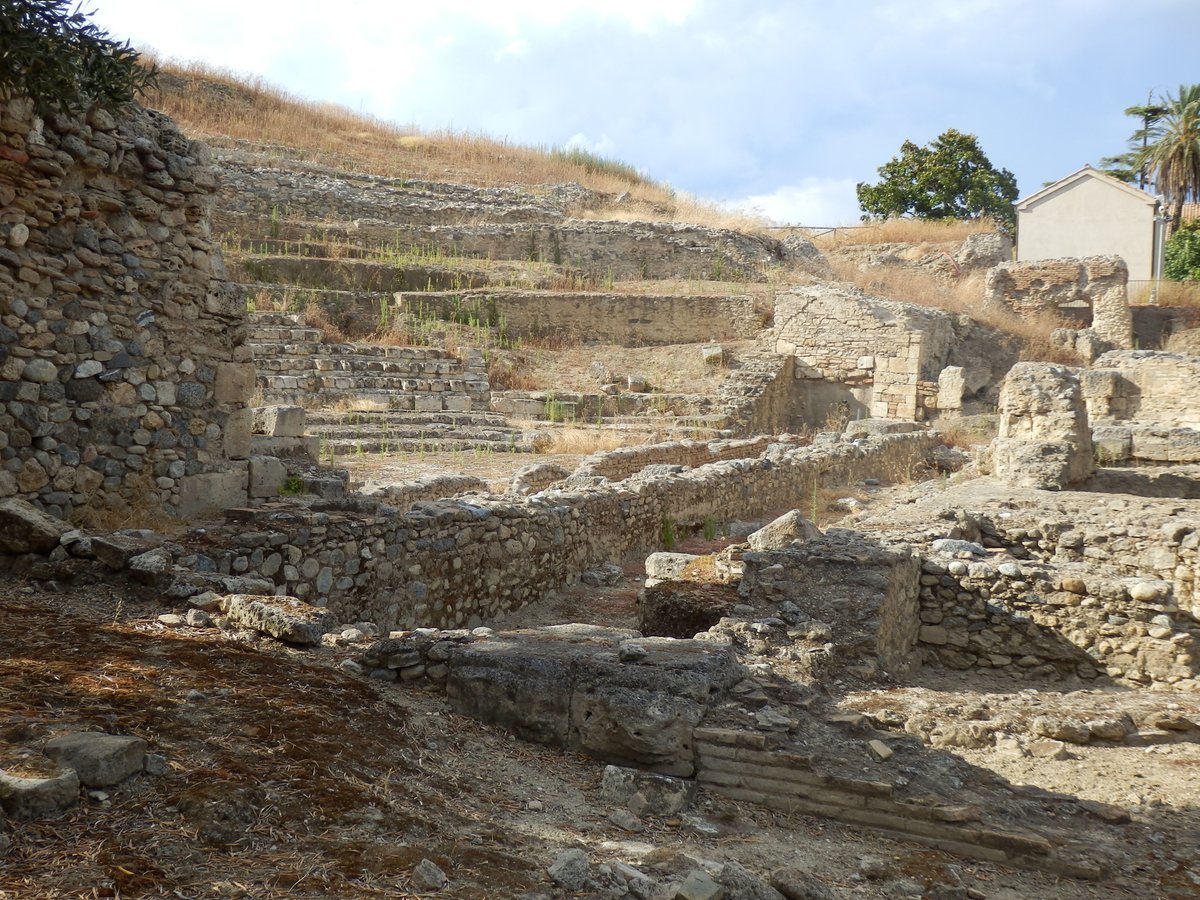
The Scolacium Archaeological Park in Roccelletta di Borgia offers a unique historical layering with Greek, Roman and Norman remains. The well-preserved Roman theatre still hosts performances, while the Norman basilica stands on the remains of an ancient temple. The site is nestled among centuries-old olive trees with panoramic views over the Gulf of Squillace.

  • Roman theatre with perfect acoustics and seating for 3,500 spectators
  • 11th-century Norman basilica built on Roman remains
  • Amphitheatre for gladiatorial games and Roman baths
  • Breathtaking views over the Gulf of Squillace among centuries-old olive trees
Copertina itinerario Scolacium Archaeological Park: Roman Theatre, Norman Basilica and Gulf Views
Visit the ancient Roman city of Scolacium with its theatre, amphitheatre and 11th-century Norman basilica. Stroll among centuries-old olive trees with panoramic views over the Gulf of Squillace.

Good to know


A Dive into Antiquity

As soon as you cross the entrance of the Scolacium Archaeological Park, you are catapulted into another era. The site stretches among centuries-old olive trees swaying in the wind, creating an atmosphere suspended between past and present. What immediately strikes you is the Norman basilica, with its imposing stone arches standing out against the Calabrian sky. A little further on, the semi-circular Roman theatre still preserves part of the cavea, allowing you to imagine the performances that once took place here. The amphitheatre, more hidden among the vegetation, reveals the grandeur of a city that was once among the most important in Magna Graecia and later Roman times. Walking among these ruins, with the scent of the Mediterranean scrub and the sound of cicadas, is an experience that engages all the senses.

Historical Overview

Scolacium originated as a Greek colony named Skylletion in the 6th century BC, later flourishing as a Roman city under the name Minervia Scolacium after its conquest in the 2nd century BC. It was the birthplace of the writer Cassiodorus in 485 AD, a prominent figure of the late antique period. During the Middle Ages, the Normans constructed a basilica atop the remains of an earlier Roman building, demonstrating the site’s continuous habitation. Archaeological excavations have uncovered baths, a forum, and a necropolis, attesting to the strategic importance of this port city.

  • 6th century BC: Greek foundation as Skylletion
  • 2nd century BC: Roman conquest and refoundation as Minervia Scolacium
  • 485 AD: Birth of Cassiodorus
  • 11th century: Construction of the Norman basilica

The Theatre and the Amphitheatre: Two Faces of Ancient Entertainment

The Roman Theatre of Scolacium is one of the best-preserved in Calabria, with seating that could accommodate up to 3,500 spectators. Its acoustics are still remarkable: try speaking from the centre of the orchestra to hear your voice echo perfectly. Unlike other theatres, here you can notice the local stone used for construction, with a warm hue that blends harmoniously with the landscape. Nearby, the amphitheatre displays a characteristic elliptical layout, where gladiatorial games took place. What makes this complex unique is the proximity between the two buildings, allowing you to directly compare the different architectures for entertainment in ancient Rome.

The Norman Basilica: Where Eras Converge

The Basilica of Santa Maria della Roccella represents a rare example of Norman architecture in Calabria. Built in the 11th century on the remains of a Roman structure, it showcases a unique fusion of styles: sturdy Roman columns were repurposed to support Norman arches. The east-facing apse follows Byzantine tradition, while the three-nave layout echoes Romanesque style. What stands out is the chromatic contrast between the basilica’s pale stone and the deep green of the olive trees surrounding it. Inside, the remains of frescoes and the underground crypt recount centuries of religious history at this crossroads of cultures.

Why Visit

Three concrete reasons not to miss Scolacium: first, the unique historical layering that allows you to see Greek, Roman, and Norman civilizations all in one site. Second, the excellent state of preservation of the theater, rare in Calabria, which gives a clear idea of ancient architecture. Third, the panoramic location overlooking the Gulf of Squillace, offering breathtaking views where archaeology meets nature. Additionally, the recently updated information panels make the visit self-guided and in-depth without needing a guide.

When to Go

The best time to visit Scolacium is the early afternoon of a spring day, when the low-angled sunlight enhances the volumes of the ruins and the long shadows create spectacular light plays on the ancient stone. In summer, prefer the cooler hours of the day to enjoy the walk among the olive trees without tiring yourself. Autumn offers unique atmospheres with the warm colors of the vegetation contrasting with the gray of the ruins.

In the Surroundings

Complete your day with a visit to the Archaeological Museum of Catanzaro, which displays the most precious artifacts unearthed at Scolacium, including statues and mosaics. For a culinary experience, stop by one of the area’s educational farmhouses to sample the DOP olive oil produced by the ancient olive trees surrounding the archaeological park.

💡 Did You Know…?

What makes Scolacium special is that it was the birthplace of Cassiodorus, the great Roman politician and writer of the 6th century. Legend has it that right here he founded the Vivarium, a study centre where monks copied and preserved ancient manuscripts, thus saving classical culture from oblivion. Today, among the olive trees, you can almost hear the echo of those voices passing down knowledge.