St. George’s Cathedral is the symbol of Ragusa and one of the finest examples of Sicilian Baroque. Built after the 1693 earthquake to a design by Rosario Gagliardi, it stands on a scenic staircase in the heart of Ibla. Tower facade with statues of St. George, St. James, St. Peter, and St. Paul, and a wooden portal carved by Vincenzo Fiorello. Neoclassical dome 43 meters high, work of Stefano Ittar. Latin cross interior with three naves, paintings by Vito D’Anna, Antonio Manno, and Dario Querci, and a monumental Serassi organ. Cathedral Museum with sacred furnishings and the Gaginesque tribune.
Introduction
If there’s one image that lingers from Ragusa Ibla, it’s that of the Duomo di San Giorgio towering over the square. With its slender, theatrical tower-like façade, it feels like a stage set. Climbing the long staircase, flanked by the statues of the apostles standing guard, builds anticipation for the stunning finale. The neoclassical dome, 43 meters high, dominates the entire district. This isn’t just a Baroque masterpiece; it’s the beating heart of Ibla, a place where art and faith seamlessly merge.
Introduction
If there’s one image that lingers from Ragusa Ibla, it’s that of the Duomo di San Giorgio towering over the square. With its slender, theatrical tower-like façade, it feels like a stage set. Climbing the long staircase, flanked by the statues of the apostles standing guard, builds anticipation for the stunning finale. The neoclassical dome, 43 meters high, dominates the entire district. This isn’t just a Baroque masterpiece; it’s the beating heart of Ibla, a place where art and faith seamlessly merge.
Historical Overview
The first church of San Giorgio stood where the Giardino Ibleo is today, but the
1693 earthquake razed it to the ground. Reconstruction began in 1739 based on a design by
Rosario Gagliardi, with the first stone laid on June 28. Construction work actually started in 1744, and the facade was completed in 1775. The neoclassical dome was added in 1820, attributed to Stefano Ittar. Here are the key milestones:
- 1693: Earthquake destroys the original church.
- 1739: First stone of the new cathedral.
- 1775: Facade completion.
- 1820: Construction of the dome.
- 2002: Declared a UNESCO World Heritage site.
Historical Overview
The first church of San Giorgio stood where the Giardino Ibleo is today, but the
1693 earthquake razed it to the ground. Reconstruction began in 1739 based on a design by
Rosario Gagliardi, with the first stone laid on June 28. Construction work actually started in 1744, and the facade was completed in 1775. The neoclassical dome was added in 1820, attributed to Stefano Ittar. Here are the key milestones:
- 1693: Earthquake destroys the original church.
- 1739: First stone of the new cathedral.
- 1775: Facade completion.
- 1820: Construction of the dome.
- 2002: Declared a UNESCO World Heritage site.
The Tower Facade: A Scenographic Masterpiece
The facade is the true coup de théâtre. Gagliardi conceived it as a tower facade, incorporating the bell tower into the front and ending with a bulbous spire. The effect is amplified by its oblique position relative to the square and the high staircase. Two pairs of scrolls connect the levels, with statues of Saint George and Saint James below and Saint Peter and Saint Paul above. The portal has a mixed-line frame rich with vegetal friezes, and the wooden doors from 1793, the work of Vincenzo Fiorello, tell the story of the saint’s martyrdom in six panels. Climbing up, it is impossible not to stop and admire the view over the valley.
The Tower Facade: A Scenographic Masterpiece
The facade is the true coup de théâtre. Gagliardi conceived it as a tower facade, incorporating the bell tower into the front and ending with a bulbous spire. The effect is amplified by its oblique position relative to the square and the high staircase. Two pairs of scrolls connect the levels, with statues of Saint George and Saint James below and Saint Peter and Saint Paul above. The portal has a mixed-line frame rich with vegetal friezes, and the wooden doors from 1793, the work of Vincenzo Fiorello, tell the story of the saint’s martyrdom in six panels. Climbing up, it is impossible not to stop and admire the view over the valley.
Interior: Art and Spirituality
The interior, with its Latin cross layout, is bright thanks to the double-shell dome that filters the light. The nave is divided by ten stone pillars, and each side chapel holds a treasure. In the right aisle, the processional wooden statue of Saint George (1874) by Rosario Bagnasco stands out, while on the left is the Holy Ark, a silver reliquary urn from 1818. The paintings are by artists such as Vito D’Anna and Dario Querci. Not to be missed is the monumental Serassi organ from 1881, with 3,368 pipes, still functioning. In the sacristy, the Gagini tribune (16th century) leaves visitors in awe. Every corner tells centuries of devotion and art.
Interior: Art and Spirituality
The interior, with its Latin cross layout, is bright thanks to the double-shell dome that filters the light. The nave is divided by ten stone pillars, and each side chapel holds a treasure. In the right aisle, the processional wooden statue of Saint George (1874) by Rosario Bagnasco stands out, while on the left is the Holy Ark, a silver reliquary urn from 1818. The paintings are by artists such as Vito D’Anna and Dario Querci. Not to be missed is the monumental Serassi organ from 1881, with 3,368 pipes, still functioning. In the sacristy, the Gagini tribune (16th century) leaves visitors in awe. Every corner tells centuries of devotion and art.
Why Visit It
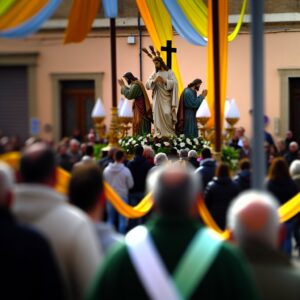
Three concrete reasons to put it on your itinerary. One: it is part of the UNESCO site ‘Late Baroque Towns of the Val di Noto’ – a recognition that alone makes the trip worthwhile. Two: the Museo del Duomo, renovated in 2026, displays sacred artworks and the precious Gagini tribune – a perfect addition after your visit. Three: the feast of Saint George, on the last Sunday of May, when the statue of the saint is carried through the streets of Ibla on the shoulders of devotees. If you happen to be there during that time, you’ll see the cathedral transform into a stage of faith and tradition.
Why Visit It
Three concrete reasons to put it on your itinerary. One: it is part of the UNESCO site ‘Late Baroque Towns of the Val di Noto’ – a recognition that alone makes the trip worthwhile. Two: the Museo del Duomo, renovated in 2026, displays sacred artworks and the precious Gagini tribune – a perfect addition after your visit. Three: the feast of Saint George, on the last Sunday of May, when the statue of the saint is carried through the streets of Ibla on the shoulders of devotees. If you happen to be there during that time, you’ll see the cathedral transform into a stage of faith and tradition.
When to Go
The most enchanting time? Late afternoon, when the low sun ignites the limestone facade, casting sharp shadows and warm contrasts. The light slants into the staircase, and the square fills with an almost surreal tranquility. In spring or autumn, the temperatures are perfect for sitting at outdoor café tables and enjoying the spectacle. To avoid crowds, choose a weekday: Ibla becomes a small village again, and the cathedral is all yours.
When to Go
The most enchanting time? Late afternoon, when the low sun ignites the limestone facade, casting sharp shadows and warm contrasts. The light slants into the staircase, and the square fills with an almost surreal tranquility. In spring or autumn, the temperatures are perfect for sitting at outdoor café tables and enjoying the spectacle. To avoid crowds, choose a weekday: Ibla becomes a small village again, and the cathedral is all yours.
Nearby
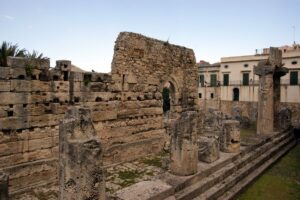
Just a stone’s throw from the Duomo is the Giardino Ibleo, a public park that preserves the remains of the ancient church of San Giorgio, including the Gothic-Spanish portal from the 1400s. It’s the perfect spot for a shady break. A short distance away, the Museo del Duomo, recently reopened, offers an immersive journey into the city’s religious history. If you have some time, climb up to Ragusa Superiore to admire the Duomo from above: the view of the dome emerging from the rooftops is postcard-perfect.
Nearby
Just a stone’s throw from the Duomo is the Giardino Ibleo, a public park that preserves the remains of the ancient church of San Giorgio, including the Gothic-Spanish portal from the 1400s. It’s the perfect spot for a shady break. A short distance away, the Museo del Duomo, recently reopened, offers an immersive journey into the city’s religious history. If you have some time, climb up to Ragusa Superiore to admire the Duomo from above: the view of the dome emerging from the rooftops is postcard-perfect.