Cardu Museum: Ceremonial Weapons and Thai Bronzes in the Heart of Cagliari

In Cagliari’s Castello district, the Stefano Cardu Civic Museum of Siamese Art safeguards Italy’s unique collection of Oriental art, donated by a Cagliari-born engineer who lived in Siam. The modern exhibition, with clear explanatory panels, makes the visit accessible to all, offering a cultural experience distinct from the typical Sardinian itinerary.

• Italy’s only collection entirely dedicated to Siamese art with museum-quality pieces
• Finely decorated ceremonial arts, among Europe’s most comprehensive Thai bronzes, and enameled ceramics
• Modern layout and clear captions in a quiet, intimate atmosphere
• Located in the Citadel of Museums, a complex that also includes the National Archaeological Museum
Copertina itinerario Cardu Museum: Ceremonial Weapons and Thai Bronzes in the Heart of Cagliari
The Stefano Cardu Civic Museum of Siamese Art in Cagliari houses Italy’s only collection of Oriental art, featuring weapons, enameled ceramics, and Thai bronzes gathered between the late 19th and early 20th centuries. It is located within the Citadel of Museums.

Good to know


Introduction

You expect a classic museum and instead find yourself catapulted into a corner of Thailand in the heart of Cagliari. The Stefano Cardu Civic Museum of Siamese Art is one of those discoveries that leaves you speechless: a unique institution in Italy dedicated entirely to Oriental art. Entering its home in Palazzo Regio, in Piazza Palazzo, you’re greeted by an atmosphere that seems suspended between two distant worlds. It’s not just a collection; it’s a journey through ceremonial weapons, enameled ceramics, and Thai bronzes that tell stories of far-off kings and courts. I stumbled upon it by chance during a walk and fell in love instantly—the feeling is like discovering a well-kept secret in the city.

Historical Background

It all began with Stefano Cardu, a native of Cagliari who lived for a long time in Siam (present-day Thailand) in the late 19th century. Upon returning to Sardinia, he donated his extraordinary collection to the city in 1918. What’s interesting is that he wasn’t just a simple collector, but an entrepreneur who worked for the King of Siam—this explains the exceptional quality of the pieces. The museum had various locations before settling permanently in Palazzo Regio in 2000. The timeline tells a story of passion spanning centuries and continents:

  • Late 19th century: Cardu lives and works in Siam
  • 1918: Donation of the collection to Cagliari
  • 2000: Opening in the current location at Palazzo Regio

The Armory Hall

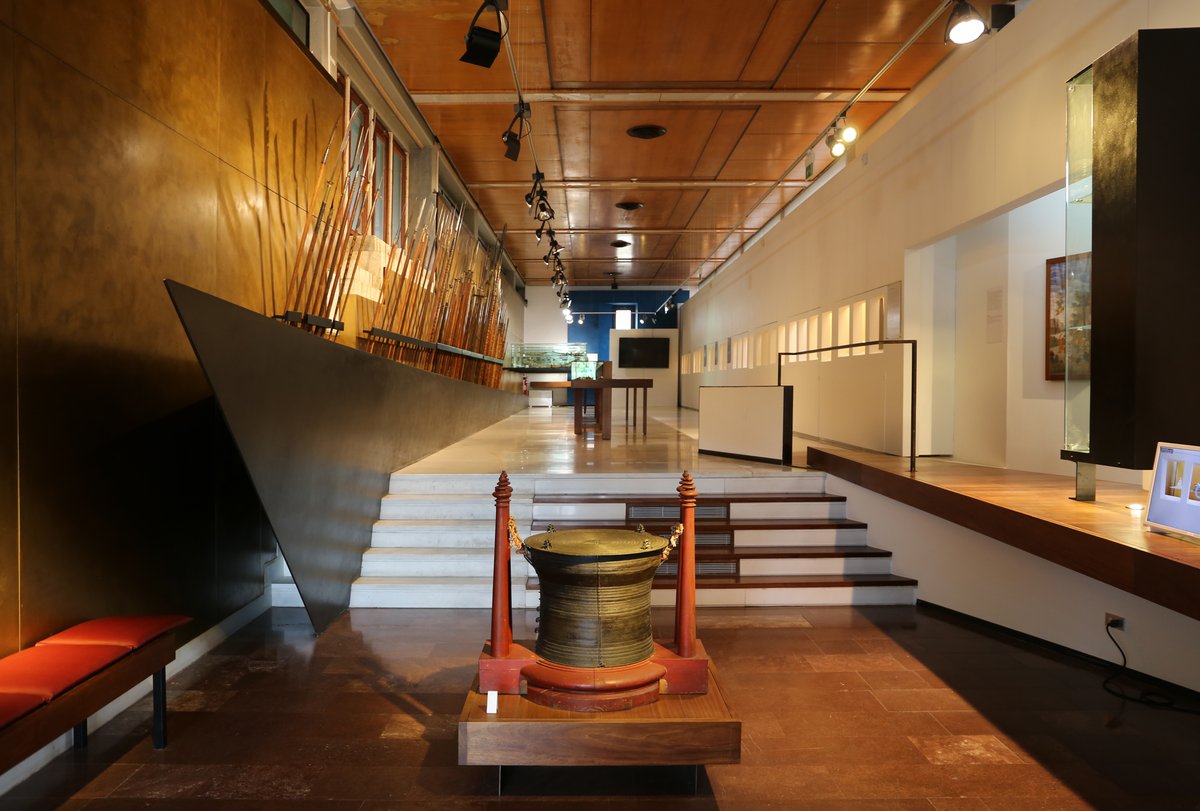
This section impressed me the most. These are not just weapons of war, but finely decorated ceremonial objects that tell the story of a martial art transformed into artistic expression. There are daggers with intricately carved ivory handles, swords with lacquered wooden scabbards and gold decorations. What surprises is the variety: from Malaysian krises to traditional Thai swords. Each piece seems to have its own personality—some have such detailed engravings that you get lost looking at them. I stopped in front of a sword with a dragon-head-shaped hilt: the balance between martial function and artistic beauty is impressive. I’m not a weapons expert, but here you immediately understand you’re looking at something special.

Bronzes and Ceramics

If the weapons leave you breathless, the Buddha statues and ceramics will soothe your soul. The collection of Thai bronzes is among the most comprehensive in Europe, featuring representations of the Buddha in various poses and historical periods. What you notice is how the style varies between different regions of Thailand—some are more robust, others more slender. The ceramics, on the other hand, showcase incredible technical mastery: glazed pottery in green and brown that looks almost modern in design, yet dates back centuries. There’s a display case with small figurines depicting traditional dancers: the details of the costumes are so precise you can almost hear the music. It’s fascinating to think that these objects traveled from Asia to Sardinia—a journey that seems normal today, but must have been an adventure at the time.

Why Visit It

Three concrete reasons not to miss it. First: it’s the only museum in Italy entirely dedicated to Siamese art – you won’t find anything like it elsewhere. Second: the quality of the pieces is museum-grade, but the atmosphere is intimate and cozy, without the crowds of large museums. Third: it offers a cultural break different from the usual during a visit to Cagliari – after churches and fortresses, immersing yourself in another culture is refreshing. Personally, I particularly appreciated that the captions are clear and not too technical, accessible even to those who aren’t experts in Eastern art. And then there’s that sense of discovery: how many people know that in the center of Cagliari hides a piece of Thailand?

When to Go

The museum is open year-round, but the best time in my opinion is a winter afternoon, when warm light filters through the windows and creates shadow plays on the bronze statues. In summer, it can be a pleasant break from the heat, but the cooler months offer a more intimate atmosphere. Avoid peak weekend hours if you prefer to visit at a leisurely pace—I went on a Thursday afternoon and was practically alone. A personal tip: go when you feel like focusing on the details, because here, beauty lies in the small things. Mornings are often quieter, but the afternoon has that golden light that enhances the colors of the ceramics.

In the Surroundings

After leaving the museum, you find yourself in the heart of the Castello district, so you’re truly spoiled for choice. Here are two thematic suggestions: the Cathedral of Santa Maria is just a few steps away, where you can continue your journey through different cultures by admiring its Romanesque-Pisan pulpits. Or, to stay with an Eastern theme but in a culinary version, look for one of the pastry shops that make seadas with honey—the sweet-salty contrast somewhat resembles certain pairings in Thai cuisine. If you’d like another unusual museum, the Cathedral Treasury Museum with its sacred objects is a short distance away, but the atmosphere is completely different. I usually end the visit with a walk along the Stampace walls to watch the sunset over the gulf.

💡 Did You Know…?

Stefano Cardu was not just a collector: he worked as an engineer for the Siamese government, contributing to railway construction. His passion for local art led him to acquire pieces directly from the royal court of Bangkok, some of which had been exhibited at the 1911 Turin Universal Exposition. The museum particularly features a ceremonial sword with a gold hilt said to have belonged to a Thai prince. The collection arrived in Cagliari in 1919 as Cardu’s donation to his hometown, but remained in storage for decades before finding this worthy permanent home.