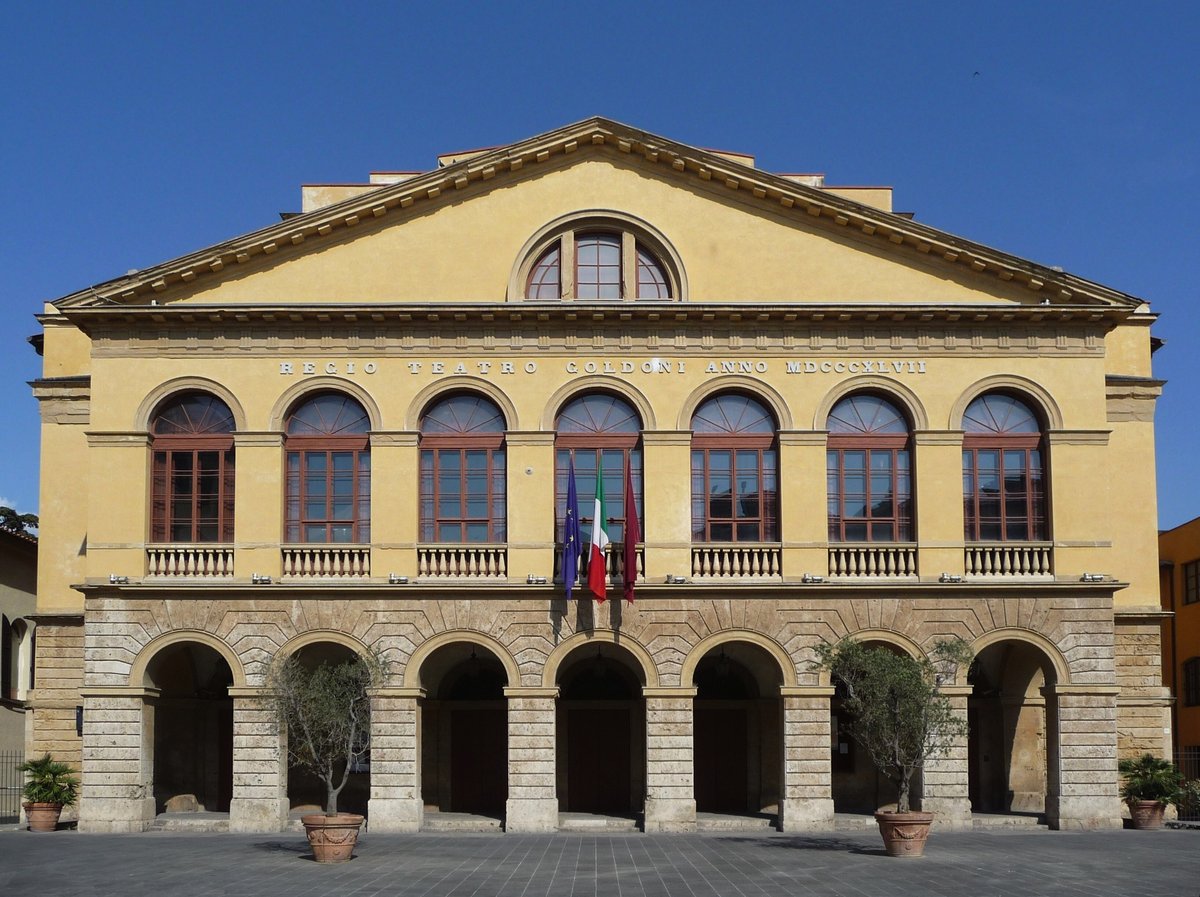
Teatro Goldoni is Livorno’s main theater, inaugurated in 1847 with a design by architect Giuseppe Cappellini. Located on Via Mayer, steps from the city center, it features a horseshoe-shaped auditorium with three tiers of boxes and a ceiling frescoed by Cesare Maffei. Today, it hosts a high-caliber season of drama, concerts, and ballet.
– History and Architecture: a neoclassical gem with rococo details.
– Programming: over 100 events per year, from opera to contemporary shows.
– Guided Tour: available by reservation to explore the dressing rooms and stage.
– Practical Tip: book tickets online well in advance for the most popular performances.
Evocative Introduction
Stepping into Livorno’s Teatro Goldoni is like taking a leap back into the 19th century. The facade, simple yet elegant, doesn’t prepare you for the spectacle of marble, stuccowork, and velvet that awaits inside. I was left speechless the first time I saw the central chandelier – one of those that immediately makes you feel you’re in for a special evening. The acoustics are astonishing; even from the last row of the gallery, you can hear perfectly. And then there’s that atmosphere, a blend of history and anticipation, that makes every performance a unique experience. It’s not just a theater: it’s the beating heart of Livorno’s culture, a place where the community comes together.
Historical Notes
Inaugurated in 1843 based on a design by architect Giuseppe Cappellini, the Goldoni Theater was commissioned by the Accademia degli Armonici to provide Livorno with a performance venue worthy of the city. The choice of name pays homage to Carlo Goldoni, the great Venetian playwright who stayed in Livorno. During World War II, the theater suffered damage but was restored and reopened in 1947. Today, with nearly 800 seats, it is a remarkable example of an Italian-style theater. Here are the key moments:
History in a Nutshell
- 1839: cornerstone laid
- 1843: inauguration with Saverio Mercadante’s opera ‘Il bravo’
- 1943: closed due to war damage
- 1947: reopened after restoration
- 1990: complete restoration of furnishings and stuccos
Architecture That Charms
The interior of the Goldoni is a triumph of gilded stuccoes, horseshoe-shaped balconies, and a painted ceiling depicting Apollo and the Muses. The hall is intimate, almost making you feel part of the show even if you’re in the stalls. The historic curtain, painted by Luigi Ademollo, is a work of art: it shows Amerigo Vespucci’s arrival in Livorno. I recommend arriving a bit early to admire it at your leisure. The modern stage technology blends perfectly with the ancient structure, allowing for contemporary productions as well. A curious detail: the side boxes have mirrors that amplify the light, an optical trick from the era.
Programming: Not Just Prose
Sure, Goldoni is famous for its high-quality prose, but its offerings go far beyond. In addition to theatrical performances, it regularly hosts classical music concerts (the Orchestra della Toscana often plays here), ballet, and even contemporary dance shows. I saw an opera, ‘The Barber of Seville’, and it was a fantastic experience: the acoustics are perfect for the human voice. The season runs from October to April, but there are special events in summer. The average ticket price is around €20-30, a fair price for the quality on offer. Check the website for the latest updates – sometimes there are previews or open rehearsals.
Why Visit
1. A dive into 19th-century atmosphere: Stepping into the Goldoni is like traveling back in time. Original details – from crystal chandeliers to red velvets – have been carefully restored. 2. Excellent acoustics: Even in the cheapest seats, the sound is crystal clear. Perfect for live music lovers. 3. An authentic local experience: Livorno’s residents are fond of their theater; you’ll find a warm and knowledgeable audience. It’s a way to immerse yourself in the city culture, not just the tourist side.
When to Go
The best time? Autumn and winter, when the programming is at its peak. But if you love outdoor theatre, in July there’s ‘Estate al Goldoni’ with performances in the courtyard. Personally, I adore December evenings: the theatre is decorated for the holidays, and the atmosphere is magical. For backstage visits, morning on weekdays is quieter: call and ask if there are guided tours, sometimes they arrange them at flexible times.
Nearby
After the show, two must-see spots just steps away. First: Terrazza Mascagni, a 10-minute walk. There you can enjoy a sunset over the sea with a view of the Tuscan archipelago. Second: Venezia Nuova, the canal district. Wandering among the little bridges and artisan shops is a unique experience, and just a stone’s throw away is the Museum of Natural History of the Mediterranean, interesting for both adults and children. If you’re hungry, stop at a trattoria in the center: cacciucco is the star dish, but tortello livornese is also worth trying.