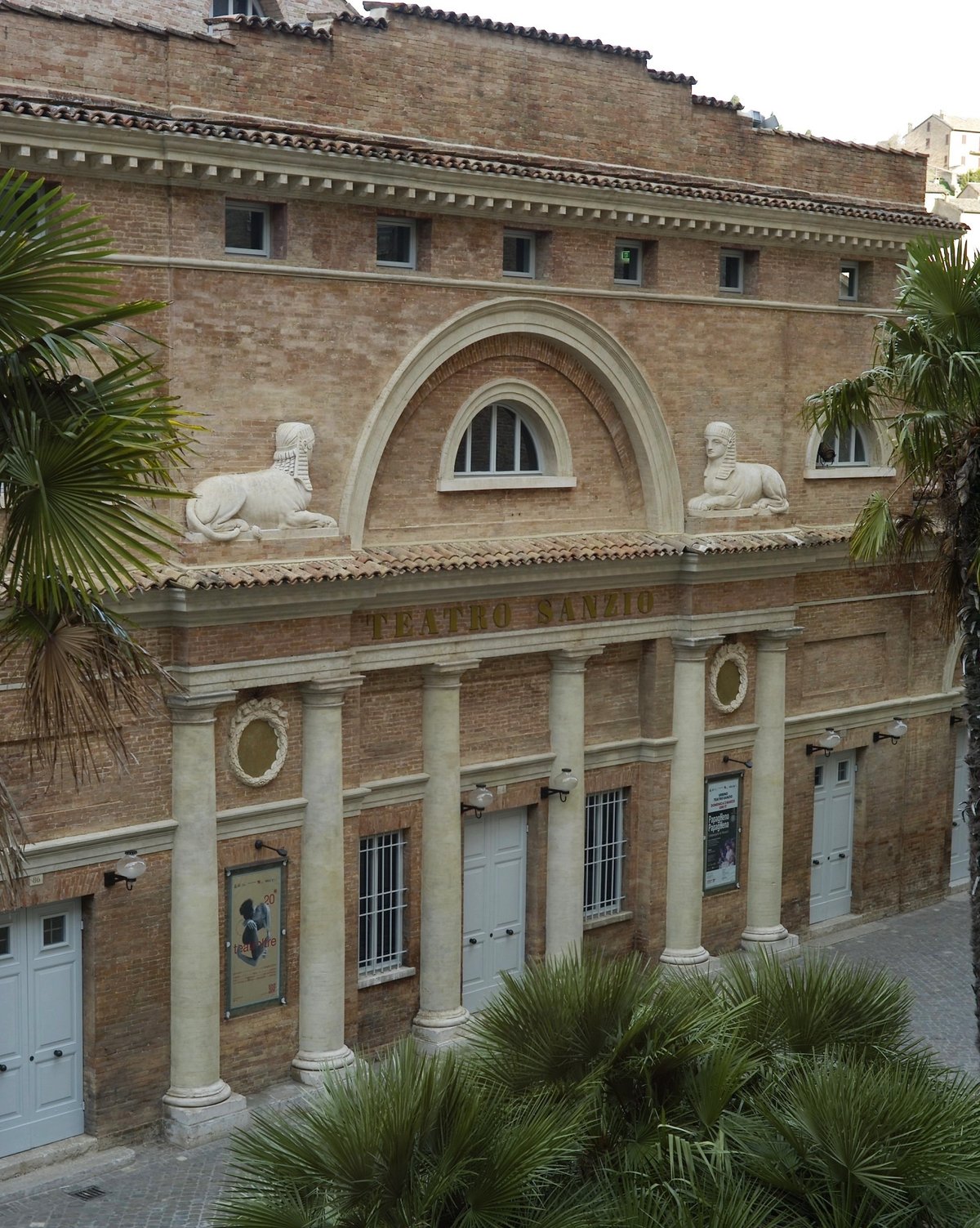
The Teatro Sanzio, inaugurated in 1845 in the former monastery of Santa Chiara, is a neoclassical gem with a horseshoe-shaped hall and perfect acoustics. It offers a rich season of classical drama, concerts, dance, and family events, managed by AMAT.
- Hall with three tiers of boxes and a gallery for unobstructed views
- Excellent acoustics for symphonic and chamber music concerts
- Varied programming including jazz, modern dance, and poetry readings
- Integrated into Urbino’s historic center, a UNESCO World Heritage site, near the Ducal Palace
Introduction
Arriving in Urbino, a breathtaking Renaissance city, the Teatro Sanzio presents itself as an elegant surprise. It’s not just a theater, but a neoclassical jewel set among the red bricks of the historic center. Its sober facade, with its columned portico, feels almost like a discreet invitation. Upon entering, you breathe a different air: the atmosphere is intimate, cozy, far from the crowded grand theaters. I was struck by how perfectly it’s integrated into the urban fabric, without being overbearing. It’s the right place for those who want to combine culture and authenticity, perhaps after a day among Raphael’s masterpieces. Here, performances seem to have a special flavor, as if the history of the walls adds magic.
Historical Overview
The history of the Teatro Sanzio is one of transformation. Inaugurated in 1845, it takes its name from the Urbino painter Raphael Sanzio, a fitting tribute in this city. It was not originally built as a theatre but as the
former convent of the Santa Chiara nuns, repurposed based on a design by architect Vincenzo Ghinelli. Over time, it has experienced highs and lows: closures, restorations, yet always retaining its clean neoclassical character. During World War II, it suffered damage, but post-war reconstruction brought it back to life. Today, it is managed by AMAT (Marche Association for Theatrical Activities), making it a vibrant cultural hub. A concise timeline:
- 1845: Inauguration as a civic theatre
- Late 19th century: Period of significant opera and drama activity
- 1944: War damage during the conflict
- 1950s: Restoration and reopening
- Today: Host to a rich season of drama, concerts, and dance
The Enchanting Acoustics
One thing that amazed me was the acoustics. I’m no expert, but during a chamber music concert, I noticed how every note resonated clearly and warmly, without any annoying echoes. The hall, with its approximately 400 seats, has a horseshoe shape that helps distribute sound evenly. This acoustic quality is said to be the result of careful restoration in the 1990s, which preserved original materials like the wood of the boxes. It’s a detail that makes all the difference: here, you come to truly listen, not just to watch. For music enthusiasts, it’s a little paradise. Even the actors on stage say their voices come through cleanly, without needing to strain. An advantage not all theaters have.
The Theater Season: A Surprising Mix
The Sanzio’s programming is never dull. Beyond the classic prose plays that attract national companies, there are jazz and contemporary music concerts that bring a fresh breeze. I’ve seen modern dance performances here that blend tradition and innovation, with choreography designed for the intimate spaces. The winter season is the most intense, but in summer there are sometimes special events in the inner courtyard, creating a more informal atmosphere. What’s appealing is the variety: one evening you might attend a Pirandello play, the next a poetry reading. The theater collaborates with local festivals, like Urbino Musica Antica, bringing international ensembles. It’s a vibrant place, not a museum. For those visiting Urbino, checking the schedule can offer unforgettable experiences.
Why Visit It
First, because it’s a rare example of a well-preserved neoclassical theater in the Marche region, with a history intertwined with that of the city. Second, for its programming: it offers quality performances in an accessible setting, away from the crowds of major centers. Third, for the experience: sitting in the stalls here is like diving into an elegant era, without being too formal. Plus, ticket prices are often reasonable, a pleasant surprise. And after the show, you can step directly into the streets of Urbino, still vibrant with energy.
When to Go
The best time? An autumn evening, when the air is crisp and the theater lights glow against the dark sky. In winter, with the theater season in full swing, the atmosphere is livelier, but also in spring, when Urbino awakens, attending a performance can be magical. I would avoid the hottest summer months, unless there are outdoor evening events. Personally, I’ve found that after sunset, with the streets quiet, the experience is more intense.
In the Surroundings
After the theater, it’s worth taking a short stroll to the Ducal Palace, just a few minutes away on foot, to admire Renaissance masterpieces and Raphael’s studies. Another idea is to seek out one of the small taverns in the center, like those on Via Budassi, to sample local cheeses or a glass of wine from the Pesaro hills. If you love art, the National Gallery of the Marche, also in the Ducal Palace, is unmissable. Urbino is small, everything is within easy reach, and these spots perfectly round out a day of culture.