
🧭 What to Expect
- Best for: A cultural day trip or weekend getaway, blending history and nature.
- Highlights: Villa Manzoni, the historic center with palaces and churches, the lakeside with views of Resegone and Lake Como.
- Recommended for: Families, couples, and curious travelers who want to discover an authentic side of Lombardy.
Events nearby

Are you ready to discover Lecco? This city overlooking the eastern branch of Lake Como is much more than a starting point for excursions. Known as the city of Alessandro Manzoni, Lecco offers a historic center rich in noble palaces, ancient churches, and museums that tell its story. From the lakeside, you can enjoy a spectacular view of Resegone, the mountain of The Betrothed. This article guides you through the city's main highlights: from Villa Manzoni to the Basilica of San Nicolò, passing by the Teatro della Società and the medieval towers. A perfect itinerary for a weekend or a day trip, to discover the authentic soul of Lecco.
Overview
- Villa Manzoni: The Writer’s Residence
- Basilica of San Nicolò: Lecco's Cathedral
- Palazzo Belgiojoso: A Dive into History and Science
- Palazzo delle Paure: A Dive into Art and History in Lecco
- The Teatro della Società: Lecco's Neoclassical Gem
- Torre Viscontea: A Dive into Lecco's Middle Ages
- San Nicolò Tower: The 'Matitone' Touching the Sky
- Archaeological, Historical, and Natural History Museum: A Dive into Lecco's Prehistory
- Civic Manzoni Museum
- Palazzo Bovara: the Heart of the City Between Neoclassical and Modern
- Monument to Alessandro Manzoni: A Bronze Tribute by the Lake
- Sanctuary of Santa Maria Gloriosa: A Balcony Overlooking Lecco
- Church of San Francesco: Modernity and Spirituality in Lecco
- Church of the Immaculate Conception: A Hidden Gem in the Heart of Town
Itineraries nearby


Villa Manzoni: The Writer’s Residence
- Go to the page: Villa Manzoni in Lecco: The House-Museum with Original Furnishings and Garden on Lake Como
- Via Giovanni Amendola, Lecco (LC)
- Open in Google Maps
- View on Google Images
- +39 0341 481247
 April 2026 is the date to circle. After a major restoration, Villa Manzoni finally reopens to the public. Whether you're a literature enthusiast or just curious, this is a must-see stop in Lecco. The villa, declared a National Monument in 1940, was the family home of Alessandro Manzoni, who spent his childhood and youth here. Wandering through the ground-floor rooms, still furnished as they were in 1818—the year the writer sold the property—you'll feel the echo of his words. The period furniture, handwritten documents, and rare editions of The Betrothed tell his story. Upstairs, the Municipal Art Gallery displays over 400 paintings, including works by local artists such as Ennio Morlotti. Don't miss the view from the first floor: Mount Resegone and Lake Como spread out before you, just as Manzoni saw them. The Italian-style geometric garden, though reduced in size, retains its 18th-century charm. And if you have time, the Manzonian Itinerary starts here, a route that passes through the places that inspired the novel, like the village of Pescarenico. The villa is part of the Lecco Urban Museum System (Si.M.U.L.), and the ticket is combined with Palazzo delle Paure. A tip: set aside at least an hour for your visit, and take advantage of the 10-minute introductory video on the history of the Manzoni family. It's a shame it was closed for so long, but the reopening promises wonders: a bookshop, café, and educational spaces. In short, a place that smells of history and literature, not to be missed.
Basilica of San Nicolò: Lecco's Cathedral
- Via San Nicolò, Lecco (LC)
- Open in Google Maps
- View on Google Images
 The Basilica of San Nicolò is the beating heart of Lecco, the perfect starting point to understand the city. Dedicated to the patron saint of sailors, it stands on the remains of the ancient walls, in an elevated position. The first thing you notice is the bell tower: 96 meters of pure verticality, one of the tallest in Italy. Completed in 1904 in the Neo-Gothic style, it is now the city's landmark, visible from every corner. The neoclassical façade, with its six Ionic pilasters and marble portal, is the work of Lecco-born architect Giuseppe Bovara, who oversaw the expansion between 1831 and 1862. Step inside: the three-aisled interior welcomes you with a 19th-century pictorial cycle, frescoes, and medallions of sainted bishops. The baptistery chapel is the only surviving portion of the 13th-century church, featuring a baptismal font from 1596. During the 1955 restorations, fragments of 14th-century frescoes from the Giottesque school were uncovered, depicting the life of Saint Anthony Abbot. Don't miss the bronze doors by Enrico Manfrini (1975) and the bronze Stations of the Cross by the same artist. If you like, go up to the parvis: the double staircase in gray stone offers a beautiful view of the lake. The basilica is open every day: Monday–Friday 8:30–11:30 a.m. and 3:00–6:30 p.m., Saturday until 6:00 p.m., Sunday continuous hours until 8:00 p.m. A tip: visit during the week when it's quieter, and take time to admire the Art Nouveau stained glass windows of the choir.
Palazzo Belgiojoso: A Dive into History and Science
- Corso Giacomo Matteotti, Lecco (LC)
- Open in Google Maps
- View on Google Images
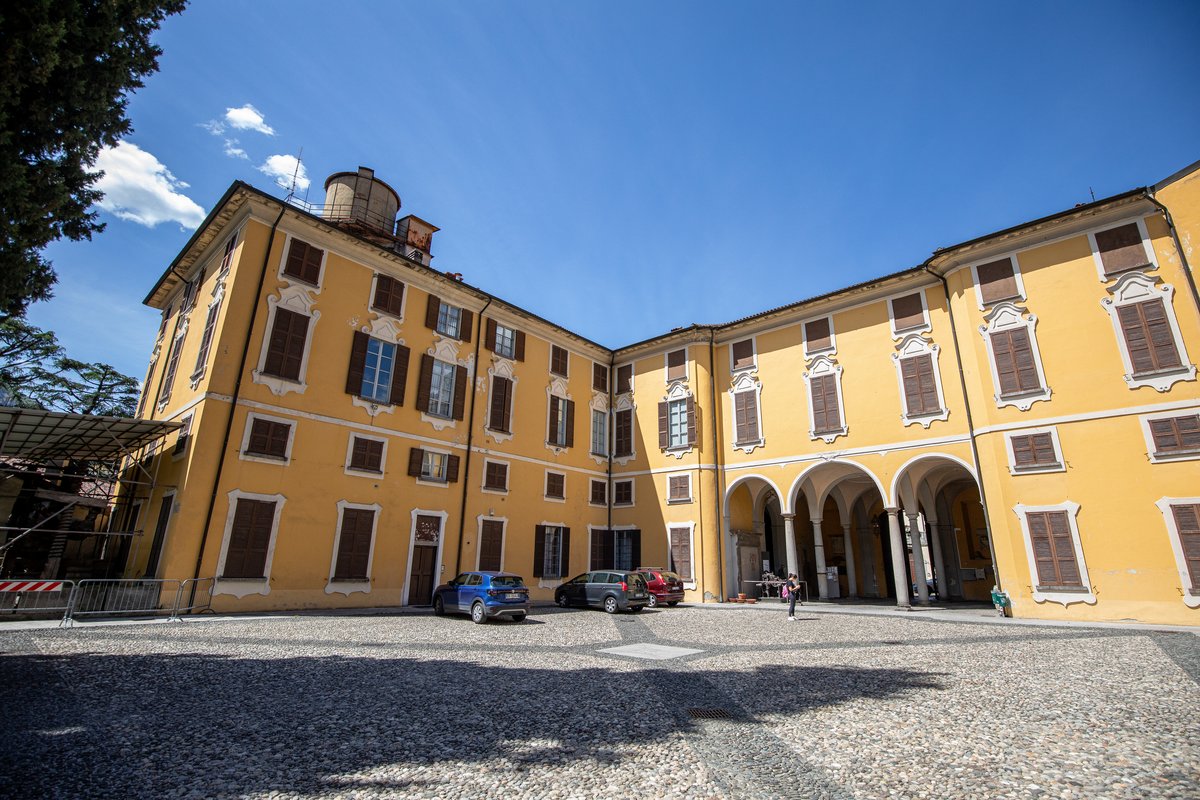 If you're in Lecco, Palazzo Belgiojoso is an absolute must-see. Built in the 18th century as a country villa by Marquis Giacomo Locatelli, this elegant U-shaped palace is now the heart of the city's museum system. Here you'll find four museums under one roof: the Natural History Museum with its period displays, the Archaeological Museum with artifacts from the Paleolithic to the Early Middle Ages, the Historical Museum covering the Risorgimento and the Resistance, and the Civic Planetarium with an 8-meter dome. Admission is free, and a single ticket covers all three museums (the planetarium is separate). Not to be missed: the monumental portico with plaques and coats of arms from the Forte di Fuentes, and, as you climb the staircase, the medallions depicting characters from The Betrothed. If you're looking for a bit of relaxation, the internal garden is a peaceful oasis. For visitors with visual impairments, there's the sensory path "Please Touch Me!" with tactile exhibits and braille captions. In short, a place that combines history, art, and science in a surprising way.
Palazzo delle Paure: A Dive into Art and History in Lecco
- Lungolario Isonzo, Lecco (LC)
- http://www.museilecco.org/oraritariffe.htm
- Open in Google Maps
- View on Google Images
- segreteria.museo@comune.lecco.it
- +39 0341 286729
 The Palazzo delle Paure is located in the heart of Lecco, between Piazza Cermenati and Piazza XX Settembre. The curious name comes from the fact that until 1964, citizens came here to pay taxes—an activity that inspired 'fears.' Today, however, that's a different story. The building, built in an eclectic neo-medieval style between 1902 and 1905, stands out for its rectangular tower with windows and mullioned windows, added around 1926. On the façade, an ancient marble coat of arms with the Visconti serpent, dating back to the 14th century, stands out. Inside, you'll find a diverse museum complex. On the first floor, temporary exhibitions are held (such as the one on Hokusai in 2026). On the second floor, you'll find the Gallery of Modern and Contemporary Art, with works by local and national artists: from Sottocornola to Baj, from Morlotti to Rotella. Also on the second floor is the Graphic and Photography Section, with about 4,000 historical photographs of Lecco and the Manzoni sites. Going up to the third floor, you reach the Lecco Alpine Observatory, an interactive space dedicated to the history of mountaineering—a gem for mountain lovers. Tickets cost €6 (full price) and opening hours are: Tuesday 10 am–2 pm, Wednesday to Sunday 10 am–6 pm, closed on Mondays. Last admission one hour before closing. There are no architectural barriers, and there's also a bookshop and a Baby Pit Stop. In short, it's an unmissable stop to understand the identity of Lecco.
The Teatro della Società: Lecco's Neoclassical Gem
- Piazza Giuseppe Garibaldi 10, Lecco (LC)
- Open in Google Maps
- View on Google Images
 In the heart of Lecco, in Piazza Garibaldi, stands the Teatro della Società, a neoclassical masterpiece designed by Giuseppe Bovara in 1835. Inaugurated in 1844 with Donizetti's Anna Bolena, the theater is inspired by the model of La Scala in Milan. The facade features harmonious lines and refined details, while inside, the stuccos by Giacomo Mattarelli and the fresco 'Il teatro della vita' by Orlando Sora, created in 1979, stand out. After eight years of restoration (2017–2025), the theater reopened on 29 November 2025 with a week of free events. Today it is managed by the Fondazione Teàrte Lecco and hosts a rich season: prose, symphonic concerts, and dance. Highlights of the 2026 program include Amadeus and the Lecco Jazz Festival. The hall has a capacity of 460 seats and excellent acoustics. A place that combines history and modernity, perfect for a cultural evening.
Torre Viscontea: A Dive into Lecco's Middle Ages
- Vicolo della Torre, Lecco (LC)
- http://www.museilecco.org/oraritariffe.htm
- Open in Google Maps
- View on Google Images
- segreteria.museo@comune.lecco.it
- +39 0341 282396
 If you're passing through Lecco, you can't miss the Torre Viscontea, the only remaining piece of the ancient castle that once protected the town. It stands in Piazza XX Settembre, just a stone's throw from the lake, like a silent giant that has witnessed centuries of history. Built in the 14th century by order of Azzone Visconti, it was part of a triangular defensive system. On the ground floor, you can still see the guardhouse quarters and some stone cannonballs — it instantly gives you a sense of the military life that once filled the place. In the 17th century, it was garrisoned by Spanish soldiers, the very ones mentioned by Manzoni in The Betrothed. Then, in 1782, Emperor Joseph II decided to abolish the fortress, and the castle was almost entirely demolished. The tower, however, remained: it's the oldest building in Lecco, and it shows. In 1816, the architect Giuseppe Bovara restored it and turned it into a prison — a function it had already served during the Spanish era. Today, it's owned by the municipality and hosts temporary exhibitions (on the first floor) and the Museum of the Mountain and Lecco Mountaineering on the second and third floors. Admission is free, but watch the hours: open only Thursday (10-1), and Friday-Saturday-Sunday (2-6). It's not accessible for people with mobility issues due to the stairs. If you love history, the atmosphere here is special — you can almost hear the echoes of soldiers and prisoners. I recommend pairing it with a walk along the lakeside.
San Nicolò Tower: The 'Matitone' Touching the Sky
- Via San Nicolò, Lecco (LC)
- https://www.campaniledilecco.it/
- Open in Google Maps
- View on Google Images
 If there is one symbol that dominates Lecco's skyline, it is the San Nicolò Tower. At 96 meters tall, it is the second highest bell tower in Italy and one of the tallest in Europe. Locals affectionately call it the 'Matitone' (big pencil) because of its octagonal shape that resembles a pencil pointing to the sky. Built between 1882 and 1904 on the remains of an ancient 15th-century defensive tower (part of the medieval city walls), the tower has a curious history: work stopped in 1894 due to lack of funds, but the local population raised money through community initiatives, and in 1903 the cross was placed. On Christmas night 1904, for the first time, its nine bells (by founder Giorgio Pruneri) rang out, the largest weighing a full 27 quintals. Climbing the 396 steps (no elevator, mind you) is an effort that is immediately rewarded: from the panoramic terrace, you get an incredible view of the city, Lake Como, and the surrounding mountains. Caution: the climb is not recommended for those suffering from vertigo, claustrophobia, or heart problems, and is not allowed for children under six. But for those who make it, it's an experience not to be missed.
Archaeological, Historical, and Natural History Museum: A Dive into Lecco's Prehistory
- Corso Giacomo Matteotti 32, Lecco (LC)
- http://www.museilecco.org/oraritariffe.htm
- Open in Google Maps
- View on Google Images
- segreteria.meseo@comune.lecco.it
- +39 0341 286078
 If you're passing through Lecco, don't miss the museum complex at Palazzo Belgiojoso, on Corso Matteotti 32. Inside a 17th-century palace, you'll find three museums in one: Archaeology, Natural History, and the upcoming Historical Museum. Admission is free (Tuesday–Friday 10am–2pm, Saturday–Sunday 10am–6pm), allowing you to hop between eras.
The Archaeological Museum opened in 2001 and showcases artifacts from the Paleolithic to the early Middle Ages. The highlight? The historiated menhir of Ello, dating back to the Copper Age. But there's much more: a reconstruction of a Golasecca woman's attire, Celtic weapons (including a Montefortino-type helmet), and the metallurgy hall celebrating Lecco's ancient ironworking tradition. Don't miss the coin collection and the Greek and Italiote exhibits.
The Natural History Museum, meanwhile, takes you through local ecosystems with nine rooms dedicated to birds, insects, and minerals. Panels clearly explain the region's habitats. If you have kids, the Planetarium (8-meter dome) offers Sunday screenings at 4pm (separate ticket).
In short, this is a place that surprisingly combines archaeology and nature. Come discover why Lecco is more than just lake and mountains.
Civic Manzoni Museum
- Via Giovanni Amendola, Lecco (LC)
- Open in Google Maps
- View on Google Images
 If you're a literature lover or simply curious to learn more about the famous author of The Betrothed, the Civic Manzoni Museum is a must-see. Located on the ground floor of Villa Manzoni in the Caleotto district, this museum is one of the most visited literary museums in Lombardy. The villa, declared a national monument in 1940, reopened to the public in April 2026 after a restoration costing over 4.3 million euros (also funded by the PNRR), which restored the facades, staircase, and stables to their former glory, now transformed into a modern event space.
The exhibition route winds through nine rooms that tell the story of Manzoni's life and works. Among the most evocative relics is the original cradle of the writer, along with period furniture, autographs, first editions of his masterpieces, and a rich collection of 19th-century prints and paintings depicting Manzoni's places. Don't miss the red room with showcases dedicated to his tragedies and linguistic writings, and the grisaille salon, a neoclassical room with a Murano chandelier bought by his mother Giulia Beccaria. In the courtyard of honor stands the Chapel of the Assumption, where Manzoni's father is buried.
Practical info: the museum is open Thursday (10 AM–1 PM), Friday (2:30 PM–6:30 PM), Saturday and Sunday (10 AM–1 PM). Admission €6 full, €4 reduced. Address: Via Beato Guanella, 1. For more details, visit www.museilecco.org.
Palazzo Bovara: the Heart of the City Between Neoclassical and Modern
- Via Salvatore Sassi, Lecco (LC)
- Open in Google Maps
- View on Google Images
 If you're strolling through Lecco, you can't miss Palazzo Bovara, the neoclassical building that houses the town hall. Designed by architect Giuseppe Bovara in 1836, it was meant to be the city's first modern hospital. Work began in 1843, but the facade was only completed in 1854 due to lack of funds. At the start of the 20th century, it became a courthouse and home to the Civic Museums, until 1928, when with the creation of "Greater Lecco," it was transformed into the town hall – a function it still serves today. Fun fact: the City Council Chamber, with a maximum capacity of 60, was originally the hospital chapel. Inside, two plaques commemorate the city's elevation to city status (1848) and the Silver Medal for Military Valor for the Resistance. On the facade stands out the municipal coat of arms in marble by Luigi Milani (1932). Today Palazzo Bovara is undergoing a major transformation: after recent restorations that strengthened the floors and removed architectural barriers, a large expansion is planned with a modern tower to bring together all municipal offices (estimated cost €25 million, completion not before 2027). The building can be visited during Town Hall opening hours (Mon-Fri 8:00 AM-12:30 PM), and the Council Chamber is often open to the public. Tip: take the opportunity to admire the neoclassical interiors and breathe in some administrative history. Admission is free, and it's located at Piazza Armando Diaz 1, a central area well connected with nearby parking.
Monument to Alessandro Manzoni: A Bronze Tribute by the Lake
- Piazza Alessandro Manzoni, Lecco (LC)
- Open in Google Maps
- View on Google Images
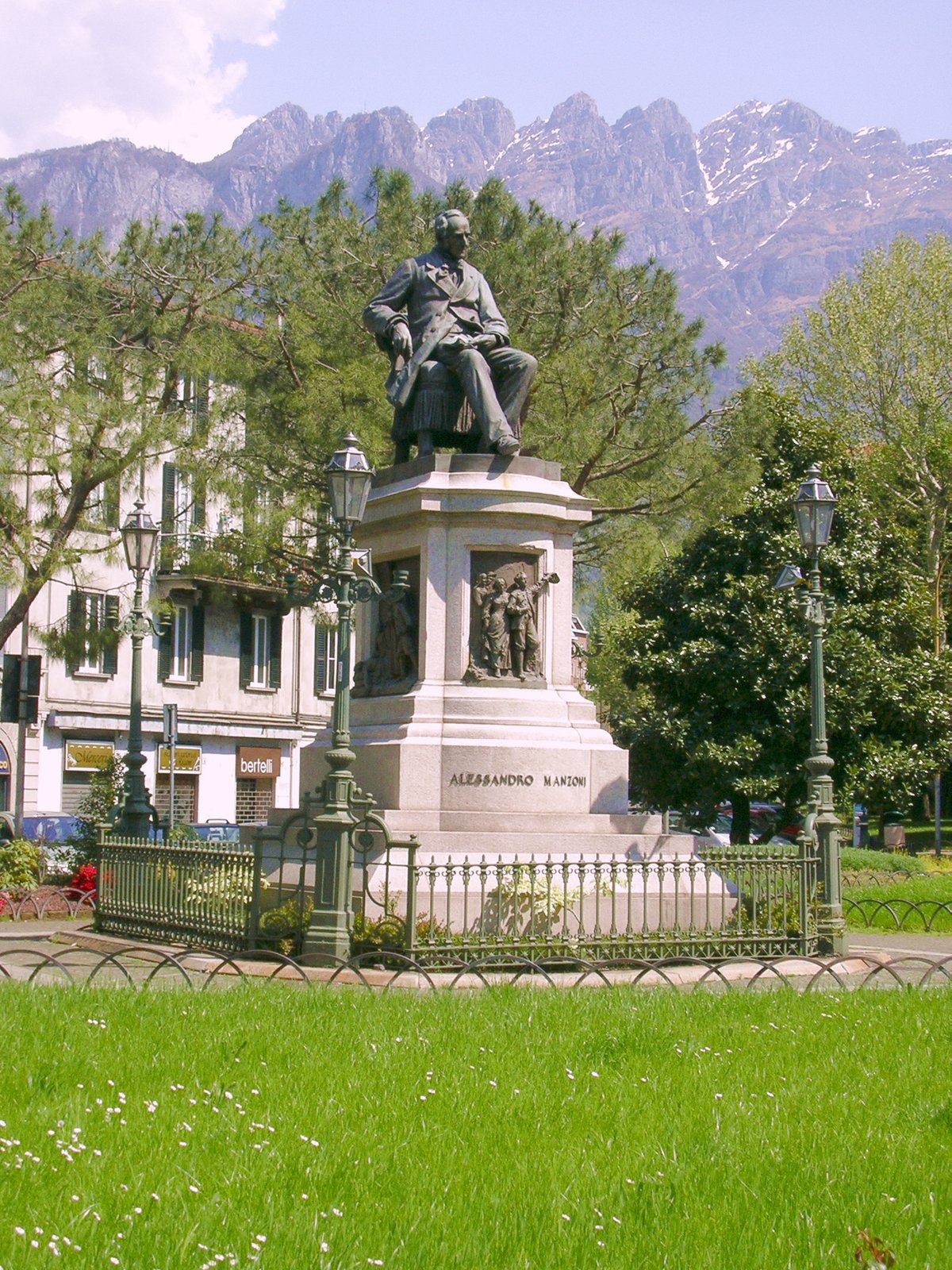 If you're strolling along the Lecco lakefront, you can't miss him: Alessandro Manzoni, seated in bronze, lost in thought, his gaze fixed on the lake. It's the Monument to Alessandro Manzoni, unveiled in 1891 to celebrate the centenary of the writer's birth. It was created by Francesco Confalonieri, a sculptor from Brianza, and I must say the effect is striking: Manzoni is captured in a moment of meditation, the manuscript of The Betrothed resting on his knees. The statue is nearly 3 meters tall, weighs 18 quintals (about 1.8 tons), and rests on a pink granite base with three high reliefs depicting key scenes from the novel: the abduction of Lucia, the death of Don Rodrigo at the lazzaretto, and the wedding. A small detail I noticed: the plaques are in the Scapigliatura style, a bit more "dynamic" compared to the statue. The monument was restored in 2016 – before it was a bit neglected, now it shines. The square is open, without barriers, and there is a paid parking nearby. If you want to learn more, Villa Manzoni, where the writer spent his childhood, is just a stone's throw away. The best part? From here you can see the Resegone mountain behind, just like in the illustrations of the time. A quick stop, but well worth the trip.
Sanctuary of Santa Maria Gloriosa: A Balcony Overlooking Lecco
- Via Antonio Bonaiti, Lecco (LC)
- Open in Google Maps
- View on Google Images
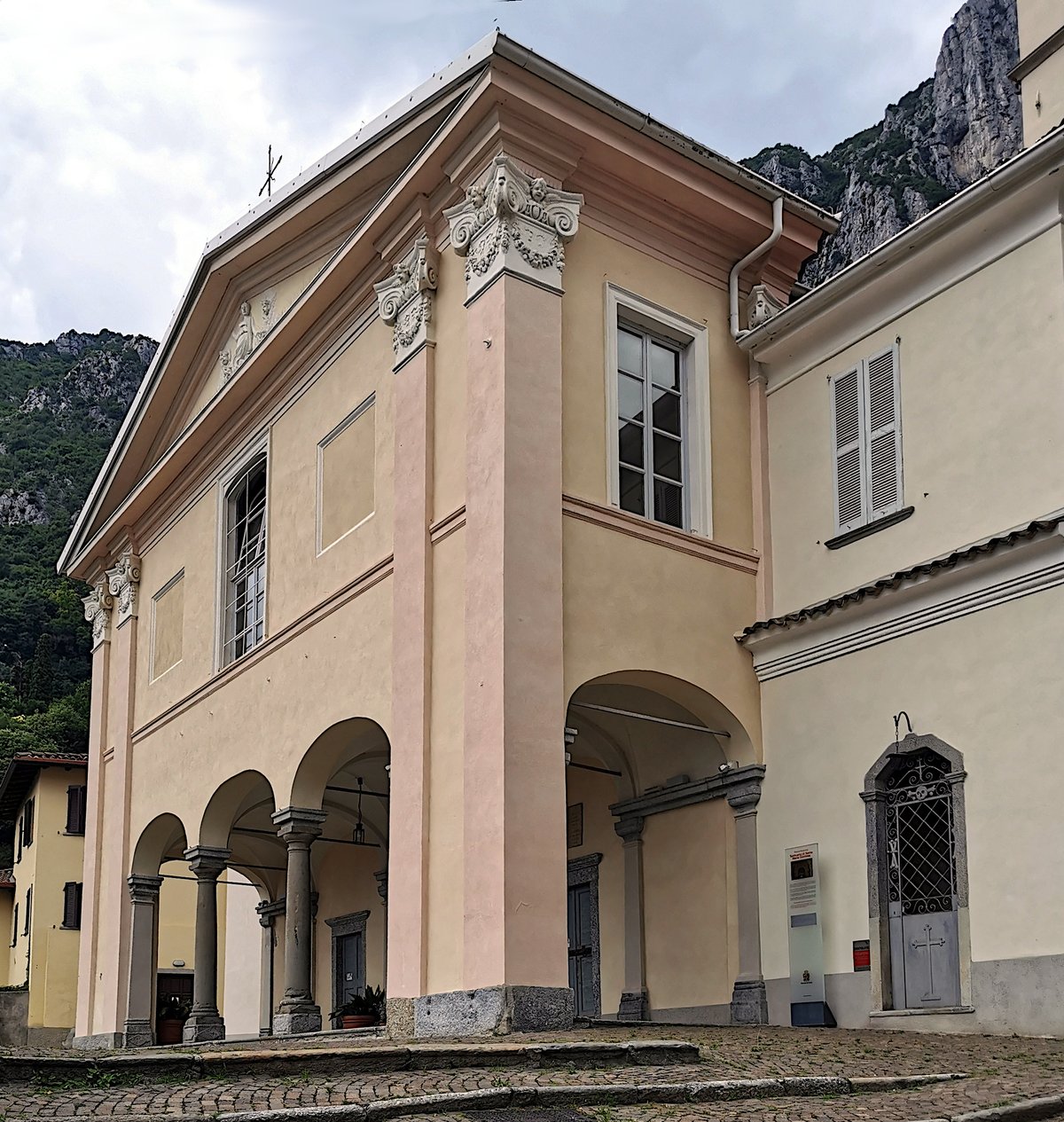 If there's one place in Lecco that combines history and scenery, it's the Sanctuary of Santa Maria Gloriosa. Perched in the Rancio district, it can be reached by climbing a wide staircase that already promises something special. Once on the churchyard, the view is breathtaking: the entire city, the lake, and the mountains open up before you. A sight worth the climb. The church has ancient origins, first documented in 1455 but likely older. In 1640 it became a parish church, and its current appearance is the result of 17th-century renovations. Inside, four side chapels with barrel vaults and stone balustrades. Not to be missed: the late Baroque statue of the Madonna and Child in carved, painted, and gilded wood, and a 16th-century crucifix. There is also an icon of the Madonna Odigitria on a gold background, possibly 15th-century, of mysterious origin. In 1828 architect Giuseppe Bovara designed the main altar in Neoclassical style, with a small temple and adoring angels. In the 20th century, mural paintings were added to the vault. The sanctuary was restored and inaugurated in 2012, an intervention that recovered its ancient splendor. Practical info: Via Bonaiti 1, Sunday mass at 8:30 AM. Parking a minute away on foot. It's a perfect stop for those who want a quiet moment with a view. I recommend going up around sunset, when the light colors the lake orange.
Church of San Francesco: Modernity and Spirituality in Lecco
- Via per Erna, Lecco (LC)
- Open in Google Maps
- View on Google Images
 The Church of San Francesco d'Assisi is a modern surprise in the heart of Lecco. Built between 1949 and 1951 to a design by architect Mino Fiocchi, it stands in the Santo Stefano district at Piazzale dei Cappuccini 6. Its octagonal floor plan with a segmented dome and lantern is an example of an essential reinterpretation of Palladian and neoclassical language. Inside, the spacious nave is lit by stained-glass windows depicting scenes from the lives of Saint Francis and Saint Clare. The walls are painted, with solid wood confessionals and a floor of Red Verona marble. Flanking the presbytery are spaces with colored stained-glass windows. The ancient 18th-century wooden altar comes from Sant'Angelo Lodigiano, but the presbytery was renovated in a contemporary style in the 1980s. The church is entrusted to the Capuchin Friars and became a parish in 1962. In addition to religious services, it houses a parish theater and an oratory, the heart of a lively community. Its location at the northern end of the urban axis creates a visual dialogue with the Santuario della Vittoria to the south. Mass times vary: weekdays 8:00, 9:00, 18:30; Saturday 18:30; Sunday 8:00, 10:00, 11:30, 18:30, 21:00. Confessions: Mon, Wed-Sun 8:30-12:00 and 15:00-18:30. Info: tel. 0341/365401, email leccosanfrancesco@chiesadimilano.it.
Church of the Immaculate Conception: A Hidden Gem in the Heart of Town
- Via Lucia, Lecco (LC)
- Open in Google Maps
- View on Google Images
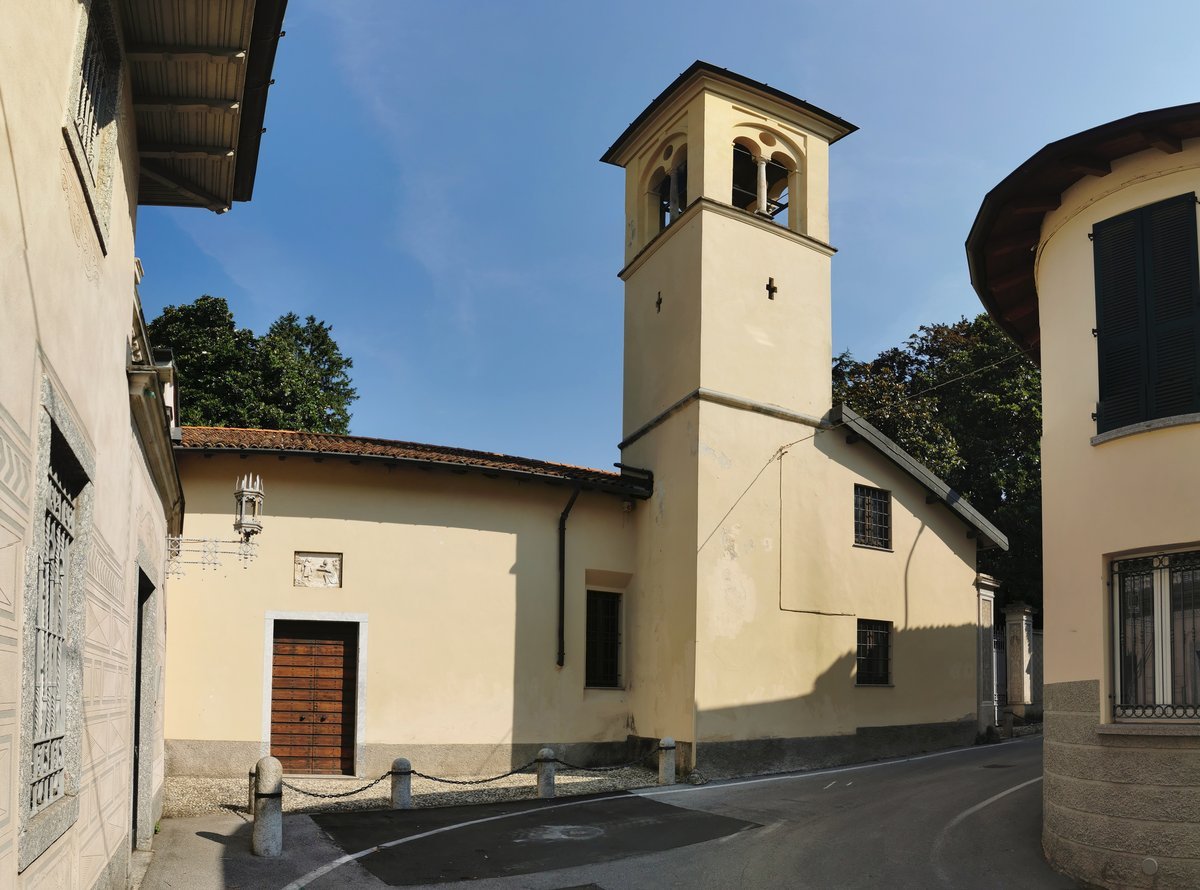 Wandering along Via Parini, a stone's throw from the station, you almost stumble upon the Church of the Immaculate Conception. It seems hidden, absorbed by the surrounding buildings: the main facade is partially concealed by a side structure. Climbing five stone steps, then three more, you enter a quiet, intimate space. The exterior surfaces are coated in rough lime plaster, unpainted; in places the missing plaster reveals rough-hewn mixed stone masonry. On the south side, four very tall single-lancet windows, protected by iron grilles and with decorated stained glass, filter the light. The story of this oratory begins in 1907, when the provost Monsignor Luigi Vismara highlighted the need to rebuild it. The original design by engineer Chiappetta was revised by engineer Giulio Amigoni to cut costs. The altar decoration was completed first thanks to a donation from the Delù family. In 1914, starry celestial arches and gilded column capitals appeared. A year later, painter Giovanni Battista Jemoli decorated the nave walls with six panels depicting scenes from the life of St. Louis, still well preserved today. Between 1940 and 1947, the new tabernacle was made, and later a crown for the Blessed Virgin in embossed silver and gold, with amethysts and topazes, the work of the Beato Angelico School in Milan, donated by the children of the oratory. Today, the church is a peaceful corner in the center of Lecco, with weekday and Sunday Masses (times vary, best to check on the day itself). In short, a place worth a stop, perhaps combined with a visit to the nearby lakeside promenade.