
Castel Presule (Schloss Prösels) is a Renaissance fortress set in the Sciliar-Catinaccio Natural Park, a stone’s throw from Fiè allo Sciliar. Built in the 13th century and expanded in 1517 by Leonhard von Völs, it is today only accessible by guided tour, revealing frescoed halls, a collection of weapons, and the evocative Powder Tower.
- Guided tours from May to October (closed on Saturdays) with hourly departures
- Weapon collection and armor in the Pillar Hall, featuring unique pieces
- Renaissance frescoes in the loggia courtyard and St. Anne’s Chapel
- Summer events: concerts, exhibitions, and the Oswald von Wolkenstein Cavalcade
Events nearby

08/04/2026 - 23/09/2026
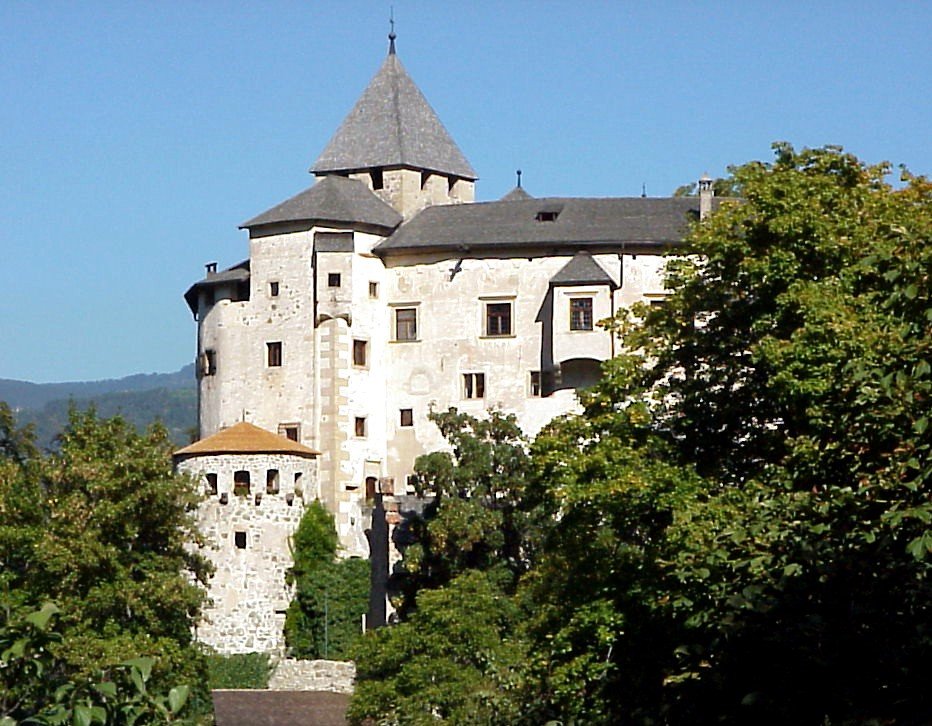
In Fiè allo Sciliar, the Renaissance castle of Leonhard von Völs reveals frescoed halls, a weapon collection, and a chapel. Guided tours from May to October, events, and witch legends.
- https://schloss-proesels.seiseralm.it/
- Prösler Straße – Via Presule, Bolzano (BZ)
- +39 0471 601 062
- Open in Google Maps
- View on Google Images Schloss Prösels – Castello Presule a Bolzano
Good to know
Evocative Introduction
Perched on a rocky spur with the Dolomites as a backdrop, Castel Presule is a Renaissance gem that surprises you at every turn. This is not your typical medieval castle: here, the elegance of the 16th century dominates, with frescoed loggias, decorated halls, and light filtering through the mountains. Entering means stepping back in time, but with a comfort you wouldn’t expect. The view of the Sciliar leaves you breathless, and the scent of history mingles with that of green meadows. A place worth the detour, if only to soak in the atmosphere.
Historical Background
The earliest traces of the castle date back to 1279, when it was a fortress of the Lords of Fiè, ministerials of the bishops of Bressanone. The turning point came in 1517, when Leonhard von Völs, captain of Tyrol, transformed it into a Renaissance residence. After his death (1530), a slow decline began: the castle changed owners 14 times. In 1978, the Kuratorium cooperative purchased it and, after restoration, opened it to the public in 1982. A curiosity: witch trials were held here between 1506 and 1510, as recalled by a stele at the entrance.
Rooms and Collections: A Journey into the Renaissance
The guided tour starts from the inner courtyard, with its three-story frescoed loggia and a monumental cistern. Among the rooms, the octagonal Hall of Pillars houses a collection of weapons ranging from medieval armor to a samurai armor, and even relics from the battles of Solferino and Custoza. The Hall of Knights is the heart of the castle, with a coffered ceiling and frescoes, now used for weddings. Don’t miss the Chapel of St. Anne with its altarpiece and original side panels. There is also a small archaeological museum with objects found during renovations.
Legends and Mysteries: The Witches of Castel Presule
Between 1506 and 1510, under the rule of Leonhard, the castle was the scene of a brutal witch hunt. Ten women were tried and burned at the stake. Today, a commemorative stele at the entrance remembers those victims. Local legends say their spirits still wander within the walls, but I didn’t hear anything strange… or maybe it was just the wind among the spires of the Sciliar. A dive into the dark side of the Renaissance, adding allure to this already history-rich place.
Why Visit
1. One of a kind: It is one of the rare Renaissance castles in the Dolomites, far from medieval stereotypes. 2. Extraordinary collections: from samurai weapons to frescoes, there’s always something surprising. 3. Exclusive events: in summer it hosts concerts, exhibitions, and the knightly tournament of Oswald von Wolkenstein, a historical reenactment not to be missed. In short, it’s not just a museum: it’s a living place you can experience.
When to Go
The castle is open from May to October (closed on Saturdays). The best time? September: the days are still long, autumn colors begin to tinge the woods, and the summer crowds have disappeared. If you love soft light, choose the 3:30 PM visit in July and August: the sun illuminates the orange facades and the meadows turn golden. In May and June, on the other hand, nature is in bloom and the air is fresh. Avoid Saturdays (closed) and check the hours on the official website, as they vary from month to month.
In the Surroundings
After your visit, take a stroll through the Sciliar-Catinaccio Nature Park. The Aica di Fiè Farm Trail starts right from the castle and offers breathtaking views of the plateau. If you have time, hike up to the Fiè Lakes: two crystal-clear pools nestled in the woods, perfect for a picnic. Alternatively, explore the village of Fiè allo Sciliar, with its stone houses and traditional farmsteads. For the more adventurous, the Alpe di Siusi is just a stone’s throw away: endless meadows and mountain huts where you can enjoy dumplings and strudel.
Itineraries nearby

💡 Did You Know…?
During the restorations of the 1980s, a stone slab engraved with a cross was discovered beneath the chapel floor: it is said to mark the grave of one of the ten women accused of witchcraft in 1506. To this day, a stele at the castle entrance commemorates those pyres. Locals say that on full moon nights, whispers can be heard coming from the Powder Tower… but perhaps it’s just the wind from the Sciliar.