If you think Trento is just a stop on the way to the mountains, think again. This city holds a treasure of often-overlooked towers and historic palaces, perfect for a one-day walking itinerary. Through medieval alleys and Renaissance vistas, you’ll discover 10 buildings that tell centuries of power and beauty. From Torre Mozza with its truncated shape to the elegant Palazzo Thun, each stop reveals architectural details and local anecdotes. A route that blends history and authenticity, away from the crowds, ideal for those who love to walk with eyes fixed on the sky. Prepare for a journey through time, step by step, in the heart of Trento.
🗺️ Your trip at a glance
A compact yet surprising itinerary, perfect for a day of discovery. Medieval towers and stately palaces alternate along a 3 km route, all in the city center.
- Ideal for architecture enthusiasts and urban walkers.
- Highlights: 10 selected stops, hidden details, and local stories.
- For those seeking an authentic experience off the tourist trail.
Itinerary stops
Stop no. 1
Palazzo Pretorio: The Residence of the Prince-Bishops
 Start your exploration of Trento right here, in Piazza Duomo. Palazzo Pretorio, with its crenellated façade and elegant mullioned and triple windows, welcomes you like an open history book. It served as the residence of the prince-bishops from the 9th to the 13th centuries, later becoming the seat of the court – hence the name “Pretorio.” Today it houses the Museo Diocesano Tridentino, a true treasure chest containing Flemish tapestries from the Council of Trent, Gothic wooden sculptures, and a collection of goldsmith work. Don’t miss the Torre Civica next door, standing 43 meters tall, built on the remains of the Roman Porta Veronensis; if you climb the 156 steps, the view of the square will repay your effort. The palace underwent extensive restoration, but the medieval appearance you see today was restored in the 1950s. A tip: take time to observe the architectural details, such as the coat of arms of Bishop Thun on the façade. It is the perfect starting point to immerse yourself in the city’s history.
- Piazza del Duomo 18, Trento (TN)
- http://museodiocesanotridentino.it
- Open in Google Maps
- View on Google Images

You should go if…
Stop no. 2
Palazzo Balduini and Its Medieval Frescoes
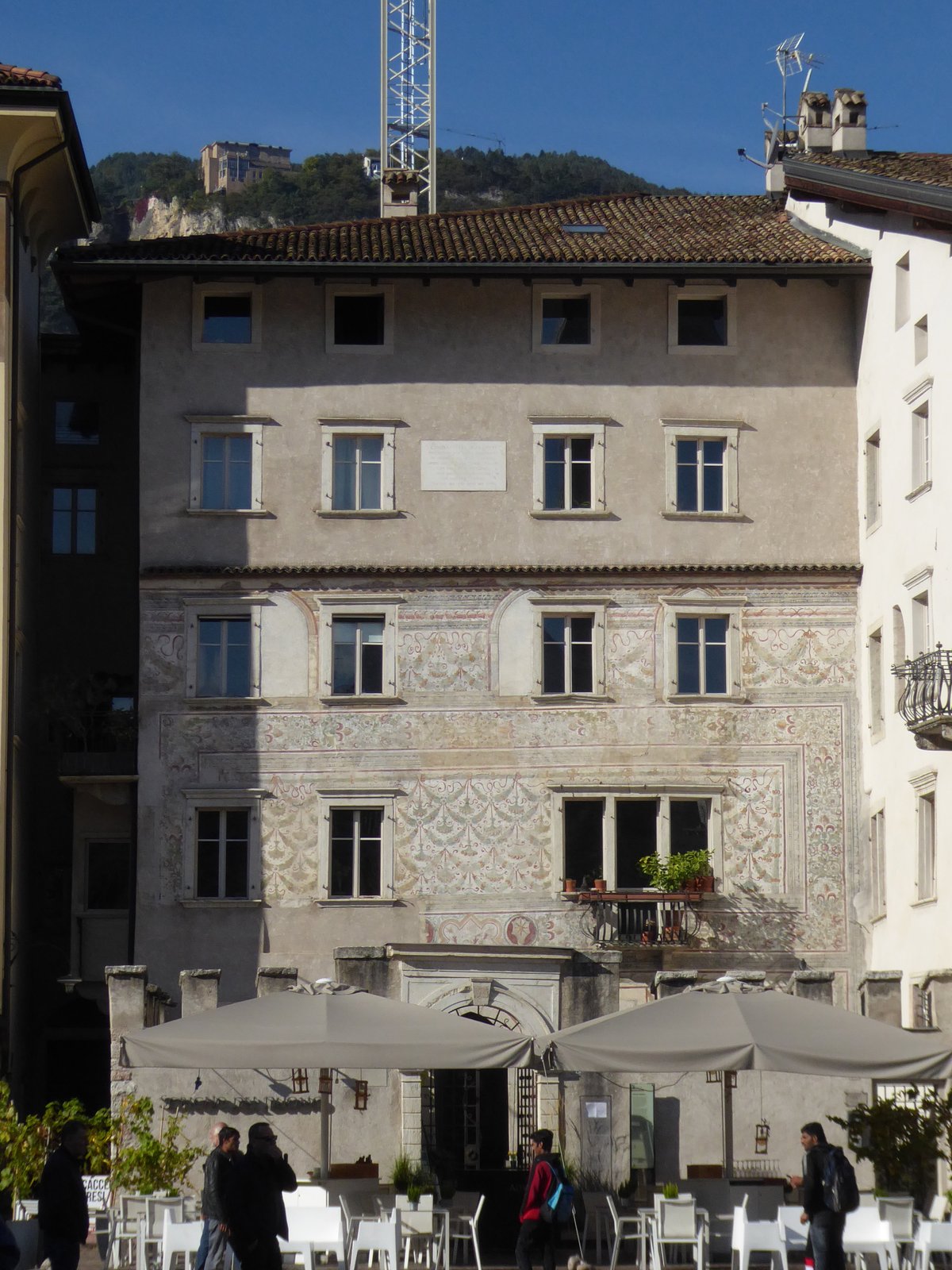 Leaving the slender silhouette of Torre Mozza, you immediately find yourself in front of Palazzo Balduini, one of the oldest buildings in Piazza Duomo. What catches the eye is the painted facade: garlands of leaves and fruits tied with red ribbons on a white background. It is the oldest external decoration in the city, dating from 1470-1475, commissioned by Arcangelo Balduini, physician to the prince-bishop and to Emperor Frederick III. The artist? It is thought to be Bartolomeo Sacchetto from Verona. Under the entrance portico, note the Balduini coat of arms: a dragon and a goat, now faded. Today the palace houses a Trentino-style osteria – ideal for a break – but the real gem is that on the ground floor you will find Farmacia Dall’Armi, one of the oldest pharmacies in Italy, still operating since the 1400s. A dive into history and local flavors.
- Piazza del Duomo, Trento (TN)
- Open in Google Maps
- View on Google Images
You should go if…
Stop no. 3
Torre Mozza: The Truncated Tower That Tells Stories
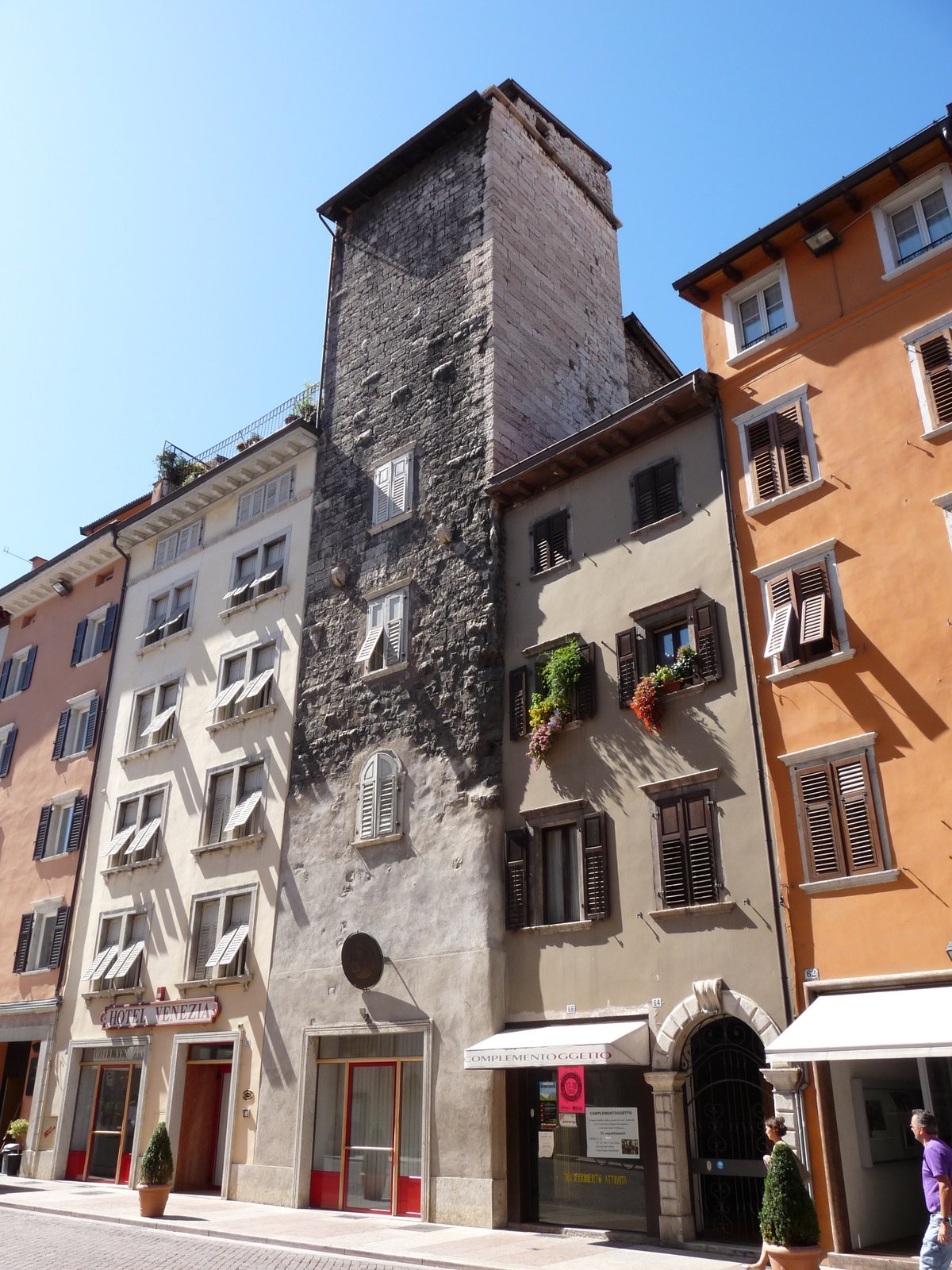 Continuing along Via Belenzani, you stop in front of another medieval tower: the Torre Mozza. Exactly 23 meters tall, it has a square base and was built in the 13th century with limestone ashlars. The name? It comes from the fact that the original crenellated crown was demolished who knows when, replaced by a sloping roof of tiles. On the east facade, windows from different eras stand out: a Renaissance arched window and two later architraved ones. Once it belonged to the Gentilotti family, then to the Girardi, and since the mid-20th century it has been owned by the Menestrina family. Today it is part of the Hotel Venezia: the first two floors are hotel rooms! From here, if you look up, you can admire the 16th-century frescoes of Casa Rella and the Civic Tower. A corner of history that seems to have stepped out of another century.
- Via Rodolfo Belenzani, Trento (TN)
- Open in Google Maps
- View on Google Images
You should go if…
Stop no. 4
Palazzo Thun: History and Power in the Heart of Trento
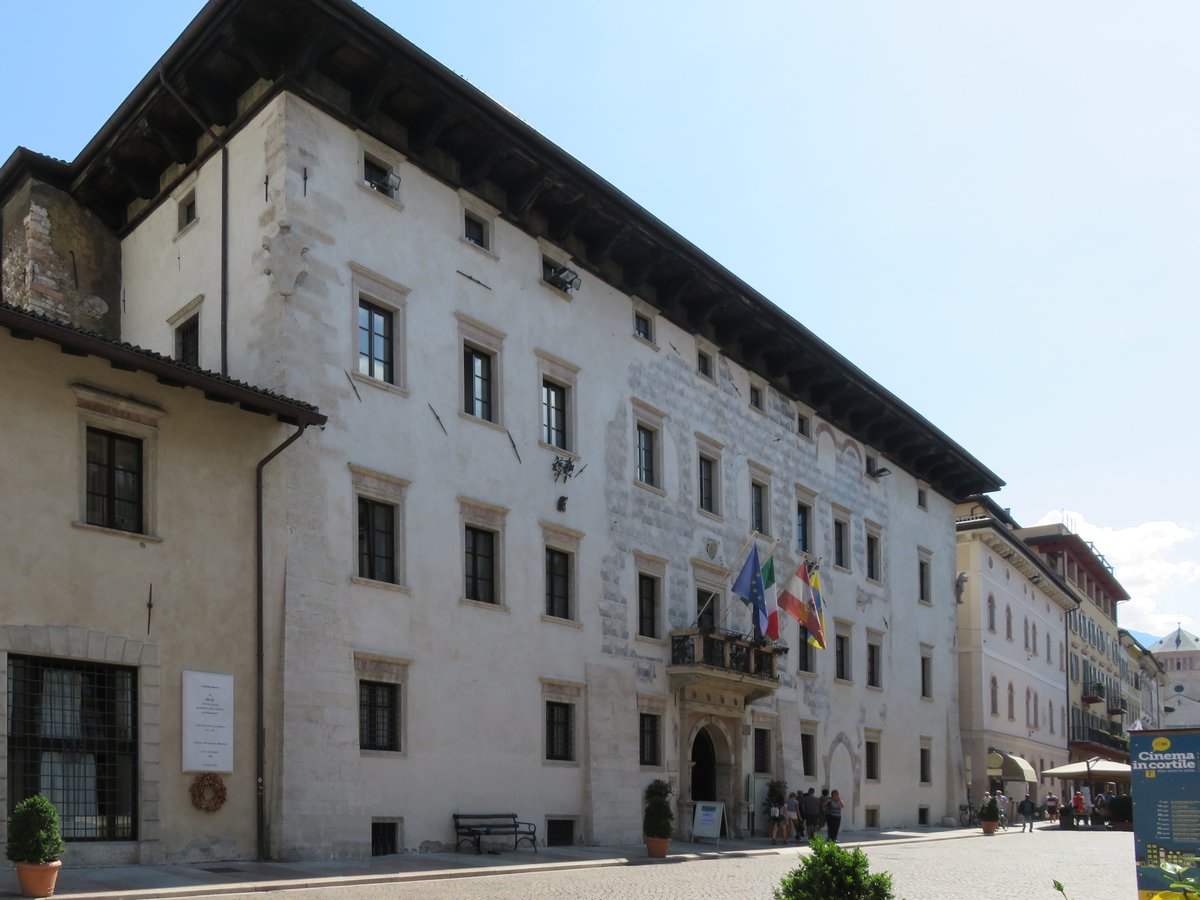 The itinerary now brings you to Palazzo Thun, an elegant residence that from 1454 was for four centuries the city dwelling of the powerful Thun family, originally from the Val di Non. Today it houses the Town Hall, but just step into the inner courtyard to breathe the noble past. The palace, resulting from the merger of medieval buildings, was renovated in the 16th century and then restored in neoclassical style by architect Rodolfo Vantini in 1831. The facade shows the Thun coat of arms on the corners and on the portal. Inside, hidden from most eyes, the grand staircase preserves the detached frescoes by Domenico Brusasorci (1551), depicting mythological and historical scenes. The stone statue of Neptune, by Stefano Salterio (1768), was originally on the fountain of Piazza del Duomo. The council hall was decorated in 1938 by Pino Casarini. Curious fact: during the Council of Trent it hosted cardinal legates like Ercole Gonzaga and Giovanni Morone, and the nearby palaces were connected by a wooden bridge. The courtyard is the only area freely visitable; the Vantini Chapel and Torre Mirana open only for events.
- Via delle Orne, Trento (TN)
- Open in Google Maps
- View on Google Images
You should go if…
Stop no. 5
Palazzo Roccabruna, the historic wine bar
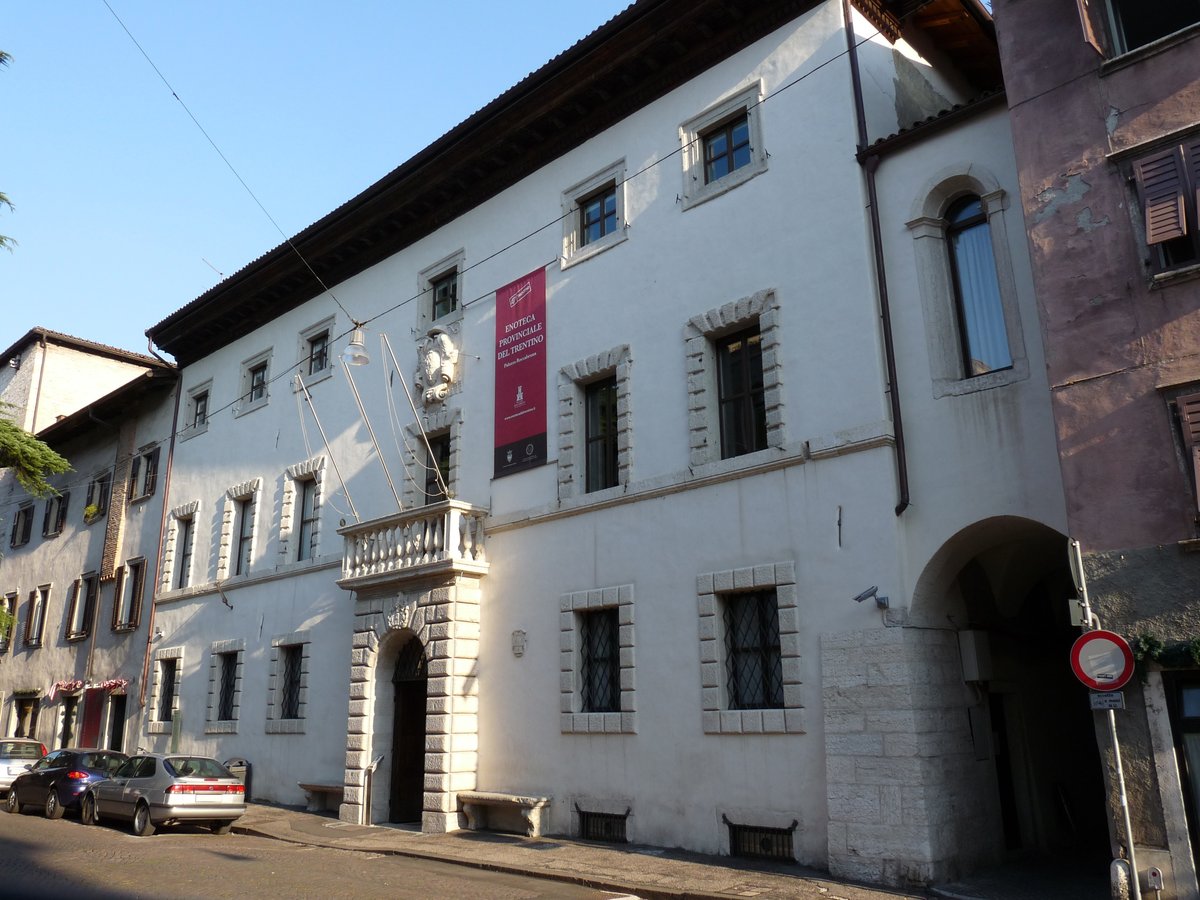 From Palazzo Thun, slip into Via Santissima Trinità and you’ll reach Palazzo Roccabruna, a 16th-century residence that today houses the Provincial Enoteca of Trentino. Built between 1557 and 1562 for the canon Girolamo Roccabruna, during the Council of Trent it was home to the Spanish ambassador, the Count of Luna, who lived and died here. The facade features a rusticated portal with the coats of arms of the Roccabruna family and Prince-Bishop Madruzzo; inside, the atrium is adorned with busts of Roman emperors. The piano nobile preserves the Hall of the Count of Luna with its wooden coffered ceiling and frescoes depicting suns and moons, and the Chapel of St. Jerome with scenes from his life. Today, the palace is a hub for wine lovers: weekly guided tastings showcase over a hundred local labels, including Trentodoc, Nosiola, and Teroldego, paired with platters of Trentino cured meats and cheeses. A historic collection of over 600 bottles completes the experience. Open Wednesday to Saturday from 6:00 PM to 10:00 PM, it’s the perfect spot for a toast where art meets tradition.
- Via Santissima Trinitá, Trento (TN)
- Open in Google Maps
- View on Google Images
You should go if…
Stop no. 6
Palazzo Trentini: A Baroque Gem Housing the Provincial Council
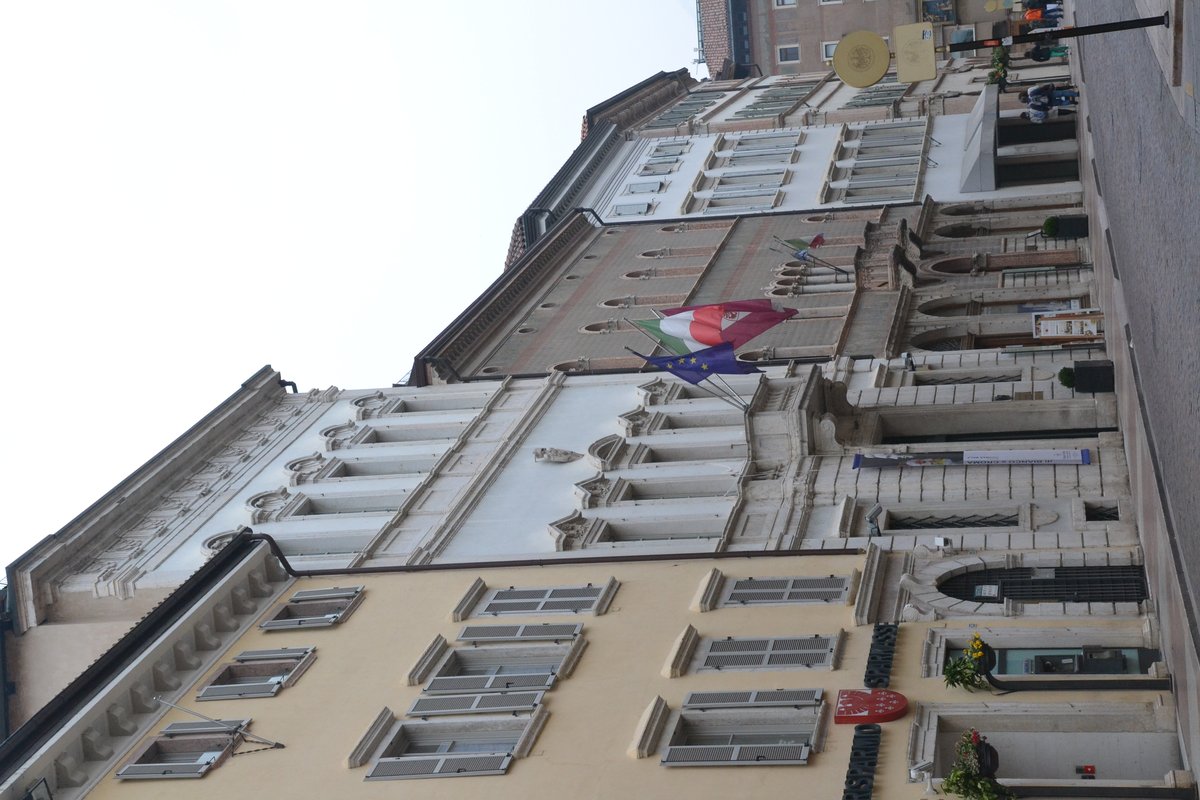 Continuing along Via Manci, you’ll come across one of the most elegant 18th-century facades in Trentino: Palazzo Trentini. Built around 1740 for the baronial Trentini family, it merges two pre-existing Gothic buildings. Today it houses the Provincial Council of Trento. Step inside and be amazed by the Salone dell’Aurora, dominated by the fresco Trionfo dell’Aurora (1750), an allegory of the family’s rise. The rooms are decorated by Carlo Henrici, Giorgio Anselmi, and Pietro Antonio Bianchi, with an allegorical program drawn from Cesare Ripa’s Iconologia. Don’t miss the rococo maiolica stoves and the inlaid wooden floors. The palace is free to visit by reservation (Tuesday-Thursday, 2-4 PM) and hosts temporary contemporary art exhibitions.
- Via Giannantonio Manci 27, Trento (TN)
- Open in Google Maps
- View on Google Images
You should go if…
Stop no. 7
Palazzo Trautmannsdorf: Stone Masks and Wines
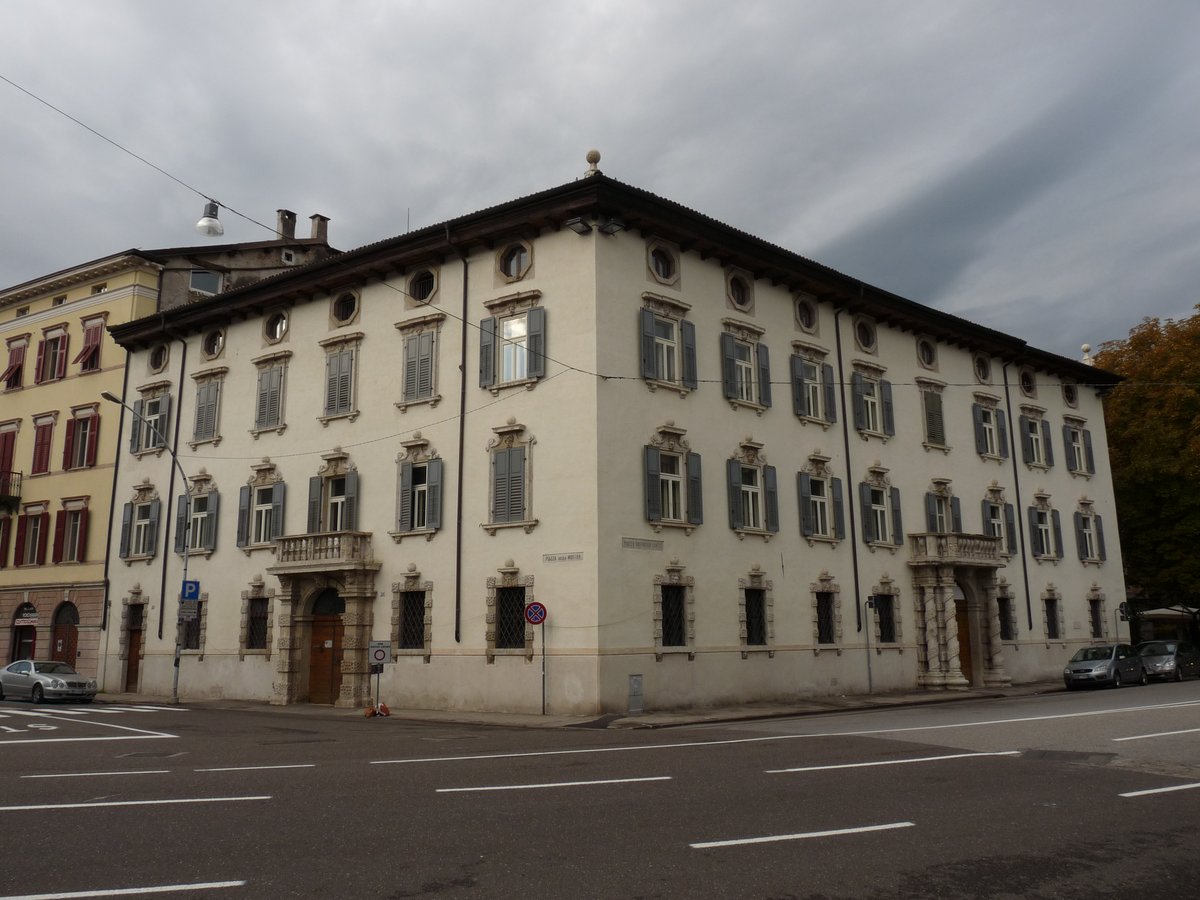 The scene changes, but not the atmosphere: here you are in front of Palazzo Trautmannsdorf, a building that seems to want to amaze with every detail. Overlooking three squares, it has a trapezoidal shape and a facade rich in grotesque stone masks – one for each window – acting as silent guardians. During the first phase of the Council of Trent, the Spanish cardinal Pedro Pacheco stayed here. The palace is a labyrinth of eras: after a long restoration (2019-2022), stucco ceilings with the coats of arms of the Counts Saracini and a blue room with 18th-century decorations were uncovered. Today, however, the focus has shifted: inside are now located the Consorzio Vini del Trentino, the Istituto Tutela Grappa, and Trentodoc, a food and wine hub that from 2025 will also host the Strada del Vino e dei Sapori. It’s a shame it’s mostly visible from the outside (it’s a private residence), but it’s worth stopping to observe the masks and the balconies with twisted columns. If you like, pop over to nearby Piazza della Mostra for a complete view.
- Via del Suffragio, Trento (TN)
- Open in Google Maps
- View on Google Images
You should go if…
Stop no. 8
Augustus Tower: The Castle’s Secret Keep
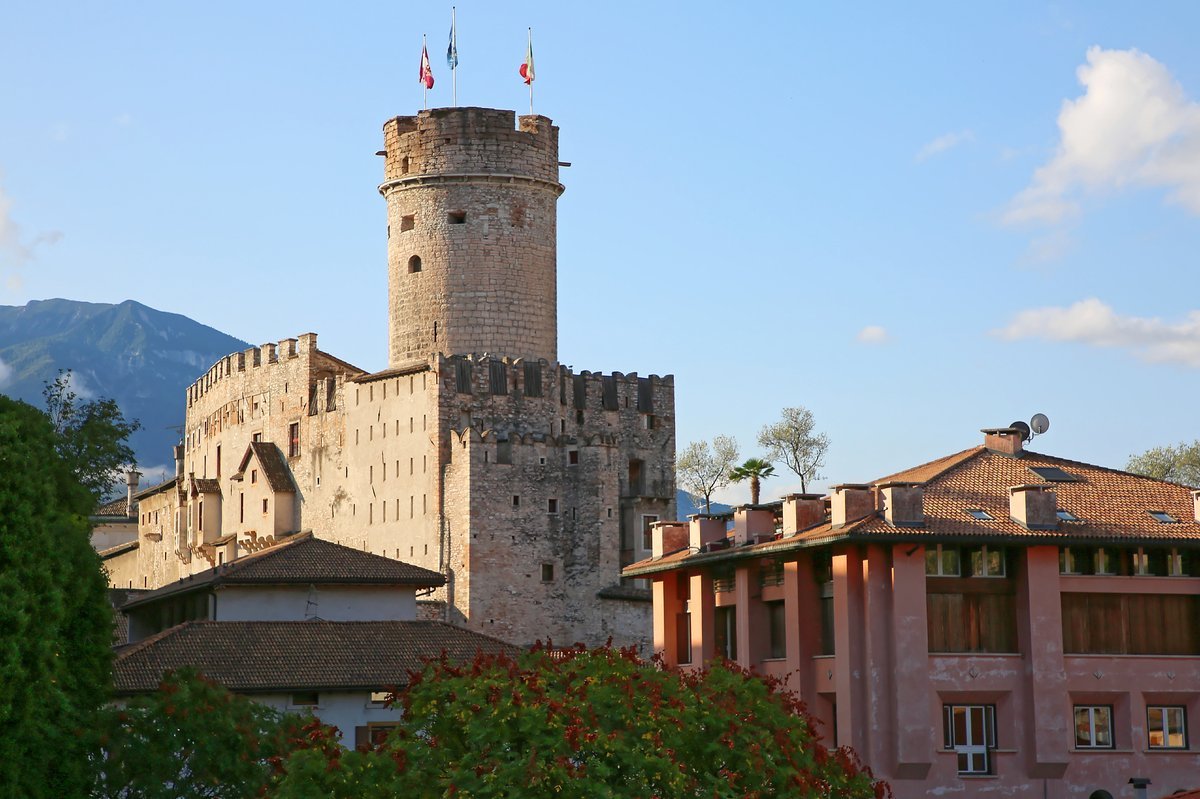 Leave behind the Trautmannsdorf masks and get ready to look up: here is the Torre d’Augusto, the cylindrical keep of Buonconsiglio Castle that soars over 40 meters. You can’t enter – it’s closed to the public for safety – but it’s worth observing from the outside, perhaps from the castle courtyard. Built in 1237 by Sodegerio di Tito, it was the domus imperatori, the last defensive bastion. The entrances were elevated, reachable only by removable wooden stairs. Legends? There are: they say witches and brigands frequented it, so much so that the castle was called Malconsiglio. Inside, a wooden spiral staircase leads to a 19th-century platform commissioned by the Austrians, from which the view spans all of Trento. Today it is narrated by the #buonconsiglioadomicilio format.
- Via Torre D’Augusto, Trento (TN)
- Open in Google Maps
- View on Google Images
You should go if…
Stop no. 9
Palazzo Tabarelli: The Diamond Palace
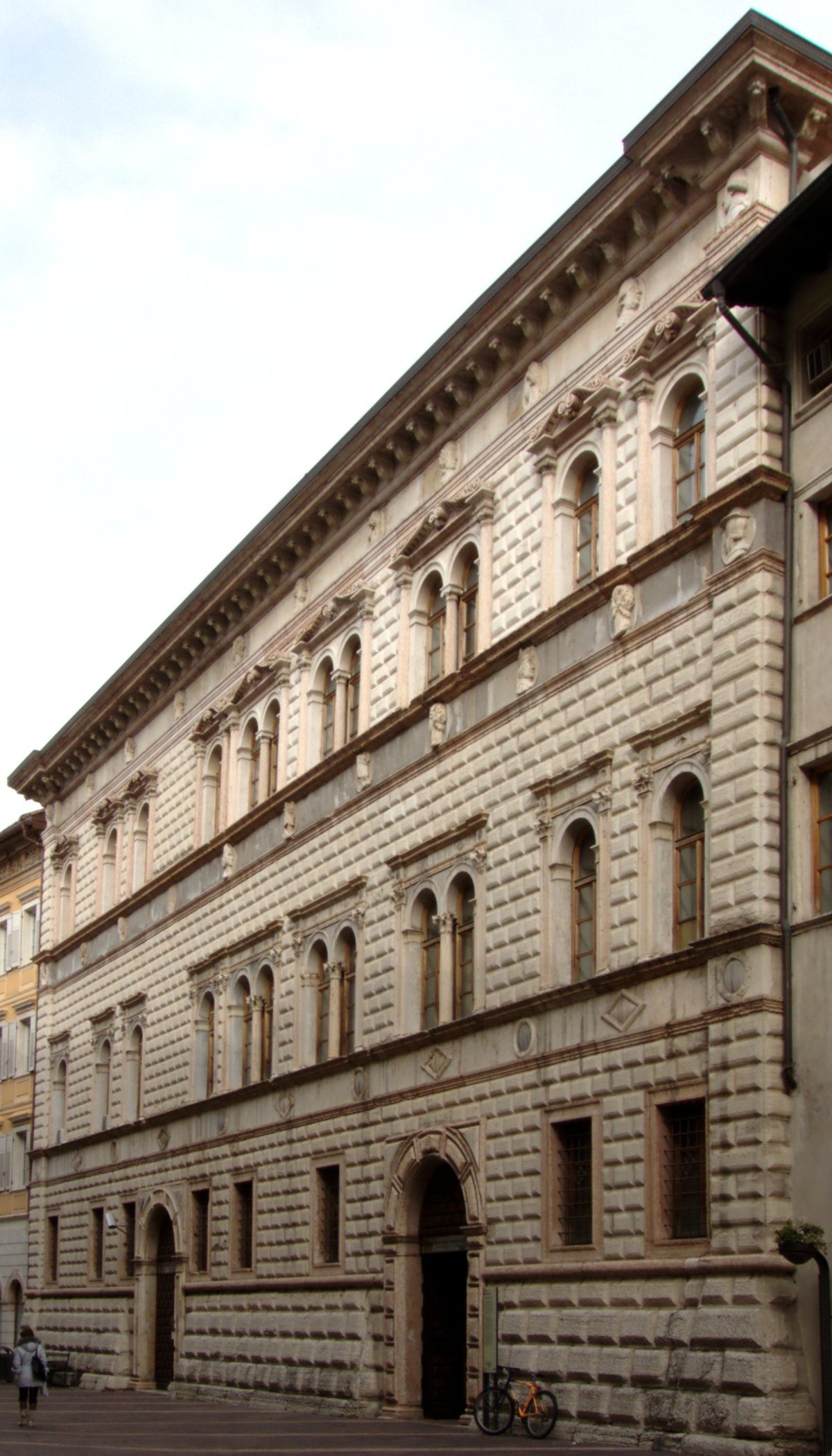 From Torre d’Augusto, heading south, you come across a true gem: Palazzo Tabarelli, also known as the ‘Diamond Palace’ for the sparkles its façade emits. It’s a unique case in the city: the rusticated cladding in white and pink stone is an exception in Trentino Renaissance. Built between 1512 and 1527 for the Tabarelli de Fatis family, the design is by Alessio Longhi, the same architect of the Buonconsiglio loggia. On the façade, 22 stone medallions depict figures like Bernardo Cles, Maximilian I, and Charles V – six added in the 18th century when the upper part was completed. But the real treasure lies beneath: during restorations in the 1970s-80s, layers of a Roman domus and Lombard traces emerged, now visitable during events like Trento Underground. The interior, unfortunately, has undergone alterations over the centuries, but the courtyard with its Renaissance loggia is worth a look. A palace that tells centuries of history, from Roman Tridentum to Trentino nobility.
- Passaggio San Benedetto, Trento (TN)
- Open in Google Maps
- View on Google Images
You should go if…
Stop no. 10
Palazzo Saracini Cresseri
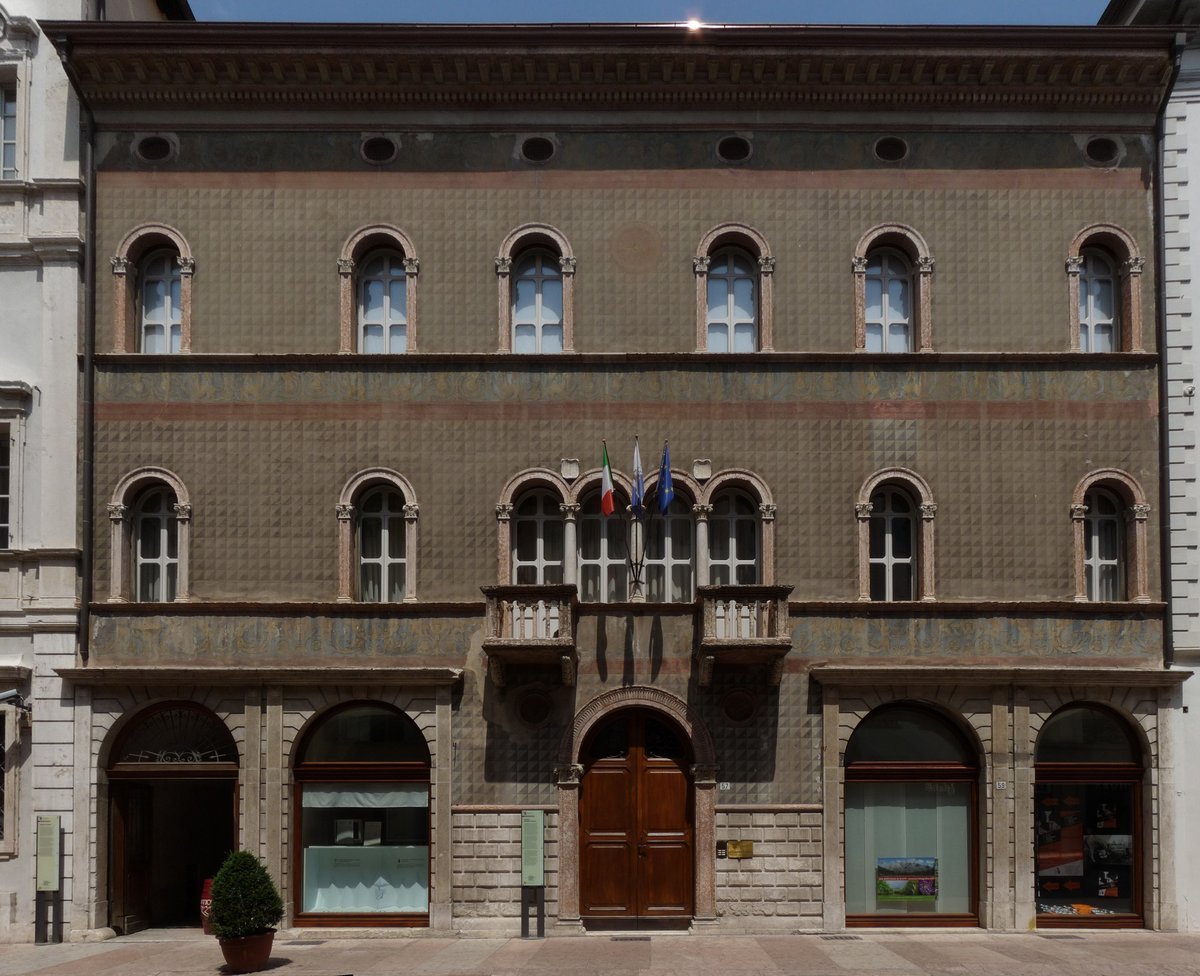 From Palazzo Tabarelli, enter Vicolo della S.A.T. and you’ll find yourself facing another facade worth a stop: Palazzo Saracini Cresseri. It looks like a skyscraper of geometric patterns: thousands of white and black triangles painted by hand, without stencils, simulating a diamond-point ashlar. A 19th-century optical illusion, created with the fragile ‘mezzo fresco’ technique. The building dates back to the 16th century, commissioned by Prince-Bishop Bernardo Clesio for the Council of Trent, but the current decoration is from 1862, when the Pedrotti family (patrons) raised it. Look at the red stone portal and the central four-light window. A plaque inside recalls that in 1777 the Duke of Gloucester, brother of King George III, died there. Since 1954, it has been the headquarters of SAT (Società Alpinisti Tridentini): here you’ll find the Mountain Museum, the library (with 50,000 volumes) and the choir. The 2019 restoration (€154,000) restored the facade to its former glory, triangle by triangle.
- Vicolo della S.A.T., Trento (TN)
- Open in Google Maps
- View on Google Images
You should go if…