Royal Palace of Cagliari: Frescoed Halls and Monumental Staircases in the Heart of Castello

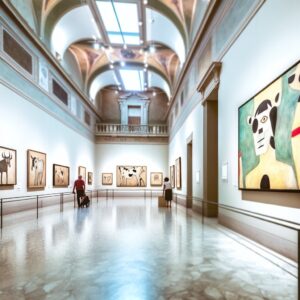
The Royal Palace, now the seat of the Prefecture, served for centuries as the residence of the Spanish and later Savoy viceroys in Cagliari’s Castello district. Its sober facade conceals surprising interiors with frescoed halls and monumental staircases that narrate the power that governed Sardinia.

  • Frescoed halls and monumental staircases from the Spanish and Savoy periods
  • Neoclassical facade with the marble coat of arms of the Kingdom of Sardinia
  • Central location in Piazza Palazzo in the historic Castello district
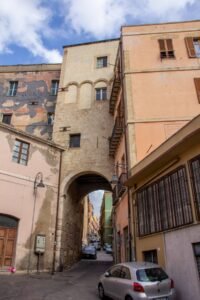
  • Close to the Cathedral of Santa Maria and the Towers of San Pancrazio and the Elephant


Events nearby


Copertina itinerario Royal Palace of Cagliari: Frescoed Halls and Monumental Staircases in the Heart of Castello
Royal Palace – Prefecture of Cagliari: Seat of Spanish and Savoy Viceroys with Period Interiors in Piazza Palazzo. Discover the Neoclassical Facade, the Coat of Arms of the Kingdom of Sardinia, and the Nearby Cathedral of Santa Maria.

Good to know


Introduction

Have you ever walked through a city and felt like a building tells stories without saying a word? The Royal Palace of Cagliari is exactly that. It’s not just a palace; it’s the beating heart of Sardinian power for centuries, now housing the Prefecture. You see it immediately, imposing yet not arrogant, in Piazza Palazzo, with that light stone façade that seems to capture the Sardinian sunlight. It’s not a crowded museum; in fact, people often pass by without noticing it, but if you stop for a moment, you feel the weight of history. It’s a place that speaks of viceroys, parliaments, and decisions that have shaped the island. For me, it’s one of those spots that helps you understand Cagliari beyond the beaches: a layered city with an ancient, proud soul.

Historical Overview

Its history is a tapestry of governance. It was built in the 14th century as the seat of the Aragonese Viceroy, when Sardinia was under the control of the Crown of Aragon. It wasn’t just a house for the governor, but a symbol of royal power on the island. Then, under the Savoy dynasty, it became the King’s residence during his stays in Cagliari. Imagine: decisions affecting all of Sardinia were made here. The current façade, more sober and neoclassical, dates mainly from the 19th-century renovations. Today, of course, it houses the Prefecture, but that air of quiet authority hasn’t faded. I like to picture the processions, the carriages, the speeches in the square.

  • 14th century: Initial construction as the seat of the Aragonese Viceroy.
  • 18th century: Becomes the residence of the Savoy family during the Kingdom of Sardinia.
  • 19th century: Renovations giving it its current neoclassical appearance.
  • Today: Houses the Prefecture of Cagliari.

The Square as a Stage

Don’t just visit the palace, experience the square. Piazza Palazzo is not merely an open space; it’s the prestigious living room of Cagliari’s power. The Palazzo Regio provides a majestic backdrop, but look around: the Cathedral of Santa Maria is just steps away, almost in dialogue. The feeling is of being in a place where politics and faith have always intersected. In the evening, with the lighting, the atmosphere becomes even more evocative and somewhat mysterious. I passed through on a quiet afternoon and saw only a few passersby and pigeons: an almost unreal silence for a city center. It’s the perfect spot for a break, to sit on a bench and observe life flowing slowly, away from the hustle of the nearby Castello.

A Detail That Speaks

If you look closely at the facade, you’ll notice it’s not perfectly symmetrical. There are windows of slightly different sizes, openings that seem to have been added in later periods. For me, these small ‘imperfections’ are its beauty: they tell of adaptations, changes in function, a long history that hasn’t crystallized into a single design. It’s not a building born all at once, but one that grew with the city. At the corner, look for the marble coat of arms: it’s that of the Kingdom of Sardinia, a tangible reminder of the monarchical past. These are details that a hurried guide might not mention, but they give character to the place. They make you feel like you’re looking at something lived-in, not just preserved.

Why Visit It

First, because it’s living, accessible history. You don’t need to queue or buy a ticket to breathe it in (at least from the outside). Second, for the context: you’re in the heart of the Castello district, Cagliari’s medieval quarter, making it the perfect starting point to explore alleyways, bastions, and other noble palaces. Third, for that unique feeling of being in a place of power that today is also a place for everyone—a piece of the institution that’s part of the everyday urban landscape. It’s a way to tangibly experience Cagliari’s layers, from capital of the viceroyalty to regional capital.

When to Go

I would recommend late afternoon, especially in spring or autumn. The low sun bathes the palace’s pale stone in a warm, golden light that highlights every detail and casts long shadows across the square. In summer, midday hours are too hot and the light is blinding. In winter, however, clear days offer a crisp and solemn atmosphere. Avoid heavy rain days, not for the palace itself, but because the square loses some of its magic. The best feeling? When the square is almost deserted and you can hear only the wind coming from the sea.

In the Surroundings

Leaving Piazza Palazzo, you’re literally just a two-minute walk away from the Cathedral of Santa Maria. Step inside to see the Romanesque pulpits and the crypt: it’s another essential piece of historic Cagliari. Then, if you want to continue on the theme of power and defense, head up towards the Towers of San Pancrazio and the Elephant. They are the sentinels of the Castello district, and from their summits, you have a breathtaking view of the city and the gulf. These two experiences perfectly complement your visit to the Royal Palace: one shows you religious and civil power, the other helps you understand how this power was defended.

Itineraries nearby


💡 Did You Know…?

A little-known, ultra-realistic curiosity: in the Council Hall, the frescoed ceiling hides a unique detail. Among the coats of arms and allegories, there is a small figure of a Moor with a turban that seems to observe the room. According to some local guides, it would be a tribute to the commercial and cultural relations that Sardinia has always had with North Africa, a bond often forgotten but deeply rooted. Furthermore, during the restorations in the 1990s, traces of medieval frescoes predating the current construction emerged under some layers of plaster, testifying to a layered history that continues to surprise.