Fieschi Castle: Medieval Manor with Cylindrical Towers and Views over Val di Vara

Fieschi Castle in Varese Ligure is an authentic example of 13th-century Ligurian fortified architecture, perfectly preserved. Its strategic location offers breathtaking views over Val di Vara, away from the crowds of more popular tourist destinations. The medieval village at its feet, with its characteristic elliptical shape, completes the discovery experience of an intimate and historic Liguria.

  • 13th-century castle with cylindrical towers and well-preserved massive walls
  • 360-degree panorama over Val di Vara and surrounding mountains
  • Medieval village of Varese Ligure with elliptical shape and EMAS environmental certification
  • Authentic defensive architecture with arrow slits, walkways, and corbels
Copertina itinerario Fieschi Castle: Medieval Manor with Cylindrical Towers and Views over Val di Vara
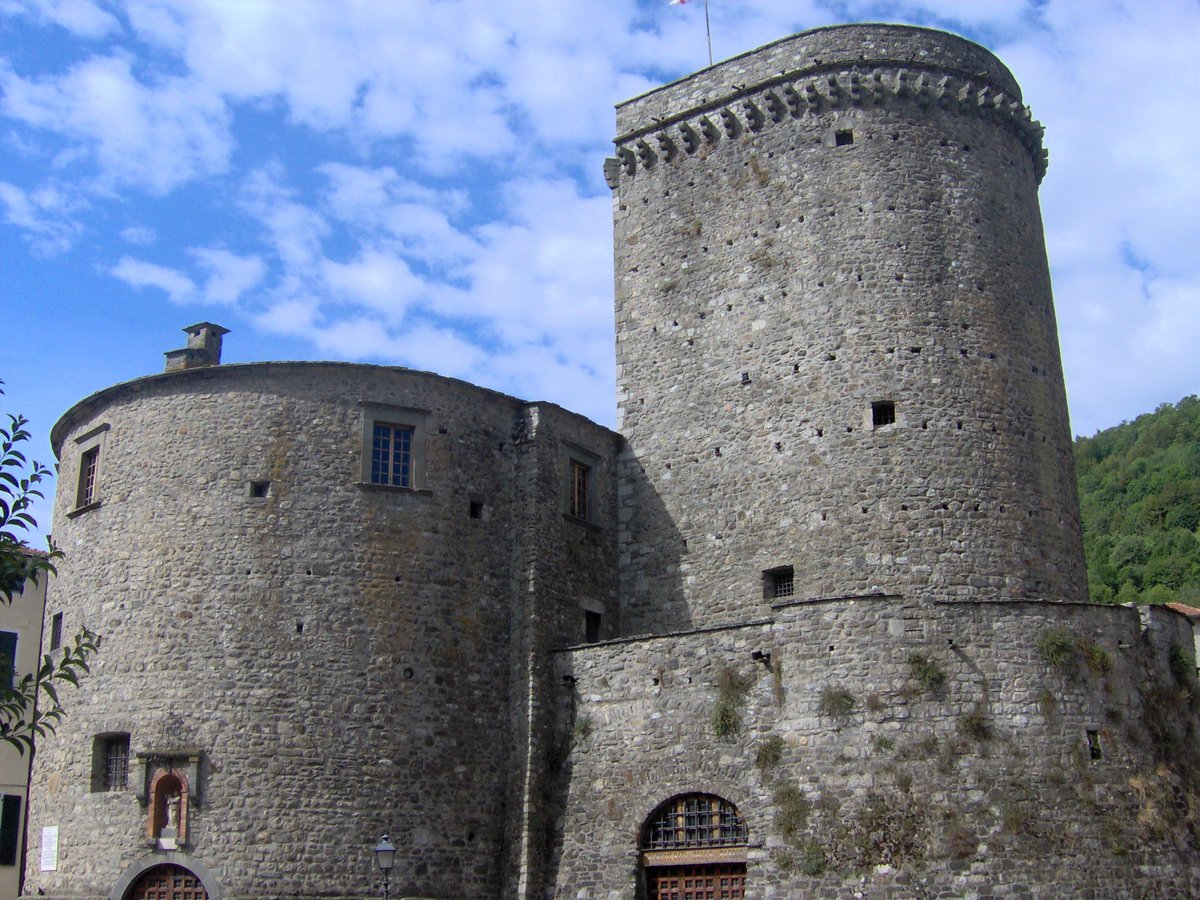
13th-century castle with massive walls, towers, and well-preserved arrow slits. External visit with 360-degree panorama over Val di Vara and the medieval village of Varese Ligure, one of the first EMAS-certified in Europe.

Good to know


A Castle That Surprises You

As you arrive in Varese Ligure, the Castello dei Fieschi appears almost suddenly, like an imposing stone sentinel overlooking the Val di Vara. It’s not one of those perfectly restored castles teeming with tourists—and perhaps that’s precisely its charm. Its massive bulk, with cylindrical towers silhouetted against the sky, immediately makes you realize you’re about to discover something authentic. The atmosphere here is different from the crowded Cinque Terre: you breathe an air of genuineness, of history lived rather than just told. I stopped to look at it from below before approaching and thought about how wonderful it is to still find places like this, far from the beaten path. The view of the valley alone is reason enough to come, with the slate roofs of the village seeming to create a mosaic at its feet.

History in a Nutshell

The history of Castello dei Fieschi is closely tied to one of the most powerful families in medieval Liguria. It was built in the 13th century by the Fieschi counts, lords of Lavagna, as a strategic outpost to control the Val di Vara valley. Despite centuries and various changes in ownership, it has retained its original structure, with the central keep and two corner towers that still define its silhouette today. In the 16th century, it passed to the Doria family, then to the Centurione, but it has always remained a symbol of feudal power over this territory. Interestingly, it never suffered destructive sieges—perhaps its position was so intimidating that it discouraged attackers. Today, it belongs to the municipality and, although the interior is not accessible to visitors, walking around its walls makes you feel the weight of history.

  • 13th century: construction by the Fieschi counts
  • 16th century: transfer to the Doria family
  • Subsequent centuries: various private owners
  • Today: municipal property, accessible externally

The Architecture That Speaks

What strikes you about the Castello dei Fieschi is how the architecture alone tells its story. The walls are thick, the windows small and strategically placed, the towers perfectly oriented for visual control of the valley. There are no superfluous decorations—everything is designed for defense and territorial control. Walking along the perimeter, you can still see the corbels (those stone projections beneath the battlements) and the arrow slits from which archers could shoot. The local stone, with a warm gray hue that changes color with the light, gives the whole structure a robust yet not threatening appearance. I’ve often wondered what life must have been like inside, with its cramped spaces and the view always fixed on the valley to be monitored. One particular detail I noticed: the main entrance is elevated, once accessible only by movable ladders—a clear sign of defense.

The Village That Embraces It

The Fieschi Castle is not visited alone, but in symbiosis with Varese Ligure. The medieval village that unfolds at its feet is an integral part of the experience, with its tower-houses, low porticoes, and alleyways that seem designed to shield from the wind. Walking through the historic center, declared one of Italy’s most beautiful villages, helps you understand how the castle and the town were once a single defensive and residential system. I gladly lost myself among the carrugi (narrow lanes), noticing how many buildings still preserve ancient coats of arms on their façades. The main square, with its unusual oval shape, almost seems to embrace the visitor. I recommend climbing up to the Church of San Filippo Neri for a different view of the castle—from there, you can better appreciate its proportions and how it dominates the entire settlement. It’s one of those places where every corner tells a story.

Why It’s Worth Visiting

Three concrete reasons not to miss the Castello dei Fieschi. First: authenticity. Here you won’t find fanciful reconstructions or multimedia displays, but stone as it has remained after centuries of history. Second: the 360-degree panorama over the Val di Vara, with its green hills and scattered villages that look like nativity scenes. Third: the chance to combine culture and nature in one go, since trails to explore the valley start from the castle. Personally, I especially appreciated the silence—rare at more famous tourist sites—which allows you to truly imagine what life must have been like here. And then there’s that feeling of discovery, of being in a place few know but which has important stories to tell.

The Right Moment

If you asked me when to go, I’d say aim for a late autumn afternoon. The low, warm sunlight bathes the castle stone in warm hues, from ochre to reddish, creating shadow plays that highlight the textures of the walls. The fresh, clean valley air, without summer’s humidity, makes the walk more pleasant. In autumn, the landscape colors—the greens of oaks turning yellow, the reds of vineyards—provide the perfect frame for the manor’s sternness. I’d avoid days of persistent rain, not so much for the bad weather itself, but because slippery stone and muddy ground make access less easy. A candid tip: check the forecast and choose a sunny day after a storm—the atmosphere is magical.

Complete the Experience

After visiting the castle, here are two suggestions to enrich your day. Just a few minutes’ drive away is Brugnato, home to the Romanesque Abbey of San Pietro, which preserves capitals carved with animal and plant figures of rare beauty. The atmosphere here is even more intimate, almost mystical. If you’d rather sample local products, stop at one of the valley’s farms producing Varese Ligure DOP cheese—I tried an aged variety with an intense yet not overpowering flavor, perfect with a bit of local honey. Both experiences help you understand that this valley is not just about landscape, but also about enduring traditions. Personally, I lost track of time in Brugnato because the light filtering through the abbey’s windows was simply mesmerizing.

💡 Did You Know…?

A local legend tells of a secret passage connecting the castle to the Church of San Filippo Neri, allowing the Fieschi to move unseen. Historically, the castle was involved in the struggles between Guelphs and Ghibellines, and it is said that important relics were hidden here during raids. Today, during some guided tours, it is possible to access normally closed areas, such as the ancient prisons, where graffiti left by prisoners can still be read. The restored main tower offers a 360-degree panorama stretching from the Apennines to the sea, making the visit particularly evocative at sunset.