Introduction
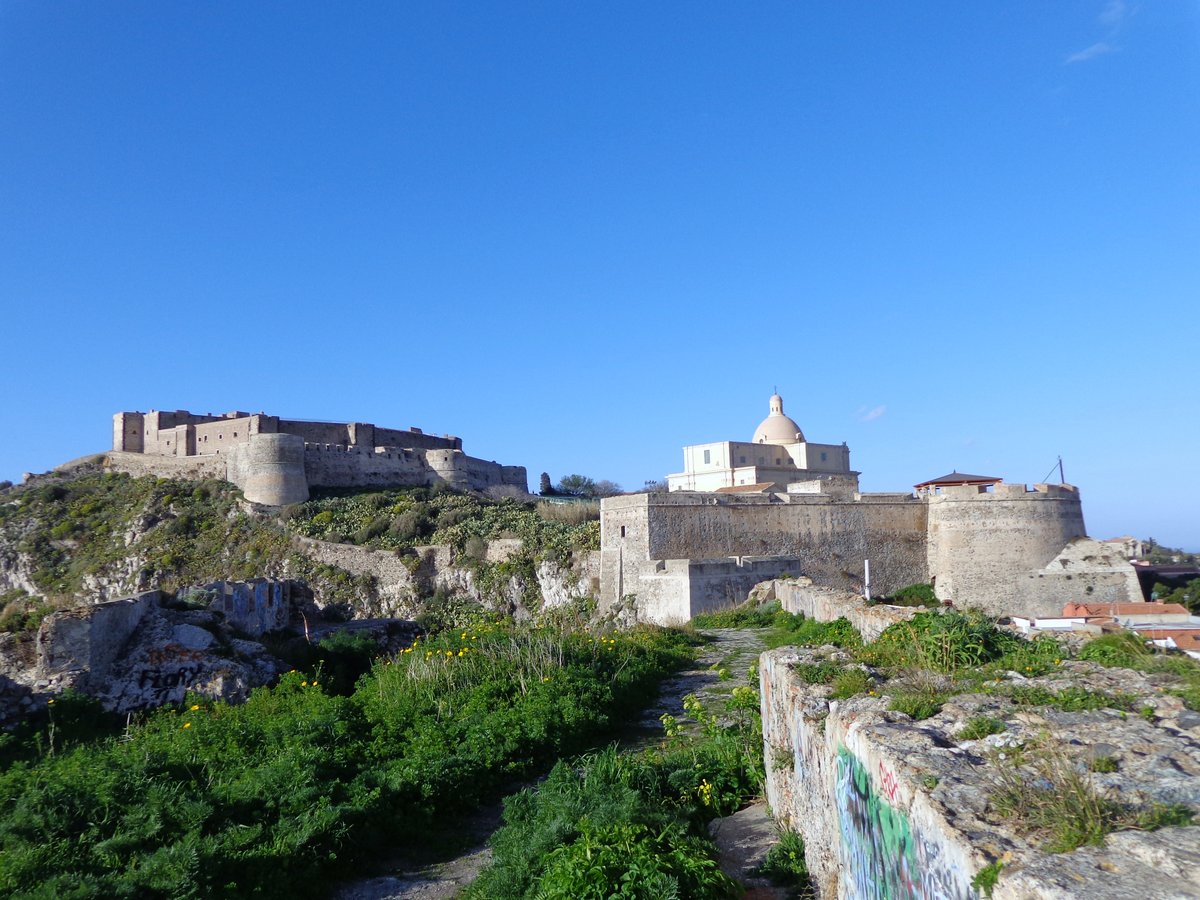
Upon arriving in Milazzo, the first sight that catches the eye is the castle dominating the promontory, an imposing silhouette that seems to rise directly from the Tyrrhenian Sea. It’s not just a monument, but an entire fortified village that tells centuries of history. Climbing towards the entrance gives the sensation of stepping into a suspended world, where Norman walls blend with Spanish bastions. The view from up there is simply breathtaking: on one side, the deep blue of the sea; on the other, the city spreading out at the foot of the hill. Personally, I paused for a moment to breathe in that air filled with stories before immersing myself in exploration.
Historical Overview
The history of Milazzo Castle is a true layering of eras. The first settlements date back to the Greek period, but the structure we see today took shape with the Normans in the 11th century. Frederick II of Swabia stayed there several times, adding his imperial touch. Then came the Spanish, who between the 16th and 17th centuries transformed the fortress into a military citadel with imposing star-shaped bastions. During the Risorgimento, it also served as a prison for patriots like Luigi Rizzotti. Every stone here speaks of power, defense, and the passage of civilizations.
- 4th century BC: First Greek settlements on the promontory
- 11th century: The Normans build the castle’s core
- 13th century: Frederick II of Swabia consolidates the fortifications
- 16th-17th centuries: The Spanish construct the bastioned enclosure
- 1860: Garibaldi establishes his headquarters here
The Village Within the Walls
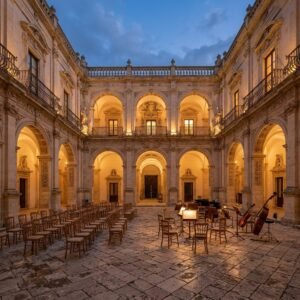
One of the things that struck me most is that Milazzo Castle isn’t just an empty fortress; it contains an entire, perfectly preserved medieval village. As soon as you pass through the Porta di Mare, you find yourself in a maze of cobblestone alleys, stone houses, and quiet little squares. The Church of San Francesco di Paola, with its simple façade, looks like it came straight out of a period painting. Walking through these lanes, I had the impression that time had stood still. A few residents still live here, and seeing laundry hung between the ancient walls adds a touch of everyday life to this special place. It’s not uncommon to encounter cats dozing in the sun, the true guardians of the village.
The Ramparts and Panoramic Views
If there’s one thing truly worth visiting, it’s the 360-degree views from the Spanish ramparts. Climbing onto the walls, your gaze can roam freely: to the northeast, you can spot the Aeolian Islands emerging from the sea, with Stromboli sometimes revealing a wisp of smoke. Turning around, you embrace the entire Gulf of Milazzo, with boats looking like toys. The most magical moment? When the sun begins to set and paints everything orange. The Santa Maria and San Giovanni ramparts offer privileged vantage points. I recommend bringing a camera, but also taking a few minutes just to look, unfiltered. The sea breeze completes the experience.
Why Visit It
Three concrete reasons not to miss this place? First: it is one of the most extensive and layered fortified complexes in Sicily, where a single visit spans centuries of military architecture. Second: the panoramic views are among the most spectacular on the Messina Tyrrhenian coast, with photo spots that look like living postcards. Third: the atmosphere of the internal medieval village is authentic and evocative, different from the usual castle-museums. Here, you can still breathe the life of times past, with that silence broken only by the wind and the sea. Perfect for those seeking history without rhetoric and landscapes that stay in your eyes.
When to Go
My advice? Avoid the midday hours during summer days, when the sun beats down hard on the ascent and the bare walls. The best light for photos is early in the morning or late in the afternoon, when the rays are oblique and accentuate the stone textures. In spring and autumn, the climate is ideal for exploring at a leisurely pace. In winter, on clear days, the crisp air offers exceptionally sharp views of the Aeolian Islands. Once I went with a threatening gray sky, and I must say the somber atmosphere of the fortifications had its own particular charm, almost dramatic.
In the Surroundings
After visiting the castle, heading down towards the sea, it’s worth stopping by the Basilica of San Francesco di Paola in the historic center of Milazzo, a Baroque jewel with richly decorated interiors. For those wanting to combine culture and sea, just a few minutes’ drive away is the Capo Milazzo Nature Reserve, with trails skirting sheer cliffs overlooking the sea and the evocative Venus’ Pool, a natural pool of crystal-clear water. Two complementary experiences that perfectly round out a day between history and nature.