Paestum: Italy’s Best-Preserved Greek Temples Just Steps from the Sea

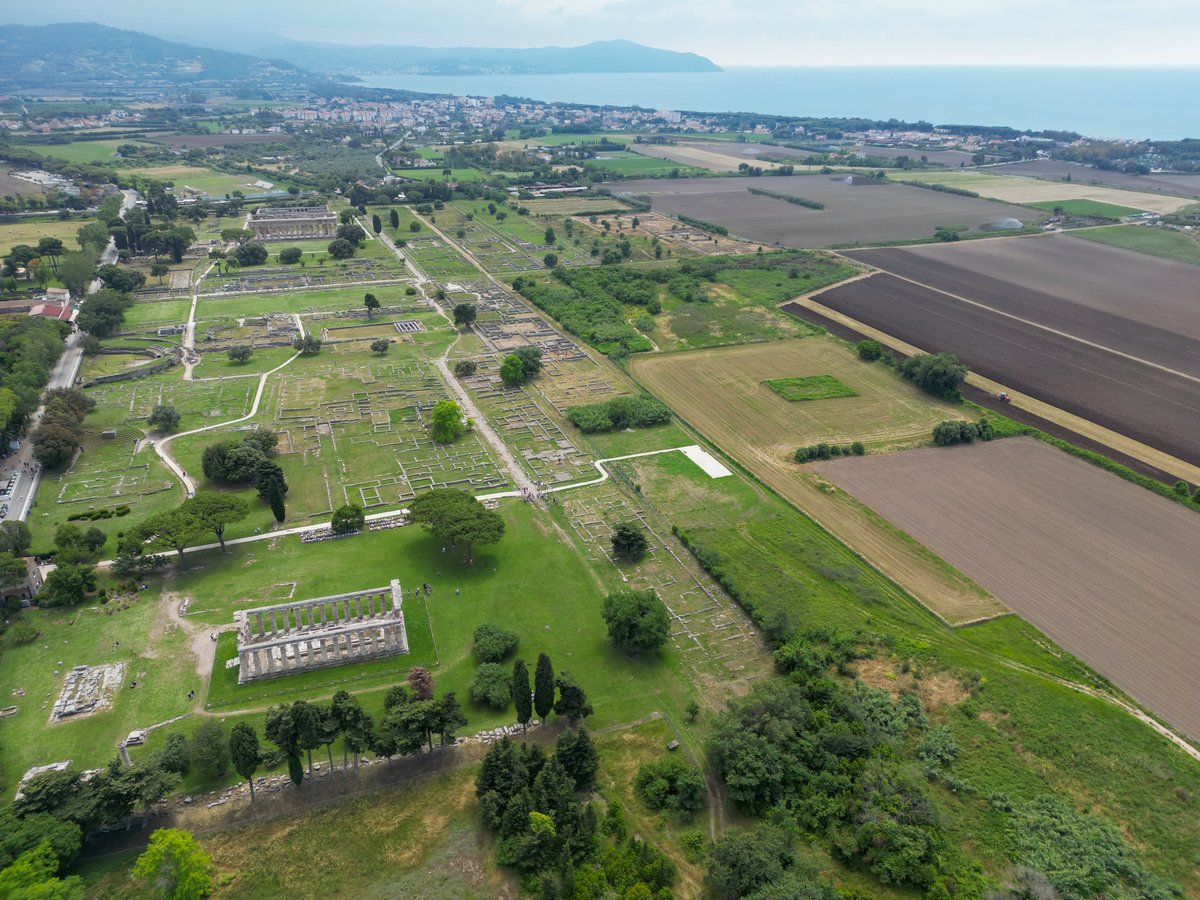
Paestum is one of those places that takes your breath away: three 5th-century BC Greek temples so well-preserved they seem freshly built. The site is spacious, well-organized, and perfect for a half-day visit, perhaps combined with a stop at the beach.

Why it’s worth visiting:
• The three Doric temples (Basilica, Neptune, and Ceres) are among the best-preserved in the world
• The National Archaeological Museum houses the famous Tomb of the Diver
• The green area among the ruins is perfect for families with children
• The location just a few kilometers from the sea allows you to combine culture and relaxation

Copertina itinerario Paestum: Italy's Best-Preserved Greek Temples Just Steps from the Sea
The archaeological site of Paestum features three perfectly intact Greek temples from the 5th century BC, the Archaeological Museum with the Tomb of the Diver, and a green area ideal for families. Easily accessible from the Amalfi Coast.

Good to know


Introduction

Paestum takes your breath away. It’s not just an archaeological site; it’s a stunning sight that stops you in your tracks: three perfectly preserved 5th-century BC Greek temples stand out against the sky, with their Doric columns looking as if they’ve just come from the hands of artisans. The feeling is strange, almost surreal: you expect to see today’s tourists, but instead you feel catapulted back 2,500 years. And the beauty of it is that this piece of ancient Greece is just a stone’s throw from the sea of the Amalfi Coast, a contrast that makes the visit even more unique. The first time I saw it, I stood there with my mouth open for ten minutes, unable to take a photo. It’s one of those places that makes you understand why Italy is an open-air museum, but here there’s something more: a timeless atmosphere that grabs you and doesn’t let go. And then, between one temple and another, the green of the archaeological area appears, with meadows where children run free. It’s not the usual boring cultural visit; it’s an experience that engages all the senses.

Historical Overview

Paestum was originally founded as Poseidonia by Greek colonists around 600 BC. Imagine: settlers from Sybaris in Calabria seeking new territories. The city flourished for centuries, becoming a major commercial and cultural hub, so much so that the Romans conquered it in 273 BC and renamed it Paestum. But the story takes a twist here: the city was abandoned in the Middle Ages, likely due to malaria and Saracen raids, and fell into oblivion for centuries. It was only rediscovered in the 18th century during road construction, and since then, excavations have revealed incredible treasures. What you see today is not a reconstruction: the temples are original, miraculously surviving time and wars. Sometimes I wonder how they’ve endured so well, while other cities have been wiped away. Perhaps it’s the location, perhaps luck, but the result is unique in the world.

  • 600 BC: Greek foundation as Poseidonia
  • 273 BC: Roman conquest and name change to Paestum
  • Middle Ages: Abandonment and oblivion
  • 18th century: Rediscovery during roadworks
  • Today: UNESCO site since 1998

The Archaeological Museum: The Tomb of the Diver

If the temples impressed you, get ready for the museum. This is where you’ll find one of the most famous artifacts in all of Italian archaeology: the Tomb of the Diver. It’s not just a tomb; it’s a unique masterpiece, the only example of Greek painting with a non-funerary theme from that period. The cover slab shows a young man diving into the sea, symbolizing the transition from life to death. I saw it and was moved: it’s so delicate, so full of meaning, that it seems to speak to you. The museum is also well-organized, with artifacts that tell the story of daily life in Paestum: vases, jewelry, tools. There’s also a section dedicated to the Lucanians, the Italic people who inhabited the area before the Romans. Don’t skip it, because it completes the visit to the archaeological site. And a personal tip: take the time to observe the details, like the decorations on the vases or the terracotta statuettes. They’re small things, but they immerse you in history in a more intimate way.

The Green Area: A Break Between Temples

One of the things I love most about Paestum is that it’s not just a collection of ruins. Between one temple and another, wide green meadows open up, perfect for a break or for letting children run around. It’s a family-friendly site, rare for an archaeological area of this importance. I visited with a friend and her five-year-old son, and while we admired the columns, he played tag in the open spaces. This isn’t a minor detail: it makes the visit relaxed and accessible to everyone. In spring, the meadows fill with wildflowers, creating a beautiful contrast with the ancient stone. And if you feel like having a picnic, there are equipped areas to sit. Of course, it’s not like a playground, but for such a site, it’s an unexpected convenience. Sometimes I stop to watch families strolling by: it almost feels like a city park, but with Greek temples as the backdrop. It’s this blend of culture and relaxation that makes Paestum special.

Why Visit It

First: the temples are the best preserved in Italy, and that’s no exaggeration. The Temple of Neptune, in particular, is so intact it looks fake, but it’s all original. Second: the combination with the sea. After your visit, in ten minutes you’re on the beaches of Capaccio Paestum, where you can take a refreshing swim. Third: it’s accessible to everyone. You don’t need to be an archaeology expert to appreciate it; the visual impact is immediate and powerful. And then, there’s that sense of discovery: you walk among ruins that have seen Greeks, Romans, and today tourists like you pass by. It’s a bridge between eras that still works. I return often, and each time I find a new detail: a different shadow on the columns at sunset, a flower sprouting between the stones. It’s not a place you can exhaust in one visit.

When to Go

The best time? Early morning or late afternoon, especially in spring or autumn. The light is golden, the temples take on pink and orange hues, and the crowds are smaller. In summer, avoid the midday hours: it gets incredibly hot, and there isn’t much shade. I prefer autumn: the air is cool, the colors are warm, and you can enjoy the visit without sweating. In winter, however, the site is almost deserted, and the atmosphere is melancholic and evocative. But be careful: it sometimes rains, and the stones become slippery. A personal tip: check the forecast and go when the sky is clear. The view of the temples against a blue sky is priceless. And if you can, plan your visit for Friday or Saturday: there are often evening events with special lighting, offering different emotions.

In the Surrounding Area

After Paestum, don’t head straight home. Just a few kilometers away lies the Certosa di Padula, a monumental monastery that’s a UNESCO World Heritage site. It’s immense, with cloisters that make you feel small, and tells a different yet complementary story. Alternatively, if you want to stay on the archaeological theme, head to Velia, another Greek-Roman site on the coast, less known but fascinating. I visited on a windy day, and the ruins by the sea had a dramatic air. And for a tasty break, look for buffalo mozzarella at local farms: this is the homeland of the DOP, and tasting one freshly made is an experience. These aren’t cliché suggestions, but real places that enrich the journey. Sometimes I stop at one of these farms, buy some cheese, and have a snack with a view of the temples. It’s the perfect way to end the day.

Itineraries nearby


💡 Did You Know…?

The Tomb of the Diver, discovered in 1968, is the only example of Greek painting from the Classical period (480 BC) in Italy. It depicts a young man diving into the afterlife, symbolizing the transition from life to death. The temples were ‘rediscovered’ in the 18th century during road construction: local farmers called them ‘the three giants’ and used them as shelters for animals. Even today, on windy days, you can hear the characteristic whistle through the columns of the Temple of Neptune.