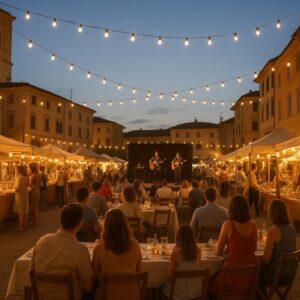
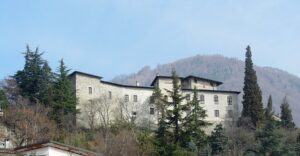
Padenghe Castle, dating back to the year 1000, is the oldest in Valtenesi. Always open and free, it offers a dive into the Middle Ages among crenellated walls, towers, and cobblestone alleys. From the bell tower, you can enjoy a breathtaking view of Lake Garda.
– Three towers and a fortified castle: retains the original layout with cobblestone walls and three towers, one over 21 meters high.
– Panoramic view: climb the tower to admire Lake Garda and the Sirmione peninsula.
– Free entry: always open, with tower and theater visitable for free.
– Intact medieval village: stone houses, lowered arches, and original icehouses.
Introduction
Perched on a morainic hill, surrounded by vineyards and olive groves, Castello di Padenghe is the oldest castle in Valtenesi. As soon as you step inside, the atmosphere takes you back centuries: cobblestone alleys, stone houses, three towers overlooking the lake. It’s a living place, not a museum – and the best part? It’s always open and free. You can enter whenever you want, get lost in the streets, and enjoy the view of Lake Garda. It feels like walking through an untouched medieval village where time has stood still.
Introduction
Perched on a morainic hill, surrounded by vineyards and olive groves, Castello di Padenghe is the oldest castle in Valtenesi. As soon as you step inside, the atmosphere takes you back centuries: cobblestone alleys, stone houses, three towers overlooking the lake. It’s a living place, not a museum – and the best part? It’s always open and free. You can enter whenever you want, get lost in the streets, and enjoy the view of Lake Garda. It feels like walking through an untouched medieval village where time has stood still.
Historical Overview
Construction began in the 11th century during the Hungarian invasions: it served as a refuge for the population and livestock. It was expanded in three phases: first the walls and houses, then the Castellino with its circular tower (14th century), and finally the entrance tower with a drawbridge. In 1154, Frederick Barbarossa granted it to the Bishop of Verona; centuries of conflict followed between Brescia and Verona, and later between Venice and Milan. From 1450, it lost its military function and passed into private hands. The 20th-century restorations restored its original appearance.
Historical Overview
Construction began in the 11th century during the Hungarian invasions: it served as a refuge for the population and livestock. It was expanded in three phases: first the walls and houses, then the Castellino with its circular tower (14th century), and finally the entrance tower with a drawbridge. In 1154, Frederick Barbarossa granted it to the Bishop of Verona; centuries of conflict followed between Brescia and Verona, and later between Venice and Milan. From 1450, it lost its military function and passed into private hands. The 20th-century restorations restored its original appearance.
The Three Towers and the Pebble Walls
The castle is immediately recognizable by its three towers: the largest, over 21 meters high, dominates the entrance with the slits of the drawbridge still visible. The walls are made of river pebbles, stone flakes, and bricks – a rough mix that feels authentic. The bell tower, open at certain times, offers a 360° view of the lake and as far as the Dolomites of Brenta. A little further on, the Castellino with its circular tower adds a fairytale touch to the fortress’s profile.
The Three Towers and the Pebble Walls
The castle is immediately recognizable by its three towers: the largest, over 21 meters high, dominates the entrance with the slits of the drawbridge still visible. The walls are made of river pebbles, stone flakes, and bricks – a rough mix that feels authentic. The bell tower, open at certain times, offers a 360° view of the lake and as far as the Dolomites of Brenta. A little further on, the Castellino with its circular tower adds a fairytale touch to the fortress’s profile.
A Tiny Medieval Village Waiting to Be Explored
Inside the walls, the houses are arranged in three parallel rows, squeezed between curtains and alleys. Each dwelling had a cellar with an icehouse and a vaulted ceiling. Today many spaces are cultivated as vegetable gardens, and as you stroll, you notice lowered arches, terracotta frames, and pointed windows. It’s a living neighborhood, not a set: someone still lives there. The effect is that of an almost intact medieval village, where every corner deserves a photo.
A Tiny Medieval Village Waiting to Be Explored
Inside the walls, the houses are arranged in three parallel rows, squeezed between curtains and alleys. Each dwelling had a cellar with an icehouse and a vaulted ceiling. Today many spaces are cultivated as vegetable gardens, and as you stroll, you notice lowered arches, terracotta frames, and pointed windows. It’s a living neighborhood, not a set: someone still lives there. The effect is that of an almost intact medieval village, where every corner deserves a photo.
Why Visit It
For three reasons: it’s free and always open – no ticket, no opening hours for the walls. Then, the panoramic view from the tower: on clear days you can see all of Lake Garda and the mountains. Finally, it’s authentic: not a theme park, but a piece of history that still breathes. Perfect for a relaxing stroll or taking photos without the crowds.
Why Visit It
For three reasons: it’s free and always open – no ticket, no opening hours for the walls. Then, the panoramic view from the tower: on clear days you can see all of Lake Garda and the mountains. Finally, it’s authentic: not a theme park, but a piece of history that still breathes. Perfect for a relaxing stroll or taking photos without the crowds.
When to Go
The best time? At sunset. The soft light illuminates the castle stones and the lake turns orange. The tower is open until 9 pm in summer, so you can climb up at your leisure. In spring and autumn, the weather is perfect for wandering the alleys without hurry. Winter has its charm, but days are shorter: it’s best to arrive early.
When to Go
The best time? At sunset. The soft light illuminates the castle stones and the lake turns orange. The tower is open until 9 pm in summer, so you can climb up at your leisure. In spring and autumn, the weather is perfect for wandering the alleys without hurry. Winter has its charm, but days are shorter: it’s best to arrive early.
Nearby
Just a stone’s throw from the castle stands the Church of San Emiliano (11th century), with a frescoed apse and Romanesque bell tower. Worth a stop. Right below the walls, the Moms’ Kiosk is an informal bar with tables on the hills: perfect for an aperitivo with a view. If you feel like walking, the CAI 801 trail connects the castle to Lonato, offering glimpses of the countryside.
Nearby
Just a stone’s throw from the castle stands the Church of San Emiliano (11th century), with a frescoed apse and Romanesque bell tower. Worth a stop. Right below the walls, the Moms’ Kiosk is an informal bar with tables on the hills: perfect for an aperitivo with a view. If you feel like walking, the CAI 801 trail connects the castle to Lonato, offering glimpses of the countryside.