Introduction
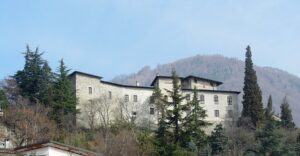
If you are on the shores of Lake Como and look up towards the promontory of Rezzonico, you will see a silhouette that seems to have stepped out of a history book: it is the Castle of Rezzonico. Do not expect a fairy-tale castle with lavish interiors – the beauty here is all outside. This fourteenth-century fortress, now privately owned, displays its tall crenellated tower from afar, and offers one of the most breathtaking views over the lake, especially at sunset. The medieval village of Santa Maria Rezzonico, with its alleys and porticoes, completes the atmosphere. A stop here is a dive into the past, among ancient walls and a silence broken only by the water.
Introduction
If you are on the shores of Lake Como and look up towards the promontory of Rezzonico, you will see a silhouette that seems to have stepped out of a history book: it is the Castle of Rezzonico. Do not expect a fairy-tale castle with lavish interiors – the beauty here is all outside. This fourteenth-century fortress, now privately owned, displays its tall crenellated tower from afar, and offers one of the most breathtaking views over the lake, especially at sunset. The medieval village of Santa Maria Rezzonico, with its alleys and porticoes, completes the atmosphere. A stop here is a dive into the past, among ancient walls and a silence broken only by the water.
Historical Notes
The castle was built in the 14th century by the powerful Della Torre di Rezzonico family (which gave birth to Pope Clement XIII). It likely arose on the remains of an older fortification, of which today two entrance gates and some stretches of walls dating back to the 6th century remain, locally called “Roman walls.” It is a castle-enclosure: a walled area of about 2000 sqm that contained dwellings and the main tower, designed to protect the population during raids. In the 16th century it was occasionally occupied by soldiers of Gian Giacomo Medici. Restored in the 19th century, today it is a private residence, often used as a wedding venue.
Historical Notes
The castle was built in the 14th century by the powerful Della Torre di Rezzonico family (which gave birth to Pope Clement XIII). It likely arose on the remains of an older fortification, of which today two entrance gates and some stretches of walls dating back to the 6th century remain, locally called “Roman walls.” It is a castle-enclosure: a walled area of about 2000 sqm that contained dwellings and the main tower, designed to protect the population during raids. In the 16th century it was occasionally occupied by soldiers of Gian Giacomo Medici. Restored in the 19th century, today it is a private residence, often used as a wedding venue.
Brief Timeline
- 6th century: first fortifications (Roman walls)
- 14th century: construction of the enclosure castle by the Della Torre family
- 16th century: occupation by Gian Giacomo Medici
- 19th century: restoration and conversion into a residence
- Today: private property, open only for special events
Brief Timeline
- 6th century: first fortifications (Roman walls)
- 14th century: construction of the enclosure castle by the Della Torre family
- 16th century: occupation by Gian Giacomo Medici
- 19th century: restoration and conversion into a residence
- Today: private property, open only for special events
Architecture and Peculiarities
The structure is a perfect example of a castle-enclosure: trapezoidal in plan, with three towers and two entrances. The tall crenellated tower (with Ghibelline merlons) is the most recognizable feature. The thick, imposing curtain walls once enclosed an entire small village. If you look closely, you’ll notice the remains of ancient gates and wall fragments dating back to the 6th century. The interior of the castle is not open to visitors, but the courtyard is accessible to people with mobility difficulties. The Chapel of the Three Wise Men (now dedicated to Saint Anthony) recalls the passage of the relics of the Three Wise Men in the 12th century, during their transport from Milan to Cologne at the behest of Frederick Barbarossa.
Architecture and Peculiarities
The structure is a perfect example of a castle-enclosure: trapezoidal in plan, with three towers and two entrances. The tall crenellated tower (with Ghibelline merlons) is the most recognizable feature. The thick, imposing curtain walls once enclosed an entire small village. If you look closely, you’ll notice the remains of ancient gates and wall fragments dating back to the 6th century. The interior of the castle is not open to visitors, but the courtyard is accessible to people with mobility difficulties. The Chapel of the Three Wise Men (now dedicated to Saint Anthony) recalls the passage of the relics of the Three Wise Men in the 12th century, during their transport from Milan to Cologne at the behest of Frederick Barbarossa.
The hamlet of Santa Maria Rezzonico
Before reaching the castle, it’s worth strolling through the medieval hamlet of Santa Maria Rezzonico. Cobbled alleys, ancient arcades, stone houses: it feels like stepping back in time. The hamlet is small but authentic, and culminates right at the foot of the castle. From here, a path also leads to a small pebble beach, perfect for a refreshing break with a view of the lake. The atmosphere is peaceful, far from the hustle and bustle of more touristy spots. I recommend getting lost in the alleys and stopping to admire the view: it’s one of those places that stays in your heart.
The hamlet of Santa Maria Rezzonico
Before reaching the castle, it’s worth strolling through the medieval hamlet of Santa Maria Rezzonico. Cobbled alleys, ancient arcades, stone houses: it feels like stepping back in time. The hamlet is small but authentic, and culminates right at the foot of the castle. From here, a path also leads to a small pebble beach, perfect for a refreshing break with a view of the lake. The atmosphere is peaceful, far from the hustle and bustle of more touristy spots. I recommend getting lost in the alleys and stopping to admire the view: it’s one of those places that stays in your heart.
Why Visit It
1. Unique Panorama: from the castle hill you can enjoy a 180° view of the lake, with Bellagio and Varenna in front. The spectacle is guaranteed especially at sunrise or sunset. 2. Authentic History: this is not a tourist castle with tickets and queues, but a real, lived-in place that tells centuries of history. 3. Charming Village: Santa Maria Rezzonico is one of the most picturesque villages on the lake, still genuine and uncrowded. Perfect for those seeking a trip off the mainstream circuits.
Why Visit It
1. Unique Panorama: from the castle hill you can enjoy a 180° view of the lake, with Bellagio and Varenna in front. The spectacle is guaranteed especially at sunrise or sunset. 2. Authentic History: this is not a tourist castle with tickets and queues, but a real, lived-in place that tells centuries of history. 3. Charming Village: Santa Maria Rezzonico is one of the most picturesque villages on the lake, still genuine and uncrowded. Perfect for those seeking a trip off the mainstream circuits.
When to Go
The most magical time? Late afternoon, when the sun sets behind the mountains and paints the lake orange and pink. In spring and autumn, the light is soft and colors explode. In summer, the village is cool thanks to the lake breeze, but more crowded. If you can, choose a weekday to enjoy the tranquility. Winter, with snow on the peaks, offers an even more evocative atmosphere.
When to Go
The most magical time? Late afternoon, when the sun sets behind the mountains and paints the lake orange and pink. In spring and autumn, the light is soft and colors explode. In summer, the village is cool thanks to the lake breeze, but more crowded. If you can, choose a weekday to enjoy the tranquility. Winter, with snow on the peaks, offers an even more evocative atmosphere.
In the Surroundings
After your visit, I suggest you hop over to Menaggio (just a few kilometers away): a lively lakeside town with a beautiful promenade and typical restaurants. Or, if you’re up for another gem, take the ferry to Varenna or Bellagio, two of the most iconic villages on Lake Como. From Rezzonico, the view of them is already spectacular, but seeing them up close is a whole different story.
In the Surroundings
After your visit, I suggest you hop over to Menaggio (just a few kilometers away): a lively lakeside town with a beautiful promenade and typical restaurants. Or, if you’re up for another gem, take the ferry to Varenna or Bellagio, two of the most iconic villages on Lake Como. From Rezzonico, the view of them is already spectacular, but seeing them up close is a whole different story.