An Unexpected Baroque Amid Byzantine Basilicas
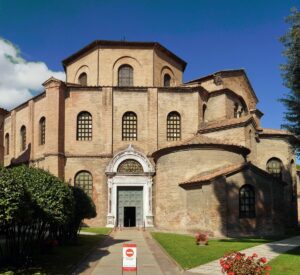
In a city famous for its early Christian mosaics, the Ravenna Cathedral surprises with its Baroque style. The Cathedral of the Resurrection, built between 1734 and 1745, stands where the ancient Ursiana Basilica (5th century) once stood. The contrast is striking: outside, a façade with a three-arched portico and a cylindrical bell tower 35 meters high; inside, barrel vaults, an elliptical dome, and polychrome marbles. Admission is free, and the place has an intimate atmosphere, far from mass tourism. It is not just a Baroque gem: it houses unique pieces, such as the 6th-century ambo and the mysterious Madonna of the Sweat. A dive into a lesser-known but equally fascinating Ravenna.
An Unexpected Baroque Amid Byzantine Basilicas
In a city famous for its early Christian mosaics, the Ravenna Cathedral surprises with its Baroque style. The Cathedral of the Resurrection, built between 1734 and 1745, stands where the ancient Ursiana Basilica (5th century) once stood. The contrast is striking: outside, a façade with a three-arched portico and a cylindrical bell tower 35 meters high; inside, barrel vaults, an elliptical dome, and polychrome marbles. Admission is free, and the place has an intimate atmosphere, far from mass tourism. It is not just a Baroque gem: it houses unique pieces, such as the 6th-century ambo and the mysterious Madonna of the Sweat. A dive into a lesser-known but equally fascinating Ravenna.
From the Ursiana to the Baroque: 1300 Years of History
Not available.
From the Ursiana to the Baroque: 1300 Years of History
Not available.
The Ambo of Bishop Agnello: A 6th-Century Jewel
Under the third arch of the right aisle, you’ll find a piece of history: the ambo of Bishop Agnello, crafted between 557 and 570. This is a Greek marble artifact shaped like a tower (pyrgos), decorated with 36 panels depicting animals: lambs, peacocks, deer, doves, ducks, and fish. Each animal is a symbol of creation, a theme dear to Paleochristian art. The ambo was used for readings during Mass and originally came from the ancient Ursiana basilica. It’s surprising to find it here, in a Baroque setting, almost like a living fossil. The original steps are lost, but the structure remains impeccable.
The Ambo of Bishop Agnello: A 6th-Century Jewel
Under the third arch of the right aisle, you’ll find a piece of history: the ambo of Bishop Agnello, crafted between 557 and 570. This is a Greek marble artifact shaped like a tower (pyrgos), decorated with 36 panels depicting animals: lambs, peacocks, deer, doves, ducks, and fish. Each animal is a symbol of creation, a theme dear to Paleochristian art. The ambo was used for readings during Mass and originally came from the ancient Ursiana basilica. It’s surprising to find it here, in a Baroque setting, almost like a living fossil. The original steps are lost, but the structure remains impeccable.
The Chapel of the Madonna of the Sweat: Miracle and Art
In the right transept, the Chapel of the Madonna of the Sweat is a small jewel. It was built as an ex voto after the plague of 1629-1630, but its story begins earlier: in 1512, during the Battle of Ravenna, a soldier stabbed an image of the Virgin, and it bled or sweated blood. The miracle repeated in 1630. The icon, a 14th-century panel of Giotto’s school, is kept on the altar of polychrome marble, a work by Pietro Bracci (1759). The dome is frescoed by Giovanni Battista Barbiani with the Virgin in Glory, and the pendentives have the Four Evangelists by Andrea Barbiani. In the niches, two 5th-century sarcophagi: of Saint Barbazian and of Blessed Rinaldo da Concorezzo.
The Chapel of the Madonna of the Sweat: Miracle and Art
In the right transept, the Chapel of the Madonna of the Sweat is a small jewel. It was built as an ex voto after the plague of 1629-1630, but its story begins earlier: in 1512, during the Battle of Ravenna, a soldier stabbed an image of the Virgin, and it bled or sweated blood. The miracle repeated in 1630. The icon, a 14th-century panel of Giotto’s school, is kept on the altar of polychrome marble, a work by Pietro Bracci (1759). The dome is frescoed by Giovanni Battista Barbiani with the Virgin in Glory, and the pendentives have the Four Evangelists by Andrea Barbiani. In the niches, two 5th-century sarcophagi: of Saint Barbazian and of Blessed Rinaldo da Concorezzo.
Why Visit It: Three Reasons You Can’t Miss It
1. Free entry: in a city where many sites charge, the cathedral is accessible to all, no ticket required. You can enter and leave whenever you like, even just for a moment of reflection. 2. A journey through time: here Baroque, Early Christian, and medieval elements coexist. The 6th-century ambo, the 5th-century sarcophagi, the paintings by Guido Reni in the Chapel of the Blessed Sacrament: every corner holds a surprise. 3. The Madonna of the Sweat: a miraculous icon that has marked the city’s history. Even if you are not a believer, its story is fascinating. And the chapel itself is a masterpiece of Baroque art.
Why Visit It: Three Reasons You Can’t Miss It
1. Free entry: in a city where many sites charge, the cathedral is accessible to all, no ticket required. You can enter and leave whenever you like, even just for a moment of reflection. 2. A journey through time: here Baroque, Early Christian, and medieval elements coexist. The 6th-century ambo, the 5th-century sarcophagi, the paintings by Guido Reni in the Chapel of the Blessed Sacrament: every corner holds a surprise. 3. The Madonna of the Sweat: a miraculous icon that has marked the city’s history. Even if you are not a believer, its story is fascinating. And the chapel itself is a masterpiece of Baroque art.
When to Go: The Perfect Time to Visit
Early in the morning, when it opens at 7:00 AM, the Duomo is almost deserted: few tourists, soft light filtering through the windows, and silence broken only by footsteps on the opus sectile floor. It’s the ideal time to enjoy the ambo and the Chapel of the Madonna of the Sweat without crowds. If you visit in December, don’t miss the artistic mechanical nativity scene set up inside, with statues in Palestinian style and day/night effects. In summer, evening masses create a evocative atmosphere. Avoid the central hours, when organized groups fill the aisles.
When to Go: The Perfect Time to Visit
Early in the morning, when it opens at 7:00 AM, the Duomo is almost deserted: few tourists, soft light filtering through the windows, and silence broken only by footsteps on the opus sectile floor. It’s the ideal time to enjoy the ambo and the Chapel of the Madonna of the Sweat without crowds. If you visit in December, don’t miss the artistic mechanical nativity scene set up inside, with statues in Palestinian style and day/night effects. In summer, evening masses create a evocative atmosphere. Avoid the central hours, when organized groups fill the aisles.
In the Vicinity: A Stroll through Byzantine Art
Just steps from the Cathedral, in Piazza Duomo, stands the Neonian Baptistery, one of Ravenna’s oldest monuments. Its 5th-century mosaics, depicting Christ’s baptism and the twelve apostles, are unmissable. A short walk away, the Archiepiscopal Museum houses the Chapel of St. Andrew, with Ostrogothic-era mosaics, and the famous ivory throne of Maximian. The Archbishop’s Palace is also worth a visit. Together with the Cathedral, they form a complex that tells the story of Ravenna as a capital. Everything is close, so you can explore on foot.
In the Vicinity: A Stroll through Byzantine Art
Just steps from the Cathedral, in Piazza Duomo, stands the Neonian Baptistery, one of Ravenna’s oldest monuments. Its 5th-century mosaics, depicting Christ’s baptism and the twelve apostles, are unmissable. A short walk away, the Archiepiscopal Museum houses the Chapel of St. Andrew, with Ostrogothic-era mosaics, and the famous ivory throne of Maximian. The Archbishop’s Palace is also worth a visit. Together with the Cathedral, they form a complex that tells the story of Ravenna as a capital. Everything is close, so you can explore on foot.