Introduction
Arriving in Villa Celiera is like taking a step back in time, yet with a gaze fixed on nature. This hamlet perched on a limestone cliff, at an altitude of 714 meters, is the ideal gateway to explore the Gran Sasso and Monti della Laga National Park. Here, among centuries-old oak forests and breathtaking views, you breathe a different air: slower, more genuine. The village preserves its medieval charm intact, but above all it is the starting point for two wonders: the Cistercian abbey of Santa Maria Casanova and the Voltigno plateau. A perfect combination of spirituality and adventure.
Introduction
Arriving in Villa Celiera is like taking a step back in time, yet with a gaze fixed on nature. This hamlet perched on a limestone cliff, at an altitude of 714 meters, is the ideal gateway to explore the Gran Sasso and Monti della Laga National Park. Here, among centuries-old oak forests and breathtaking views, you breathe a different air: slower, more genuine. The village preserves its medieval charm intact, but above all it is the starting point for two wonders: the Cistercian abbey of Santa Maria Casanova and the Voltigno plateau. A perfect combination of spirituality and adventure.
Historical Notes
Villa Celiera was founded between the 5th and 6th centuries, after the barbarian invasions, when refugees from nearby Bertona took shelter on this rock. Its name derives from its function as a ‘cella’ (storehouse) for the Cistercian abbey of Santa Maria Casanova, founded in 1191. For centuries, the village revolved around the monks, who managed the lands and community. In 1258, under King Manfred and Pope Alexander IV, the abbey merged with the monastery of San Bartolomeo in Carpineto, and in 1311 also with the monastery of San Giovanni in Lamis. Today, of the abbey remain the defensive tower, the chapter house, and the church, silent witnesses to a glorious past. The National Park was established in 1991.
Historical Notes
Villa Celiera was founded between the 5th and 6th centuries, after the barbarian invasions, when refugees from nearby Bertona took shelter on this rock. Its name derives from its function as a ‘cella’ (storehouse) for the Cistercian abbey of Santa Maria Casanova, founded in 1191. For centuries, the village revolved around the monks, who managed the lands and community. In 1258, under King Manfred and Pope Alexander IV, the abbey merged with the monastery of San Bartolomeo in Carpineto, and in 1311 also with the monastery of San Giovanni in Lamis. Today, of the abbey remain the defensive tower, the chapter house, and the church, silent witnesses to a glorious past. The National Park was established in 1991.
The Abbey of Santa Maria Casanova
Just a short walk from the center of Villa Celiera, nestled in greenery, lie the remains of the Cistercian Abbey of Santa Maria Casanova. Don’t expect an intact building; it’s a captivating ruin, with the tower still standing proudly. Stepping inside, you can sense the spirituality of those who once prayed and worked here. The chapter house, with its cross vaults, and the church, of which the apse remains, tell centuries of monastic life. The Benedictine Cistercian monks were masters of agriculture and art, and from here they controlled estates that stretched as far as Apulia. Walking silently among these stones is an experience I recommend to everyone. Bring a book and stop to listen to the wind in the trees.
The Abbey of Santa Maria Casanova
Just a short walk from the center of Villa Celiera, nestled in greenery, lie the remains of the Cistercian Abbey of Santa Maria Casanova. Don’t expect an intact building; it’s a captivating ruin, with the tower still standing proudly. Stepping inside, you can sense the spirituality of those who once prayed and worked here. The chapter house, with its cross vaults, and the church, of which the apse remains, tell centuries of monastic life. The Benedictine Cistercian monks were masters of agriculture and art, and from here they controlled estates that stretched as far as Apulia. Walking silently among these stones is an experience I recommend to everyone. Bring a book and stop to listen to the wind in the trees.
The Voltigno Plateau and Outdoor Activities
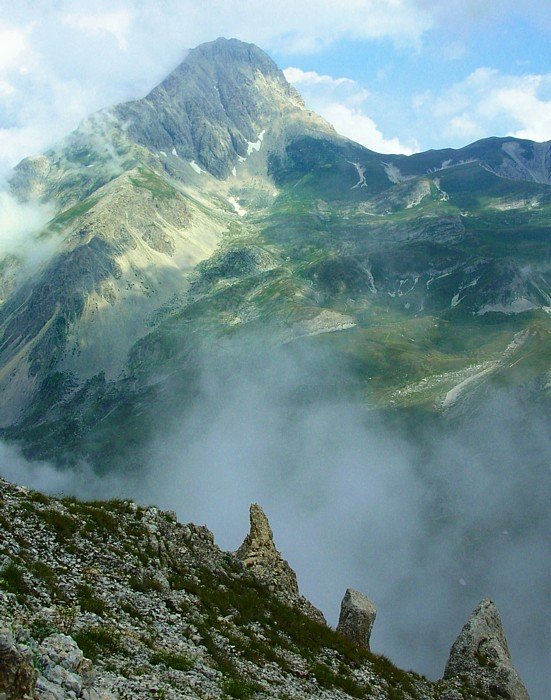
Ascending from Villa Celiera, you reach the Voltigno plateau, a karst plateau that feels like another world. Here the landscape opens up: endless meadows, beech forests, and in winter a white blanket that attracts cross-country skiing enthusiasts. The trails are well-maintained, but in summer they turn into perfect routes for trekking, mountain biking, and even horseback riding. I took a walk at sunset: the sun tinged the Corno Grande red and the silence was broken only by the rustle of the wind. Keep your eyes open to spot chamois and golden eagles – the park is rich in wildlife. If you’re lucky, you’ll meet some shepherds with their sheep, symbols of a still-living tradition.
The Voltigno Plateau and Outdoor Activities
Ascending from Villa Celiera, you reach the Voltigno plateau, a karst plateau that feels like another world. Here the landscape opens up: endless meadows, beech forests, and in winter a white blanket that attracts cross-country skiing enthusiasts. The trails are well-maintained, but in summer they turn into perfect routes for trekking, mountain biking, and even horseback riding. I took a walk at sunset: the sun tinged the Corno Grande red and the silence was broken only by the rustle of the wind. Keep your eyes open to spot chamois and golden eagles – the park is rich in wildlife. If you’re lucky, you’ll meet some shepherds with their sheep, symbols of a still-living tradition.
Why Visit It
1. Nature and history in one place: here you can combine exploring a medieval abbey with hikes in one of Italy’s largest national parks. 2. Outdoor sports for everyone: from cross-country skiing in winter to walking in summer, the Voltigno plateau offers trails suitable for all levels. 3. Authenticity and tranquility: far from crowded tourist spots, Villa Celiera offers a genuine experience, in touch with locals and traditional flavors, like Farindola pecorino and arrosticini.
Why Visit It
1. Nature and history in one place: here you can combine exploring a medieval abbey with hikes in one of Italy’s largest national parks. 2. Outdoor sports for everyone: from cross-country skiing in winter to walking in summer, the Voltigno plateau offers trails suitable for all levels. 3. Authenticity and tranquility: far from crowded tourist spots, Villa Celiera offers a genuine experience, in touch with locals and traditional flavors, like Farindola pecorino and arrosticini.
When to Go
If you love snow and cross-country skiing, winter is the right time: the Voltigno plateau turns into a white trail. In spring and autumn, on the other hand, the climate is mild and the colors are spectacular – the beech trees turn yellow and orange, and the air is crisp. Personally, I love autumn: the light is warmer, the trails are less crowded, and you can still pick mushrooms and chestnuts. Summer also has its charm, with long days for hikes, but the sun beats down hard: it’s better to leave early in the morning.
When to Go
If you love snow and cross-country skiing, winter is the right time: the Voltigno plateau turns into a white trail. In spring and autumn, on the other hand, the climate is mild and the colors are spectacular – the beech trees turn yellow and orange, and the air is crisp. Personally, I love autumn: the light is warmer, the trails are less crowded, and you can still pick mushrooms and chestnuts. Summer also has its charm, with long days for hikes, but the sun beats down hard: it’s better to leave early in the morning.
Nearby
Just a stone’s throw from Villa Celiera, the Abbey of San Clemente a Casauria is worth a visit, a masterpiece of Romanesque architecture with a beautiful cloister. A little further on, the village of Farindola is famous for its pecorino cheese and transhumance traditions. If you have time, don’t miss Lake Penne, a WWF oasis where you can observe water birds and take a walk in nature. All these places are easily reachable and perfectly complement a trip in the District of the Great Abbeys.
Nearby
Just a stone’s throw from Villa Celiera, the Abbey of San Clemente a Casauria is worth a visit, a masterpiece of Romanesque architecture with a beautiful cloister. A little further on, the village of Farindola is famous for its pecorino cheese and transhumance traditions. If you have time, don’t miss Lake Penne, a WWF oasis where you can observe water birds and take a walk in nature. All these places are easily reachable and perfectly complement a trip in the District of the Great Abbeys.