Introduction
Entering the Cathedral of Saint John the Baptist in Ragusa is like being swept away by a wave of marble and light. The Baroque facade, with its powerful columns and carvings that seem to dance, welcomes you with an almost theatrical majesty. Yet, nothing is fake: every detail, from the two sundials of 1751 to the copper-clad dome, tells a story of earthquakes and rebirths. Walking on the pitch stone pavement of 1745, surrounded by balustrades, makes you feel small yet part of something grand. It is one of those places where time seems suspended, suspended between the Italian and French hours of the meridians.
Introduction
Entering the Cathedral of Saint John the Baptist in Ragusa is like being swept away by a wave of marble and light. The Baroque facade, with its powerful columns and carvings that seem to dance, welcomes you with an almost theatrical majesty. Yet, nothing is fake: every detail, from the two sundials of 1751 to the copper-clad dome, tells a story of earthquakes and rebirths. Walking on the pitch stone pavement of 1745, surrounded by balustrades, makes you feel small yet part of something grand. It is one of those places where time seems suspended, suspended between the Italian and French hours of the meridians.
Historical Notes
It all began after the earthquake of 1693, which razed much of the city to the ground. The original church, located beneath the medieval castle, had been destroyed. On April 15, 1694, the first stone was laid in the ‘Patro’ district, and by August 16 of the same year, the first Mass was celebrated. However, the cathedral as we see it today is the result of 18th-century expansions, with the facade designed by Francesco Battaglia starting in 1765. It was solemnly consecrated on May 30, 1778. The dome was raised in 1783, and in 1950, with the creation of the Diocese of Ragusa, it became a cathedral. Since 2002, it has been part of the UNESCO site ‘Late Baroque Towns of the Val di Noto’.
Historical Notes
It all began after the earthquake of 1693, which razed much of the city to the ground. The original church, located beneath the medieval castle, had been destroyed. On April 15, 1694, the first stone was laid in the ‘Patro’ district, and by August 16 of the same year, the first Mass was celebrated. However, the cathedral as we see it today is the result of 18th-century expansions, with the facade designed by Francesco Battaglia starting in 1765. It was solemnly consecrated on May 30, 1778. The dome was raised in 1783, and in 1950, with the creation of the Diocese of Ragusa, it became a cathedral. Since 2002, it has been part of the UNESCO site ‘Late Baroque Towns of the Val di Noto’.
Key Timeline
Here are the key moments in the cathedral’s history:
- 1693 – Earthquake destroys the original church.
- 1694 – Reconstruction begins in the new Ragusa Superiore.
- 1741 – Opened for worship.
- 1751 – Installation of the two sundials on the facade.
- 1778 – Solemn consecration.
- 1783 – Completion of the dome.
- 1950 – Raised to cathedral status.
- 2002 – Inscribed as a UNESCO World Heritage site.
Key Timeline
Here are the key moments in the cathedral’s history:
- 1693 – Earthquake destroys the original church.
- 1694 – Reconstruction begins in the new Ragusa Superiore.
- 1741 – Opened for worship.
- 1751 – Installation of the two sundials on the facade.
- 1778 – Solemn consecration.
- 1783 – Completion of the dome.
- 1950 – Raised to cathedral status.
- 2002 – Inscribed as a UNESCO World Heritage site.
The Facade and the Sundials
The facade is a masterpiece of symmetry and imagination. Divided into five sections by Corinthian columns and rusticated pilasters, it features three portals: the central one is a triumph of columns and statues (the Immaculate Conception, Saint John the Baptist, and Saint John the Evangelist). But what steals the show are the two sundials from 1751, placed on the second level. The left one marks ‘Italian hours,’ counting from sunset to sunset; the right one marks ‘French hours,’ from midnight to midnight. A curiosity that tells of two different ways of experiencing time. To the left stands the 50-meter-high bell tower, while its twin on the right remains unfinished (only the base, from 1820). In front, the wide parvis with its balustrade in pitchstone from 1745 invites you to stop and look up.
The Facade and the Sundials
The facade is a masterpiece of symmetry and imagination. Divided into five sections by Corinthian columns and rusticated pilasters, it features three portals: the central one is a triumph of columns and statues (the Immaculate Conception, Saint John the Baptist, and Saint John the Evangelist). But what steals the show are the two sundials from 1751, placed on the second level. The left one marks ‘Italian hours,’ counting from sunset to sunset; the right one marks ‘French hours,’ from midnight to midnight. A curiosity that tells of two different ways of experiencing time. To the left stands the 50-meter-high bell tower, while its twin on the right remains unfinished (only the base, from 1820). In front, the wide parvis with its balustrade in pitchstone from 1745 invites you to stop and look up.
The wooden statue of Saint John the Baptist
Inside, in the first bay of the left aisle, is one of the most beloved works by the people of Ragusa: the wooden statue of Saint John the Baptist, sculpted by Carmelo Licitra in 1861. The saint appears with harsh features, dressed in camel skins and a red cloak, holding the Book of Revelation and a lamb. It is said that Licitra was inspired by the face of a beggar, who then mysteriously disappeared. The statue is carried in procession during the patron saint festival at the end of August. But it is not the only treasure: also noteworthy are the painting of the Immaculate Conception by Dario Querci (1865), the large Serassi organ from 1858 with over 3,000 pipes, and the ‘talédda’, a huge monochrome frame of the Crucifixion used during Lent.
The wooden statue of Saint John the Baptist
Inside, in the first bay of the left aisle, is one of the most beloved works by the people of Ragusa: the wooden statue of Saint John the Baptist, sculpted by Carmelo Licitra in 1861. The saint appears with harsh features, dressed in camel skins and a red cloak, holding the Book of Revelation and a lamb. It is said that Licitra was inspired by the face of a beggar, who then mysteriously disappeared. The statue is carried in procession during the patron saint festival at the end of August. But it is not the only treasure: also noteworthy are the painting of the Immaculate Conception by Dario Querci (1865), the large Serassi organ from 1858 with over 3,000 pipes, and the ‘talédda’, a huge monochrome frame of the Crucifixion used during Lent.
Why Visit It
Three good reasons not to miss it. First: it’s a concentrated dose of Sicilian history – from the 1693 earthquake to UNESCO Baroque, every stone tells a story of rebirth. Second: the details are astonishing, like the two sundials measuring different times, or the Serassi organ, one of the largest in Italy. Third: outside the cathedral, the side gardens with ficus and palm trees offer a shaded break, and the nearby Bishop’s Palace houses the Cathedral Museum, with unique pieces like a 14th-century ivory reliquary casket. In short, it’s not just a church, but a journey through Sicilian Baroque.
Why Visit It
Three good reasons not to miss it. First: it’s a concentrated dose of Sicilian history – from the 1693 earthquake to UNESCO Baroque, every stone tells a story of rebirth. Second: the details are astonishing, like the two sundials measuring different times, or the Serassi organ, one of the largest in Italy. Third: outside the cathedral, the side gardens with ficus and palm trees offer a shaded break, and the nearby Bishop’s Palace houses the Cathedral Museum, with unique pieces like a 14th-century ivory reliquary casket. In short, it’s not just a church, but a journey through Sicilian Baroque.
When to Go
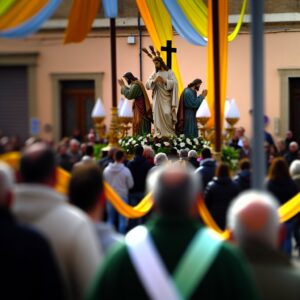
To enjoy the facade in the best light, go in the late afternoon: the low sun ignites the golden tones of the pece stone and makes the clock details shine. If you can, choose the period between June and August: on June 24 the Nativity of John the Baptist is celebrated, and on August 29 the patronal feast with procession and ‘sarcià’ (the traditional greasy pole). On those days, the cathedral is alive like never before. But even in spring or autumn, with fewer crowds, you can admire the interiors calmly. Avoid the central hours in summer: the churchyard is very exposed.
When to Go
To enjoy the facade in the best light, go in the late afternoon: the low sun ignites the golden tones of the pece stone and makes the clock details shine. If you can, choose the period between June and August: on June 24 the Nativity of John the Baptist is celebrated, and on August 29 the patronal feast with procession and ‘sarcià’ (the traditional greasy pole). On those days, the cathedral is alive like never before. But even in spring or autumn, with fewer crowds, you can admire the interiors calmly. Avoid the central hours in summer: the churchyard is very exposed.
Nearby
Just a short walk away (crossing the bridge that connects the two Ragusas) lies Ragusa Ibla, with its labyrinth of Baroque alleyways and the splendid Cathedral of San Giorgio, another UNESCO gem. Still in Ibla, don’t miss the Giardino Ibleo, a public park with breathtaking views over the valley. If you feel like diving into history, just a few minutes’ drive away are the necropolises of Cava d’Ispica, a rock-cut archaeological site. Two different worlds, both unmissable.
Nearby
Just a short walk away (crossing the bridge that connects the two Ragusas) lies Ragusa Ibla, with its labyrinth of Baroque alleyways and the splendid Cathedral of San Giorgio, another UNESCO gem. Still in Ibla, don’t miss the Giardino Ibleo, a public park with breathtaking views over the valley. If you feel like diving into history, just a few minutes’ drive away are the necropolises of Cava d’Ispica, a rock-cut archaeological site. Two different worlds, both unmissable.