
🧭 What to Expect
- Ideal for family excursions and outdoor adventurers
- Highlights: lake-mountain landscapes, well-preserved castles, well-marked trails
- Best time: spring and autumn for mild weather and fewer crowds
- How to get around: car recommended to reach villages and trail parking lots
- Must not miss: the Bellano Gorge and Vezio Castle at sunset
Events nearby


The Province of Lecco is a destination that surprises, often overshadowed by more beaten tourist circuits. Yet it offers a unique mix of lake landscapes, imposing mountains, and a historical heritage of castles and medieval villages. Vezio Castle dominates Lake Como from a privileged position, while the Bellano Gorge offers a natural spectacle carved into the rock. Villa Monastero enchants with its gardens on the lake, and Montecchio Nord Fort tells the military history of the area. For hiking enthusiasts, the trails around the Grigne Museum and Mount Legnoncino offer unforgettable views. Villages like Corenno Plinio and Lierna preserve atmospheres of bygone times. In this article, I will guide you through the must-see destinations of the Province of Lecco, with practical tips for visiting them at their best. Get ready to discover an authentic corner of Italy where nature and history merge.
Overview
- Castello di Vezio: History, Falconry, and Breathtaking Views of Lake Como
- Villa Monastero: Immersed in History and Nature on Lake Como
- Villa Monastero: Immersed in History and Nature on Lake Como
- Bellano Gorge: A plunge into legend and nature
- Bellano Gorge: A plunge into legend and nature
- Forte Montecchio Nord: The Fortress That Defied Time
- Abbey of San Pietro al Monte: Trekking and Romanesque Art in Civate
- Castle of Corenno Plinio
- Barbarossa Tower: A Leap into the Middle Ages
- Castello di Lierna: a Fortified Hamlet on the Lake
Itineraries nearby


Castello di Vezio: History, Falconry, and Breathtaking Views of Lake Como
- Go to the page: Castello di Vezio: Medieval Falconry and 360° Views of Lake Como
- Via per Perledo, Bologna (LC)
- http://www.castellodivezio.it/inglese/index.php
- Open in Google Maps
- View on Google Images
- +39 348 8242504
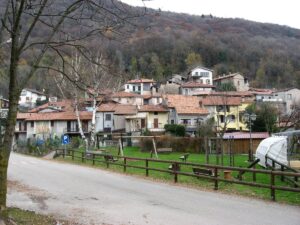
 Perched on a promontory overlooking Varenna, Castello di Vezio is one of those places where history and landscape merge in a single glance. Its origins are shrouded in mystery, but tradition links it to the Lombard queen Teodolinda, who is said to have built a church and the castle here. The first written record dates back to 1169, when exiles from Como found refuge after the war. Over the centuries, ownership passed from the Monti counts to the Serbelloni family and eventually to the Greppi Di Robilant, who still own it today. Visiting the castle is an experience that blends nature, culture, and a touch of mystery. Climbing the tower offers a 360-degree view of Lake Como – a panorama worth the trip alone. In the dungeons, legend says ghosts wander, but the real surprise is the exhibition on the Lariosauro, a prehistoric marine reptile discovered right in Perledo, up to 130 cm long. Falconry shows take place daily, with birds of prey flying freely over the lake: thrilling for both young and old. The castle is reachable on foot from Varenna or the village of Vezio via a well-marked path. At the entrance you'll find a bar, souvenir shop, and facilities. In short, a stop that combines history, science, and fun, perfect for a day trip.
Villa Monastero: Immersed in History and Nature on Lake Como
- Go to the page: Villa Monastero: botanical garden and house museum on Lake Como
- Viale Giovanni Polvani 4, Fiumelatte (LC)
- https://www.villamonastero.eu/
- Open in Google Maps
- View on Google Images
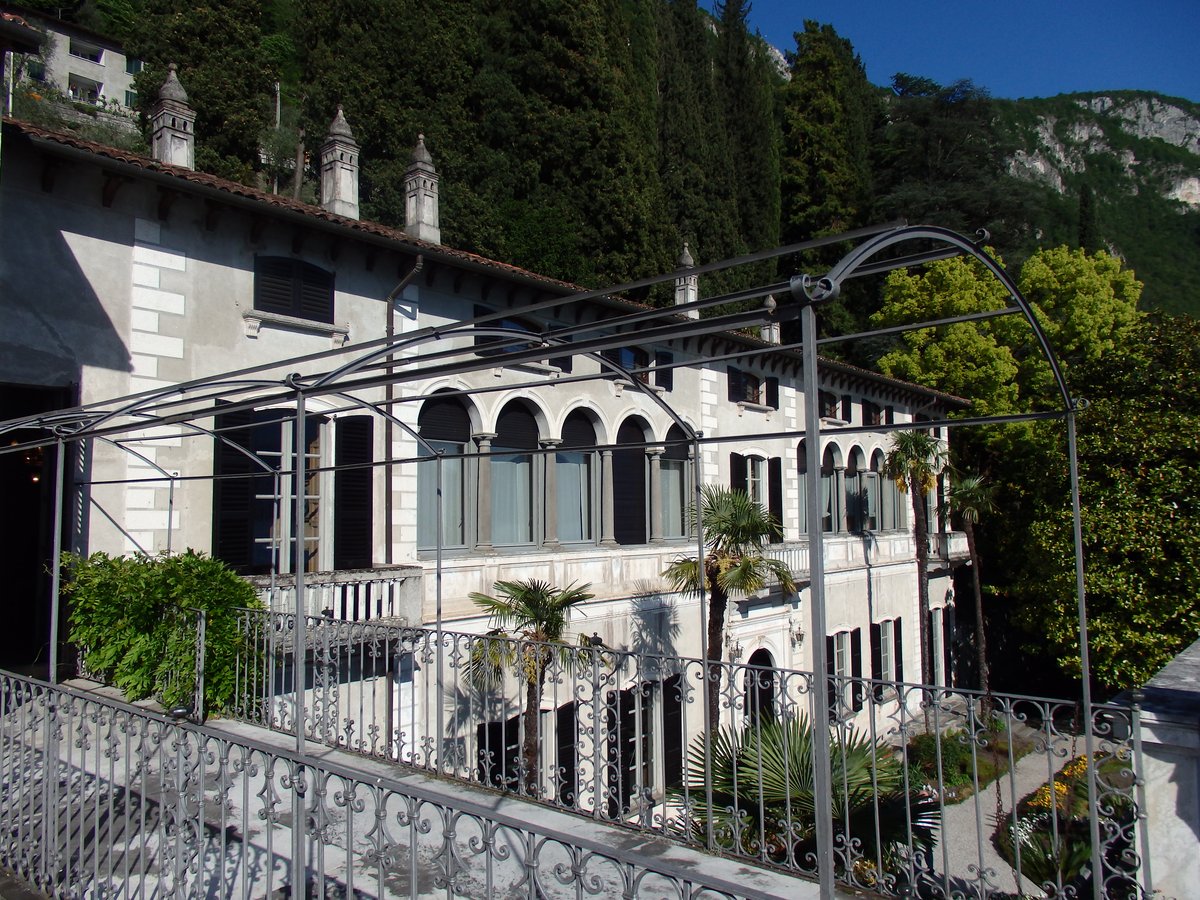 Villa Monastero is one of those stops that stays with you. Situated between Varenna and Fiumelatte on the eastern shore of Lake Como, it is a former 13th-century Cistercian monastery turned noble residence. Today, it is a perfect blend of House Museum, botanical garden, and conference center. The park stretches for nearly 2 km along the lake, from Varenna to Fiumelatte, with terraces filled with exotic species: African palms, cedars of Lebanon, agaves, yuccas, and the rare blue palm Erythea armata. Among the pathways and staircases, you'll find statues and fountains, such as Comolli's "Clemenza di Tito". Inside, 14 rooms are furnished with period pieces: the neo-Renaissance Black Room, the Music Room with two antique pianos, and the Fermi Room, where Enrico Fermi gave his last physics lectures in 1954. The villa hosts the International School of Physics of the Italian Physical Society every year. A few steps away flows the Fiumelatte stream, one of Italy's shortest rivers (250 m), mentioned by Leonardo da Vinci in the Codex Atlanticus. Hours and tickets vary: in summer (June–August) it is open daily 9:30 AM–8:00 PM, full ticket €10 (garden only €8). You can easily arrive by train or boat (free docking with reservation). The mild lake climate offers blooms almost year-round. Tip: visit at dawn or sunset to enjoy the silence and light reflecting on the water. A place that never fails to amaze at every step.
Villa Monastero: Immersed in History and Nature on Lake Como
- Go to the page: Villa Monastero in Fiumelatte: A Historic Residence on Lake Como with Botanical Gardens and Italy's Shortest River
- Viale Giovanni Polvani 4, Fiumelatte (LC)
- https://www.villamonastero.eu/
- Open in Google Maps
- View on Google Images
Villa Monastero is one of those stops that stays with you. Situated between Varenna and Fiumelatte on the eastern shore of Lake Como, it is a former 13th-century Cistercian monastery turned noble residence. Today, it is a perfect blend of House Museum, botanical garden, and conference center. The park stretches for nearly 2 km along the lake, from Varenna to Fiumelatte, with terraces filled with exotic species: African palms, cedars of Lebanon, agaves, yuccas, and the rare blue palm Erythea armata. Among the pathways and staircases, you'll find statues and fountains, such as Comolli's "Clemenza di Tito". Inside, 14 rooms are furnished with period pieces: the neo-Renaissance Black Room, the Music Room with two antique pianos, and the Fermi Room, where Enrico Fermi gave his last physics lectures in 1954. The villa hosts the International School of Physics of the Italian Physical Society every year. A few steps away flows the Fiumelatte stream, one of Italy's shortest rivers (250 m), mentioned by Leonardo da Vinci in the Codex Atlanticus. Hours and tickets vary: in summer (June–August) it is open daily 9:30 AM–8:00 PM, full ticket €10 (garden only €8). You can easily arrive by train or boat (free docking with reservation). The mild lake climate offers blooms almost year-round. Tip: visit at dawn or sunset to enjoy the silence and light reflecting on the water. A place that never fails to amaze at every step.Bellano Gorge: A plunge into legend and nature
- Go to the page: Bellano Gorge: Suspended Walkways Over a 50-Meter Deep Canyon
- Bellano (LC)
- https://discoveringbellano.eu/it/orrido-di-bellano
- Open in Google Maps
- View on Google Images
- +39 334 3774966
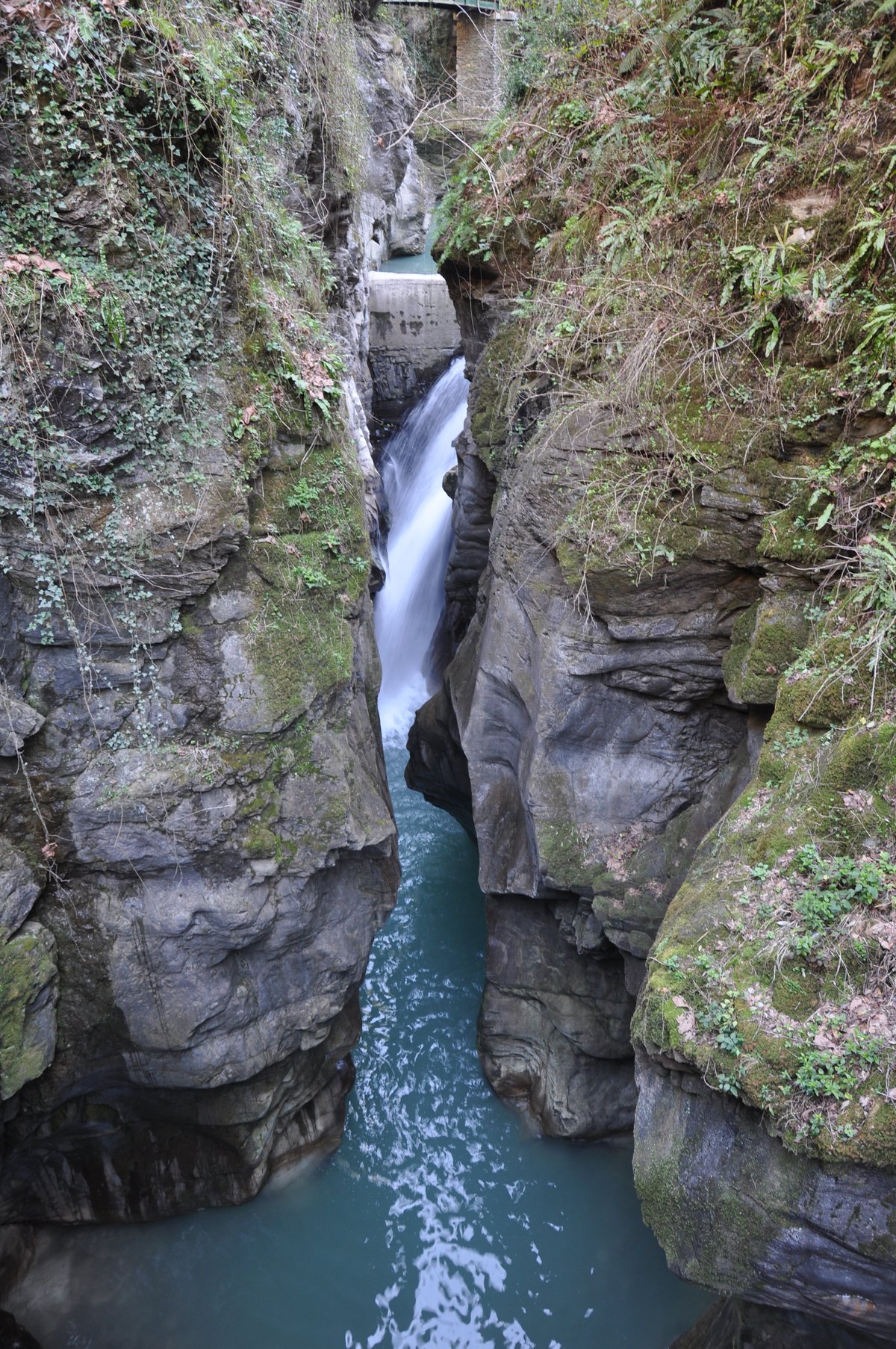 If you don't know it yet, the Bellano Gorge is one of those wonders that leave you speechless. A deep gorge carved out by the Pioverna stream over 15 million years ago, which you can now explore by walking on walkways suspended high above the water. The roar of the 40-meter waterfall accompanies you throughout the path, while light filters through the rocks and lush vegetation. An almost mystical experience that inspired poets like Stendhal and Boldoni (who called it 'horror of a horrendous horribleness').
At the entrance, you are welcomed by the famous Cà del Diavol, a pentagonal tower of mysterious origin, linked to legends of satanic rites. Today it is a three-story multimedia museum: you will discover geology, local legends (like that of Taino buried with a treasure) and you can even have a VR experience that takes you from the gorge to the mountains of Valsassina. The path is easy, but be careful: the walkways can become slippery, so comfortable shoes are a must. No strollers allowed, but for small children a baby carrier is fine.
The Gorge is open all year, with varying hours. In summer (June-August) it is open daily until 7-8 pm, in March-April less. The ticket costs 5-6 euros, reduced to 3-4 for children and residents. If you arrive by train or ferry (Bellano is well connected), you get a discount. The best time? In autumn or spring, when the water is more abundant and the show is guaranteed. Bring a sweatshirt, the humidity is noticeable!
In short, a place that combines nature, history and a touch of mystery. Not to be missed if you pass through Lake Como.
Bellano Gorge: A plunge into legend and nature
- Go to the page: Bellano Gorge: Canyon and Waterfalls on Lake Como
- Bellano (LC)
- https://discoveringbellano.eu/it/orrido-di-bellano
- Open in Google Maps
- View on Google Images
- +39 334 3774966
If you don't know it yet, the Bellano Gorge is one of those wonders that leave you speechless. A deep gorge carved out by the Pioverna stream over 15 million years ago, which you can now explore by walking on walkways suspended high above the water. The roar of the 40-meter waterfall accompanies you throughout the path, while light filters through the rocks and lush vegetation. An almost mystical experience that inspired poets like Stendhal and Boldoni (who called it 'horror of a horrendous horribleness').At the entrance, you are welcomed by the famous Cà del Diavol, a pentagonal tower of mysterious origin, linked to legends of satanic rites. Today it is a three-story multimedia museum: you will discover geology, local legends (like that of Taino buried with a treasure) and you can even have a VR experience that takes you from the gorge to the mountains of Valsassina. The path is easy, but be careful: the walkways can become slippery, so comfortable shoes are a must. No strollers allowed, but for small children a baby carrier is fine.
The Gorge is open all year, with varying hours. In summer (June-August) it is open daily until 7-8 pm, in March-April less. The ticket costs 5-6 euros, reduced to 3-4 for children and residents. If you arrive by train or ferry (Bellano is well connected), you get a discount. The best time? In autumn or spring, when the water is more abundant and the show is guaranteed. Bring a sweatshirt, the humidity is noticeable!
In short, a place that combines nature, history and a touch of mystery. Not to be missed if you pass through Lake Como.
Forte Montecchio Nord: The Fortress That Defied Time
- Via alle Torri 8, Colico (LC)
- https://www.fortemontecchionord.it/
- Open in Google Maps
- View on Google Images
- +39 0341940322
 There's a place where the history of the Great War has remained frozen: Forte Montecchio Nord in Colico. It is considered one of the best-preserved forts in the world, and when you enter, the atmosphere feels almost surreal. Built between 1912 and 1914 as part of the Cadorna Line, it was meant to protect Italy from an attack through Switzerland. Today, it is the only fort in Italy that still has its four original Schneider 149/35 cannons, with a range of 14 km, mounted on rotating armored cupolas. The guided tour takes you through the shelter, a large fortified building set into the rock, and then into the 140-meter covered corridor that leads to the battery. Halfway along, you'll find the powder magazine, dug 12 meters into the mountain: a labyrinth of tunnels where ammunition was stored. Climbing up, you reach the battery with its steel cupolas and can walk alongside these iron giants. On the barracks' walls, fascist-era inscriptions are still visible, a detail that gives pause for thought. During World War II, the fort was garrisoned by Italian and German troops, and on April 27, 1945, the cannons fired five shots at the convoy escorting Mussolini. The fort had an advanced ventilation and heating system, with wood stoves and ducts still visible. From the roof, nicknamed the 'balcony' of the fortress, the view spans Upper Lake Como, the Pian di Spagna Nature Reserve, and Mount Legnone. Admission: €10 for adults, €6 for children. Book the guided tour, as it's the only way to access the fort. Since 2008, it has been managed by the White War Museum, which has preserved it perfectly. A heartfelt tip: don't miss the chance to see an authentic piece of history.
Abbey of San Pietro al Monte: Trekking and Romanesque Art in Civate
- Sentiero della Val de La Porta, Civate (LC)
- https://www.amicidisanpietro.it/
- Open in Google Maps
- View on Google Images
- info@amicidisanpietro.it
- +39 346 3066590
 If you think you have to go to the city to see a Romanesque masterpiece, the Abbey of San Pietro al Monte will change your mind. Perched at 630 meters on the slopes of Mount Cornizzolo, it can only be reached on foot: about 45 minutes uphill from Civate (Pozzo district), on a well-marked path that winds through the woods. The last stretch is steeper, but the effort is rewarded with a breathtaking view of Lake Annone and the Lecco mountains.
The complex, of Lombard origin (8th century), is one of the best preserved in Lombardy. Upon entering, you are greeted by the inscription "Ora et Labora" on the stone portals, a legacy of the Benedictine monks. The basilica houses an 11th-century cycle of Romanesque frescoes depicting the Apocalypse: on the vault is the Heavenly Jerusalem, in the apse the Triumphant Christ. Not to be missed are the stucco ciborium and the crypt with small columns and reliefs.
Attention: the interior can only be visited by reservation, calling 3463066590 or writing to info@amicidisanpietro.it. Entry is free on Saturdays and Sundays, but always with a guide. Bring water and a snack: there is no café here, but the lawn in front of the basilica is perfect for a picnic. A hike suitable for everyone, as long as you wear trekking shoes. And if you have energy left, from the plateau you can continue to the Marisa Consigliere Refuge (another hour) and then to the summit of Cornizzolo.
Castle of Corenno Plinio
- Go to the page: Corenno Plinio Castle: 14th-century square tower perched above Lake Como
- Vicolo della Predera, Corenno Plinio (LC)
- Open in Google Maps
- View on Google Images
 If you're in the area, you can't miss the Castle of Corenno Plinio. Perched on a rocky spur with breathtaking views of Lake Como, this medieval castle will transport you back in time. Built between 1360 and 1370 by order of the Andreani family, it stands on ancient Roman foundations. Its structure is that of an enclosure castle, designed to protect the population and their belongings in case of attack. Strolling along the crenellated walls, you'll notice two towers: a square one to the north, older (11th century), and a sail-shaped one to the south, bearing the Andreani coat of arms. The moat that once surrounded it, mentioned in the statutes of 1389, was filled between 1825 and 1830 for the construction of the military road, now SP72. Visits are only possible with a guide on set dates (e.g., the first Saturday of the month from May to September, or on special occasions like the medieval reenactment in August). The cost is €5, free for residents of Dervio and children under 10. Booking is mandatory at the Dervio Infopoint (tel. 0341 040021). Don't miss the chance to combine the visit with the medieval village of Corenno Plinio, with its stone streets and the Church of San Tommaso, which houses the Andreani tombs. The name 'Plinio' was added in 1863 in honor of Gaius Plinius Secundus. An experience that combines history, panoramas, and authenticity. Personally, I was struck by the contrast between the robustness of the walls and the delicacy of the lakeside landscape. I recommend arriving by boat to admire the castle from the lake, as local guides suggest. The atmosphere is magical, especially at sunset.
Barbarossa Tower: A Leap into the Middle Ages
- Go to the page: Barbarossa Tower: Twelve Centuries of History and Spectacular Views of Lake Como
- Via della torre di Federico Barbarossa, Mandello del Lario (LC)
- Open in Google Maps
- View on Google Images
 Perched in the hamlet of Maggiana, the Barbarossa Tower is one of the best-preserved on Lake Como. Dating back to the 12th century, tradition has it that Frederick Barbarossa stayed here in 1158. A plaque found in 1828 confirmed this, but it is now lost. Whether true or not, climbing its five floors (all accessible—mind the narrow stairs!) is well worth the trip. The tower stands about 24 meters tall, with a square base and walls over a meter thick. Each level reveals a piece of history: from traces of frescoes to medieval arrow slits. At the top, a 19th-century terrace offers an incredible view of Mandello, the Lecco branch of the lake, and the mountains. Inside, the Ethnographic Museum, curated by the Gruppo Amici di Maggiana, displays farming tools and vintage photos—it feels like stepping into a lived-in home. Admission is free with a donation, and every June the medieval festival “Torre in Festa” features reenactments and local cuisine. A quick note: the tower is not accessible for people with mobility issues. And heads up: from April 2026 it will close for restoration, so take advantage if you're in the area!
Castello di Lierna: a Fortified Hamlet on the Lake
- Go to the page: Lierna Castle: Private Medieval Fortress on Lake Como
- Via Scura, Lierna (LC)
- Open in Google Maps
- View on Google Images
 If you're looking for a corner of Lake Como off the beaten path, the Castello di Lierna is a discovery worth the trip. Don't expect a fairy-tale castle with crenellated towers: here time has transformed an ancient fortress into a living hamlet, with stone houses, flower-filled courtyards, and the little church of Santi Maurizio e Lazzaro that looks like it stepped out of a painting. Its origins? Roman, later reworked in the Middle Ages, with battles between Como and Milan (the Ten Years' War ended in 1127). Legend has it that Queen Theodelinda stayed here, but reliable documents speak of a strategic role for controlling the lake. Today you reach it on foot from Lierna station, following a paved path of 600 meters with minimal elevation gain: suitable for everyone, but keep a steady step. Enter through Via Scura, a shady alley, and emerge into the church square: here a well with its original lever and a portal dated 1746 take you back centuries. The church, open in summer, preserves 15th-century frescoes and the relic of Saint Maurice, carried in procession every September 22. The hamlet is still inhabited, so respect the silence and enjoy the atmosphere suspended between the lake's scent and stories of pirates like the Medeghino, who in the 16th century used the castle as a base. Just a bit further down, the beach of Lierna awaits for a swim. A tip? Bring a book and sit on the benches by the shore: time here seems to stand still.