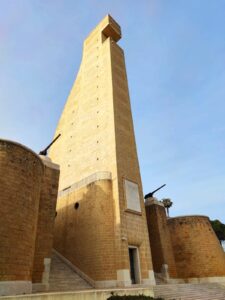
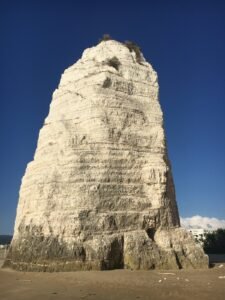
Explore Barletta with this 1-day walking itinerary designed for culture lovers. Four unmissable stops: the Swabian Castle, the Curci Theater, the De Nittis Art Gallery, and the Yugoslav Memorial. Start from the Norman castle, symbol of the city, with its mighty walls and temporary exhibitions. A few minutes away, the 19th-century theater, still hosting shows today. Then the art gallery, which houses masterpieces by Giuseppe De Nittis. Finally, the memorial, a Yugoslav commemorative monument. All stops are reachable on foot, through alleys and squares of the historic center. An ideal tour for those who want to combine art, history, and a walk. Includes tips on timings and tickets. Experience Barletta at a slow pace, discovering its treasures.
🗺️ Your trip at a glance
This itinerary takes you to discover the cultural heart of Barletta in one day. A walking route that combines castle, theater, art gallery, and memorial, for a complete experience.
- Ideal for those who love history and art, looking for a cultural day at a slow pace.
- Highlights: iconic stops just steps away, unique historical context, in the city center.
- For whom: curious travelers, families, culture enthusiasts.
Itinerary stops
Stop no. 1
Swabian Castle of Barletta
 We begin our day in Barletta at the city’s symbol: the Swabian Castle. Overlooking the sea, this fortress is an incredible palimpsest of history: Norman, Swabian, Angevin, and Spanish. Entering through the stone bridge, you cross the moat and find yourself in a large square courtyard, the beating heart of cultural events. Don’t miss the bust of Frederick II of Swabia and the Sarcophagus of the Apostles, a Paleochristian testimony from the 3rd-4th century. The castle houses the Civic Museum, with archaeological finds and works of art, and the Municipal Library. Climb the ramparts for a 360° view of the city and the Adriatic. Admission costs €6 (reduced €3) and is open Tuesday to Sunday, 9 am to 7 pm. A tip: get the cumulative ticket (€8) which also includes the Picture Gallery and the Cantina della Sfida, it will save you money.
- Viale Manuti Giorgio, Barletta (BT)
- Open in Google Maps
- View on Google Images

You should go if…
Stop no. 2
Teatro Curci: A 19th-Century Jewel
 After the Castle, the second step is a must: the Teatro Curci. Entering here is like taking a step back in time, among gilded decorations and a ceiling depicting Aurora on the chariot of the Sun. Inaugurated in 1872, after the collapse of the old San Ferdinando, it was rebuilt on the model of the San Carlo in Naples. The horseshoe-shaped hall has 495 seats, but the real magic is in the details: the boxes with cornucopias, the historic curtain by Calò that tells the story of the Disfida di Barletta, and those busts of musicians that greet you on the façade. I went there one afternoon, without a show, and even so the atmosphere was charged. Today it hosts seasons of drama, dance, and international concerts. If you pass by, check the program: you might catch something special.
- Go to the page: Curci Theatre of Barletta: Neoclassical Architecture and Perfect Acoustics Since 1872
- Via Consalvo da Cordova, Barletta (BT)
- https://www.teatrocurci.it/
- Open in Google Maps
- View on Google Images
You should go if…
Stop no. 3
De Nittis Gallery
 After leaving Teatro Curci, another gem awaits you: the De Nittis Gallery, inside the splendid Palazzo della Marra. Here time stands still before the masterpieces of Giuseppe De Nittis, an Impressionist from Barletta who conquered Paris. The collection, donated by his wife Léontine, includes 146 paintings and 65 drawings: a journey from the light of Naples to Parisian high society, passing through horse races and intimate portraits. I was enchanted by “Colazione in giardino” (Breakfast in the Garden), an explosion of light en plein air. The two-floor exhibition is meticulously curated, with comparisons to Manet and Degas. If you love 19th-century art, here you’ll find a piece of European history. By the way, the Baroque palace deserves a mention: look out from the loggia with a sea view!
- Go to the page: De Nittis Gallery: Over 200 Works in the Painter’s House-Museum in Barletta
- Via della Marra, Barletta (BT)
- Open in Google Maps
- View on Google Images
You should go if…
Stop no. 4
Yugoslav Memorial Ossuary
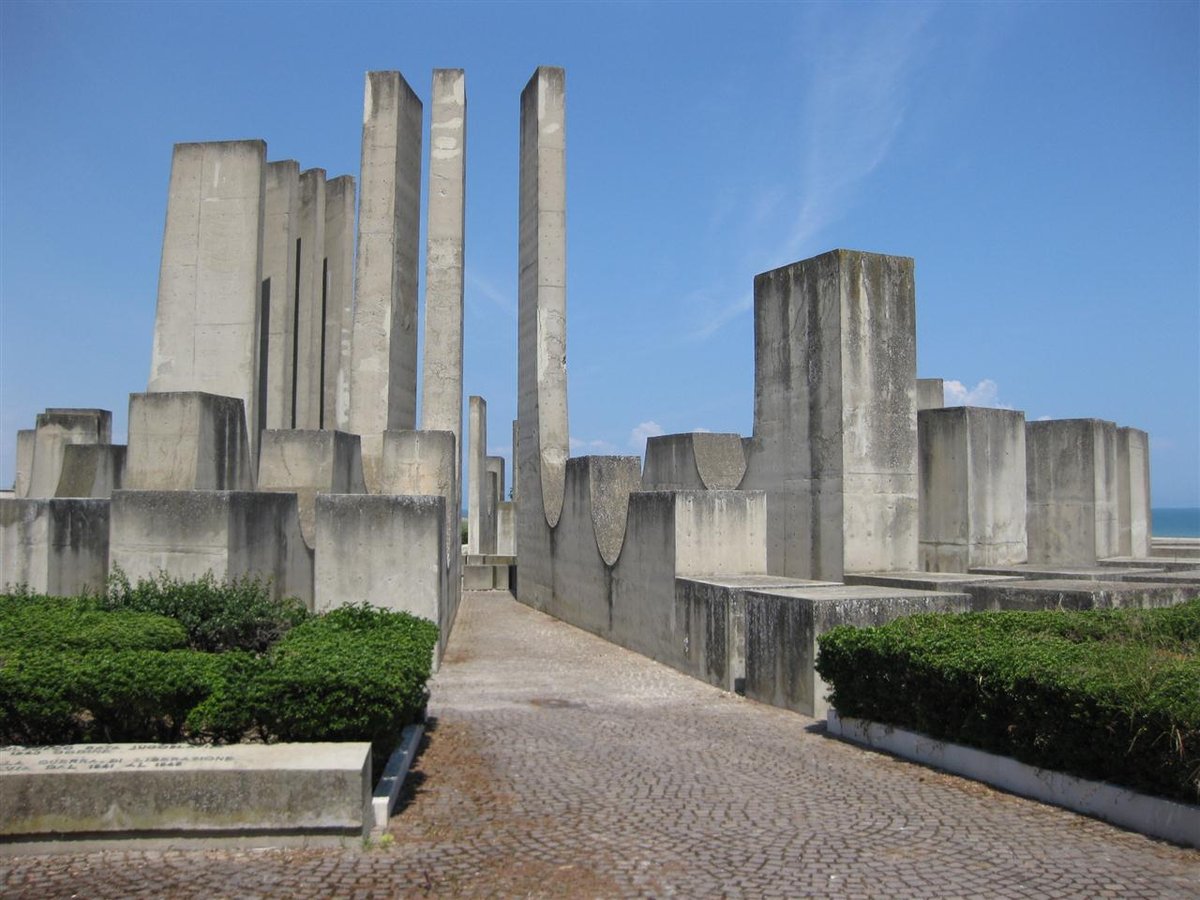 The final stop is the most unexpected. In the monumental cemetery of Barletta lies a modern work of art: the Yugoslav ossuary. Designed by sculptor Dušan Džamonja and architect Hildegard Auf-Franić, it was inaugurated in 1970 to commemorate the partisans who fell during World War II. The reinforced concrete structure spans two levels: outside, large volumes converge toward a skylight; inside, a granite staircase descends into the crypt where over 800 bodies rest. On two bronze portals are engraved the names of the fallen and missing, a list that stirs emotion. At the center of the floor, a red mosaic symbolizes the blood shed. From the terrace, there is a view of the Adriatic, with the idea that the sea unites the two shores. Today, the monument is unfortunately in a state of decay due to salt spray, but it remains a powerful place of memory, far from mass tourism. I recommend visiting with respect, perhaps at sunset when the warm light enhances the Brutalist forms.
- Via del Gelso, Barletta (BT)
- Open in Google Maps
- View on Google Images
You should go if…