
🧭 What to Expect
- Ideal for: those looking for a vacation combining sea, history, and nature
- Highlights: Gargano coast, archaeological sites, medieval castles
- In short: a province with a thousand faces, perfect for a slow trip off the beaten path
Events nearby



When you think of the province of Foggia, your mind immediately goes to the Gargano, with its cliffs overlooking the sea and crystal-clear waters. But this land offers much more: archaeological sites like Herdonia and Grotta Paglicci, Norman and Swabian castles in Lucera and Monte Sant'Angelo, and authentic villages like Faeto and Bovino. I traveled around the area for days, between nature trails and food and wine stops, and selected the unmissable experiences. Whether you are a history lover or a beach seeker, you'll find a unique mix here. From practical tips from Viaggio in Puglia and Italia.it, here's what not to miss in the province of Foggia.
Overview
- Pizzomunno: Vieste's Symbol Between Legend and Sea
- The Norman, Swabian, Angevin, and Aragonese Castle
- Swabian-Angevin Fortress of Lucera: One of Europe's Most Imposing Medieval Fortifications
- Sant'Eufemia Island Lighthouse: The Guardian of Gargano
- Herdonia: The Ancient Daunian City Unveiling Its Secrets
- Herdonia: The Ancient Daunian City Unveiling Its Secrets
- Grotta Paglicci
- Augustan Roman Amphitheater of Lucera
- The Swabian-Angevin Castle of Manfredonia
- Torre Mileto: Beach and Historic Tower
- Torre Mileto: Beach and Historic Tower
- Castel Pagano: history, legends and breathtaking views
- Torre Alemanna: The Teutonic Jewel of Cerignola
- Crepacuore Castle: The Echo of a Lost Fortress
- Villa di Faragola: A Late Antique Jewel Reborn from the Ashes
- Santa Maria di Devia: a hidden Romanesque masterpiece on the Gargano
- Castello Ducale of Torremaggiore: A Dive into the Middle Ages
Itineraries nearby


Pizzomunno: Vieste's Symbol Between Legend and Sea
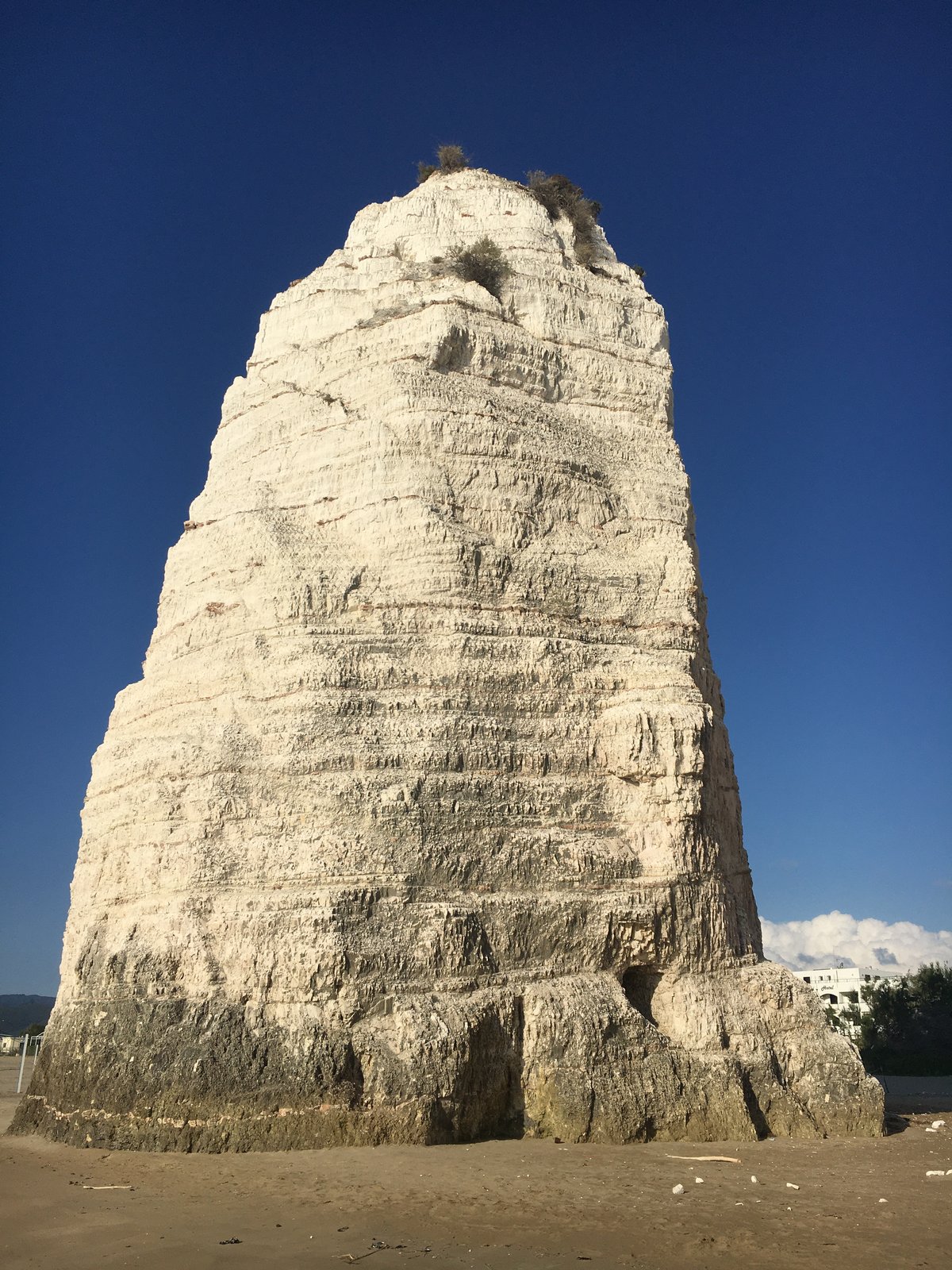 If there's one place that captures the soul of Vieste, it's Pizzomunno. This imposing limestone monolith, 25 meters high, stands at the beginning of Castello Beach (also known as Scialara) and has always been the city's symbol. How can you not be impressed? It's there, white, solitary, standing guard over the turquoise sea of Gargano. But its magic goes beyond geology: the legend of Pizzomunno and Cristalda gives it a soul. The story goes that the young fisherman, after losing his beloved to jealous sirens, turned to stone from grief. And every hundred years, for one night, the two lovers embrace again. Story or fantasy? It hardly matters when you're there looking at it. The surrounding beach is enchanting: fine light sand, water that shades from blue to green, and a view of the old town perched on the cliff. If you visit, don't miss the tradition: they say that anyone who walks all the way around Pizzomunno will return to Vieste. I did it—who knows? For a quieter visit, aim for June or September; in summer it's crowded, but sunrise or sunset offers unforgettable moments. And if you want a different perspective, climb up Via Bacco or Via Barion: from up there you'll see it dominating the coast.
The Norman, Swabian, Angevin, and Aragonese Castle
- Via Castello, Monte Sant'Angelo (FG)
- https://ecogargano.it/
- Open in Google Maps
- View on Google Images
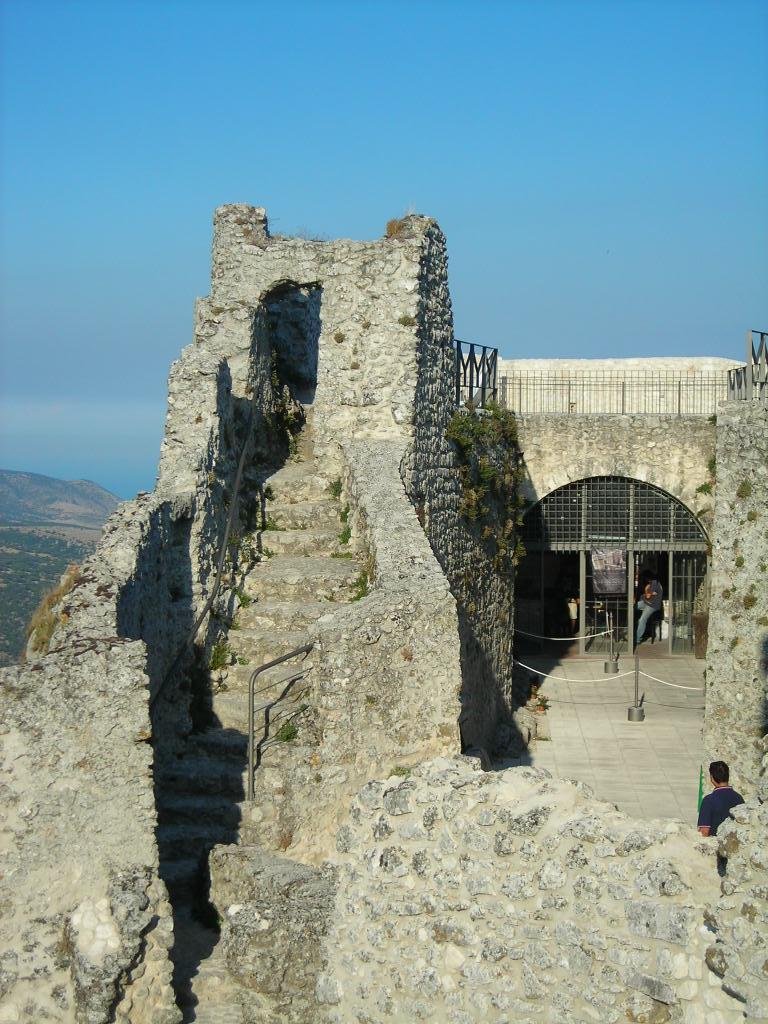 Perched on the highest point of Monte Sant'Angelo, the Norman, Swabian, Angevin, and Aragonese Castle dominates the Gargano promontory, the Gulf of Manfredonia, and the Tavoliere plain. Its origins date back to the 9th century, when the Lombard bishop Orso I built a Byzantine castrum between 837 and 838. Since then, every ruling power has left its mark: the Normans with the imposing Torre dei Giganti (18 meters high, walls 3.70 meters thick), the Swabians with the Treasury Hall of Frederick II, dedicated to his favorite Bianca Lancia; the Angevins, who turned it into a state prison (Philippa of Antioch was imprisoned here, and Queen Joanna I was possibly murdered); and finally the Aragonese, who added the almond-shaped tower and moat in the 15th century. Strolling along the walls, you breathe an authentic medieval atmosphere. The inner courtyard, with its curtain walls and cylindrical towers, and the staircase leading to the castellan's apartments tell stories of princes and courtiers. Don't miss the walkway near the perimeter wall: the view stretches from the sea to the town, offering a unique panorama. After centuries of neglect and restoration, the castle has been owned by the municipality since 1907 and now hosts events and guided tours. A gem waiting to be discovered, amidst ghost legends and Iron Age artifacts unearthed by recent excavations.
Swabian-Angevin Fortress of Lucera: One of Europe's Most Imposing Medieval Fortifications
- Sentiero dell Fortezza Svevo-Angioina, Lucera (FG)
- https://www.comune.lucera.fg.it/lucera/zf/index.php/servizi-aggiuntivi/index/index/idtesto/36
- Open in Google Maps
- View on Google Images
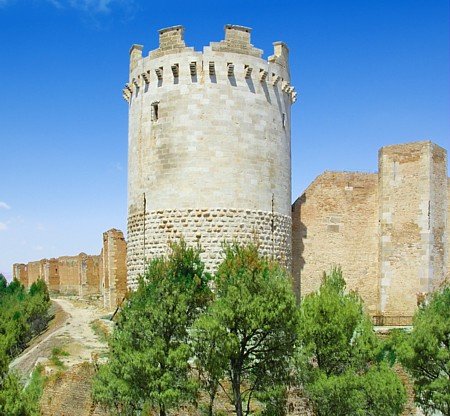 Perched atop Monte Albano, the Swabian-Angevin Fortress of Lucera is a giant of brick and history. With its curtain wall stretching 900 meters and rising 13 meters high, it is one of the largest medieval fortifications in Europe, and I assure you, the view from the walkway will leave you breathless: from up here you embrace the entire Tavoliere delle Puglie, all the way to the Gargano and the Daunian Sub-Apennines when the sky is clear.
History here is written in two distinct layers. In 1233, Frederick II built his imperial palace, of which only the truncated pyramidal base remains today, with a courtyard that on the third floor turned into an octagon—a preview of Castel del Monte. After the emperor's death, Charles I of Anjou transformed the residence into a true fortress: between 1269 and 1283, he erected the imposing curtain wall, punctuated by 13 square towers, 2 pentagonal bastions, and 2 cylindrical towers—the Torre del Leone (15 m) and the Torre della Leonessa (25 m), which tower over the entrance.
Today you can walk along the walls, visit the towers, and observe the remains of the Frederickian palace and the Angevin church of San Francesco. Inside the fort, the Tourist Information Service offers free guided tours (call 0881-541662). During the summer, don't miss the historical reenactment "Luceria 1240," which recreates Frederick II's medieval camp. Open from Tuesday to Sunday (10 AM–1 PM and 3 PM–7 PM), the fortress is a dive into the Middle Ages that is absolutely worth a stop on your journey through Capitanata.
Sant'Eufemia Island Lighthouse: The Guardian of Gargano
- Lungomare Cristoforo Colombo, Vieste (FG)
- Open in Google Maps
- View on Google Images
 If there is one place that captures the charm of Gargano, it is the Sant'Eufemia Island Lighthouse. Perched on a rocky islet about 800 meters from Vieste, this lighthouse has been active since 1868, illuminating the Adriatic Sea with its three white flashes every 15 seconds, visible up to 25 nautical miles. The 27-meter-high octagonal tower sits atop the old keeper's house, now abandoned after automation in 1997. Reaching it by sea is an adventure: depart from Vieste's port, land at a pier, and ascend a panoramic walkway offering breathtaking views of the historic center and the sea. It's a shame you can't go inside, but even seeing it up close provides a unique thrill.
But the real surprise lies hidden: a cave with over 200 votive inscriptions in Greek and Latin, left by sailors invoking Venus Sosandra, the savior goddess. The cult dates back to the 3rd century BC, and the carvings cover the walls like a millennia-old travel diary. Among them stands out the inscription of Venetian Doge Pietro Orseolo II, who stopped here in 1002 with his fleet on his way to liberate Bari from the Saracens. A true treasure chest of history, still being excavated by the Universities of Bari and Foggia.
If you're in Vieste, don't miss a boat trip to the islet. The lighthouse is not accessible, but the views and the history you can feel are worth the crossing. Bring your camera: the rock with the tower silhouetted against the sky is an image that stays with you.
Herdonia: The Ancient Daunian City Unveiling Its Secrets
- Go to the page: Herdonia, the Pompeii of Apulia: What to See
- Via Traiana, Ordona (FG)
- Open in Google Maps
- View on Google Images
 In the heart of the Foggia province, just a few kilometers from Ordona, lies the archaeological site of Herdonia, a place that has traversed millennia of history. Already inhabited in Daunian times, it became an important Roman municipality thanks to the Via Traiana. Today, what remains is a fascinating puzzle of ruins that tells the story of an ancient city. Strolling among the remains, you come across the forum surrounded by shops, the basilica with its imposing columns (42x26 meters), the macellum (the covered market), and the thermal baths with richly decorated hot and cold rooms. The elliptical amphitheater (74x59 meters) makes use of a defensive ditch, a detail that surprises. But Herdonia is not just Roman: the most precious artifacts, such as the Daunian Stele from the 7th-6th century BC and the Warrior Embroidery from the 4th century BC (the oldest in Italy), are housed in the nearby HERMA Archaeological Museum, inaugurated in 2017. Unfortunately, the site is in a state of neglect: excavations stopped in 2000 and many monuments have been reburied. Care is entrusted to volunteers. Despite this, visiting it offers authentic emotions: you enter for free, walk among grass and stones, and imagine life two thousand years ago. An experience I recommend to those who love archaeology without filters, but with a touch of melancholy.
Herdonia: The Ancient Daunian City Unveiling Its Secrets
- Go to the page: Herdonia: Roman Ruins and Medieval Walls in the Foggian Plain
- Via Traiana, Ordona (FG)
- Open in Google Maps
- View on Google Images
In the heart of the Foggia province, just a few kilometers from Ordona, lies the archaeological site of Herdonia, a place that has traversed millennia of history. Already inhabited in Daunian times, it became an important Roman municipality thanks to the Via Traiana. Today, what remains is a fascinating puzzle of ruins that tells the story of an ancient city. Strolling among the remains, you come across the forum surrounded by shops, the basilica with its imposing columns (42x26 meters), the macellum (the covered market), and the thermal baths with richly decorated hot and cold rooms. The elliptical amphitheater (74x59 meters) makes use of a defensive ditch, a detail that surprises. But Herdonia is not just Roman: the most precious artifacts, such as the Daunian Stele from the 7th-6th century BC and the Warrior Embroidery from the 4th century BC (the oldest in Italy), are housed in the nearby HERMA Archaeological Museum, inaugurated in 2017. Unfortunately, the site is in a state of neglect: excavations stopped in 2000 and many monuments have been reburied. Care is entrusted to volunteers. Despite this, visiting it offers authentic emotions: you enter for free, walk among grass and stones, and imagine life two thousand years ago. An experience I recommend to those who love archaeology without filters, but with a touch of melancholy.Grotta Paglicci
- Go to the page: Grotta Paglicci: 30,000-Year-Old Cave Paintings in Gargano
- Strada Provinciale 22 Borgo Celano, Rignano Garganico (FG)
- Open in Google Maps
- View on Google Images
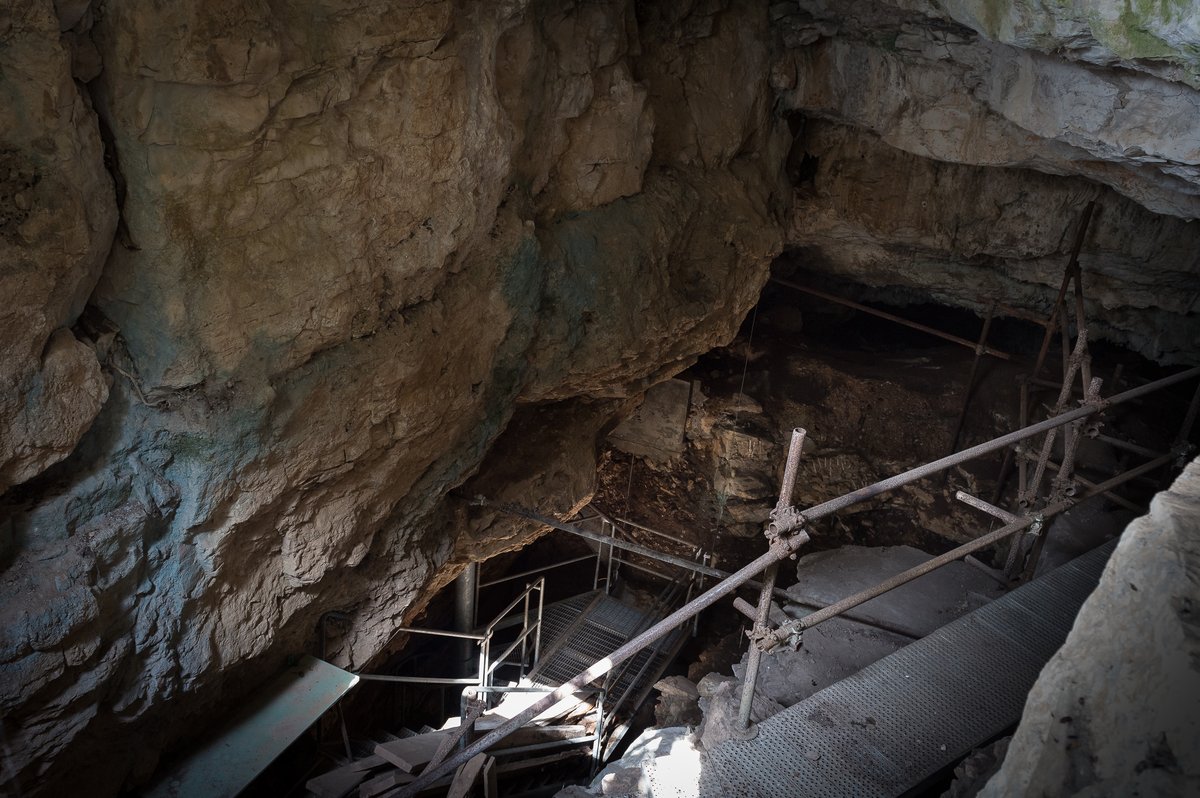 Grotta Paglicci is one of the most extraordinary Paleolithic sites in Italy, yet few know it. Located in Rignano Garganico, on the Gargano, this karst cave has yielded over 45,000 artifacts, including parietal paintings of horses and hands in red ochre, unique in Italy. Inside, two Gravettian burials dating back about 30,000 years were discovered: a 12-13 year old girl and a young woman, both with rich funerary goods. But it doesn't end there: among the finds stands out the oldest domestic dog in Italy, lived between 14,000 and 20,000 years ago, and a 32,000-year-old pestle with traces of oats, revealing the diet of our ancestors. The mobile art is exceptional: a tibia fragment engraved with an ibex, dated 22,000 years, is considered the oldest Paleolithic art dated by carbon in Italy. Unfortunately, the cave is not open to visitors for safety reasons – it is privately owned and subject to collapses. But in Rignano Garganico, the Paleolithic Museum of Grotta Paglicci has been set up, reopened in 2021 with a multimedia setup that will immerse you in the prehistoric era. You can see original artifacts, 3D reconstructions, and projections. If you love prehistory, it is a must. I wouldn't have expected it, but Gargano is not just sea and woods: here human history is written in the rocks. It is worth a detour to visit the museum: it will surprise you.
Augustan Roman Amphitheater of Lucera
- Go to the page: Roman Amphitheatre of Lucera: 1st Century BC Arena for 18,000 Spectators
- Viale Giovanni Paolo II, Lucera (FG)
- Open in Google Maps
- View on Google Images
 If you're passing through Lucera, don't miss the Augustan Roman Amphitheater, one of the oldest in Southern Italy and even older than the Colosseum. Built between 27 BC and 14 AD by order of magistrate Marcus Vecilus Campus, who financed it from his own pocket on his own land, it was dedicated to Emperor Augustus. It could hold up to 18,000 spectators, an impressive number for the time: the arena measures 75.20 x 43.20 meters, and the external structure reaches 131 x 99 meters. The elliptical plan takes advantage of a natural depression; today you enter through two reconstructed portals with Ionic columns and a dedicatory inscription. Beneath the arena runs a service gallery with three pits, used for machinery and animals. Abandoned for centuries and used as a quarry after Constans II's sack in 663, it was brought back to light by excavations in 1932 and restored between 2006 and 2009. Today it is open to visitors and often hosts cultural events, with seating for about a thousand spectators. Walking through the corridors and tiers, you can feel the atmosphere of gladiatorial games and venationes. The view from the top includes the Swabian walls and the cathedral. I recommend a visit early in the morning or at sunset, when the light enhances the details of the opus reticulatum. The entrance is on Viale Augusto; for opening hours and tickets (the cost is low and often includes the Civic Museum), it's best to contact the municipality, as information varies by season. Comfortable shoes and water are a must in summer.
The Swabian-Angevin Castle of Manfredonia
- Via dell'Arcangelo, Manfredonia (FG)
- Open in Google Maps
- View on Google Images
 The Swabian-Angevin Castle of Manfredonia is one of those places that takes you back in time. Overlooking the sea, with its massive walls and towers that seem to tell stories of battles and dominations. It is not the result of a single design, but of layers: started by Manfred of Swabia, completed by Charles I of Anjou in 1279, and later transformed by the Aragonese in the 15th century. The quadrangular layout with corner towers – three cylindrical and one pentagonal bastion – is its hallmark. Walking through the courtyard, you can almost hear the echoes of Swabian soldiers and Bourbon prisoners. Since 1620 it lost its defensive function, becoming a barracks and prison. Today, after restoration, it houses the National Archaeological Museum, with the most important artifacts from Capitanata, including the famous Daunian Stelae, bas-reliefs from the 7th-6th century BC that tell the life of the ancient Daunians. The visit is well organized: you enter in time slots, full ticket €5 (combined with Siponto for €7). Climbing onto the terraces, the view of the harbor and Gargano is spectacular. A sincere tip: don't just stick to the outside; the museum is really worth it, especially if you love archaeology. And if you're around at Christmas, there's a living nativity scene in the moat – a magical touch.
Torre Mileto: Beach and Historic Tower
- Go to the page: Torre Mileto: Beach, Historic Tower, and Gargano Views
- Strada Provinciale 41 San Nicandro - Torre Mileto - Stazione Ischitella, San Nicandro Garganico (FG)
- Open in Google Maps
- View on Google Images
 If you're looking for a spot off the beaten path, Torre Mileto is one of those discoveries that pays off. We're between San Nicandro Garganico and Lesina, on the coastal strip that separates Lake Lesina from the Adriatic Sea. The view is one you'll stop to admire: on one side the lagoon, on the other the blue sea, and in between a fine sandy beach surrounded by ancient olive trees.
The name comes from the tower built in 1568, during the Spanish rule. Standing 18 meters tall and with a truncated pyramid shape, it rises on a small peninsula. It was used to spot Ottoman pirates: stones were thrown from the arch openings. Later, in the 19th century, it served as a weather station and lighthouse. Today it can only be visited from the outside, but occasionally – such as for Coast Day – they organize special openings with guided tours. From the tower, the view is breathtaking, worth a walk up there.
The beach is wild, with two separate strips: to the south it is wider and sandier, perfect for swimming; to the north it is more sheltered and tranquil. The sea is clear and slopes gently. If you enjoy birdwatching, bring binoculars: the dunes and Mediterranean vegetation attract many birds.
In the surroundings, don't miss Lake Lesina: the traditional 'paranze' for eel fishing are a spectacle, and if you stay for dinner, try grilled eel or lagoon fish soup. To get there, a car is best: from San Nicandro it's ten minutes. Alternatively, there is a Sita Sud bus (line 729) connecting San Marco in Lamis and San Nicandro.
Torre Mileto: Beach and Historic Tower
- Go to the page: Torre Mileto: Golden Beach with Dunes, Pine Forest, and 16th-Century Tower in Gargano
- Strada Provinciale 41 San Nicandro - Torre Mileto - Stazione Ischitella, San Nicandro Garganico (FG)
- Open in Google Maps
- View on Google Images
If you're looking for a spot off the beaten path, Torre Mileto is one of those discoveries that pays off. We're between San Nicandro Garganico and Lesina, on the coastal strip that separates Lake Lesina from the Adriatic Sea. The view is one you'll stop to admire: on one side the lagoon, on the other the blue sea, and in between a fine sandy beach surrounded by ancient olive trees.The name comes from the tower built in 1568, during the Spanish rule. Standing 18 meters tall and with a truncated pyramid shape, it rises on a small peninsula. It was used to spot Ottoman pirates: stones were thrown from the arch openings. Later, in the 19th century, it served as a weather station and lighthouse. Today it can only be visited from the outside, but occasionally – such as for Coast Day – they organize special openings with guided tours. From the tower, the view is breathtaking, worth a walk up there.
The beach is wild, with two separate strips: to the south it is wider and sandier, perfect for swimming; to the north it is more sheltered and tranquil. The sea is clear and slopes gently. If you enjoy birdwatching, bring binoculars: the dunes and Mediterranean vegetation attract many birds.
In the surroundings, don't miss Lake Lesina: the traditional 'paranze' for eel fishing are a spectacle, and if you stay for dinner, try grilled eel or lagoon fish soup. To get there, a car is best: from San Nicandro it's ten minutes. Alternatively, there is a Sita Sud bus (line 729) connecting San Marco in Lamis and San Nicandro.
Castel Pagano: history, legends and breathtaking views
- Strada Provinciale 28 Pedegarganica, Apricena (FG)
- Open in Google Maps
- View on Google Images
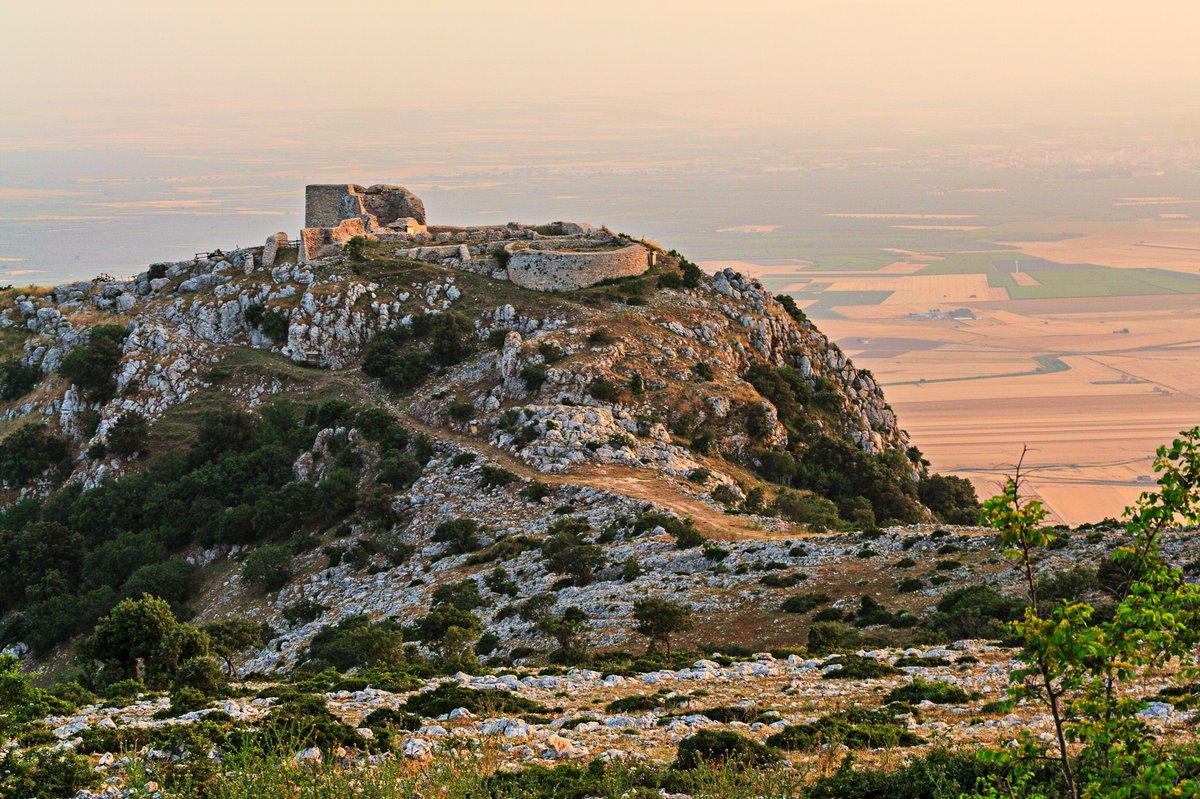 Perched at 545 meters above sea level on a Gargano spur, Castel Pagano is one of those places that takes your breath away. From here, your gaze freely sweeps over the Tavoliere, all the way to the Molise mountains and Lake Lesina. A panorama that alone is worth the trip. But the best part is that this site is also a dive into history.
The castle's origins are shrouded in mystery: it may date back to the 9th century, but it lived its golden age under Frederick II. The emperor stationed a garrison of Saracen soldiers from Sicily there, and it is to them that the name 'Pagano' is attributed. Today, imposing ruins remain: a long wall with two gates, a circular tower, and the pentagonal keep up to 7 meters high, still dominating the valley.
Fun fact: over 200 cisterns for collecting rainwater have been discovered on the site, evidence of a well-organized settlement. And then there are the legends: the apparition of the Madonna to a blind man, the battle between Saint Michael and a giant serpent, and the story of the Saracen prince who went mad for love.
Castel Pagano is free to visit. Just follow the signs for Stignano from Apricena. Bring water and comfortable shoes: you'll walk among the ruins and the nature of the Gargano National Park. A place I recommend to anyone who loves history, views, and a touch of mystery.
Torre Alemanna: The Teutonic Jewel of Cerignola
- Via Mentana, Cerignola (FG)
- Open in Google Maps
- View on Google Images
 If you find yourself in the province of Foggia, don’t miss Torre Alemanna, a hidden medieval gem in Borgo Libertà, 18 km from Cerignola. It’s the only Teutonic Knights fortress still standing in the Mediterranean—the kind of place that gives you chills. The square tower, 24 meters high, dominates the countryside and holds a treasure: on the ground floor, 13th-century frescoes depicting saints and scenes from the Passion, uncovered during restorations. The history begins in 1231, when Frederick II donated these lands to the Teutonic Order. Later, it passed to cardinals who added the Abbot’s Palace and an 18th-century loggia. Today, the complex houses the Museum of Ceramics, with Renaissance artifacts unearthed during excavations. Admission is often free, but it’s best to book ahead (tel. 3929927977). Open Mon–Fri 9 AM–1 PM, Saturday by appointment. I visited on a quiet afternoon, and the atmosphere was magical. I recommend pairing it with a visit to the nearby Piano delle Fosse Granarie in Cerignola, a unique system of over 600 grain pits. In short, an unexpected plunge into the Middle Ages.
Crepacuore Castle: The Echo of a Lost Fortress
- Strada Comunale Ignazia, Faeto (FG)
- Open in Google Maps
- View on Google Images
 Perched atop Monte Castiglione at 959 meters above sea level, Crepacuore Castle was an imposing Norman stronghold that dominated the Apennine pass of San Vito along the Via Francigena. Today, no visible trace remains: the hill is covered in forests, and silence has replaced the clash of arms. Yet, it suffices to pause for a moment and let your gaze wander to imagine the strategic importance of this place. Here, in 1024, the Byzantine emperors Basil and Constantine granted the fortress to the bishop of Troia. Then came the Normans, the Swabians, and finally the Angevins. In 1269, Charles I of Anjou restored it with 200 soldiers and 700 men to besiege the Saracen colony of Lucera. After the victory, the Provençal garrison settled there, but soon abandoned the castle to found the villages of Celle San Vito and Faeto, giving rise to the Francoprovençal minority that still exists today. The earthquake of 1456 and the Angevin-Aragonese wars sealed its fate: the castle's stones were stripped and reused to build houses, stables, and churches in the surrounding area. Visiting the site today is an almost mystical experience: you hike up the trails of Monte Castiglione, breathe pure air, and search in vain for ruins. But history is all there—in the air, in the place names, and in the calls of falcons soaring across the sky. For those who love places steeped in memory, Crepacuore is an unmissable stop in the heart of Daunia.
Villa di Faragola: A Late Antique Jewel Reborn from the Ashes
- Strada Provinciale 105 Foggia - Ascoli Satriano, Ascoli Satriano (FG)
- Open in Google Maps
- View on Google Images
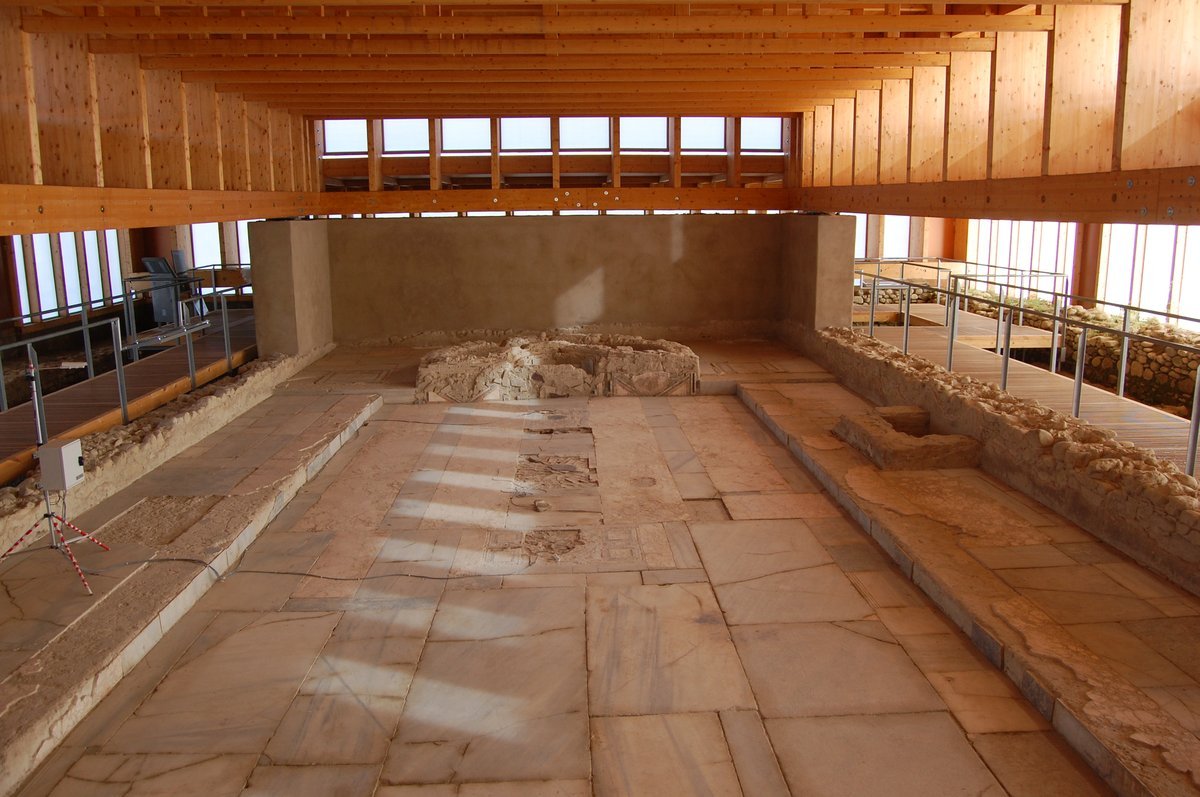 In the heart of Daunia, in Ascoli Satriano, lies one of Puglia's most captivating archaeological sites: Villa di Faragola. This late-antique aristocratic residence reached its peak between the 4th and 6th centuries AD, when it likely belonged to the powerful senatorial family of the Scipiones Orfiti. Strolling among the ruins, you'll come across a dreamy summer cenatio: a dining hall of 128.5 m² with a polychrome marble floor and, at its center, a semicircular masonry stibadium where the hosts feasted reclining on couches, while water cascaded into a pool creating shimmering light effects. Everything was designed to impress guests, offering a direct visual connection to the surrounding countryside. Nearby, the private baths stretched over 1000 m², among the largest in Italy, featuring glass-paste mosaics, marbles from Tunisia and Greece, and even a marble statue of a boy hunter. Unfortunately, in 2017, an arson fire devastated the site, severely damaging roofs and decorations. But after a €3 million restoration completed in November 2024, Villa di Faragola reopens to the public from April 2025. The restorers chose to leave some traces of the fire visible as a historical memory. Today you can visit the archaeological park and admire the stibadium, restored mosaics, and baths. A special initiative: the winery Tenute Sannella has dedicated two wines to the site, Stibadium and Villa di Faragola, symbols of rebirth. If you're in the area, don't miss this journey back in time.
Santa Maria di Devia: a hidden Romanesque masterpiece on the Gargano
- Strada Provinciale 41 San Nicandro - Torre Mileto - Stazione Ischitella, San Nicandro Garganico (FG)
- Open in Google Maps
- View on Google Images
 Nestled in the heart of the Gargano National Park, on a hill of Monte d'Elio just a few steps from San Nicandro Garganico, stands the Church of Santa Maria di Devia. This gem of Apulian Romanesque architecture often goes unnoticed, but it's absolutely worth a visit. Built in the 11th century on the ruins of an ancient Slavic settlement, this three-nave, three-apse church preserves inside a cycle of Byzantine-style frescoes dating from the 12th to the 14th century. Among the most striking scenes is the Deesis in the central apse: Christ Pantocrator flanked by the Virgin and St. John the Baptist, with an inscription reading Ego sum lux mundi. In the right nave, you'll find depictions of saints, a Theotokos Hodegetria, and even St. Hippolytus on horseback.
The church has a troubled history: after the abandonment of the village of Devia in the 14th century, it was used as a stable and the roof collapsed, until it was restored in 1969. Today it's a place of peace, with a panorama that stretches from the lakes of Lesina and Varano to the Tremiti Islands and, on clear days, to Gran Sasso.
Visiting is easy: you can get there by car following signs for Torre Mileto, and entry is free. But pay attention to opening hours: it's open to the public only in summer (from the feast of Our Lady of Mount Carmel until the end of August) and by appointment. For the rest of the year, it's best to call the Parish of Carmine at 0882471889. The site is wheelchair accessible and is part of an archaeological park with trails that follow ancient mule tracks. A tip: if you're in the area around Ferragosto, don't miss the midnight mass on August 14 and the evocative procession at sea the following day.
Castello Ducale of Torremaggiore: A Dive into the Middle Ages
- Via Luigi Rossi, Torremaggiore (FG)
- Open in Google Maps
- View on Google Images
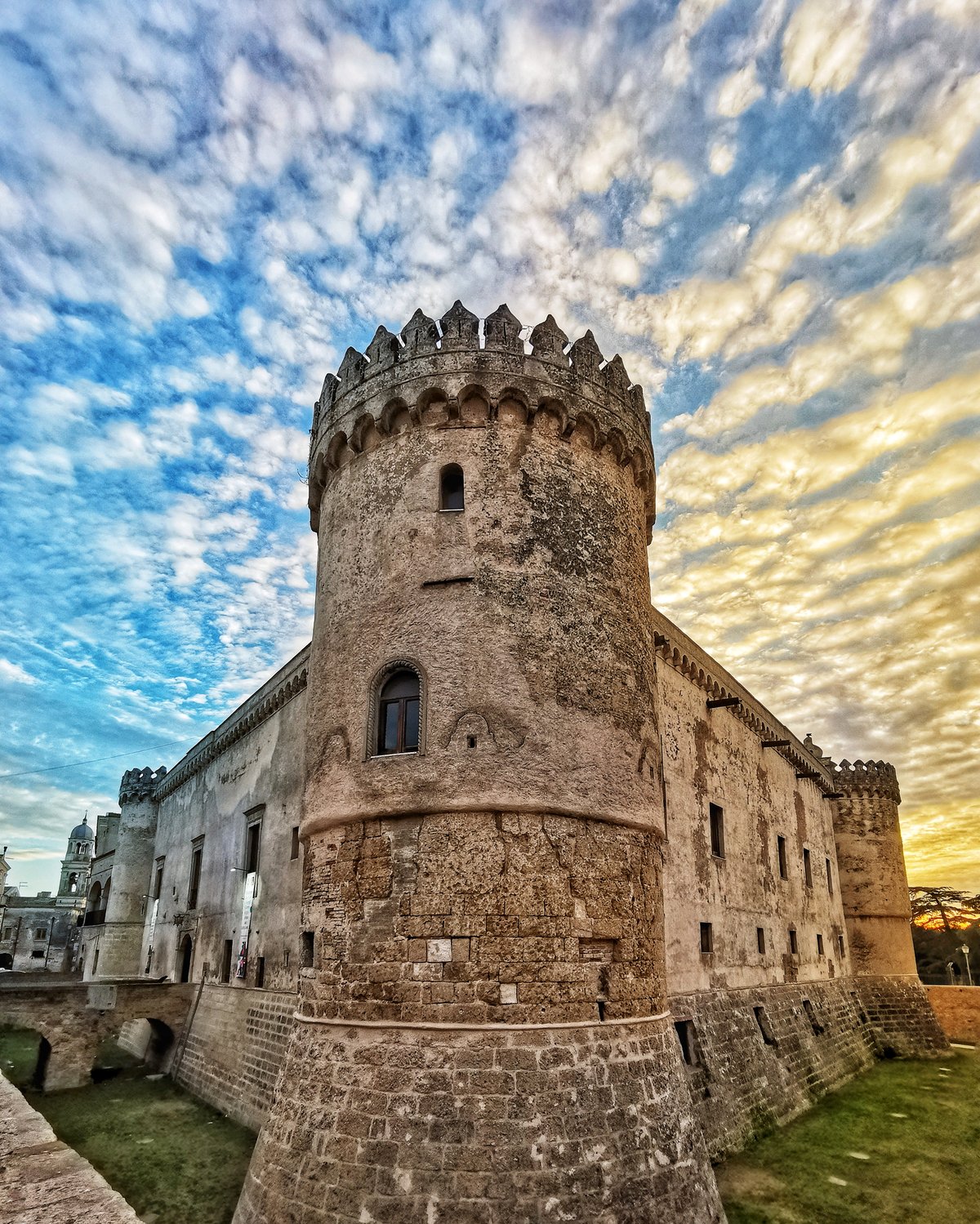 If you're passing through Torremaggiore, don't miss the Castello Ducale, a gem rooted in the 12th century. Originally a Norman tower, it was expanded over the centuries to become the residence of the De Sangro Dukes (yes, the ones of the Sansevero Chapel in Naples). The layout is an irregular quadrilateral with six towers: four cylindrical at the corners and two square, one of which in the central courtyard is the oldest part. The moat, once six meters deep and filled with water, is now almost entirely buried: only a section can be seen. Inside, the courtyard paved with lava stone welcomes you with a portico and a well. Climb the stairs – a double staircase – and you reach the main floor: here you'll find the Throne Room with 17th-century frescoes from the Neapolitan school, and the Palatine Chapel decorated in the same style. Don't miss the sundial on the central tower and, for the braver, the prison cell in the northwest tower. Inside there is also the Giacomo Negri Civic Museum, with works by the local sculptor, and an exhibit of archaeological finds from Fiorentino, the place where Frederick II of Swabia died. A little gem: Raimondo de Sangro, scientist and alchemist, was born here in 1710. To visit, you must book by contacting the Town's Culture Office (0882 383468). A national monument since 1902, it's a place steeped in history.