The Archbishop’s Palace: History and Secrets of Milan

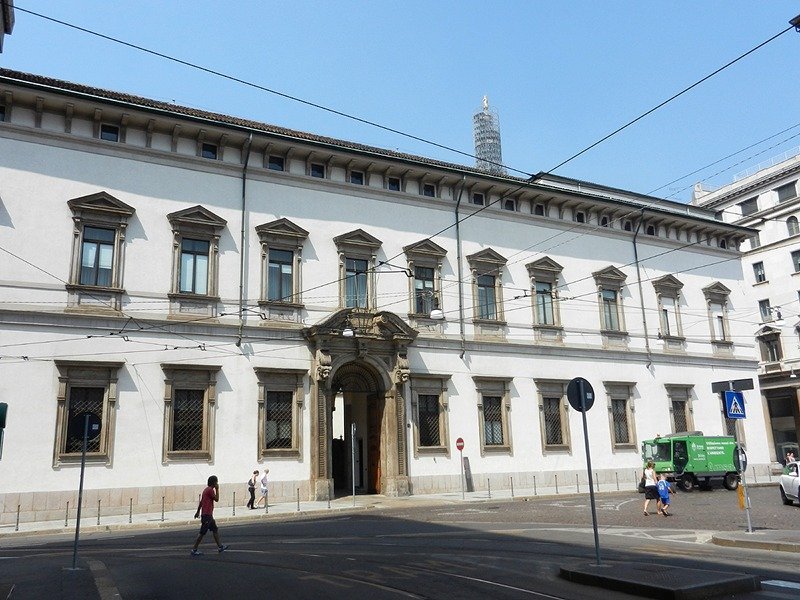
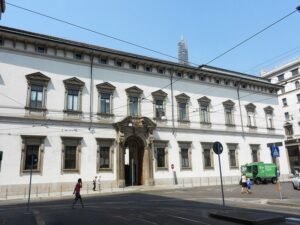
In the heart of Milan, behind the Duomo, stands the Archbishop’s Palace, the archbishop’s official residence. Its walls tell over a millennium of history: from its origins as the Domus Sancti Ambrosii, to the renovation commissioned by Saint Charles Borromeo with Pellegrino Tibaldi, up to the façade by Giuseppe Piermarini. Today it is a private building, but its charm can be appreciated while strolling through Piazza Fontana.
Mannerist façade and portal: Tibaldi’s portal stands out against the neoclassical façade of 1784.
Canonica Courtyard: a double order of round arches in rusticated stone, an example of Counter-Reformation architecture.
April 25, 1945: in these rooms, Mussolini met the CLNAI while Milan was rising up.
Archbishop’s art collection: works by Tintoretto, Cerano, and Guido Reni, visitable by appointment only.


Events nearby


Copertina itinerario The Archbishop’s Palace: History and Secrets of Milan
From medieval origins to April 25, 1945, the Archbishop’s Palace in Milan’s Piazza Fontana holds art, architecture, and memory.

Good to know


Archbishop’s Palace, a Colossus of History

From its medieval origins to April 25, 1945, the Archbishop’s Palace in Milan’s Piazza Fontana holds art, architecture, and memory. It is a building that goes almost unnoticed, right behind the Duomo. Yet it is one of Milan’s oldest and most memory-laden places. Giuseppe Piermarini’s austere façade tells only the last chapter of a story that began in the 5th century, when the Domus Sancti Ambrosii stood here. Today it is the archbishop’s official residence, a private and quiet place, but just looking at it carefully makes you feel the weight of centuries. If walls could talk, it would have much to say: not only art and architecture, but also the final act of World War II.

From Sant’Ambrogio to April 25

The origins are ancient indeed: the first archiepiscopal seat dates back to the 5th century and rested on the ancient city walls. Called Domus Sancti Ambrosii, it had its entrance facing the old Santa Maria Maggiore, where the Duomo now stands. Destroyed by Barbarossa, it was rebuilt by 1174; in the 1300s, Giovanni II Visconti turned it into a true curia, while in the 1500s Carlo Borromeo had it redone by Pellegrino Tibaldi. At the end of the 1700s, Giuseppe Piermarini redesigned the facade. In 1945, under Cardinal Schuster, the palace was the setting for the last meeting between Mussolini and the CLNAI: from there came the unconditional surrender and, on April 29, the announcement of the Liberation. An essential timeline:

  • 5th century: first buildings
  • 1174: reconstruction after Barbarossa
  • 1565: Tibaldi’s renovation
  • 1784: Piermarini’s facade
  • April 25, 1945: historical meeting

The Courtyard of the Canonica, a Hidden Gem

The beauty of this palace is that it doesn’t end with its façade. Through the portal at No. 16 in Piazza del Duomo, you catch a glimpse of the Courtyard of the Canonica, the masterpiece by Pellegrino Tibaldi commissioned by Carlo Borromeo. It is an austere courtyard, with a double order of round arches in rusticated stone: a severe yet highly elegant architecture that tells the spirit of the Counter-Reformation. On the side façades, traces of windows and terracotta friezes from the medieval palace still remain. Inside, there is also the archbishop’s picture gallery, with works by Tintoretto, Morazzone, Cerano, Procaccini, Spagnoletto, and Guido Reni: it’s a pity that it is only accessible by appointment and for study purposes. But even from outside, Tibaldi’s Mannerist portal is worth a stop. No need to go inside: just look up.

Here, on April 25, 1945

The moment most steeped in history, however, is 1945. In the palace, Cardinal Schuster tried to mediate between Mussolini and the CLNAI to the very end. On April 25, at the Archbishop’s residence, the meeting took place between the Duce, Graziani, Zerbino, and the Resistance representatives: Marazza, Arpesani, Valiani, Pertini, and Sereni. The partisans demanded unconditional surrender; Mussolini asked for a pause to consult the Germans and never returned. A few hours later, Radio Milano Libertà broadcast the proclamation of insurrection. Today there is no plaque to commemorate it: the palace has returned to being a private place. But those who know this story, walking in Piazza Fontana, feel a shiver.

Why Stop to Look at It

It’s not a museum, and there’s no ticket office, but it’s worth a stop. First: it’s one of Milan’s oldest buildings, with a history spanning fifteen centuries. Second: you can admire a masterpiece by Piermarini and Tibaldi for free, just by looking up. Third: the location is perfect, between Piazza Fontana and Piazza del Duomo. And then there’s the ‘secret’ side: thinking that inside, the end of fascism was decided. If you’re a history buff, it’s an unmissable stop. If you’re visiting for the first time, it offers a different perspective on Milan, away from the Duomo crowds.

The Right Moment

You don’t need to plan a visit with a time slot, as access is restricted. My tip? Head there in the late afternoon, when the square empties out and the facade gets a warm glow. Or choose a weekday morning for fewer crowds. Avoid the peak hours on weekends: the center is packed. If it’s a foggy day, even better—the palace seems to have stepped out of another century.

Before and after the palace

The location is a gift: just a step away is Piazza del Duomo, with the cathedral and the Galleria Vittorio Emanuele II. However, instead of diving straight into the crowd, take a walk around the Archbishop’s Palace: in via delle Ore, at the back, you’ll still see traces of the medieval palace, with terracotta friezes. Then, take a break at the nearby Museo del Novecento or simply have a coffee in Piazza Fontana, in front of the fountain that gave the square its name. A small itinerary, but dense with art and memory.

Itineraries nearby


💡 Did You Know…?

Few know that on April 25, 1945, while Milan was rising up, Cardinal Schuster had a room in the palace prepared to host Mussolini as a prisoner of war. The meeting with the CLNAI lasted hours, but the Duce left and never returned. Today there is no plaque to commemorate it: the memory is entrusted only to those who know this story. A silence that makes the Archbishop’s Palace even more fascinating.