Palazzo Durini: A Dive into Milanese Baroque
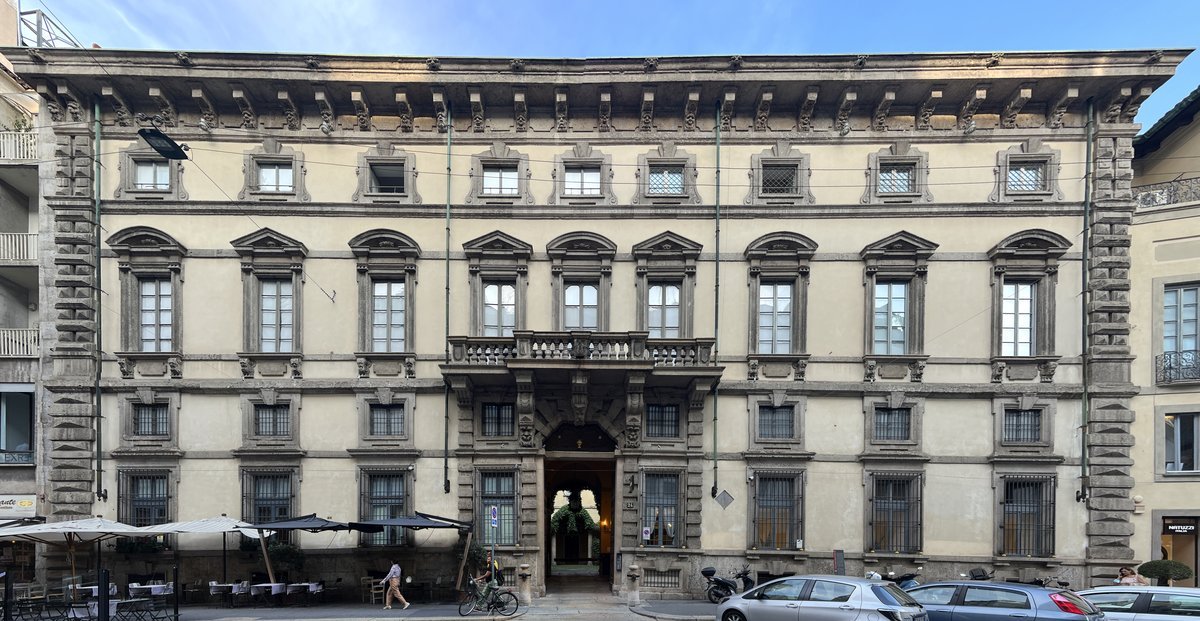
Palazzo Durini, also known as Palazzo Durini Caproni di Taliedo, is one of the most elegant surprises in central Milan. It is located at Via Durini 24, a stone’s throw from the fashion quadrangle, yet it feels like another world: a seventeenth-century façade you wouldn’t expect, a porticoed courtyard that invites you to slow down. It is not a cold museum, but a living space between offices, design showrooms, and aristocratic memory. The best part? Go in, look up, and let yourself be taken by the contrast between Baroque frescoes and contemporary armchairs. It is one of those places that Milan gives you when you think you already know it.
Historical Notes
The story begins in
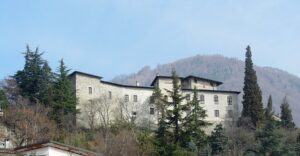
1645, when the Count of Monza Giovan Battista Durini commissioned architect Francesco Maria Richini to design a stately residence. Built between 1646 and 1648, the palace is one of the finest examples of seventeenth-century Milanese architecture. During the Spanish domination, it hosted the governor Ponce Guzman de Leon; a balcony was added for him, later moved to Durini Castle in the province of Como. Acquired by the Caproni family in 1925, it suffered war damage in 1943 and was restored. The 2000 restorations brought it back to its former glory and opened the piano nobile to design.
- 1645-1648: construction designed by Richini
- Spanish domination: hosted the governor Ponce Guzman de Leon
- 1925: purchased by the Caproni family
- 1943: war damage
- 2000: restoration and new life with Edra
Milanese Baroque: facade and courtyard
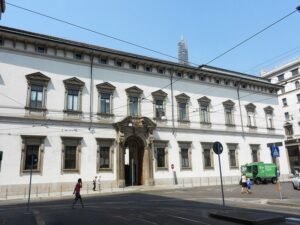
The facade on via Durini is an example of sober Baroque: four floors punctuated by cornices, rusticated pilasters and closely spaced windows, stretching upwards. The rusticated portal is the true protagonist, surmounted by a balcony with three windows. But it is in the courtyard that the space opens up into a small masterpiece: a portico with paired Doric columns, allegorical statues and ochre walls. Light enters in different ways during the day and draws sharp shadows. It is a place designed for quiet, away from traffic, despite being a stone’s throw from everything. If you love architectural photography, here you will find one of the most beautiful sets in Milan.
Noble Floor: Frescoes and Edra Showroom
Climb the grand staircase in red Verona marble and the noble floor welcomes you with its antechamber decorated in trompe-l’œil. The rooms follow one another with painted medallions and carved and gilded wooden ceilings. The highlight is the hall of honor, with the fresco of the Triumph of Eros by Melchiorre Gherardini. Today, all this coexists with the creations of Edra, the Tuscan design brand that has chosen the palace as its permanent showroom: sofas, armchairs and light installations by Jacopo Foggini dialogue with the seventeenth-century frescoes. A deliberate and reversible contrast, which does not ruin history but lets it breathe.
Why visit it
The first reason is free admission: the common areas and courtyard are freely accessible, which is not a given in Milan. The second is the chance to see a Baroque masterpiece not as a relic, but as a living space: between a law firm and a showroom, the palace breathes. Finally, if you are a design enthusiast, the contrast between the 17th-century frescoes and the Edra collections is something you won’t find in any museum. Plus, during Milan Design Week, the palace becomes a hub of events and installations: an opportunity to see it in a contemporary version.
When to go
The best time is early morning, when the coming and going of offices and clients has just begun and the courtyard is all yours. At that hour, the light brings out the ochre color of the walls and highlights the decorations. If you can, choose a weekday rather than a weekend to enjoy the calm of the place. And if you happen to be in town during a design event, take advantage of it: the building transforms and shows yet another side, with installations and gatherings.
In the Surroundings
After the visit, the center can be explored on foot. The Teatro alla Scala is nearby and always worth a detour, if only to catch a glimpse of the hall. Then, a stroll towards the Pinacoteca di Brera: art, cloisters, and an atmosphere of old Milan that blends well with the memory of the palace. If you prefer a break instead, the fashion district offers cafés and shop windows, but also quieter streets to catch your breath.