
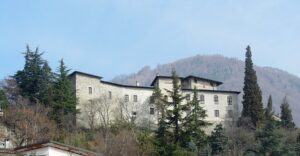
The Visconti Castle of Lodi is a medieval fortress built in 1370 at the behest of Bernabò Visconti, located in Piazza Castello in the heart of the historic center. Today it is a vibrant cultural center hosting exhibitions, concerts, and events, with free admission to most areas. Its Visconti military architecture blends with later elements, offering an immersion into Lodi’s history.
- Medieval architecture: Lombard brick walls over two meters thick, four corner towers with arrow slits, and a quadrangular courtyard with Gothic porticoes.
- Active cultural center: Hosts contemporary art exhibitions, summer concerts in the courtyard, private events, and book presentations year-round.
- Accessibility and convenience: Central location in Piazza Castello, easily reachable on foot, with free admission to most areas.
- Visconti and Sforza history: Built in 1370 by Bernabò Visconti, expanded by the Sforza in the 15th century, now a cultural asset of historical and artistic interest.
Events nearby



Visconti fortress from 1370 in Lodi’s historic center, featuring brick walls, corner towers, and an internal courtyard. Hosts art exhibitions, summer concerts, and cultural events. Free admission to most areas.
- Piazza Castello, Lodi (LO)
- Open in Google Maps
- View on Google Images Castello visconteo a Lodi
Good to know
Introduction
The Visconti Castle of Lodi stands imposingly in the heart of the city, a medieval fortress that dominates Piazza Castello with its majestic presence. Built in the 14th century at the behest of Bernabò Visconti, this architectural gem represents one of the most significant symbols of Visconti power in Lombardy. Its walls of Lombard brick, corner towers, and spacious inner courtyard tell centuries of Lodi’s history. Today, after careful restorations, the castle hosts cultural events and exhibitions, maintaining its role as a gathering hub for the community. Strolling through the inner courtyard, with its vast space surrounded by porticoes, offers an atmosphere of bygone eras, while the frescoed halls preserve traces of its glorious past. Its central location makes it easily accessible, seamlessly integrating into the modern urban fabric without losing its ancient charm.
Historical Overview
The history of the Visconti Castle of Lodi begins in 1370, when Bernabò Visconti commissioned its construction to strengthen control over the Lodi territory. Originally conceived as a military fortress, the castle served both to protect the city and to demonstrate the power of the Visconti family. In the 15th century, it came under Sforza rule, undergoing modifications and expansions. During the Spanish period (16th-18th centuries), it was converted into a barracks and warehouse, partially losing its residential function. In the 19th century, it became municipal property and was used for various public purposes, including as a prison. The 20th-century restorations restored part of the castle’s former splendor, uncovering hidden architectural elements and consolidating the structures. Today, it is recognized as a cultural asset of historical and artistic significance.
- 1370: Construction begins by order of Bernabò Visconti
- 15th century: Transition to Sforza rule and expansions
- 16th-18th centuries: Use as a Spanish barracks
- 19th century: Municipal acquisition and various public uses
- 20th-21st centuries: Restorations and conversion to cultural space
Military Architecture
The architecture of the Visconti Castle in Lodi clearly reveals its dual nature as both a military fortress and a noble residence. The perimeter walls, over two meters thick, are constructed of exposed brick in the Lombard tradition, with serizzo stone inserts in the oldest sections. The four corner towers, two of which remain well-preserved, were equipped with arrow slits and murder holes for defense. The main entrance portal, on the southern side, still bears traces of the original drawbridge. Inside, the quadrangular courtyard is surrounded by porticoes with pointed arches, typical of Lombard Gothic style. The noble floor halls retain coffered ceilings and traces of frescoes dating back to the Visconti period. Particularly fascinating is the partially accessible patrol walkway system, which offers a privileged view over Piazza Castello.
Contemporary Life
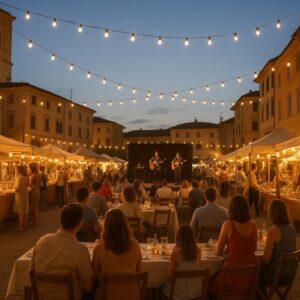
Today, the Visconti Castle of Lodi is not just a monument to admire, but a vibrant cultural hub that pulses with activities year-round. Its spacious halls regularly host contemporary art and photography exhibitions, often dedicated to themes related to the Lodi area. The inner courtyard becomes a stage for summer concerts and theatrical performances, creating a magical atmosphere under the stars. During the Christmas season, the castle transforms with artisan markets and luminous installations that highlight its architecture. Lodi’s schools organize themed guided tours to introduce younger generations to local history. Recently, some halls have been converted into spaces for private events and weddings, offering a unique and evocative setting. The civic library hosts book presentations and author meetings here, keeping the connection with written culture alive.
Why Visit It
Visiting the Visconti Castle of Lodi means immersing yourself in Visconti history without having to travel to Milan. Its central location in Piazza Castello makes it easily accessible on foot from the historic center. Admission is free for most areas, making it accessible to everyone. Temporary exhibitions always offer new reasons to return, with cultural offerings updated monthly. The inner courtyard is perfect for a refreshing break away from the traffic, with shaded benches to linger on. Informative panels in Italian and English guide you independently through the discovery of the monument’s history. Particularly appreciated is the opportunity to admire medieval construction techniques up close, with the original bricks still perfectly preserved after six centuries.
When to Go
The most evocative time to visit the Visconti Castle of Lodi is undoubtedly the autumn sunset, when the low-angled light enhances the warm color of the bricks and creates plays of shadows on the ancient walls. In this season, with the crisp air and falling leaves in the courtyard, the atmosphere becomes particularly romantic and meditative. Weekend days are ideal for capturing the liveliness of the square in front, with locals gathering for aperitivo. Avoid the midday hours of the hottest summer days, when the courtyard may offer little shade. The spring months, on the other hand, provide a soft light that highlights the architectural details, perfect for photography enthusiasts.
In the Surroundings
Just steps away from the Visconti Castle, don’t miss the Cathedral of the Assumption in Piazza della Vittoria, one of the most significant examples of Lombard Romanesque architecture with its unfinished facade and 14th-century rose window. Nearby, the Civic Temple of the Incoronata houses Renaissance masterpieces by local Lodi artists, including the altarpiece by Albertino Piazza. For an authentic gastronomic experience, head to the covered market in Piazza Broletto, where you’ll find typical local cheeses, from Grana Padano to Lodi’s mascarpone. A stroll along the banks of the Adda River completes the itinerary, offering picturesque glimpses of the river landscape that has shaped the city’s history.
Itineraries nearby

💡 Did You Know…?
Few know that the ancient well that supplied water to the garrison is still located in the inner courtyard. During restoration work, traces of the original frescoes emerged in the noble halls, now visible on special occasions. Legend has it that a secret passage connected the castle to the Cathedral, used by the lords to escape sieges.