Introduction
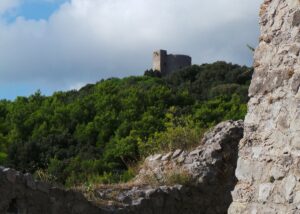
Arriving at the Castle of Gesualdo is like stepping into a scene from a historical film: its imposing bulk dominates the Irpinian village from atop a hill, creating an atmosphere that blends medieval charm and Renaissance mystery. It’s not just a fortress, but the symbol of an era and a unique figure: Carlo Gesualdo, prince and composer, known for his madrigals and a life marked by drama. The castle, with its towers and mighty walls, welcomes you with an air of faded nobility, perfect for those seeking authentic emotions away from the more beaten tourist trails. Walking through its empty rooms makes you feel the weight of history and the secrets that still linger among these stones.
Historical Overview
Gesualdo Castle has Norman origins dating back to the 11th century, but it was during the 16th century that it reached its peak of splendor under the Gesualdo family.
Carlo Gesualdo, Prince of Venosa and renowned madrigalist, made it his residence after the tragic murder of his wife Maria d’Avalos and her lover in 1590. This event profoundly marked the castle’s history, transforming it into a place of atonement and musical creation. In the 17th century, it passed to the Ludovisi family, who made architectural modifications, while today it is municipal property and open to the public after conservation restorations. Its mixed structure, with medieval and Renaissance elements, reflects the different eras it has witnessed.
- 11th century: Norman foundation
- 16th century: Residence of Carlo Gesualdo
- 1590: Murder of Maria d’Avalos
- 17th century: Transfer to the Ludovisi
- Today: Municipal property and visitable site
Architecture and Environments
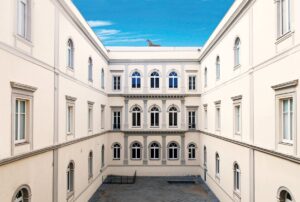
The castle stands out for its quadrangular floor plan with corner towers, typical of medieval fortresses, but enriched with Renaissance elements such as loggias and bifora windows. Inside, the Hall of the Barons, once the heart of court life, and the underground prisons, which still preserve the inscriptions of the prisoners, are particularly noteworthy. The private rooms of Carlo Gesualdo, now bare, evoke his creative solitude. The patrol walkways offer breathtaking views of the Ufita Valley and the rooftops of the village, while the internal chapel, dedicated to Saint Michael, recalls the spiritual dimension of the prince. Every corner tells a story, from the stone staircases to the vaulted ceilings, making the visit a journey through time without the need for fanciful reconstructions.
Mysteries and Legends
Gesualdo Castle is shrouded in an aura of mystery, primarily linked to the figure of Carlo Gesualdo. It is said that the ghost of Maria d’Avalos, the wife he murdered, still wanders through the rooms, and that on full moon nights, echoes of his madrigals can be heard. Some visitors report sensing presences or unexplained noises, especially in the older areas like the dungeons. These legends, fueled by the prince’s bloody history, add a noir charm to the visit, with no need for special effects. It is not a place for the faint-hearted, but for those who appreciate history in its rawest and most evocative form.
Why Visit It
Visiting Gesualdo Castle is worthwhile for three concrete reasons: first, it’s one of the few castles in Italy linked to a world-renowned composer, offering a unique blend of music and history; second, its panoramic location provides spectacular views of the Irpinia countryside, perfect for memorable photos; third, the authentic and non-touristy atmosphere allows you to immerse yourself in the life of a medieval village without the crowds. Additionally, the informative panels inside provide precise details on architecture and historical events, making the visit educational without being boring.
When to Go
The best time to visit the castle is on autumn mornings, when the low-angled light accentuates the stone textures and the light mist enveloping the hills creates a gothic tale atmosphere. In summer, avoid the midday heat, preferring the late afternoon when the air cools and the long shadows enhance the architectural drama. In spring, the flowering fields around the village add a touch of color, but autumn remains the most evocative season to capture the melancholic spirit of the place.
In the Surroundings
Complete your experience with a visit to the Museum of Rural Civilization in Gesualdo, which preserves tools and objects from the Irpinian rural tradition, and sample local wines at a winery in the area, such as those producing Aglianico. A few kilometers away, the village of Mirabella Eclano offers the Church of Santa Maria Maggiore, with medieval frescoes, while for a culinary experience, stop at a trattoria to try cavatelli with castrato sauce, a typical dish of the area.