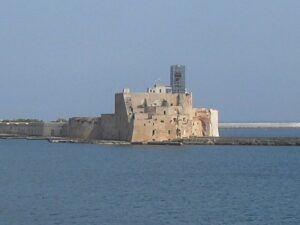
Swabian Castle of Oria: The Swabian Fortress Overlooking the Itria Valley

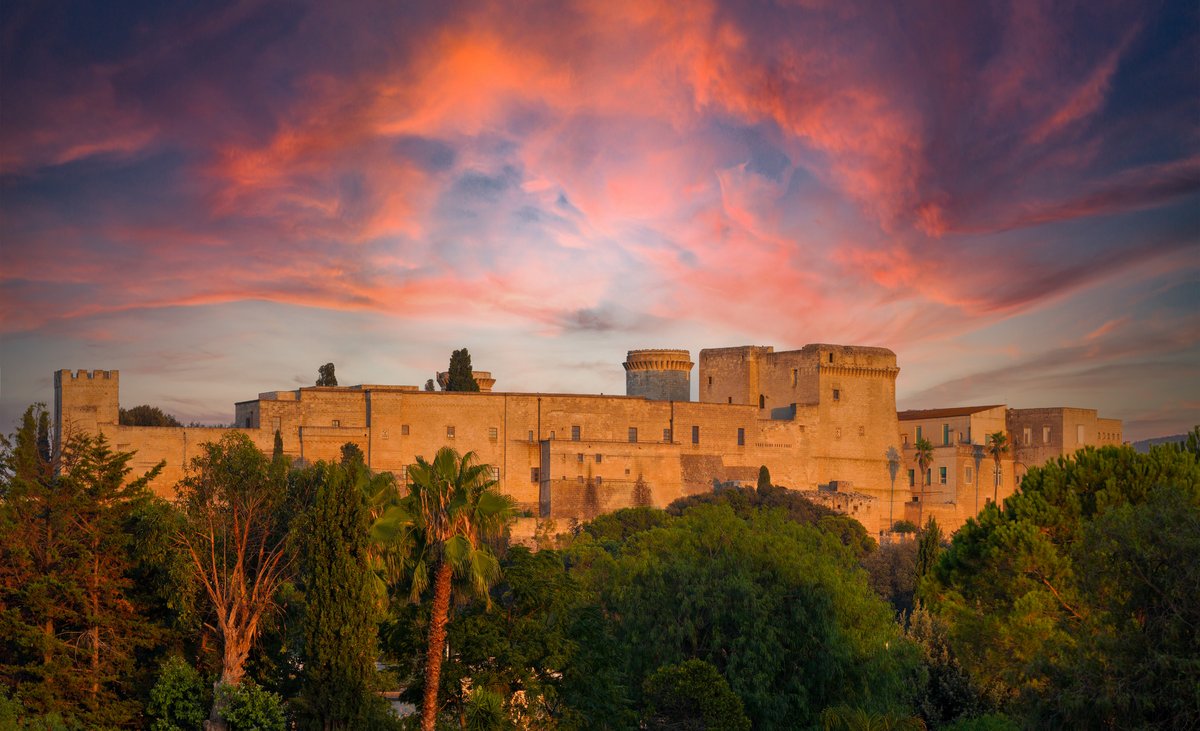
The Swabian Castle of Oria is a perfectly preserved medieval fortress that transports you to the 13th century. Built at the behest of Frederick II of Swabia, it dominates the city from the highest hill with its four imposing towers. The visit includes the rampart walkways, underground dungeons, and the weapons hall, offering an authentic historical experience. The castle regularly hosts historical reenactments, exhibitions, and concerts that bring its ancient walls to life. From the main tower, you can enjoy a breathtaking view of the Itria Valley all the way to the Adriatic Sea. Admission costs €5 with discounts for groups and children, and parking is available a few minutes’ walk away.

• 25-meter quadrangular tower with panoramic views
• Perfectly preserved medieval dungeons
• Historical events such as the Tournament of the Districts
• Enhanced accessibility with ramps for disabled visitors


Events nearby


Copertina itinerario Swabian Castle of Oria: The Swabian Fortress Overlooking the Itria Valley
The Swabian Castle of Oria, built by Frederick II in the 13th century, features imposing towers, rampart walkways, and a panoramic view of the Itria Valley. Explore the dungeons, the weapons hall, and participate in historical events.

Good to know


Introduction

As you arrive in Oria, the Swabian Castle suddenly appears before you, like a stone giant watching over the Itria Valley. It’s not just a monument, but a visual experience that takes your breath away. Climbing toward the fortress, you feel the weight of history in the massive walls, while the panorama opens up 360 degrees over expanses of olive groves and trulli. I paused to gaze at that landscape for minutes, almost forgetting I was there to visit the castle. The atmosphere is unique, a blend of majesty and mystery that envelops you immediately. The towers soar against the Apulian sky, creating a perfect contrast between human craftsmanship and the surrounding nature. Entering the inner courtyard is like stepping back in time, with the echo of footsteps resonating on the ancient stones. Perhaps it’s this feeling of being in a ‘living’ place that makes the visit so special. There aren’t just stones to admire, but stories to imagine.

Historical Overview

The history of the Swabian Castle is inextricably linked to Frederick II of Swabia, who in 1227 decided to strengthen the defenses of Oria. This was no mere whim: its strategic position dominated the communication routes between the Ionian and Adriatic Seas. Over the centuries, the castle changed hands multiple times—from the Angevins to the Aragonese—and each rule left its mark. It strikes me to think that these very walls have witnessed the passage of knights, princes, and perhaps even some notable prisoners. The current structure, with its three corner towers (the Spur Tower, the Leap Tower, and the Knight’s Tower), primarily reflects the Swabian imprint, though there are later additions. Walking through the halls, I sometimes wonder what stories these stones could tell if they could speak.

  • 1227: Frederick II orders the construction of the castle
  • 13th-14th century: expansions under the Angevins
  • 15th century: Aragonese modifications
  • Today: a visitable monument hosting cultural events

The Towers and the Walkways

If there’s one thing you can’t miss, it’s the rampart walkways connecting the three towers. Climbing those narrow stairs and then walking along the elevated passage is a unique experience. From the Spur Tower, the view stretches all the way to the sea on clear days—I counted at least five different towns on the horizon. But what struck me most was discovering that each tower had a specific function: one for lookout, one for defense, and one that served as a residence. The arrow slits for archers are still visible, and if you get close, you can almost picture the archers ready to defend the fortress. Someone told me that on windy nights, strange noises can still be heard within these walls—I didn’t have that luck (or misfortune), but the atmosphere is still full of suggestion. Bring a camera: the glimpses created between the towers are perfect for memorable shots.

Dungeons and Armory Hall

Descending into the castle dungeons is an experience that stays with you. The air grows cooler, the light becomes dim, and you begin to feel the weight of the centuries. The cells are small, with rough stone walls that still bear marks left by prisoners. Some have carved dates, crosses, symbols we can only interpret today. Then, ascending to the upper floor, the contrast with the Armory Hall is stark: here, light streams through the windows, illuminating reproductions of armor and swords. They are not original artifacts (those are in larger museums), but they still give you an idea of how the garrison must have been equipped. I lingered before a full suit of armor, thinking how uncomfortable it must have been to wear under the Apulian sun. The hall is spacious, with cross-vaulted ceilings creating a solemn atmosphere. Perhaps important meetings were held here as well, in addition to it being the weapons storage.

Why Visit

Three concrete reasons not to skip this visit? First: the panoramic view over the Itria Valley is simply unmatched. From the towers, you see a mosaic of olive groves, dry-stone walls, and trulli stretching to the horizon. Second: accessibility. Compared to other more famous Apulian castles, here you won’t find long queues and can explore at your own pace, almost feeling like a bit of a ‘discoverer’. Third: the events. If you happen to visit at the right time, you might catch historical reenactments, concerts, or temporary exhibitions that bring the stones to life in surprising ways. Last time, there was a falconry exhibition recalling Frederick II’s passion for these birds. And then there’s that something extra: the feeling of being in an authentic place, not overly ‘tamed’ for tourists. The stairs are the original ones, the stones worn by time, the atmosphere genuine.

When to Go

I’ll share a secret I discovered by chance: the best time is late afternoon, when the sun begins to set. The slanting evening light bathes the castle stones in golden and orange hues, creating spectacular shadow plays on the walls. Summer can be muggy, but it’s precisely on those August evenings that I’ve witnessed the most beautiful sunsets, with skies that looked painted. In spring, especially in May, the valley below bursts with greenery and wildflowers. I’d avoid midday hours in July and August, not just due to the heat but because the light is too harsh and flattens architectural details. Another idea? Try to coincide with one of the evening events: seeing the castle illuminated by torches is a completely different experience. Personally, I prefer visits without too many crowds, when I can linger where I want without rush.

In the Surroundings

After visiting the castle, don’t leave right away: Oria has a medieval historic center worth exploring on foot. Its cobblestone streets wind between white houses and stone portals, offering sudden glimpses of the countryside. The Cathedral of the Assumption, with its Baroque facade, houses interesting relics and an atmosphere of quiet that contrasts with the castle’s grandeur. If you’re interested in a themed experience, a few kilometers away is the Museum of Messapian Civilization in Oria, which perfectly complements the castle visit by telling the ancient history of this area. I visited and discovered that the Messapians, a pre-Roman people, had an important center here. Alternatively, for a complete change of scenery, you could head to the surrounding countryside to see trulli in their ‘authentic’ version, not the overly touristy one. There are farmhouses that still preserve them as they once were, integrated into agricultural activities.

Itineraries nearby


💡 Did You Know…?

Legend has it that the castle hides Frederick II’s treasure, which has never been found. Historically, Conradin of Swabia was imprisoned here before his execution in Naples. During restoration work, traces of an ancient Messapic settlement were discovered beneath the foundations, testifying to the site’s millennia of historical layering. The Tower of the Leap is named after a prisoner who, according to tradition, threw herself from it to escape a forced marriage.