
🧭 What to Expect
Ideal for those who love history, art, and good food Highlights: well-preserved castles, authentic villages, PDO typical products Activities: cultural visits, tastings, spa, and trekking Tip: combine the visit with a stop at a dairy to taste Parmigiano Reggiano
Events nearby
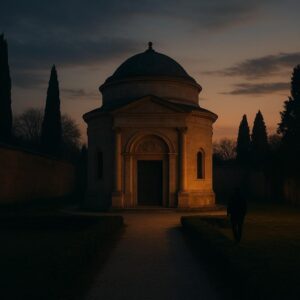
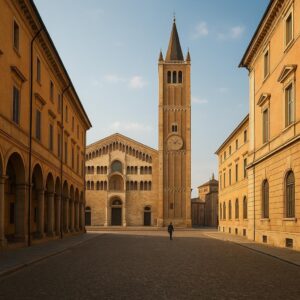
The Province of Parma is a concentration of wonders close to each other: medieval castles perched on hills, authentic villages where time seems to stand still, and a food and wine tradition that smells of Parmigiano and prosciutto. This article takes you to discover the must-see stops, from the majestic Teatro Regio in Parma to the evocative Castello di Torrechiara, passing through the Reggia di Colorno and the Terme Berzieri in Salsomaggiore. Every village has a story to tell, every castle a unique atmosphere. Whether you are an art enthusiast, a foodie, or a slow traveler, here you will find ideas for an itinerary full of emotions, between cultural excellence and authentic flavors.
Overview
- Teatro Regio: A Journey into Opera Between History and Charm
- Cathedral of Santa Maria Assunta: A Masterpiece Between Romanesque and Renaissance
- National Gallery: an art treasure in the heart of the Pilotta
- Torrechiara Castle, a Jewel of History and Love
- What to See at Bardi Castle: A Jasper Fortress
- Colorno Palace: The Versailles of the Dukes of Parma
- Terme Berzieri: a Liberty and Art Deco masterpiece
- Rocca Sanvitale: history, art, and gardens in Sala Baganza
- Felino Castle: History, Flavors, and Views
- Compiano Castle: A Thousand Years of History with Museums and Medieval Charm
- Rocca Pallavicino: A Dive into Busseto's History
- Giuseppe Verdi National Museum: A Dive into Opera
Itineraries nearby

Teatro Regio: A Journey into Opera Between History and Charm
- Go to the page: Teatro Regio Parma: Gilded Hall with Perfect Acoustics and the Verdi Festival
- Piazzale Antonio Barezzi, Parma (PR)
- https://www.teatroregioparma.it/
- Open in Google Maps
- View on Google Images
- +39 0521 203911
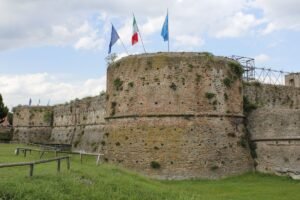
 When you think of Parma, you think of its Teatro Regio. It is not just a theater: it is a piece of history that still breathes music. Commissioned by Marie Louise of Austria, it was built between 1821 and 1829 based on a design by Nicola Bettoli, and inaugurated with Bellini's *Zaira*. The neoclassical facade, with its Ionic columns and large tympanum, welcomes you from the portico. Step inside and be amazed by the horseshoe-shaped auditorium, with four tiers of boxes and a massive chandelier weighing 1,100 kg – a dreamlike atmosphere. The people of Parma are passionate: they queue for days to get season tickets. You can feel a special air here, among ancient frescoes and gilded stuccoes. Today it hosts the opera season, the Verdi Festival, and concerts of all kinds, including rock. If you have time, book a guided tour: you will discover the foyer with Marie Louise's throne and the remains of a Roman *domus* beneath the stalls. A tip: find a seat in the gallery to enjoy the full view. Teatro Regio is not just a place to see, but an experience to live.
Cathedral of Santa Maria Assunta: A Masterpiece Between Romanesque and Renaissance
- Go to the page: Cathedral of Santa Maria Assunta: Correggio's Dome and Romanesque Treasures
- Borgo Pipa, Parma (PR)
- Open in Google Maps
- View on Google Images
 In the heart of Parma, on Piazza Duomo, stands the Cathedral of Santa Maria Assunta, a Romanesque jewel that houses authentic Renaissance marvels within. Built starting in 1074 after a fire destroyed the previous basilica, it was consecrated in 1106. Walking along the aisles, you are struck by the vertical thrust of the alternating pillars and the medieval capitals, originally polychrome. But it is when you look up that the spectacle becomes unforgettable: the dome frescoed by Correggio with the Assumption of the Virgin (1524-1530) envelops you in a whirlwind of clouds and figures, a daring perspective experiment that caused scandal at the time. A bit further, in the south transept, Benedetto Antelami’s Deposition (1178) stops you with its Gothic intensity: the dead Christ supported by John, while soldiers gamble for his clothes. Also not to be missed is the cycle by Lattanzio Gambara on the central nave and the apse fresco by Gerolamo Mazzola Bedoli. Then go down to the crypt, a dense interweaving of columns called the “stone garden,” where the relics of San Bernardo degli Uberti rest. The cathedral is open daily, free admission, and is part of a complex that also includes the octagonal Baptistery. I recommend visiting early in the morning to enjoy the light filtering through the oculi, the same light that Correggio used to bring his masterpiece to life.
National Gallery: an art treasure in the heart of the Pilotta
- Go to the page: National Gallery of Parma: Masterpieces by Correggio and Parmigianino in the Palazzo della Pilotta
- Piazza della Pilotta 6, Parma (PR)
- Open in Google Maps
- View on Google Images
 Entering the National Gallery of Parma is like opening an art history book that spans from the Middle Ages to the 20th century. The museum is housed in the majestic Palazzo della Pilotta, a complex worth visiting on its own. Here, among 19th-century corridors and halls, you'll find absolute masterpieces. The highlight? Leonardo da Vinci's Scapigliata, an enigmatic painting that captivates with its vague gaze. But it doesn't end there: there are works by Correggio (such as the Madonna of St. Jerome and the Madonna della Scodella) and Parmigianino (the famous Turkish Slave). And then Canova, Canaletto, El Greco... a seemingly endless list. The museum's history is fascinating: it originated from the Farnese collection, later taken to Naples, but thanks to Marie Louise of Austria, it was rearranged and opened to the public in the 19th century. Today, the visit follows two itineraries: one through the rooms of the different painting schools, the other dedicated to the 16th-century Parmesan school, with Correggio and Parmigianino as the obvious protagonists. A tip: take time to explore the rest of the Pilotta Complex - the wooden Farnese Theatre and the Palatine Library are wonders not to be missed. The gallery is closed on Mondays; opening hours are 9:00 AM to 7:00 PM (last entry at 6:00 PM), and the full ticket costs €18 (with discounts, especially for visitors under 24). In short, if you're in Parma, you can't skip this treasure trove of art.
Torrechiara Castle, a Jewel of History and Love
- Go to the page: Castle of Torrechiara: 15th-century fortress with Golden Chamber and hilltop views
- Sentiero d'arte, Langhirano (PR)
- https://www.polomusealeemiliaromagna.beniculturali.it/musei/castello-di-torrechiara
- Open in Google Maps
- View on Google Images
- pm-ero.torrechiara-pr@beniculturali.it
- +39 0521 355255
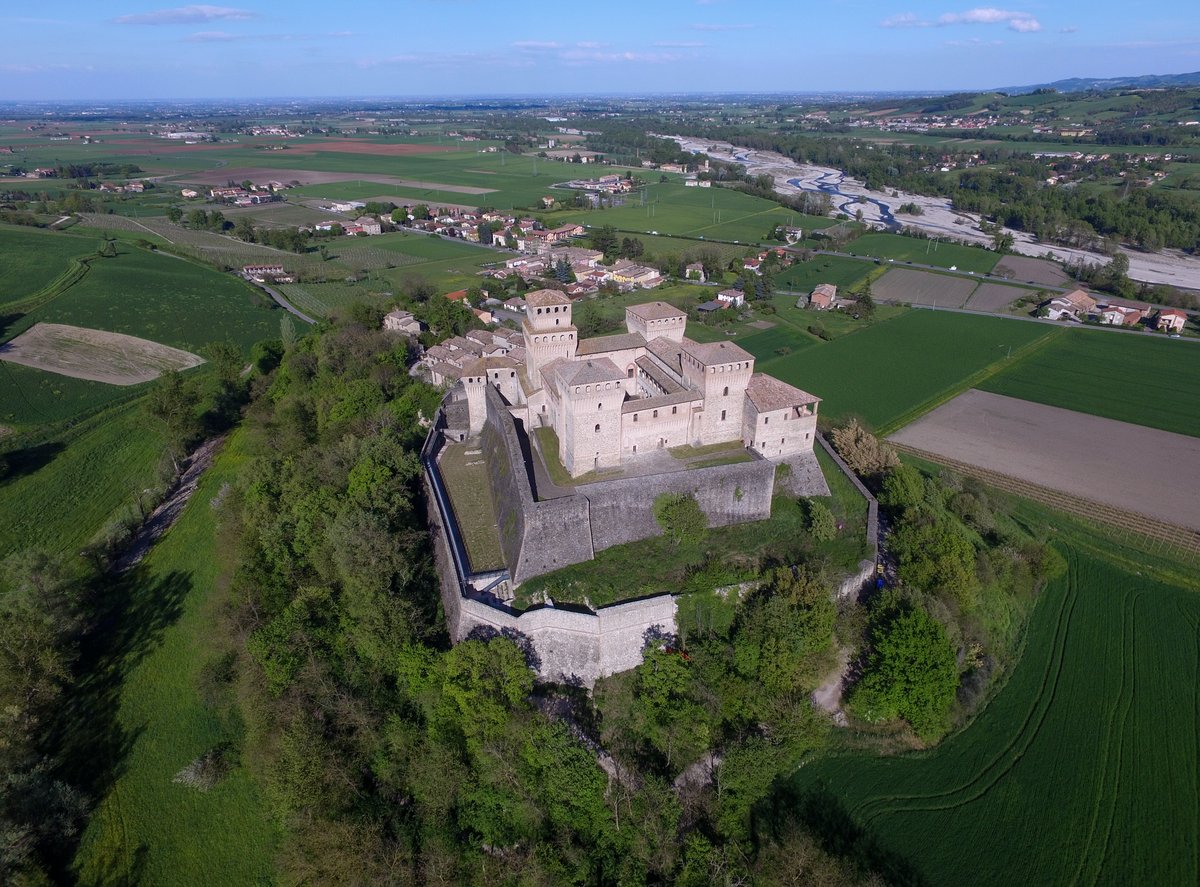 Perched on a hill overlooking the Parma valley, Torrechiara Castle is one of Italy's most scenic and best-preserved fortresses. Commissioned by Pier Maria Rossi between 1448 and 1460 for himself and his beloved Bianca Pellegrini, it combines defensive grandeur with Renaissance elegance that astonishes at every turn. The four corner towers – of the Lion, the Lily, San Nicomede, and the Golden Chamber – surround the courtyard of honor, now the setting for summer events. Inside is a triumph of frescoes: from the Hall of Coats of Arms to the rooms of Jupiter, the Angels, and the Landscapes, each chamber tells a story. The highlight is the Golden Chamber, where Benedetto Bembo immortalized the love of Pier Maria and Bianca in a pictorial cycle that is a masterpiece of International Gothic. Walking along the ramparts, you feel suspended between the Middle Ages and the Renaissance. Open all year except Mondays (hours vary by season; full ticket €5, reduced €2 for ages 18–25, free under 18), it is well worth a visit to immerse yourself in an atmosphere steeped in history and romance.
What to See at Bardi Castle: A Jasper Fortress
- Piazza Vito Fumagalli, Bardi (PR)
- Open in Google Maps
- View on Google Images
 Perched on a spur of red jasper at 600 meters altitude, Bardi Castle dominates the confluence of the Ceno and Noveglia streams. Its origins date back to the 9th century, when it was built to defend against Hungarian raids. From 1257 it became the residence of the Landi princes, who transformed it from a fortress into a noble manor, enriching it with frescoes, armories, and a library. Today it is one of the best-preserved castles in the Parma Apennines and is part of the Circuit of the Castles of the Duchy.
The tour winds through 31 points of interest: from the medieval keep to the patrol walkways with arrow slits and machicolations, from the ice house carved into the rock to the Torture Chamber. Not to be missed are the Courtyard of Honor with its 17th-century staircase and the Hall of the Princes, with coffered ceilings and friezes attributed to Girolamo Baroni. Inside you will also find four museums: the Museum of Valley Civilization, the Museum of Fauna and Poaching, the Archaeological Museum, and the Alpine Rooms dedicated to Captain Pietro Cella.
The legend of Soleste and Moroello adds a touch of mystery: the young woman, believing her beloved dead, threw herself from the tower; he, upon returning, committed suicide. It is said that her ghost still wanders the walls, and some thermal photographs from the 1990s allegedly captured anomalies.
The castle is open all year with varying hours (in winter only Saturday and Sunday). Full ticket costs €10, reduced €6. Dogs on a leash are allowed. To get there, from Parma take the SP28 south along the Val Ceno (about 70 km).
Colorno Palace: The Versailles of the Dukes of Parma
- Piazza Garibaldi, Colorno (PR)
- Open in Google Maps
- View on Google Images
 If you think the province of Parma is all about ham and Parmesan, think again. In Colorno, just a stone's throw from the city, stands what is often called the Versailles of the Dukes of Parma: the Colorno Palace. This comparison is no exaggeration—here history speaks of the Farnese, the Bourbons, and even Marie Louise of Austria, the duchess who was Napoleon's wife. Over 400 rooms, courtyards and inner courtyards overlooking the Parma River and a French-style garden that will leave you breathless.
The tour begins on the Piano Nobile, where the Grand Hall by Petitot is considered a neoclassical masterpiece. Then you move on to the apartments of Duke Ferdinand of Bourbon, with frescoes by Bresciani and a curious astronomical observatory. Don't miss the Ducal Chapel of San Liborio, home to one of Italy's finest Serassi organs. If you have time, stop in the historic garden: 11 hectares of geometric parterres, hornbeam galleries, and a romantic lake.
The visit lasts about 80 minutes and costs 12 euros with a guide included. The garden is free. From March to November, it's open daily (except Mondays that are not public holidays), with fixed entry times. In winter, only Saturdays and Sundays. My advice? Arrive early, perhaps by bike along the cycle path from Parma. And don't forget your camera.
Terme Berzieri: a Liberty and Art Deco masterpiece
- Via Bacchelli, Salsomaggiore Terme (PR)
- https://www.termedisalsomaggiore.it/
- Open in Google Maps
- View on Google Images
 If you think of thermal baths as mere pools, Terme Berzieri in Salsomaggiore will change your mind. Inaugurated in 1923, they are a unique masterpiece of Liberty and Art Deco thermal architecture, the result of an investment of 23 million lire at the time. The building was designed by architects Ugo Giusti and Giulio Bernardini, but the true protagonist is the Florentine painter Galileo Chini, who oversaw the decorations inspired by Eastern art after a stay in Bangkok.
Entering, you are greeted by a monumental marble staircase, flanked by paintings that seem to come from a dream: Chini's diptych depicts Autumn and Spring, while on the counter-façade stands out Igea Triptych by Giuseppe Moroni, a tribute to the therapeutic properties of the salsobromoiodic waters discovered by Dr. Lorenzo Berzieri in 1839. Every corner is an explosion of details: odalisques, blue lions, ram heads, historiated columns, and stained glass windows blending West and East.
After a period of decline, the baths underwent an imposing restoration costing over 44 million euros, managed by CDP Real Asset SGR in partnership with QC Terme. Reopened in 2025, they now offer a modern wellness center that combines historic elegance with contemporary sensory paths. They are located in Piazza Berzieri, in the heart of Salsomaggiore, easily reachable from Parma in about 30 minutes by car. A tip: book a visit to admire the interiors, true museums of applied art.
Rocca Sanvitale: history, art, and gardens in Sala Baganza
- Piazza Antonio Gramsci, Sala Baganza (PR)
- Open in Google Maps
- View on Google Images
 Rocca Sanvitale in Sala Baganza is much more than a castle: it's a palimpsest of centuries of history. Born as a fortress in 1477 at the behest of Gilberto III Sanvitale, today only the north wing survives from the 19th-century demolitions. Wandering through the halls, you'll be captivated by Mannerist frescoes: in the Sala dell’Eneide by Ercole Procaccini, Aeneas seems to come to life among the clouds, while the Camerino del Baglione immerses you in grotesques and fantastic landscapes. And then there's the incredible Appartamento di Antonio Farnese, thirteen Rococo rooms frescoed by Sebastiano Galeotti, reopened to the public in 2024. A dive into 18th-century Parma, among allegories and stuccoes. Outside, the Giardino del Melograno (or Farnese Garden) awaits you with its sixteen squares of flowering apple trees and quinces, arranged like an 18th-century potager. Perfect for a relaxing break. In the cellars of the former icehouse, the Museo del Vino tells the story of local winemaking tradition. In short, an unmissable stop for lovers of history, art, and nature. And if you're a sculpture enthusiast, don't miss the permanent exhibition of Jucci Ugolotti in the Renaissance halls.
Felino Castle: History, Flavors, and Views
- Via Nello Venturini, Felino (PR)
- Open in Google Maps
- View on Google Images
 If you're passionate about medieval history and good food, Felino Castle is a must. Perched on a hill between the valleys of the Parma and Baganza streams, it dominates the landscape with its four towers and imposing moat. Its origins date back to 890, when Marquis Luppone built a strategic fortress along the route to the Cisa Pass. Over the centuries, it was owned by the Rossi family, who brought it to its peak splendor in the 14th century, then passed to the Pallavicino, Sforza, and Farnese families. In 1483, Ludovico il Moro conquered it by deceit and razed its fortifications, but today, after careful restoration, it has regained its ancient charm. Entering from the stone bridge (once a drawbridge), you reach the courtyard of honor with a central well and porticoes. Don't miss the Oratory of Saint Peter the Apostle, with 15th-century frescoes and the splendid Madonna of the Robin. In the cellars, the Felino Salami Museum tells the story of this PDO product, with optional tasting. The castle is open from March to November on weekends and holidays (tours every hour, €5 full price, €4 reduced). When I went, I enjoyed the view over the Baganza Valley and the flute-cut salami. If you want to extend your visit, the castle also offers a Michelin-starred restaurant and luxury suites. A tip: call ahead, as access may be limited during private events.
Compiano Castle: A Thousand Years of History with Museums and Medieval Charm
- SP66, Compiano (PR)
- Open in Google Maps
- View on Google Images
 If you find yourself in the Val di Taro, you can't miss Compiano Castle. Perched on a hill overlooking the village – one of the most beautiful villages in Italy – this fortress has a thousand years of stories to tell. As early as the year 1000, there was a watchtower here, then it passed from the Malaspina family to the Landi family (who held it for over 400 years), and eventually to the Farnese. Today it is owned by the municipality and houses a charming boutique hotel. Its irregular quadrilateral structure with three towers – one semicircular, one square, and one circular – will amaze you as soon as you cross the stone bridge with its ravelin. Inside, the guided tour (about an hour, cost €10) will take you through the furnished rooms of the Marchioness Lina Raimondi Gambarotta, with antique furniture, carpets, and oriental objects. Then there's the International Masonic Museum, unique in Italy, with a collection of Anglo-Saxon artifacts and a reconstruction of a temple. If you want to extend the experience, you can even stay overnight in the castle: the rooms, named after noble families, combine modern comfort and historical charm. And in the evening? The restaurant Al Panigaccio serves typical dishes like grilled meat and panigacci. In short, a place that blends the Middle Ages, mystery, and relaxation. And don't forget to stroll through the village of Compiano: narrow alleys, ancient walls, and postcard-perfect views. Tip: book your visit on weekends during the low season, because in July and August it's crowded.
Rocca Pallavicino: A Dive into Busseto's History
- Piazza Giuseppe Verdi, Busseto (PR)
- Open in Google Maps
- View on Google Images
 When you arrive in Busseto, Rocca Pallavicino greets you in Piazza Verdi with its neo-Gothic bulk. Don't be fooled by its 19th-century appearance: its roots go back to 985, when Adalbert of Baden built the first fortification. Destroyed in 1216, it was rebuilt by Oberto II Pallavicino in 1250, becoming the capital of the small Pallavicino state. Imagine that in 1543 it even hosted a meeting between Emperor Charles V and Pope Paul III! Too bad that in 1522 Giovanni delle Bande Nere sacked it. By the time the municipality bought it in 1856, it was in decay. Architect Montecchini transformed it in neo-Gothic style, but preserved the 16th-century keep with its swallowtail merlons. Today you walk under the porticoes and notice the 15th-century terracotta mullioned windows, the shell medallions, and then you enter the inner courtyard, dominated by the imperial stone eagle, the Pallavicino coat of arms. But the real jewel is the Teatro Giuseppe Verdi, inaugurated in 1868 despite the Maestro's opposition—he donated 10,000 lire but never set foot inside. The decorations by Baisi, Malpeli, and Levi are stunning, and the bust of Verdi by Duprè welcomes visitors on the stairs. The Rocca still serves as the town hall, but you can visit the theater: from March to October, Tuesday to Sunday, 9:30 AM–1:00 PM and 2:30 PM–6:00 PM (ticket €6, reduced €5). A tip? Stop for a moment in the square to look at the statue of Verdi seated—it's by Luigi Secchi from 1913. And if you have time, the bookshop and free Wi-Fi await you.
Giuseppe Verdi National Museum: A Dive into Opera
- Via Claudio Monteverdi, Busseto (PR)
- Open in Google Maps
- View on Google Images
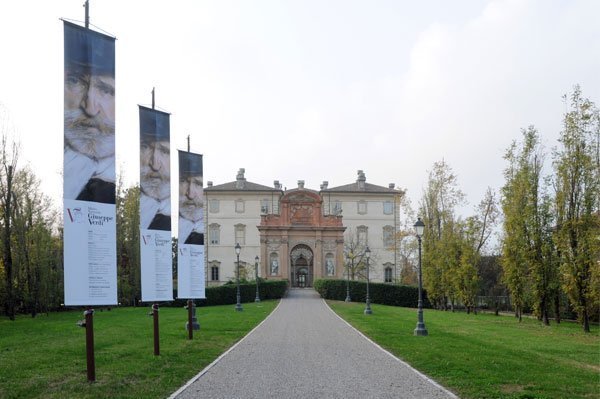 If you love Verdi, or even if you're just curious to discover the genius who revolutionized opera, the Giuseppe Verdi National Museum in Busseto is a must. You won't expect it: you enter a 16th-century Renaissance villa, Villa Pallavicino, and find yourself catapulted into a theater of lights and sounds. The museum, inaugurated on October 10, 2009, celebrates all 27 Verdi operas with a stunning display. Greeting you are reproductions of the original stage sets from Casa Ricordi, period paintings by Hayez and Boldini, precious 19th-century fabrics, and of course, the Maestro's immortal music. The atmosphere is meticulously crafted: set designer and director Pier Luigi Pizzi played with theatrical lights, while on the lecterns you'll find texts by critic Philippe Daverio guiding you through history and anecdotes. You stroll through frescoed halls (admire those by Evangelista Draghi and Ilario Spolverini!) and you almost hear the echo of Nabucco. The chronological route includes stage costumes, Verdi's salon, and a room dedicated to the Messa da Requiem. Note: the museum may be temporarily closed for renovations (check the website or call ahead). When open, the full ticket is €9, reduced €7, and entry is free on the first Sunday of the month. An experience that lets you experience Verdi firsthand.