
Ready for a journey that combines history and sea along the Pontine coast? This 3-day itinerary takes you to discover the ancient coastal towers from San Felice Circeo to Sperlonga, between breathtaking views and villages overlooking the Tyrrhenian Sea. Start from San Felice Circeo, where the Templars' Tower dominates the promontory, then continue towards Sabaudia with its Paola Tower and the dunes of the reserve. On the second day explore Terracina and its acropolis, before reaching Sperlonga, with the Tiberius' Cave and the white alleys. The Pontine coast coastal towers itinerary is perfect for those seeking culture and relaxation, with well-connected stops and dream beaches. A journey that will make you fall in love with southern Lazio.
🗺️ Your trip at a glance
A 3-day journey along the Pontine coast, from the coastal towers of San Felice Circeo to the medieval villages inland. This itinerary combines ancient history, military architecture, and coastal landscapes, with well-connected and accessible stops.
- Ideal for those looking for an active weekend between history and sea, away from the busiest routes.
- Highlights: 18 stops among coastal towers, Roman archaeological sites, and medieval villages, with interactive maps for each location.
- Perfect for curious travelers, families, and enthusiasts of landscape photography.
Itinerary stops
Day 1 - Stop no. 1
Capo Circeo Lighthouse
 We begin our Towers and Pontine Coast itinerary right at the Capo Circeo Lighthouse, located in Piazza Antonio Valente in San Felice Circeo. Built in 1866, this lighthouse stands on one of the highest points of the Circeo promontory, offering a breathtaking 360-degree view over the Circeo National Park and the Tyrrhenian Sea. Its strategic position makes it a privileged observatory for admiring the coastal towers dotting the shoreline, such as Torre Cervia and Torre Fico visible in the distance. The structure, still active and managed by the Italian Navy, is a well-preserved example of 19th-century architecture. Climbing up to the lighthouse means immersing yourself in a landscape where myth and nature merge: according to legend, the palace of the sorceress Circe stood here. Today, it's the ideal starting point for exploring the trail that runs along the promontory, rich in Mediterranean flora and glimpses of the crystal-clear sea.
- Go to the page: Capo Circeo Lighthouse: 360° View of National Park and Pontine Islands
- Piazza Antonio Valente, San Felice Circeo (LT)
- Open in Google Maps
- View on Google Images

You should go if...
Day 1 - Stop no. 2
Victory Tower
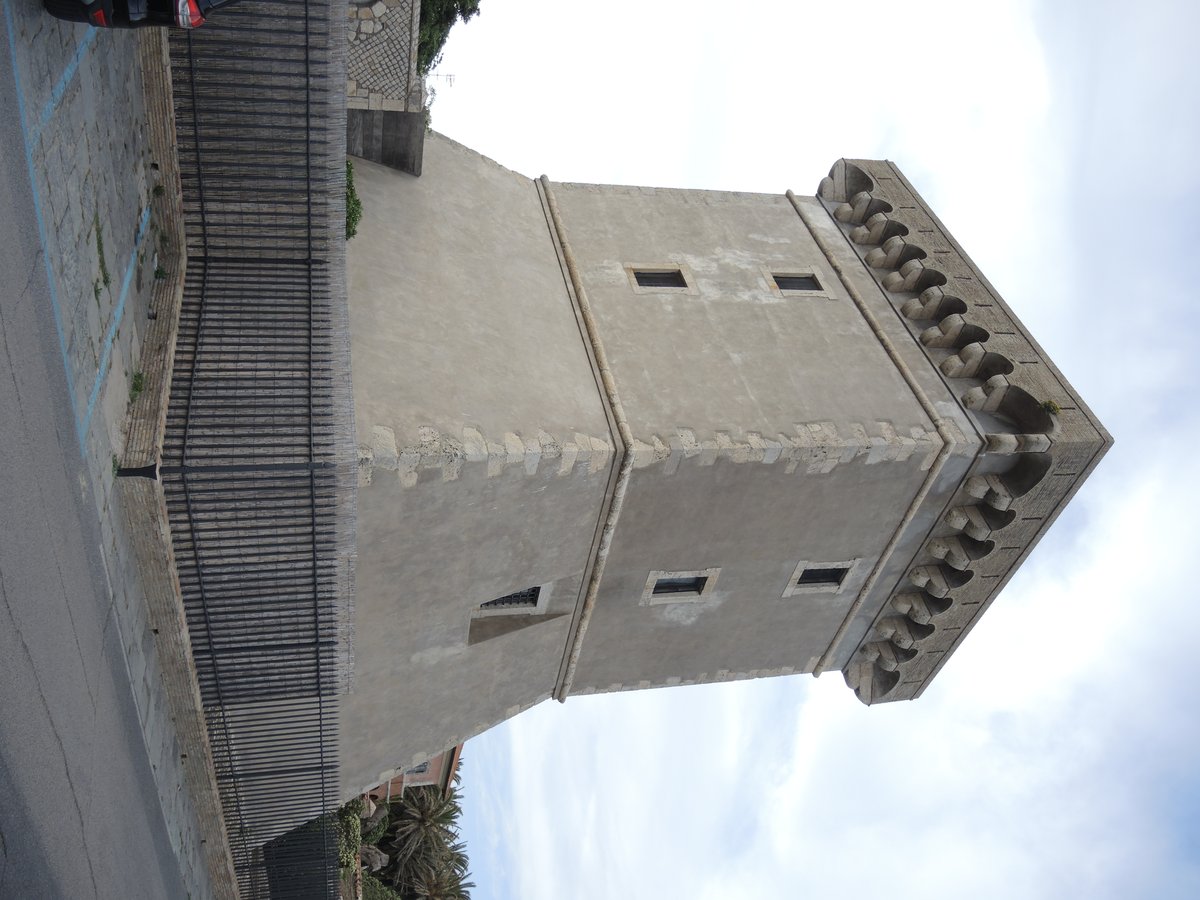 The second stop on our 'Towers and Pontine Coast' itinerary takes us to Victory Tower, located along the stunning Circe Promenade in San Felice Circeo. This coastal tower, built in the 16th century as part of the papal defense system against Saracen raids, stands majestically with its cylindrical limestone structure. Today, while not accessible inside, it offers a breathtaking panorama of the Tyrrhenian Sea and the Circeo promontory, perfect for unforgettable photo opportunities. Its strategic location, just steps from San Felice's historic center, makes it an ideal stop for those wanting to immerse themselves in history without straying too far from modern comforts. Take advantage of a stroll along the coast, breathing in the salty air and watching the waves crash against the rocks below.
- Lungomare Circe, San Felice Circeo (LT)
- Open in Google Maps
- View on Google Images
You should go if...
Day 1 - Stop no. 3
Templars' Tower
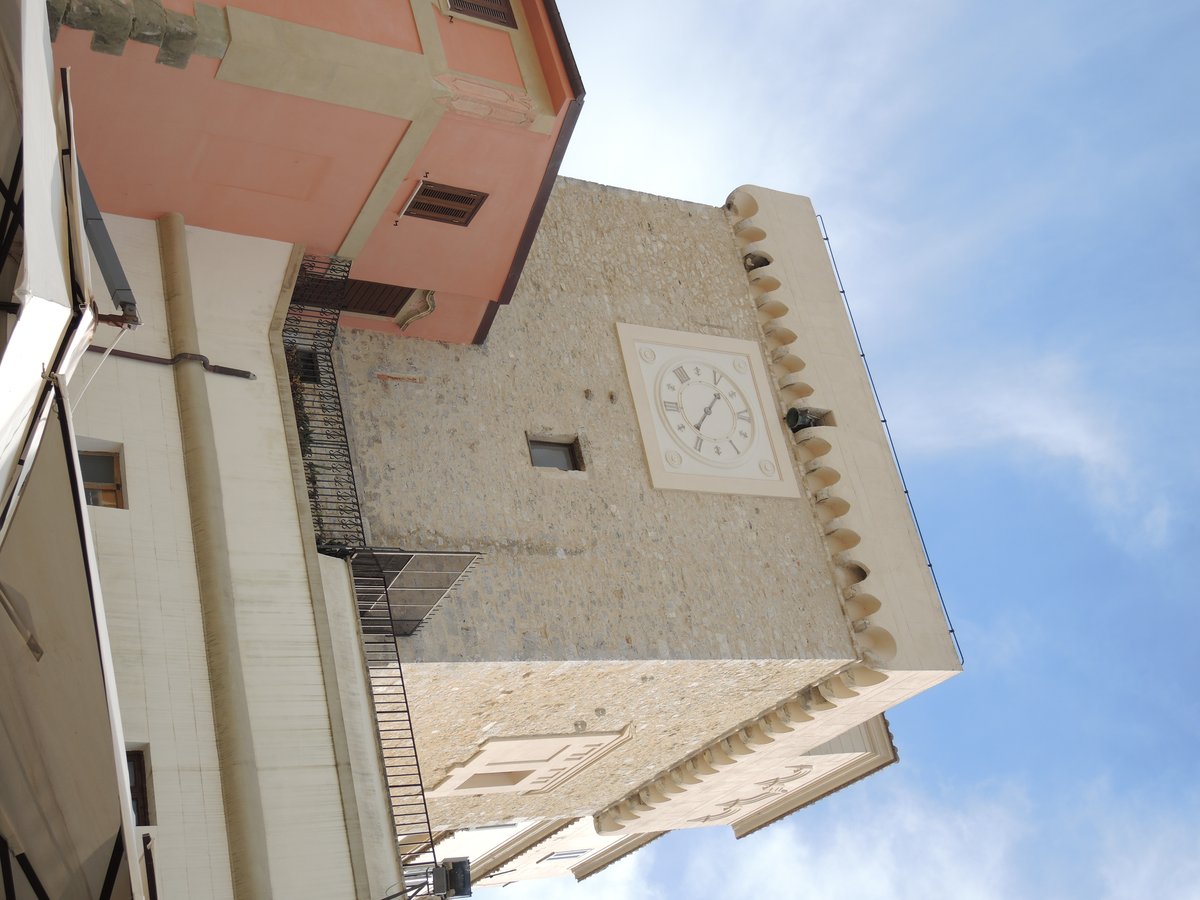 Leaving Torre Vittoria behind us, we head towards Templars' Tower along Via Don Giacinto Tacconi. This imposing structure, dating back to the 13th century, was built by the Knights Templar as a strategic lookout point against pirate raids. Unlike other coastal towers, it features a quadrangular layout with thick walls made of local stone, showcasing medieval military architecture. Its elevated position offers an exceptional panoramic view over the Gulf of Terracina and the Circeo National Park. Although the interior is not always accessible, the journey to reach it through the Mediterranean scrub is worth the visit alone. Observing the details of the arrow slits and the solidity of the construction, one immediately senses the historical importance of this defensive outpost.
- Via Don Giacinto Tacconi, San Felice Circeo (LT)
- Open in Google Maps
- View on Google Images
You should go if...
Day 1 - Stop no. 4
Olevola Tower
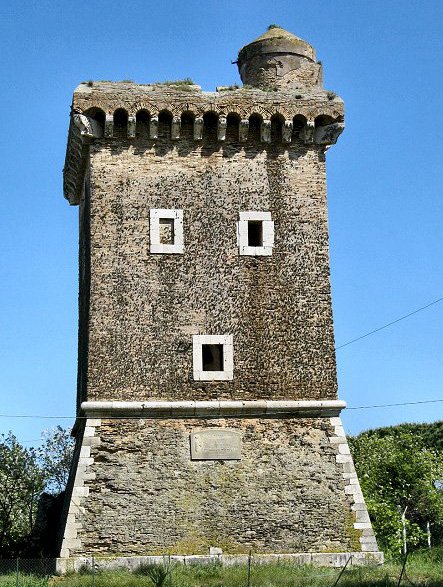 Continuing our journey along the Pontine coast, we reach Olevola Tower on Via G. Castelli in San Felice Circeo. This 16th-century tower, commissioned by Pope Pius IV to defend the coastline from Saracen raids, stands out for its cylindrical structure and sloping base, typical of the military architecture of the time. Surrounded by the lush vegetation of the Circeo National Park, it offers a breathtaking panorama of the Tyrrhenian Sea and the Pontine Islands. Access is free, and the path to reach it, winding through dirt trails scented with myrtle and mastic, provides an authentic experience. Observing the arrow slits and the solidity of the materials, one immediately understands the strategic importance of this outpost, now a silent guardian of centuries of history.
- Via G. Castelli, San Felice Circeo (LT)
- Open in Google Maps
- View on Google Images
You should go if...
Day 1 - Stop no. 5
Torre Cervia
 After leaving Torre Olevola, we head towards Torre Cervia on Via delle Batterie, another gem of the Pontine defensive system. Built in the 16th century as part of the surveillance network against pirate raids, this tower stands on a rocky promontory with direct views of the Circeo National Park and the Pontine Islands. Its strategic position allowed visual control over a wide stretch of coastline, and today it offers visitors one of the most spectacular panoramas in the area. Access is free, and the path to reach it, winding through Mediterranean scrubland trails, is in itself an immersive nature experience. Observing the massive structure and original arrow slits, you immediately sense its military importance, while today it's a privileged spot for admiring unforgettable sunsets over the Tyrrhenian Sea.
- Via delle Batterie, San Felice Circeo (LT)
- Open in Google Maps
- View on Google Images
You should go if...
Day 1 - Stop no. 6
Fico Tower
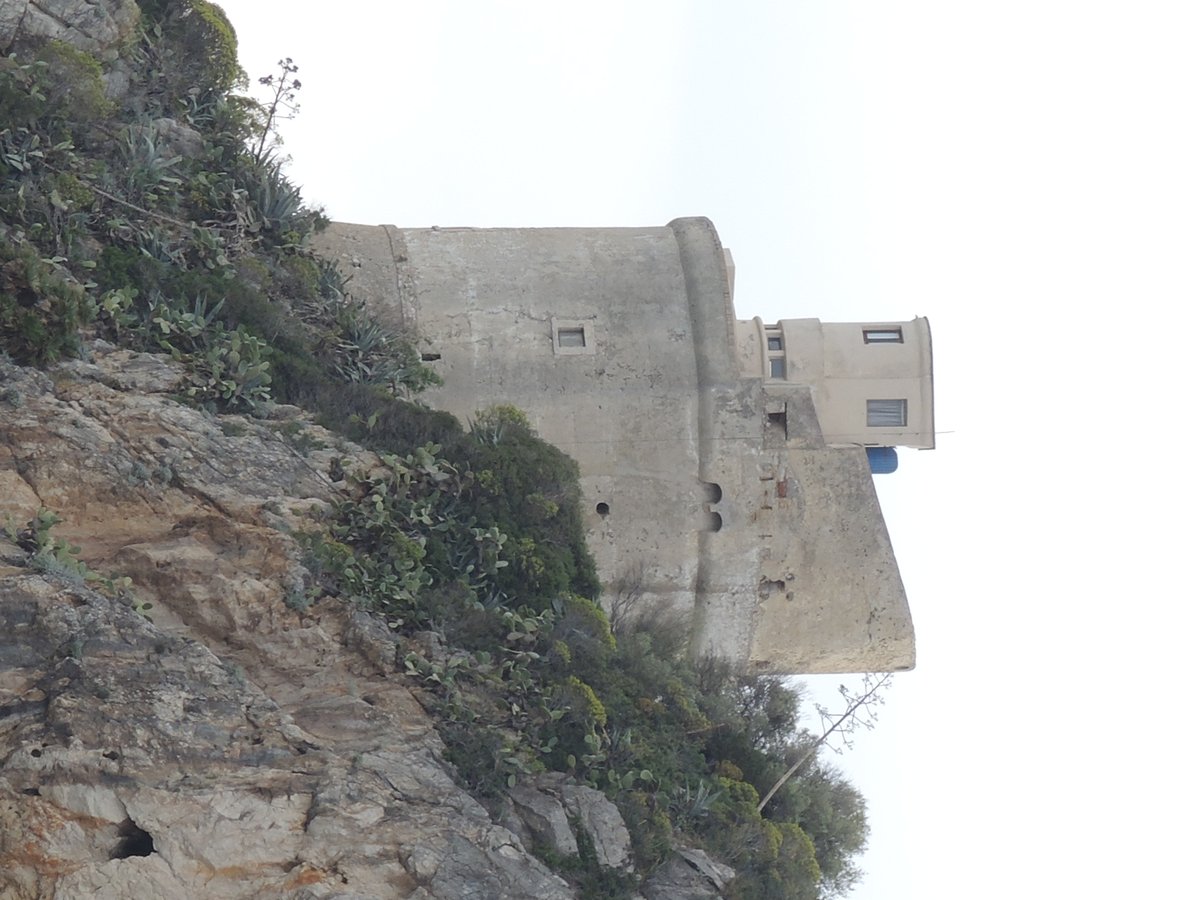 Leaving Torre Cervia behind, you'll immerse yourself in a trail leading to Fico Tower, located on Via Grotta delle Capre. Built in the 16th century as part of the Pontine defensive system against pirate raids, this tower stands out for its isolated position on a rocky promontory. Unlike other towers in the area, Fico Tower preserves its original cylindrical limestone structure intact, with authentic arrow slits that testify to its military function. The climb requires some attention, but once at the top, you're rewarded with a 360-degree view stretching from Circeo National Park to the Pontine Islands in the distance. The atmosphere is particularly evocative at sunset, when the sun's rays paint the coastline orange. Access is free, and the path through the Mediterranean scrub offers encounters with local flora, such as myrtle and mastic trees.
- Via Grotta delle Capre, San Felice Circeo (LT)
- Open in Google Maps
- View on Google Images
You should go if...
Day 1 - Stop no. 7
Torre Paola
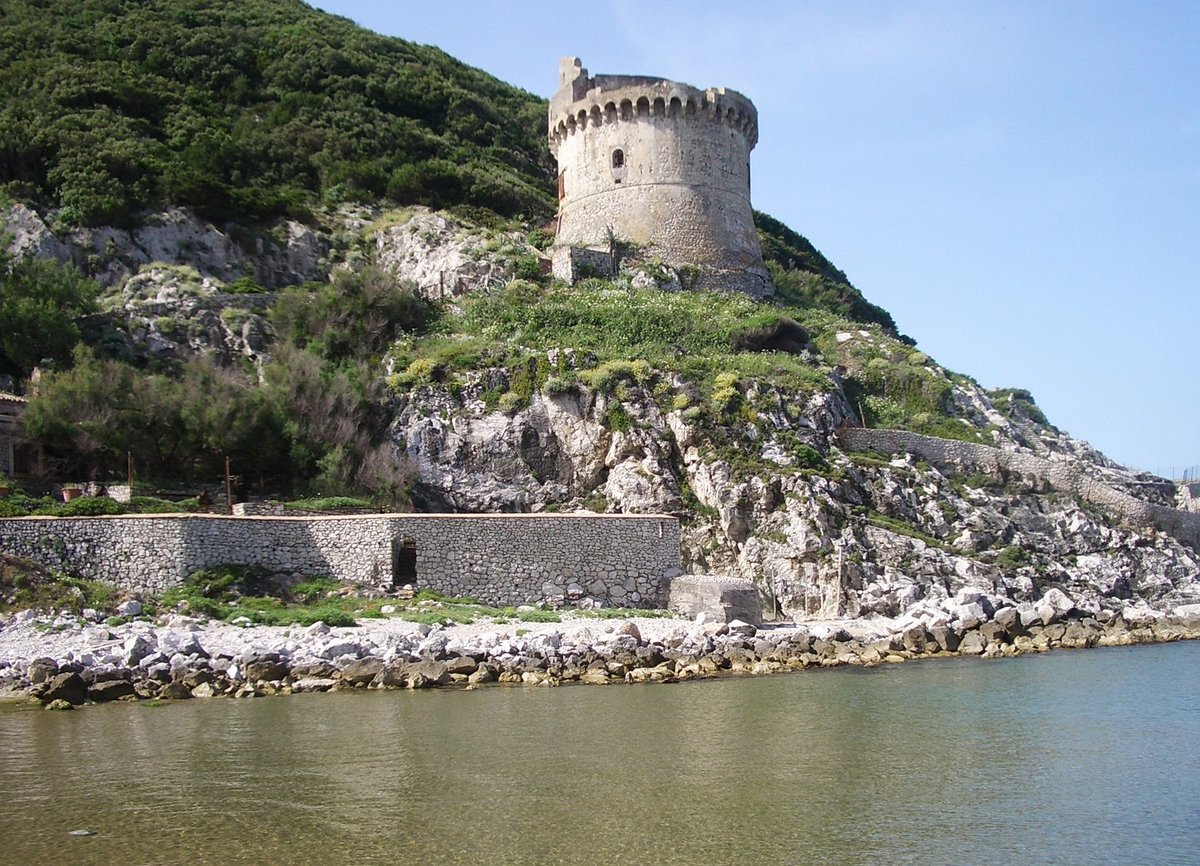 Arriving at Torre Paola, located along Strada Torre Paola in San Felice Circeo, you're greeted by a unique scene: this 16th-century tower stands right on the channel connecting Lake Paola to the Tyrrhenian Sea, creating a strategic observation point between fresh and salt waters. Built by order of Pope Pius IV as part of the Pontine defensive system, the tower features a massive limestone structure with a sloping base and still-visible arrow slits. Today, the surrounding area is an integral part of the Circeo National Park, offering nature trails through sandy dunes and pine forests. The view spans from the rugged coastline to the Pontine Islands, with sunsets painting the landscape in warm hues. Access is free and ideal for a refreshing stop during the "Towers and Pontine Coast" itinerary.
- Strada Torre Paola, San Felice Circeo (LT)
- Open in Google Maps
- View on Google Images
You should go if...
Day 2 - Stop no. 1
Foce Verde Tower
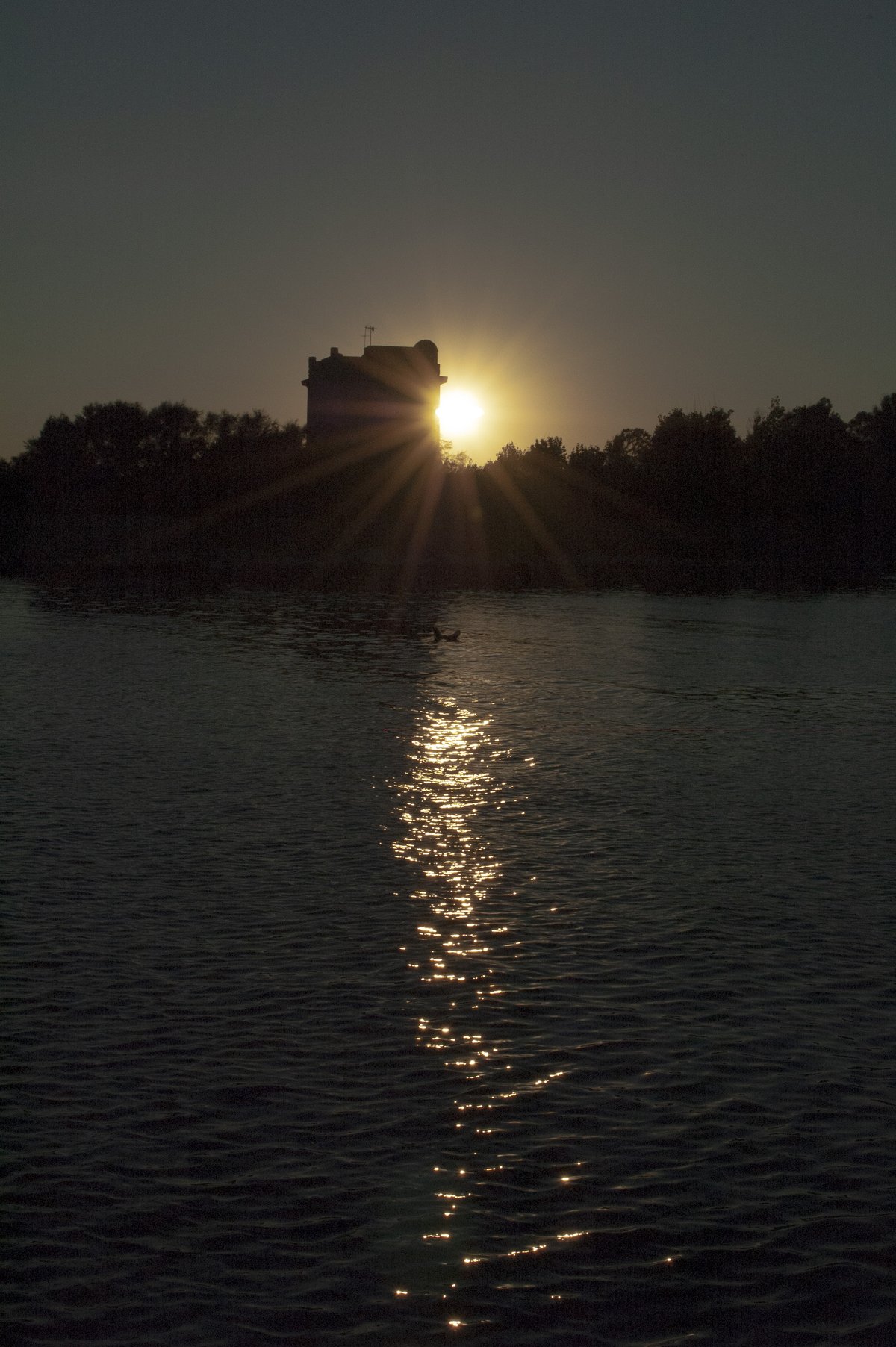 Leaving Torre Paola behind, the second day of the "Towers and Pontine Coast" itinerary begins with Foce Verde Tower, located along Strada Valmontorio in Latina. This 16th-century tower, part of the papal defensive system against Saracen raids, stands in a unique natural setting: it's surrounded by sandy dunes and Mediterranean vegetation, just steps from the mouth of the Sisto River. The structure, made of limestone with a sloping base, is well-preserved and offers panoramic views of the Tyrrhenian Sea and the wetland area behind it. Access is free and ideal for a refreshing walk, with opportunities to observe migratory birds in the nearby Foce Verde Nature Reserve. A perfect spot for those seeking history and nature in one sweeping glance.
- Strada Valmontorio, Latina (LT)
- Open in Google Maps
- View on Google Images
You should go if...
Day 2 - Stop no. 2
Torre Truglia
 The second stop of day two brings you to Torre Truglia, located right on Sperlonga's waterfront, on Via Riva dei Pescatori. This 16th-century tower, built to spot Saracen pirates, is now a symbol of the village, with its cliffside position offering breathtaking views. Inside, the Sea Museum tells the story of local fishing and ancient navigation, with artifacts and explanatory panels. The tower is easily accessible on foot from Sperlonga's historic center, and visiting it pairs perfectly with a stop at nearby beaches, like Angolo Beach, for a refreshing swim. Don't miss the view from the top, which stretches from the coast to the Pontine Islands, making this spot a must for history and nature lovers.
- Via Riva dei Pescatori, Sperlonga (LT)
- Open in Google Maps
- View on Google Images
You should go if...
Day 2 - Stop no. 3
Villa of Tiberius
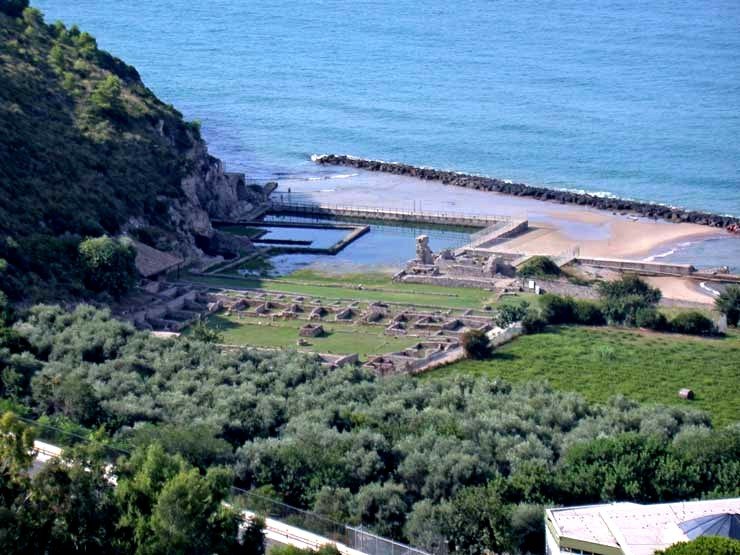 After Torre Truglia, the route leads you to the Villa of Tiberius, located along the Regional Road 213 Flacca in Sperlonga. This archaeological complex, dating back to the 1st century AD, was the lavish residence where Emperor Tiberius retreated to escape life in Rome. The site is famous for the Grotto of Tiberius, a natural cave transformed into a dining hall, where sculptures such as the Polyphemus group were discovered, now displayed in the National Archaeological Museum of Sperlonga. Walking among the remains of the baths, cisterns, and gardens, you can sense the opulence of imperial life. The villa offers spectacular views of the Gulf of Gaeta, making it an ideal spot for those who want to immerse themselves in history without sacrificing the panorama. The visit is completed by the adjacent museum, which houses original artifacts and detailed reconstructions.
- Strada Regionale 213 Flacca, Sperlonga (LT)
- Open in Google Maps
- View on Google Images
You should go if...
Day 2 - Stop no. 4
Caetani Tower
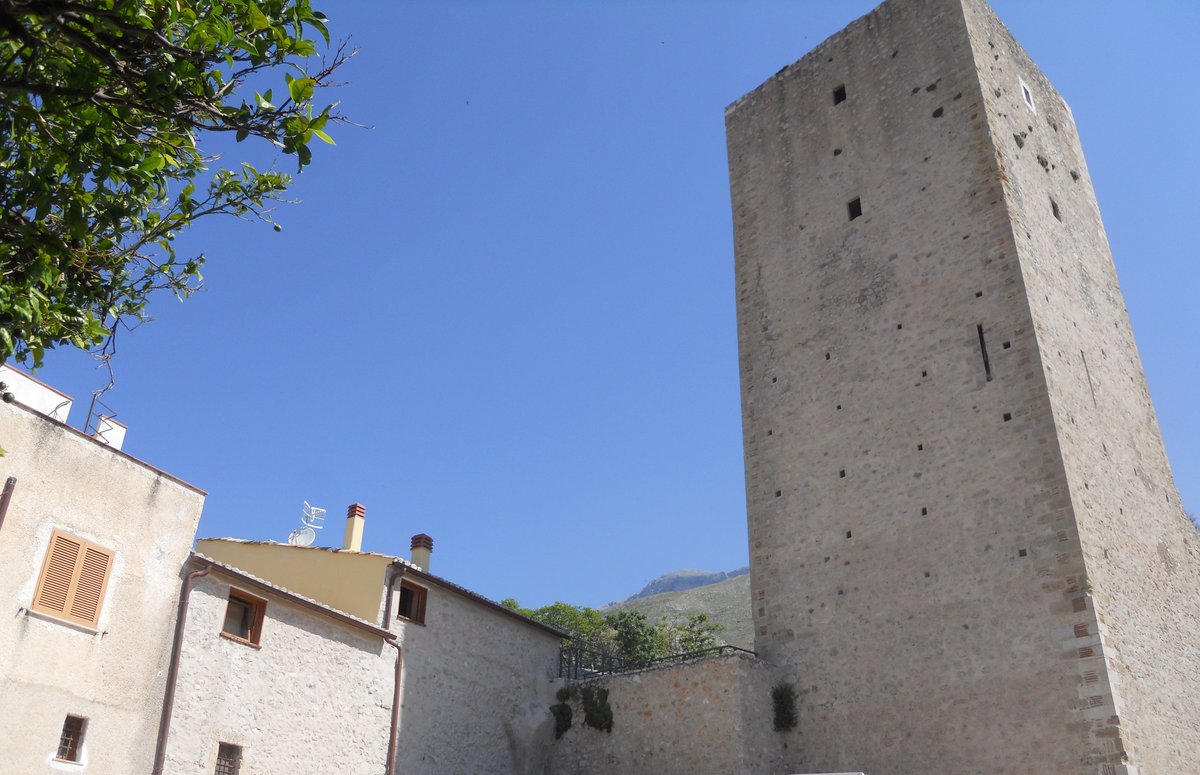 Leaving behind the grandeur of Tiberius' Villa, the second day of our itinerary brings us to Caetani Tower, located on Via del Castello in Formia. This medieval tower, dating back to the 13th century, was built by the powerful Caetani family as a lookout and defensive point against Saracen raids. Its strategic position, perched on a promontory, offers breathtaking views of Formia's harbor and the Gulf of Gaeta, allowing you to imagine the ancient guards scanning the horizon. The structure, made of local stone, features arrow slits and battlements typical of military architecture from that era. Climbing to the top, you can appreciate the contrast between the blue of the sea and the green of the Aurunci Mountains. Visiting Caetani Tower is a plunge into the medieval history of the Pontine region, perfect for those seeking a historical corner away from the crowds.
- Via del Castello, Formia (LT)
- Open in Google Maps
- View on Google Images
You should go if...
Day 2 - Stop no. 5
Cicero's Tomb
 After exploring the Caetani Tower with its medieval tales, our itinerary leads us to a site of profound historical significance: Cicero's Tomb in Formia. Located along Via Marco Tullio Cicerone, this funerary structure is traditionally identified as the final resting place of the great Roman orator, assassinated in 43 BC during the civil wars. The monument, built in opus reticulatum typical of Republican Roman architecture, stands as an imposing cylindrical tower dominating the coastal landscape. Despite centuries of debate about the actual location of his remains, the site maintains an aura of solemnity that captivates every visitor. Strolling around the tomb, you can admire the view over the Gulf of Gaeta and reflect on Cicero's cultural legacy, whose works have influenced Western thought. A perfect spot to conclude the second day of our journey through the Pontine towers.
- Via Marco Tullio Cicerone, Formia (LT)
- Open in Google Maps
- View on Google Images
You should go if...
Day 2 - Stop no. 6
Mausoleum of Lucius Munatius Plancus
 Leaving behind the evocative Tomb of Cicero in Formia, we head towards another archaeological gem: the Mausoleum of Lucius Munatius Plancus in Gaeta. This imposing Roman tomb, located on Via Lucio Munazio Planco, dates back to the 1st century BC and towers over a promontory with a spectacular view of the Gulf of Gaeta. Built in opus reticulatum, the mausoleum is dedicated to Lucius Munatius Plancus, founder of cities like Lyon and Basel, and a veteran of the civil wars. Its cylindrical structure, about 13 meters high, is a rare example of well-preserved Republican funerary architecture. Climbing up to the site, you'll appreciate not only the monument's grandeur but also the panorama that embraces the sea and the Pontine coast. An ideal place to conclude the second day of our itinerary, offering a dive into Roman history and a moment of contemplation.
- Via Lucio Munazio Planco, Gaeta (LT)
- Open in Google Maps
- View on Google Images
You should go if...
Day 2 - Stop no. 7
Monte Orlando Urban Park
 After exploring the Mausoleum of Lucius Munatius Plancus, the Monte Orlando Urban Park in Gaeta welcomes us like a green lung overlooking the sea. This park extends across a promontory dominating the Gulf of Gaeta, offering well-marked trails among maritime pines and Mediterranean scrub. Highlights include the Grotta del Turco, a natural cavity accessible via steps carved into the rock, and the Sanctuary of the Most Holy Trinity, known as Montagna Spaccata (Split Mountain), with its legendary fissures. Climbing towards the summit, you reach the Punta Stendardo Lighthouse, from which the view stretches from the Pontine Islands to the Lazio coast. It's the perfect spot for a rejuvenating break during the second day of our itinerary, combining nature, history, and unforgettable panoramas.
- Gaeta (LT)
- Open in Google Maps
- View on Google Images
You should go if...
Day 3 - Stop no. 1
Monticchio Tower
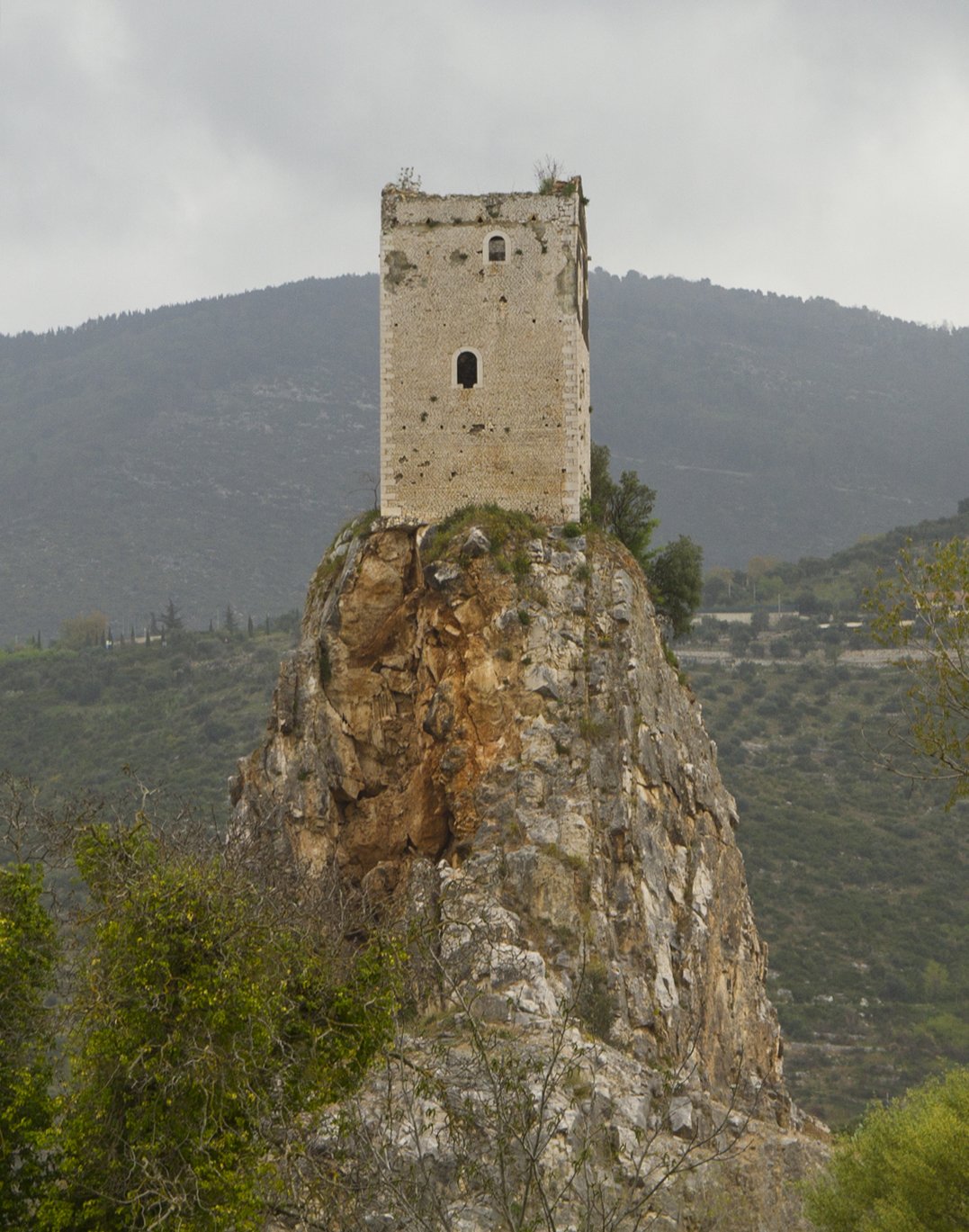 We begin the third day of our "Towers and Pontine Coast" itinerary with Monticchio Tower, located in Sermoneta on Via della Torre. This medieval tower, dating back to the 13th century, was part of the Caetani defensive system and stands on a hill offering panoramic views of the Pontine Plain and the Lepini Mountains. Built with local stone, it features a square structure with arrow slits and battlements, typical of military architecture from that period. The surroundings are characterized by olive groves and trails inviting short walks, ideal for those seeking a blend of history and rural landscape. It's a less crowded place compared to other attractions, perfect for a peaceful stop before continuing to the next coastal destinations.
- Via della Torre, Sermoneta (LT)
- Open in Google Maps
- View on Google Images
You should go if...
Day 3 - Stop no. 2
Caetani Castle of Sermoneta
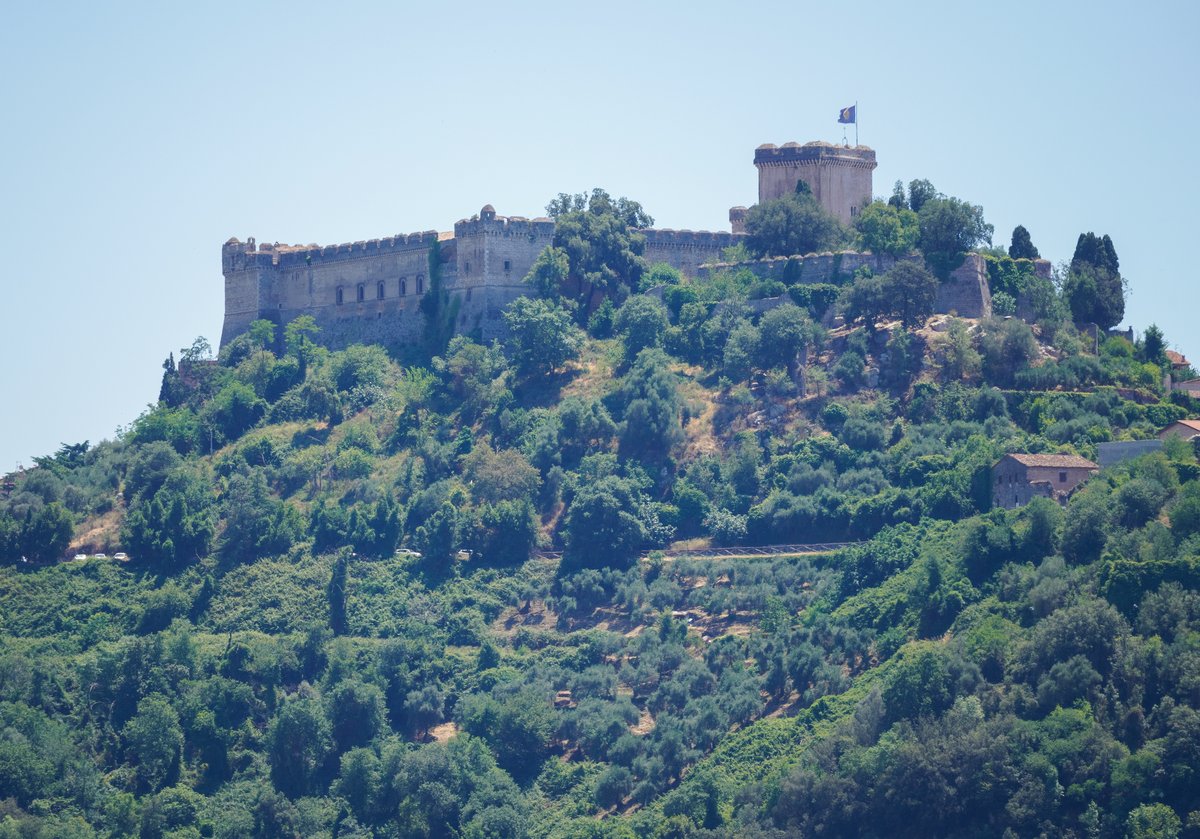 Day three of our 'Towers and Pontine Coast' itinerary takes us to Sermoneta, where the Caetani Castle towers over the medieval village from above. Built in the 13th century, this fortress is a perfect example of military architecture, with its imposing walls and soaring towers that dominate the surrounding landscape. Inside, visitors can admire Renaissance frescoes and noble halls, while from the summit, a spectacular view unfolds over the Pontine Plain and the Lepini Mountains. Its strategic location along the ancient Via Pedemontana makes it a key point for understanding the area's history, linked to the Caetani and Borgia families. A visit here is a plunge into the past, with details like the prisons and kitchens that narrate daily life from that era.
- Via Rione Vecchio, Sermoneta (LT)
- Open in Google Maps
- View on Google Images
You should go if...
Day 3 - Stop no. 3
Ceramics Museum
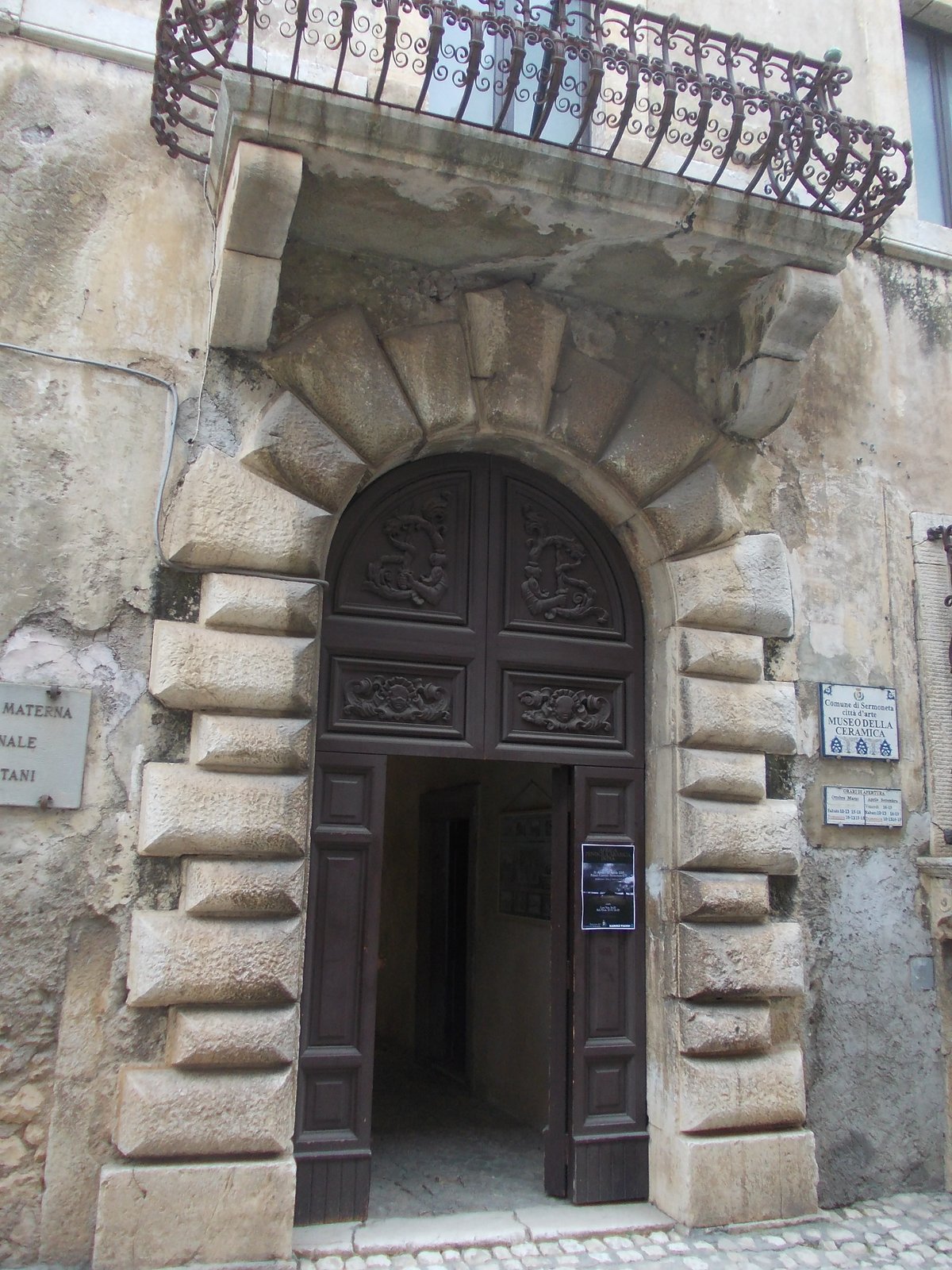 After exploring Caetani Castle, descending along Corso Garibaldi leads you to the Ceramics Museum, housed in a historic palace that tells centuries of artisan tradition. Here you can admire Renaissance and Baroque maiolica produced locally, with decorations ranging from geometric patterns to mythological scenes, showcasing the skill of Sermoneta's master craftsmen. The collections include plates, vases, and everyday objects, many of which come from archaeological excavations in the Pontine area. The museum is not just a showcase, but a journey into material culture, with explanatory panels that illustrate techniques and symbols, making this heritage accessible to everyone. A stop here completes your day in Sermoneta, tangibly uniting history and art.
- Corso Garibaldi, Sermoneta (LT)
- Open in Google Maps
- View on Google Images
You should go if...
Day 3 - Stop no. 4
Cistercian Abbey of Valvisciolo
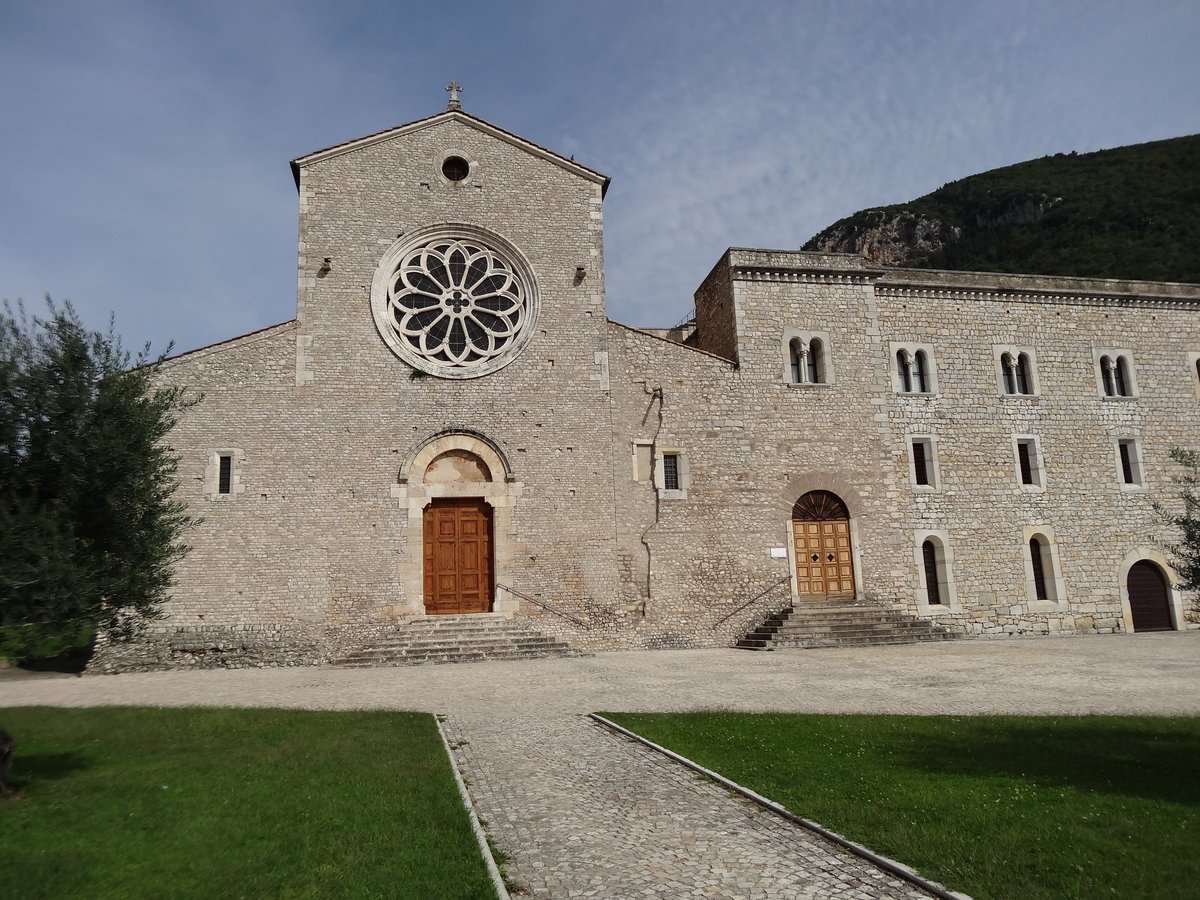 Leaving the Ceramics Museum behind, you immerse yourself in the Sermoneta countryside along SP23 to reach the Cistercian Abbey of Valvisciolo. Founded in the 12th century, this monastic complex is a perfect example of Cistercian architecture, with its Romanesque-Gothic church preserving 14th-century frescoes and a cloister where time seems to have stood still. The abbey is known for its underground crypt, an evocative space housing medieval tombs and capitals carved with allegorical symbols. The monks still follow the Rule of Saint Benedict today, and visiting this place means connecting with a living tradition. The inner garden, tended with aromatic and medicinal plants, completes the experience, offering a corner of peace away from the chaos. A stop that enriches the itinerary with spirituality and art.
- SP23, Sermoneta (LT)
- Open in Google Maps
- View on Google Images
You should go if...


