Introduction
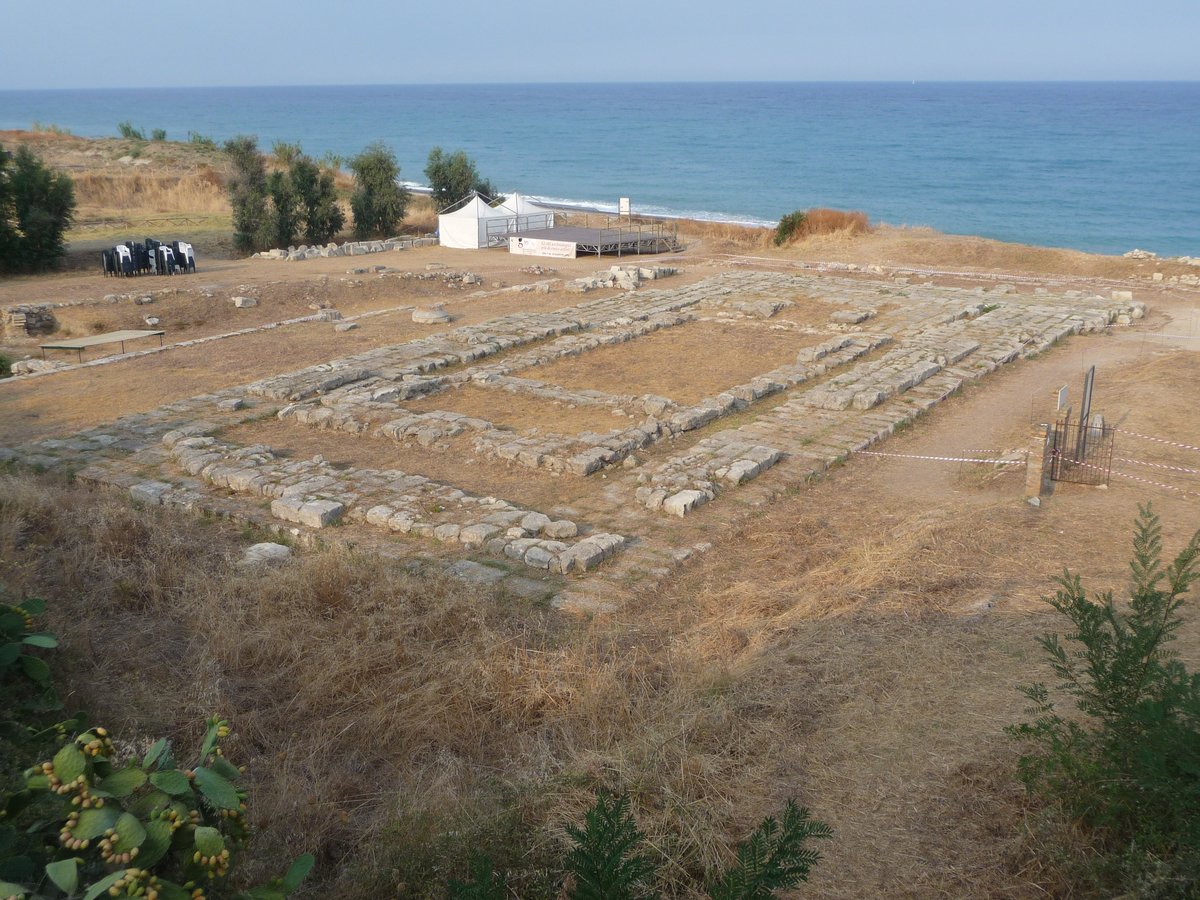
As soon as you arrive at the Kaulon Archaeological Park, you immediately understand why this place is special. It’s not just an archaeological site, but a place where history blends with the landscape in a unique way. You walk among the remains of the ancient Magna Graecia city with the Ionian Sea accompanying you just steps away, creating a powerful contrast between past and present. The perfectly preserved Dragon Mosaic strikes you with its colors and details, while the Roman baths tell of daily life from centuries ago. It’s an experience that makes you feel part of a thousand-year-old history, with the sea breeze making everything more magical. Here you don’t just visit ruins, but relive a piece of Magna Graecia in an extraordinary natural setting.
Historical Overview
Kaulon was founded by the Achaeans in the 8th century BC, becoming a major center of Magna Graecia thanks to its strategic coastal position. The city experienced periods of prosperity with flourishing trade, but was destroyed by Dionysius I of Syracuse in 389 BC and later rebuilt by the Romans. Its thermal baths and mosaics, such as the famous Dragon Mosaic, bear witness to an advanced civilization, while artifacts in the Monasterace Archaeological Museum reveal aspects of daily life and religious practices.
- 8th century BC: Foundation by the Achaeans
- 389 BC: Destruction by Dionysius I of Syracuse
- Roman era: Reconstruction and development of thermal baths
- Modern excavations: Discovery of the Dragon Mosaic and other artifacts
The Dragon Mosaic and the Thermal Baths
The Dragon Mosaic is the jewel of Kaulon: a unique work of its kind, with polychrome tiles depicting a sea monster, a symbol of protection. It is located in what was once a private home, showcasing the luxury of the era. Not far away, the Roman thermal baths reveal an advanced heating system, with hypocausts still visible, where citizens relaxed after their daily toils. Walking among these structures allows you to imagine the social life of ancient Kaulon, between warm baths and conversations. It is a plunge into engineering and art that few archaeological sites offer with such immediacy.
The Museum and the Underwater Artifacts
The Archaeological Museum of Monasterace, located right next to the park, completes your visit with extraordinary finds. Here you’ll admire amphorae, coins, and statuettes that tell the story of Kaulon’s commercial and religious life. But what truly stands out are the underwater artifacts recovered from the sea just offshore—anchors and ceramics that bear witness to shipwrecks and maritime trade. It’s like having a window into ancient Mediterranean commerce, with objects the sea has preserved for centuries. The museum, though small, is well-curated, allowing you to grasp history firsthand without lengthy explanations.
Why Visit It
Visit Kaulon for three concrete reasons: first, the Dragon Mosaic is a rare masterpiece you won’t find at other Magna Graecia sites; second, its cliffside location overlooking the sea offers unique views while you explore history; third, the museum adds depth with underwater artifacts that enrich the context. It’s an ideal spot for those wanting to combine culture and nature effortlessly, with an easy-to-follow path and clear explanations. Plus, the tranquil atmosphere lets you savor every detail without crowds.
When to Go
The best time to visit Kaulon is during spring or autumn, when the climate is mild and the sunlight enhances the colors of the mosaics without the summer heat. Avoid the midday hours in summer, opting instead for early morning or late afternoon when the air is cooler and the atmosphere becomes more evocative. During these seasons, the site is less crowded, allowing you to enjoy the tranquility of the place with the sound of the sea in the background.
In the Surroundings
After Kaulon, explore Roccella Ionica with its castle perched over the sea and golden beaches, perfect for a refreshing dip. Alternatively, head to the village of Stilo to admire the Cattolica, a unique Byzantine church in Calabria, nestled on the slopes of Mount Consolino. Both places offer thematic continuity between history and landscape, ideal for extending your immersion in the local culture without venturing too far.