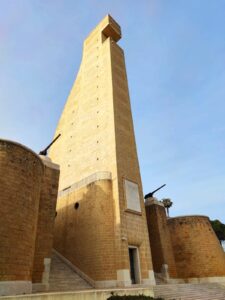
Taranto historic center itinerary 1 day: sounds too little? Actually, seven stops are enough to fall in love with the old town. Start from the Aragonese Castle, an imposing fortress on the sea, and continue through the alleys to the Cathedral of San Cataldo, a Romanesque masterpiece. Don’t miss the church of San Domenico Maggiore and the hidden squares. Every corner tells a story. Visit the National Archaeological Museum (MArTA) to admire the artifacts of Magna Graecia. Then lose yourself in the alleys of Taranto Vecchia, where row houses and courtyards tell of life in the past. The final stop is the Ponte Girevole (Swing Bridge), which connects the old city to the new one. This walking tour is designed for those who want to experience culture stress-free: museums, historic buildings, and breathtaking views of the Mar Grande. With our guide, you’ll discover secret corners and curiosities. An experience that blends art, history and authenticity. Perfect for a day trip or a long weekend.
🗺️ Your trip at a glance
A one-day itinerary that will reveal the ancient charm of Taranto, among castle, cathedral and evocative alleys. Perfect for those who love history and culture.
- Ideal for: cultural explorers and slow travelers who want to explore the historic center on foot.
- Highlights: 7 well-distributed stops, affordable entry fees, and spectacular views of the Mar Grande.
- For whom: for solo travelers, couples and small groups seeking an authentic experience away from mass tourism.
Itinerary stops
Stop no. 1
Mar.Ta: The National Archaeological Museum of Taranto
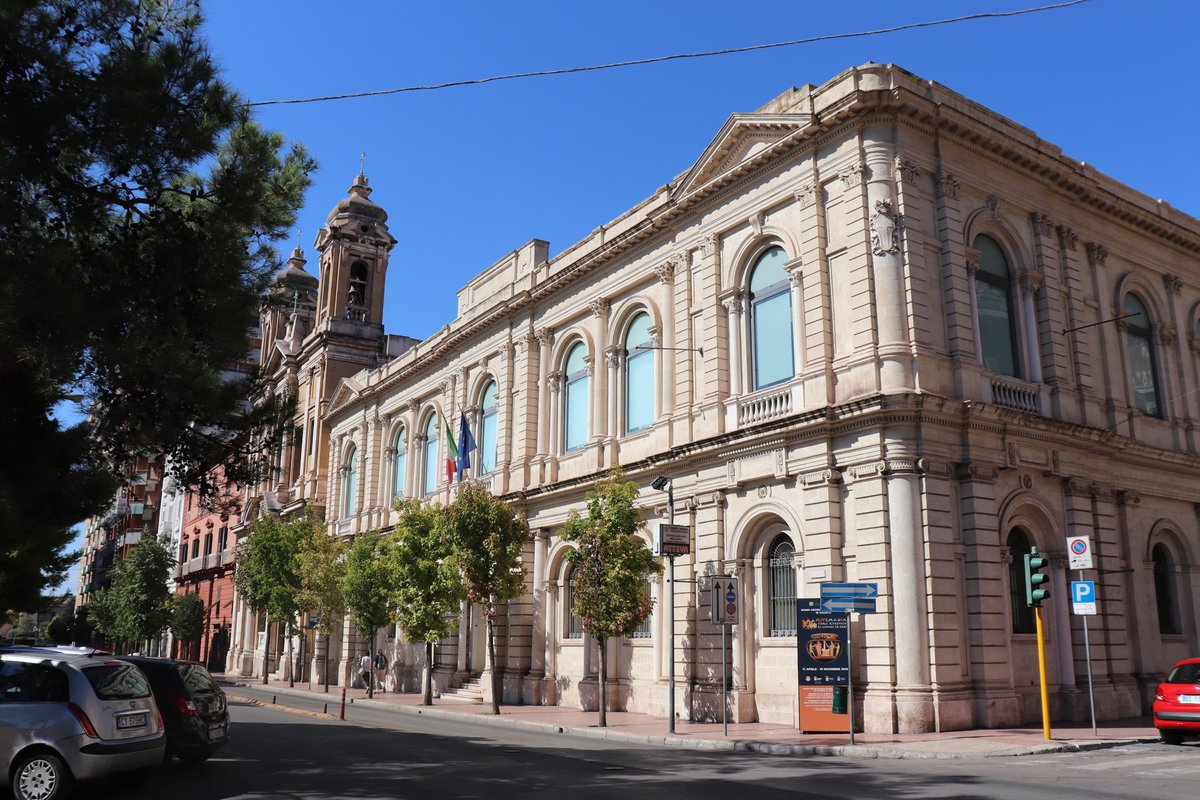 The first stop on our Taranto itinerary is the MArTA, one of the most important archaeological museums in Italy. Housed in the 18th-century former convent of San Pasquale, the museum welcomes you with a chronological journey from the Paleolithic to the Early Middle Ages. The true gem is the Gold of Taranto, a collection of Greek jewelry from the 4th–3rd centuries BC that will leave you speechless. But it doesn’t end there: you’ll find the Tomb of the Athlete, the Venuses of Parabita, and the Zeus of Ugento. The museum is well-organized, with bilingual panels and an atmosphere that makes you feel the history. The best part is that you can visit it in a couple of hours, but you might get glued to the display cases. I recommend starting from the second floor, where the oldest artifacts are. Open daily 8:30 AM–7:30 PM, ticket around 10 euros. A perfect start to understand the soul of Taranto.
- Go to the page: MAR.TA Taranto: Gold of Taras and Magna Graecia Artifacts in Former Convent
- Via Cavour 10, Taranto (TA)
- https://museotaranto.cultura.gov.it/
- Open in Google Maps
- View on Google Images

You should go if…
Stop no. 2
Spartan Hypogeum Museum: An Underground Journey into Taranto’s History
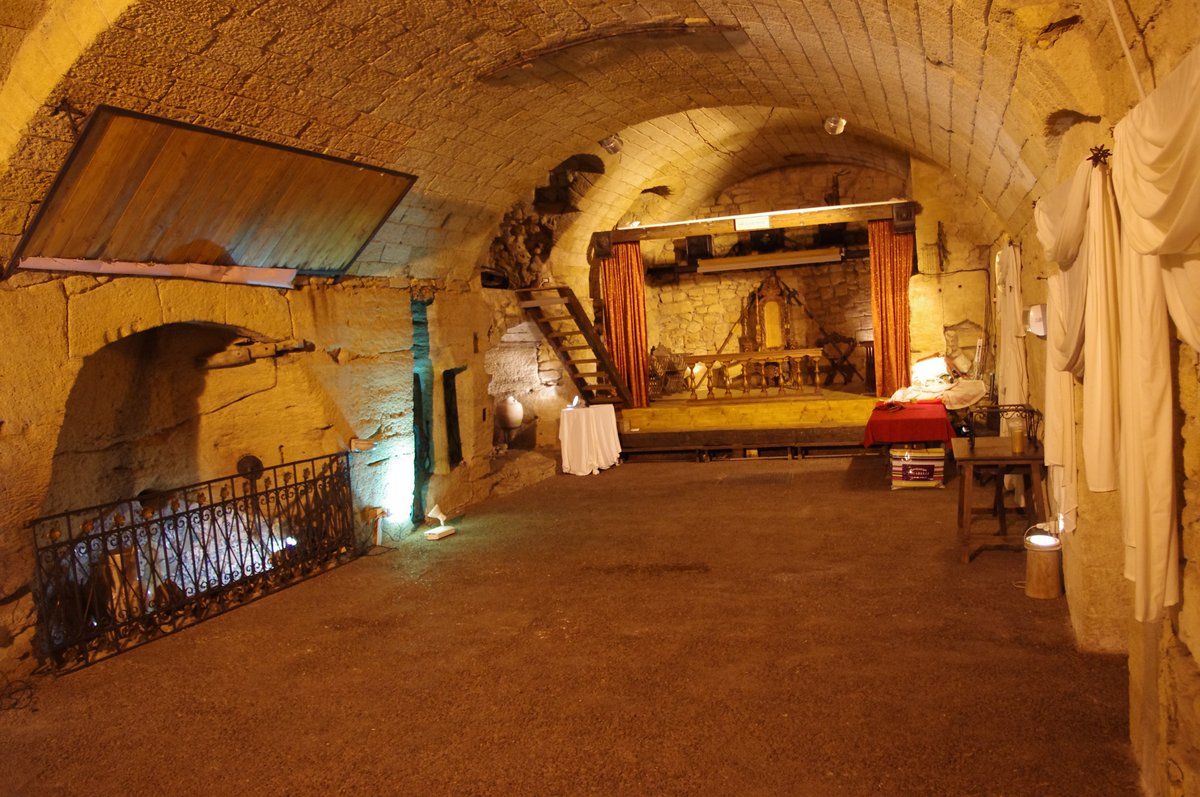 Descending the steps of Corso Vittorio Emanuele II, you find yourself in an underground world spanning 27 centuries of history. The Spartan Hypogeum Museum, carved into the local carparo stone by the Spartan founders themselves in 706 BC, covers 800 square meters and reaches a depth of 16 meters. Its four rooms – Aethra, Phalanthus, Philonides, and Persephone – preserve Greek walls, Roman opus incertum structures, and Byzantine vaults commissioned by Nikephoros Phokas. The Persephone Room, the deepest, is crossed by an underground river that feeds the freshwater springs known as ‘Citri.’ Don’t miss the tunnel that opens onto the Mar Grande. Open only on Sundays at 11 am with mandatory reservation, it is managed by the Bellacicco family, who restored it in 2004. A place that lets you literally touch the layers of Taranto’s history, amidst archaeological finds and modern art installations.
- Go to the page: Spartan Hypogeum Museum of Taranto: 800 sqm of history beneath the city
- Corso Vittorio Emanuele II, Taranto (TA)
- Open in Google Maps
- View on Google Images
You should go if…
Stop no. 3
City Palace
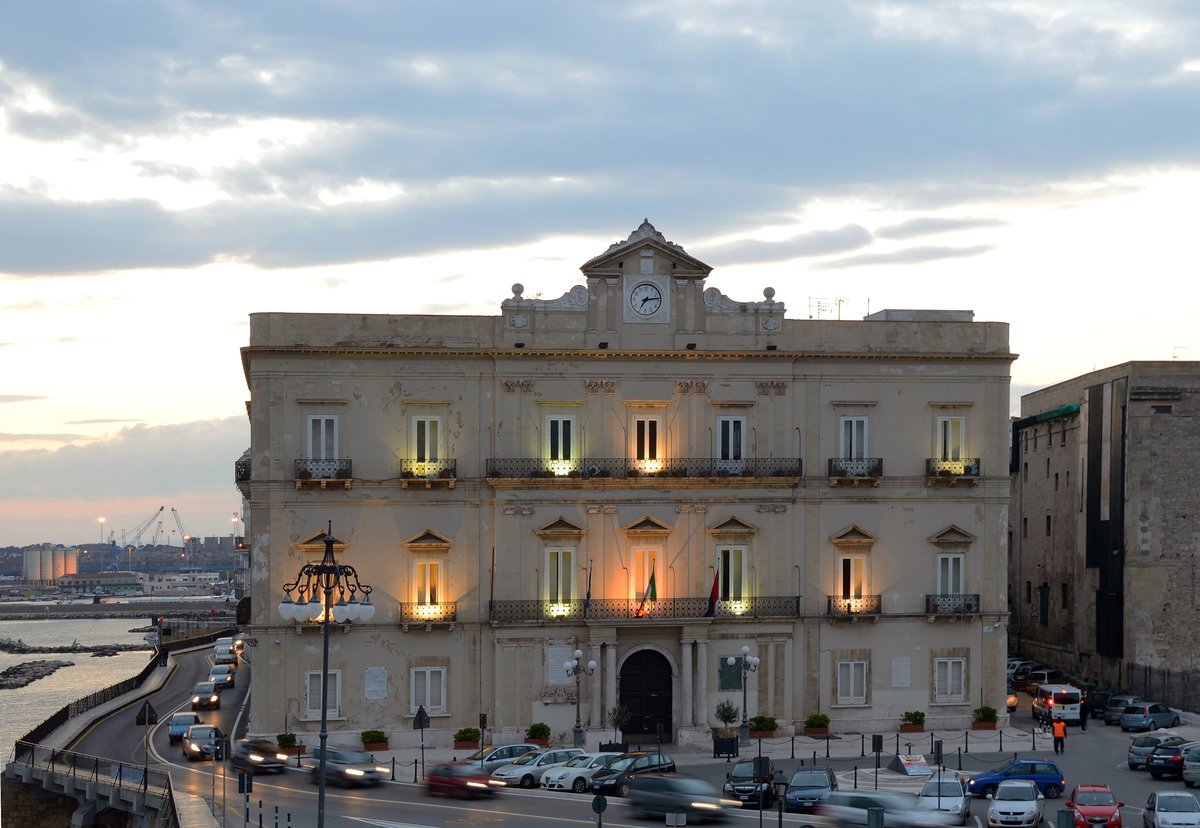 After the underground journey, you emerge into the light right in front of one of the symbols of the Old Town: the City Palace. Begun in 1864 to a design by Davide Conversano and completed in 1869, it stands where the Captain’s Residence (a fortified 16th-century palace) and the old prisons once were. The style is that classic Umbertine eclecticism you find in many institutional buildings of the era. The facade, raised in 1929 to accommodate the clock, overlooks Piazza Castello. Passing under the Governor’s Arch, you immediately find yourself inside the labyrinth of alleyways. Inside, grand staircases lead to the Hall of Mirrors (on the first floor) and the Council Chamber (on the second). The hall, with its mirrors and chandeliers, has hosted kings, ministers, and even the President of the Supreme Soviet in 1967. If you’re lucky, some exhibitions are open to the public. From here, the view over the Mar Grande is stunning – you stop for a moment to breathe before moving on.
- Piazza Municipio 1, Taranto (TA)
- http://www.comune.taranto.it/
- Open in Google Maps
- View on Google Images
You should go if…
Stop no. 4
Palazzo Galeota: Nobility and Mystery in the Heart of the Old Town
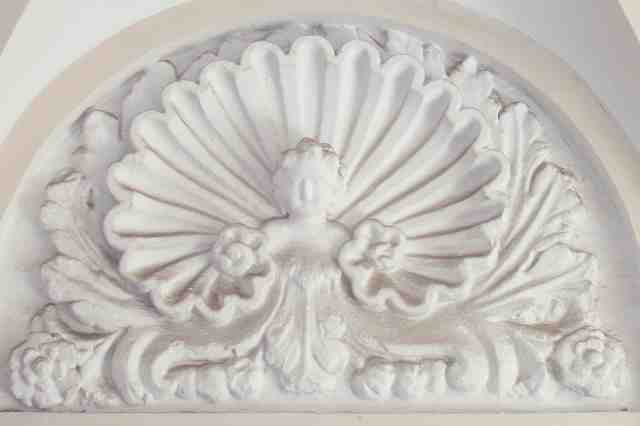 After leaving the Town Hall, you walk down Via Duomo and stop in front of Palazzo Galeota, one of the most fascinating examples of 18th-century aristocratic architecture in Taranto. Built in 1728 by the canon Don Vincenzo Cosa – a skilled usurer who aspired to nobility – the palace is the result of merging smaller houses around an internal courtyard. The façade blends Neapolitan influences with Lecce Baroque: note the portal with pilasters and volute capitals, topped by a small balcony. On the door are the initials of Luigi Galeota, the mayor who purchased the building in the 19th century. Today, the palace houses municipal offices of the Department of Culture and, in the underground chambers, the Museum of the Principality of Taranto Maria d’Enghien, which can be visited by appointment. If you enjoy a thrill, listen to the legend: the spirit of the canon – called “aùre” – still roams the halls at night. A place where history, art, and mystery intertwine.
- Via Duomo, Taranto (TA)
- Open in Google Maps
- View on Google Images
You should go if…
Stop no. 5
Cloister of the Convent of Saint Dominic
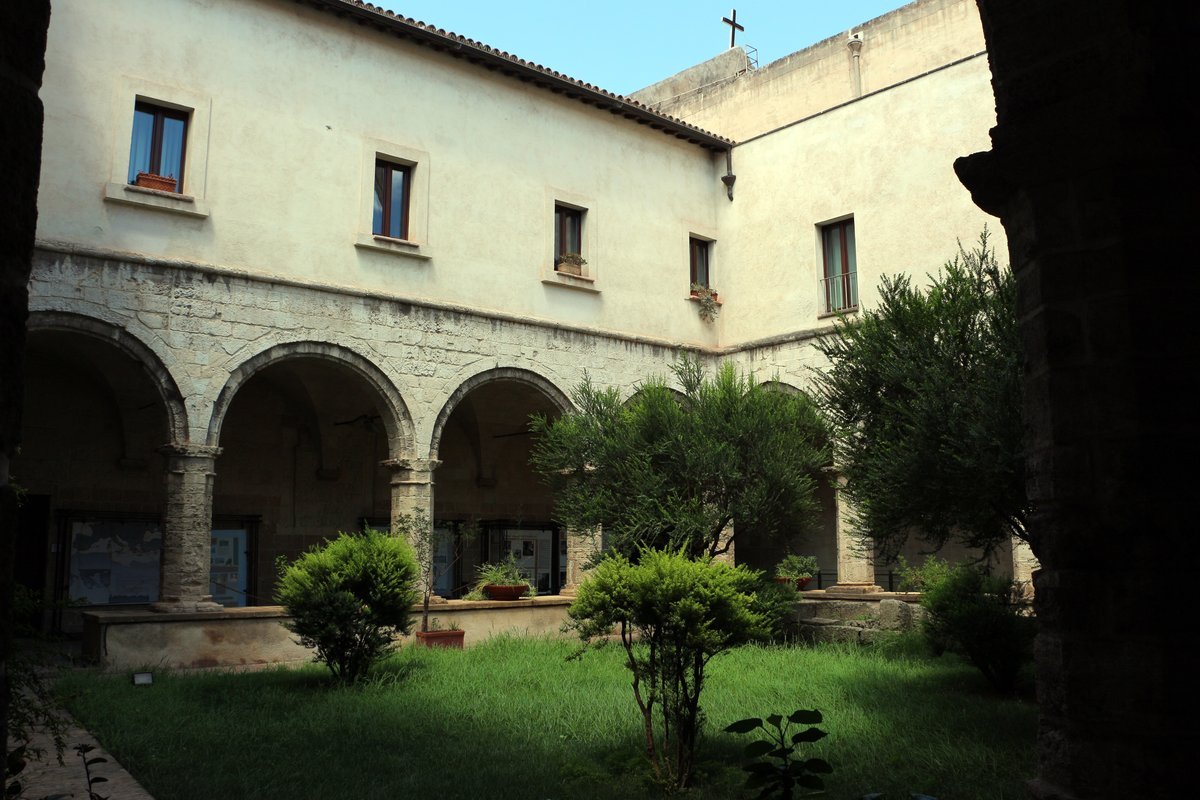 From Palazzo Galeota, continue along Via Duomo to number 33: you will find yourself at the Cloister of the Convent of Saint Dominic, a treasure chest of historical layers. The complex dates back to the mid-14th century and is an example of Gothic-Angevin architecture, but beneath your feet lie much older traces. Restorations have unearthed the foundations of a 6th-century BC Greek temple, with large dry-laid carparo stone blocks: the columns and cella are still visible along the northern wing. Strolling through the cloister – with its irregular plan and columns with foliate capitals – you will also notice two original mullioned windows and traces of medieval frescoes. Since May 6, 2025, it hosts the exhibition “Nostoi. Fragments of History” featuring archaeological artifacts recovered from the illegal market. Admission is free, and the cloister is open daily 8:30-19:30 (including Sundays). A place where the distant and recent past meet, offering an authentic experience.
You should go if…
Stop no. 6
Palazzo Pantaleo: An 18th-Century Gem of Art and Traditions
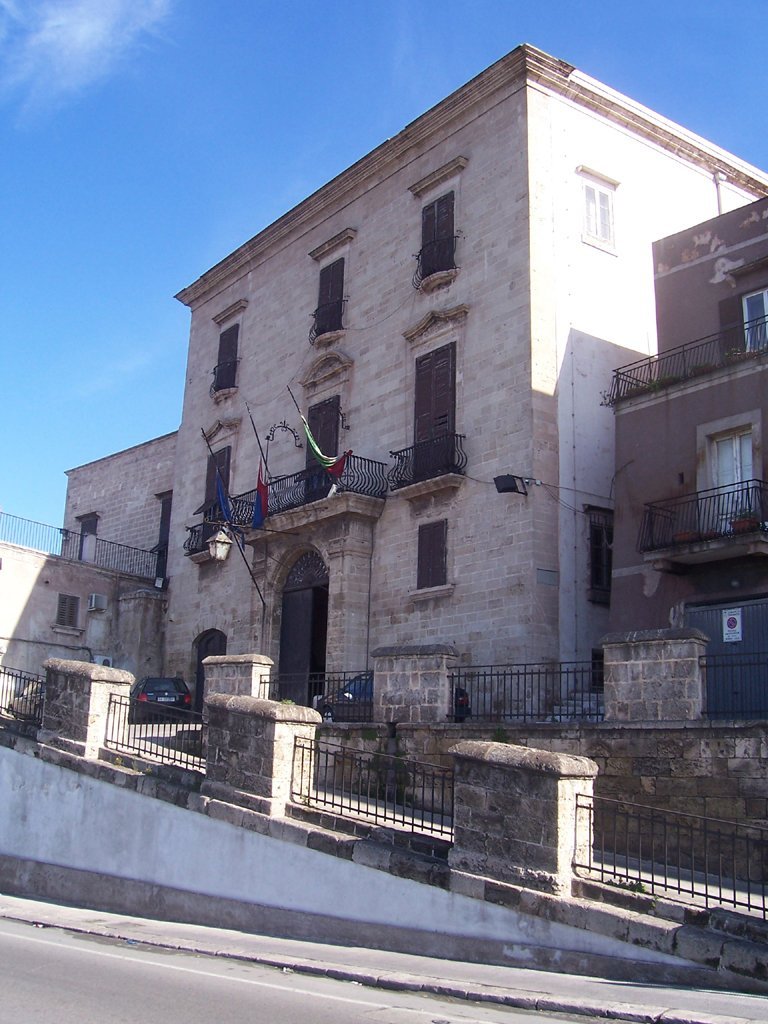 Just a few steps from the cloister, overlooking the Mar Grande, stands one of Taranto’s best-preserved 18th-century palaces: Palazzo Pantaleo. Commissioned by Baron Francesco Maria Pantaleo in 1770, it was built from scratch on a rock by master builder Francesco Saverio Miraglia. Climbing the monumental double staircase, with vaults decorated with Neapolitan-style stuccoes, you reach the noble floor. Here the ceilings are painted in tempera by Domenico Antonio Carella from Francavilla Fontana in 1773: scenes from the Aeneid and the Iliad framed by gilding. The original polychrome majolica floors come from the kilns of Vietri. On the second floor, the Alfredo Majorano Ethnographic Museum collects testimonies of Taranto’s popular culture: recordings of pizzica from the 1950s and materials on tarantism studied by Ernesto De Martino. Today the palace is the ceremonial seat of the City Hall and can be visited by appointment. Open Tuesday-Sunday 10 am-3 pm, admission fee. A dive into the nobility and traditions of yesteryear.
- Vico Civico, Taranto (TA)
- Open in Google Maps
- View on Google Images
You should go if…
Stop no. 7
Palazzo Amati: 18th-century Nobility and Marine Science
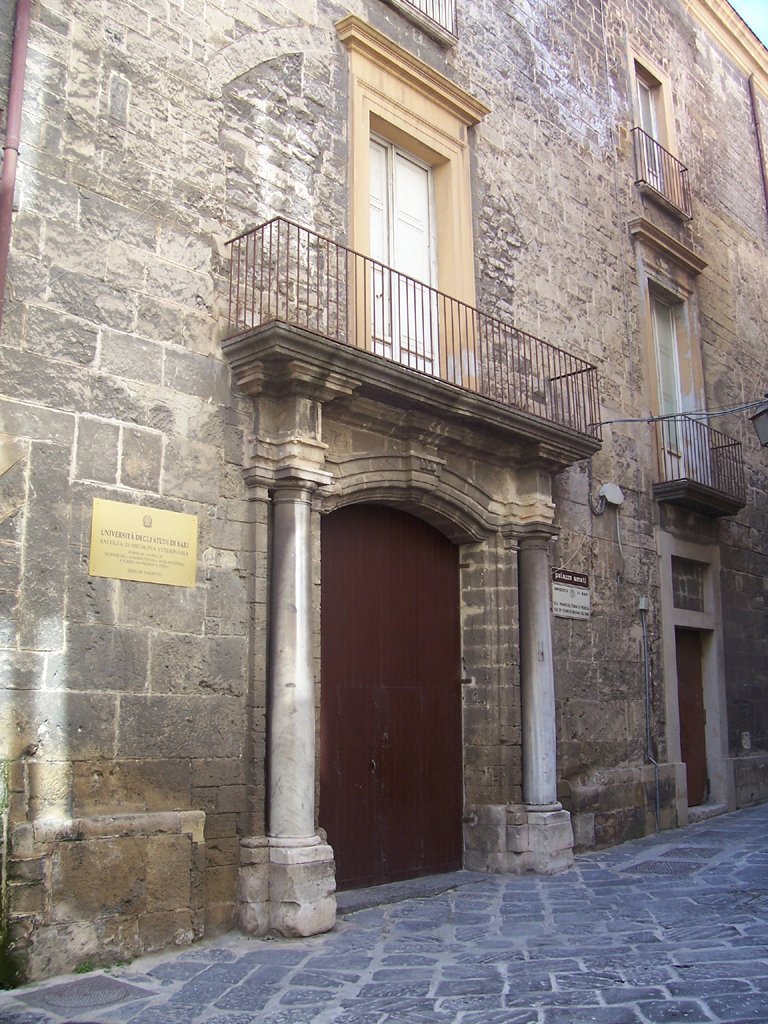 We conclude our walk with a palace that looks to the future. Palazzo Amati, commissioned by Baron Giacomo Amati in the second half of the 18th century, is one of the largest in the Borgo Antico: 37 rooms created from the merger of three buildings. Overlooking the Mar Grande, its entrance is on Corso Vittorio Emanuele II. After expropriation in 1869 it became a school, then fell into disuse, and finally, after restoration in 1977, it became a university building and a marine museum. Today it houses the Euromediterranean Center for the Sea and Cetaceans – Ketos, managed by the Jonian Dolphin Conservation. Here, scientific research, citizen science, and public outreach come together: dolphins in the Gulf are studied, and environmental education is organized. Open Tuesday to Sunday, 9 am–4 pm (closed Monday). It’s worth taking a look at the basement floor, where oil and wine were once stored. A finale that blends history and commitment to the marine ecosystem.
- Corso Vittorio Emanuele secondo, Taranto (TA)
- Open in Google Maps
- View on Google Images
You should go if…