Introduction
Akrai is not just an archaeological site; it’s a breathtaking sight that leaves you speechless. You arrive and immediately see the Greek theatre carved directly into the limestone rock, with that perfect semicircular shape that seems to embrace the landscape. The feeling is strange: you’re in Sicily, but it feels like you’ve ended up in a remote corner of classical Greece. The paved streets wind through the remains of Hellenistic houses, and if you close your eyes, you can almost hear the murmur of the ancient Syracusan colony. It’s not a sterile museum; it’s a place that breathes history. And then there’s that silence, broken only by the wind through the stones, which makes everything even more evocative. Personally, I was struck by how well-preserved the site is despite the centuries—you almost expect to see someone emerge from those dwellings.
Historical Overview
Akrai was founded in 664 BC as a fortified outpost of Syracuse, designed to control the inland territory. It was no ordinary place: it grew into a proper city with its own autonomy and reached its peak in the 3rd century BC. Then came the Romans, who conquered it in 212 BC, but the city continued to thrive until the Byzantine period before being gradually abandoned. What you see today is primarily the Greek imprint, with some Roman additions. Interestingly, the site was only rediscovered in the 19th century after centuries of oblivion. Excavating here must have been quite a feat, given the hard rock.
- 664 BC: Foundation as a Syracusan colony
- 3rd century BC: Period of maximum development
- 212 BC: Roman conquest
- Middle Ages: Gradual abandonment
- 19th century: Rediscovery and archaeological excavations
The Theatre and Its Acoustics
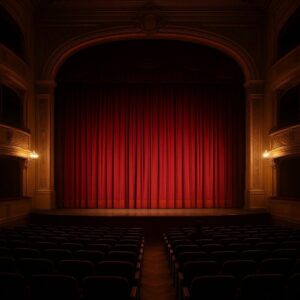
The theatre is the heart of Akrai, and not just because of its central location. It’s carved into the stone, with 12 rows of steps that appear almost natural. What surprised me the most? The acoustics are incredible. Try sitting up high and speaking in a low voice—it’s heard perfectly down in the orchestra. In summer, classical performances are still held here, and I must say the atmosphere is magical. The Greeks knew what they were doing: the cavea is oriented northwest, so spectators didn’t have the sun in their eyes during afternoon shows. Looking toward the stage, you can still see the foundation of the stage building. I always wonder what these performances must have been like two thousand years ago, with the audience seated on the same stones you’re sitting on today.
The Latomiae and the Rock Sanctuaries
Not far from the theatre are the latomiae – stone quarries that the Greeks exploited to build the city. But they are not just holes in the rock: some have been transformed into rock sanctuaries dedicated to chthonic deities, those linked to the earth and the underworld. The most famous is the so-called ‘Sanctuary of Aphrodite’, although scholars honestly have some doubts about this attribution. What strikes you are the niches carved into the wall, which must have housed statues or offerings. The atmosphere here is different from the theatre: more intimate, almost mysterious. The light filters through the rocks in a suggestive way, creating plays of shadow that change with the time of day. These are places that make you understand how, for the ancients, the sacred was an integral part of everyday space.
Why Visit It
First: it’s one of the best-preserved Greek theaters in Sicily, and being carved into the rock makes it unique. Second: the site is compact yet rich—in an hour or two, you can see the theater, paved streets, dwellings, and sanctuaries without having to do a marathon. Third: its hilltop location offers a panoramic view of the Anapo Valley that alone is worth the ticket. And there’s a fourth, more personal reason: it doesn’t have the crowds of more famous sites. You can enjoy the atmosphere calmly, almost in solitude. For me, who hates places packed with tourists, it was a true relief.
When to go
Avoid the midday hours in summer – the sun beats down fiercely and there’s almost no shade. The best time? Late afternoon, when the light is warm and low. The stones take on a golden hue and the shadows lengthen, creating a truly evocative effect. In spring it’s beautiful for the wildflowers sprouting among the ruins, while in autumn the air is crisp and you can see all the way to the sea. In winter, if you catch a clear day, the atmosphere is almost melancholic but stunning. I visited in October and it was perfect: warm but not humid, and very few people.
In the Surroundings
Just down from Akrai, take a quick trip to Palazzolo Acreide, the town that gives the site its name. The historic centre is Baroque and a UNESCO World Heritage site, with imposing churches like San Paolo and the Annunziata. If you’re interested in archaeology, the local Archaeological Museum displays artefacts from Akrai itself. For a different but thematically linked experience, there’s the Villa Romana del Tellaro – not far away, towards Noto – with its floor mosaics that give you an idea of how the Romans lived in this area. Two ancient worlds in contrast, just a few kilometres apart.