The Embriaci Tower is one of the few medieval remnants in Genoa. Standing 41 meters tall, it towers over the caruggi, unique in being spared from the 1196 edict that ordered all city towers cut to 20 meters. Today it can only be visited from the outside, but its history fascinates.
History: Linked to Guglielmo Embriaco, a crusader who conquered Jerusalem and helped finance the Duomo.
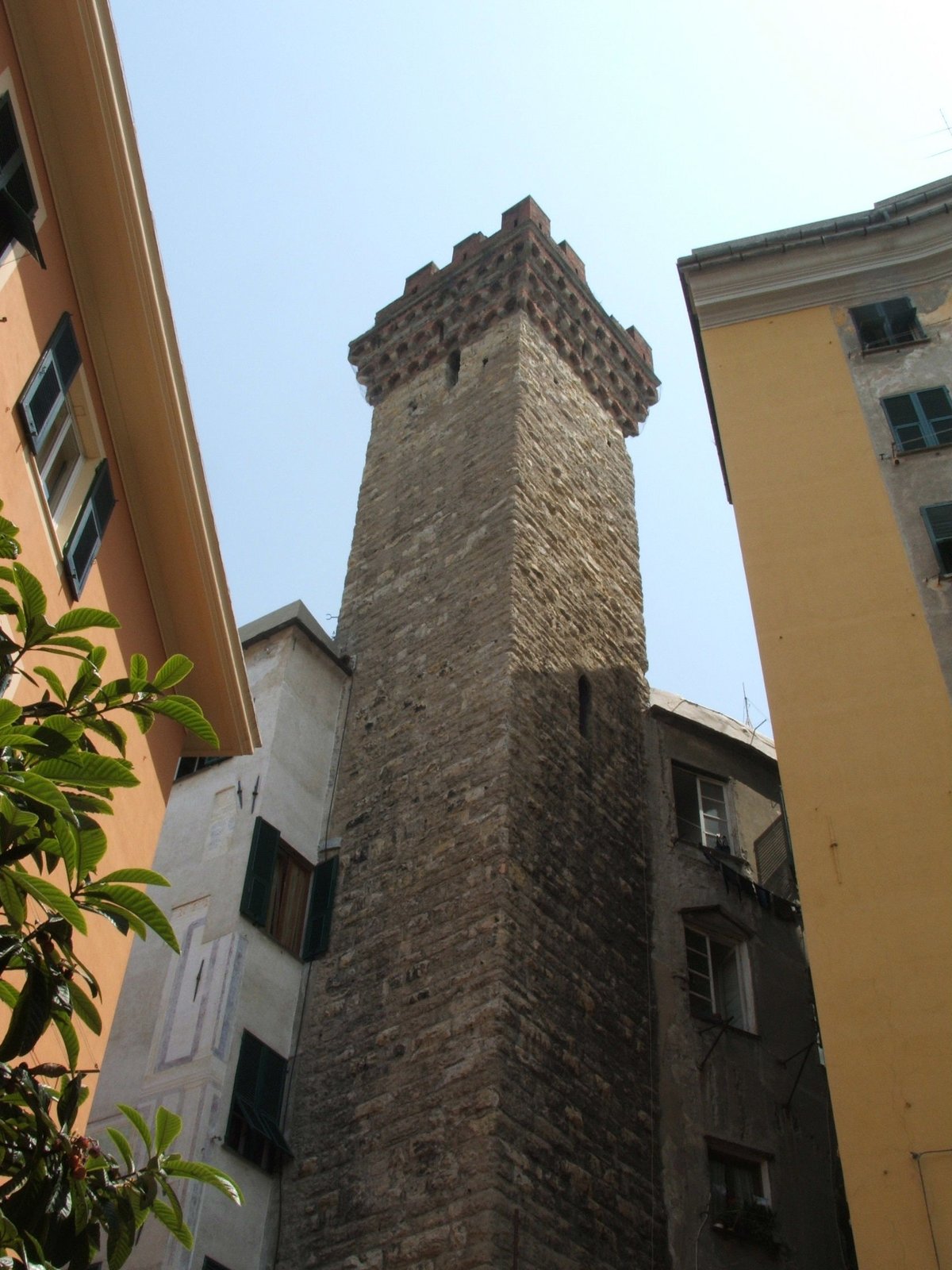
Architecture: Stone ashlar, slits, triple band of hanging arches, and Guelph merlon added in 1926.
Installations: Illuminated benches on the slope, LightingForGenoa project to experience the historic center at night.
Location: Piazza Embriaci, in the heart of the historic center, easily reachable on foot.
Evocative Introduction
While strolling through Genoa’s narrow alleyways, you might look up and encounter a stone giant. The Torre degli Embriaci towers 41 meters high, the sole survivor of an era when every noble family had its own tower. Today it stands silent, a reminder of the power of a family that made its fortune in the Holy Land. It’s not easy to find, but when you see it, it stays with you.
Evocative Introduction
While strolling through Genoa’s narrow alleyways, you might look up and encounter a stone giant. The Torre degli Embriaci towers 41 meters high, the sole survivor of an era when every noble family had its own tower. Today it stands silent, a reminder of the power of a family that made its fortune in the Holy Land. It’s not easy to find, but when you see it, it stays with you.
Historical Notes
Built at the beginning of the 12th century by the Embriaci family, the tower is linked to
Guglielmo Embriaco, a hero of the First Crusade who conquered Jerusalem in 1099. In 1196, the podestà Drudo Marcellino ordered that all city towers be reduced to 20 meters. But this one, 41 meters tall, was spared – perhaps in honor of Guglielmo. A plaque at its base commemorates him. In 1926, a restoration added the Guelph merlons, a bit historically inaccurate but charming. Today the tower is privately owned and can only be seen from outside, but its grandeur is all there to admire.
- 1099: Guglielmo Embriaco takes part in the conquest of Jerusalem.
- 12th cent.: The tower is built.
- 1196: Edict limits towers to 20 m, but this one is saved.
- 1926: Restoration adds Guelph merlons.
Historical Notes
Built at the beginning of the 12th century by the Embriaci family, the tower is linked to
Guglielmo Embriaco, a hero of the First Crusade who conquered Jerusalem in 1099. In 1196, the podestà Drudo Marcellino ordered that all city towers be reduced to 20 meters. But this one, 41 meters tall, was spared – perhaps in honor of Guglielmo. A plaque at its base commemorates him. In 1926, a restoration added the Guelph merlons, a bit historically inaccurate but charming. Today the tower is privately owned and can only be seen from outside, but its grandeur is all there to admire.
- 1099: Guglielmo Embriaco takes part in the conquest of Jerusalem.
- 12th cent.: The tower is built.
- 1196: Edict limits towers to 20 m, but this one is saved.
- 1926: Restoration adds Guelph merlons.
A Stone Giant Among the Alleys
The tower is built with large blocks of rusticated stone, with narrow slits that make it almost a miniature fortress. The top is crowned with a triple row of hanging arches – a detail that makes it unique. It is nestled among buildings and alleys, so that you often see it only when you are practically underneath. If you come from Salita alla Torre degli Embriaci, the view hits you. You cannot enter (it is private), but just look up to feel all its history. Bring binoculars, because the details at the top are wonderful.
A Stone Giant Among the Alleys
The tower is built with large blocks of rusticated stone, with narrow slits that make it almost a miniature fortress. The top is crowned with a triple row of hanging arches – a detail that makes it unique. It is nestled among buildings and alleys, so that you often see it only when you are practically underneath. If you come from Salita alla Torre degli Embriaci, the view hits you. You cannot enter (it is private), but just look up to feel all its history. Bring binoculars, because the details at the top are wonderful.
Light and Design: The Benches Ahead
Since 2023, the climb leading to the tower has been bathed in light. Luminous benches designed by Giorgia Brusemini and Carla Morganti, part of the LightingForGenoa project, have been installed. The seats take the shape of a turning page, creating a magical atmosphere, especially in the evening. The lighting resembles sun rays filtered through leaves, perfect for a rest after admiring the tower. A beautiful way to experience the historic center in a contemporary key.
Light and Design: The Benches Ahead
Since 2023, the climb leading to the tower has been bathed in light. Luminous benches designed by Giorgia Brusemini and Carla Morganti, part of the LightingForGenoa project, have been installed. The seats take the shape of a turning page, creating a magical atmosphere, especially in the evening. The lighting resembles sun rays filtered through leaves, perfect for a rest after admiring the tower. A beautiful way to experience the historic center in a contemporary key.
Why Visit
1. Historical Uniqueness: It’s the only medieval tower in Genoa still standing at its original height – a piece of history that defied the laws. 2. Atmospheric Setting: Immersing yourself in the caruggi of the historic center, among glimpses and alleys, is an experience worth having on its own. 3. Glowing Benches: A modern bonus that makes the visit even more pleasant, especially at sunset. You don’t need much time: 30 minutes are enough to enjoy and take photos.
Why Visit
1. Historical Uniqueness: It’s the only medieval tower in Genoa still standing at its original height – a piece of history that defied the laws. 2. Atmospheric Setting: Immersing yourself in the caruggi of the historic center, among glimpses and alleys, is an experience worth having on its own. 3. Glowing Benches: A modern bonus that makes the visit even more pleasant, especially at sunset. You don’t need much time: 30 minutes are enough to enjoy and take photos.
When to Go
The best time? At sunset, when the glowing benches light up and the tower stands out against the orange sky. In spring or autumn, the weather is perfect for a leisurely stroll. Avoid the midday hours in summer: among the alleyways, the heat is intense. In the evening, the tower’s lighting makes it even more dramatic.
When to Go
The best time? At sunset, when the glowing benches light up and the tower stands out against the orange sky. In spring or autumn, the weather is perfect for a leisurely stroll. Avoid the midday hours in summer: among the alleyways, the heat is intense. In the evening, the tower’s lighting makes it even more dramatic.
Nearby
Just a stone’s throw away is the Church of Santa Maria di Castello, one of Genoa’s oldest, with a Romanesque cloister and wonderful frescoes. It’s worth a visit. Additionally, Palazzo Giulio Sale (Brignole Sale) is attached to the tower: even if you can’t go inside, its facade is a gem. For a dive into the Middle Ages, all around there are other tower-palaces and alleys to explore.
Nearby
Just a stone’s throw away is the Church of Santa Maria di Castello, one of Genoa’s oldest, with a Romanesque cloister and wonderful frescoes. It’s worth a visit. Additionally, Palazzo Giulio Sale (Brignole Sale) is attached to the tower: even if you can’t go inside, its facade is a gem. For a dive into the Middle Ages, all around there are other tower-palaces and alleys to explore.