Forte Tagliata del Giovo: The Hidden Fortress in the Woods of Pontinvrea

Forte Tagliata del Giovo is a historical surprise nestled in the greenery of the Ligurian Apennines, in Pontinvrea. Built in 1887 to defend the border, today it’s a perfect spot for those seeking history, nature, and breathtaking views away from the crowds. Access is free and the fort is always open, but the real experience is the journey to reach it.

Perfectly preserved 19th-century military architecture with tunnels, positions, and gun emplacements
Scenic hike of about 40 minutes through chestnut and beech woods
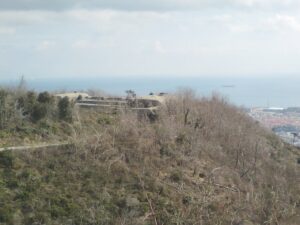
360-degree view over the Bormida and Erro valleys all the way to the Ligurian Sea
Free access year-round, ideal for a day trip

Copertina itinerario Forte Tagliata del Giovo: The Hidden Fortress in the Woods of Pontinvrea
Forte Tagliata del Giovo in Pontinvrea, Savona province: A perfectly preserved 19th-century fortress, reachable via a scenic hike through the Ligurian Apennine woods.

Good to know


Introduction

Have you ever stumbled upon a place that seems straight out of an adventure novel? Well, the Forte Tagliata del Giovo is exactly that. Getting there is half the experience: a panoramic trail winds through the woods of the Ligurian Apennines, with sudden glimpses of the valley below. When it finally appears, this 19th-century fortress takes your breath away. It’s as if time has stood still, with its stone walls emerging from the greenery, perfectly preserved yet enveloped in an almost mysterious atmosphere. This isn’t your typical crowded monument: here, you breathe in a silence broken only by the wind through the trees. Personally, I was struck by how it manages to be both imposing and discreet at the same time—a true hidden gem that few know about.

Historical Overview

Built between 1884 and 1887, Forte Tagliata del Giovo was part of the Giovo defensive system, a series of fortifications commissioned by the Kingdom of Italy to protect the northern borders. It never saw actual battles, but during World War II it was used as an observation post. Its architecture is typical of the era: underground bunkers, strategic loopholes, and a dominant position that allowed control over the Orba Valley. Interestingly, after being abandoned by the military, it was restored by local volunteers, who have maintained it in excellent condition without altering its original appearance. It’s a piece of military history that speaks more of prudence than war, and walking through it lets you imagine the life of the soldiers who stood guard within these walls.

  • 1884-1887: Construction of the fort
  • World War II: Use as an observation post
  • Recent years: Restoration and maintenance by volunteers

The Trail and the Arrival

The hike to reach the fort is an integral part of the visit. The well-marked trail starts from Pontinvrea and gently climbs through oak and chestnut trees, with shaded sections that offer some relief in summer. It’s not particularly challenging, but comfortable shoes are recommended as the terrain can be uneven in places. As you ascend, the vegetation thins out, revealing the first glimpses of the valley: if you’re lucky, you might spot a bird of prey soaring in the distance. The arrival is thrilling: the fortress suddenly appears, massive and silent. I suggest pausing for a moment before entering to admire how it blends into the landscape. Inside, explore the empty rooms and corridors: the light filtering through the arrow slits creates evocative plays of shadow, perfect for some souvenir photos.

Architecture and Hidden Details

What strikes you about Forte Tagliata del Giovo is its structural integrity. Unlike many ruins, here walls, vaults, and staircases are practically intact, allowing you to walk through history without barriers. Pay attention to the details: the narrow, long loopholes designed for riflemen’s fire, or the ventilation systems in the underground rooms, which demonstrate engineering that also considered the soldiers’ comfort. In one room, I noticed graffiti left by soldiers or visitors from decades ago: discreet marks that add a human touch. Outside, the grassy roof is a distinctive feature: it served to camouflage the fort from above, and today it’s covered with spontaneous vegetation. If you approach the perimeter walls, look toward the valley: the view stretches to the first hills of Monferrato, a panorama that alone makes the climb worthwhile.

Why Visit

First, because it’s an authentic experience off the beaten track: here you won’t find crowds or ticket offices, just the fort and nature. Second, for the perfect combination of hiking and history: the trek is accessible to many, and arriving on foot makes you appreciate the place more. Third, for photography: the changing light through the trees and on the stones offers unique shots, especially at dawn or dusk. Plus, it’s a great opportunity to discover a lesser-known area of the Ligurian Apennines, away from the coastal chaos. Personally, I find it ideal for a rejuvenating day trip: disconnecting from the noise and immersing yourself in this corner of quiet has an almost therapeutic effect.

When to Go

Avoid rainy days: the trail can become slippery, and the visit loses some of its magic. I prefer late spring or early autumn, when the air is fresh and the forest colors are vivid: in spring, the green canopies burst into life, while in autumn, red and yellow leaves create a natural carpet. In summer, go early in the morning to avoid the heat, though the tree shade helps. In winter, with snow, the landscape is enchanting, but check trail conditions as it might be icy. In any case, always check the local weather: here in the Apennines, it can change quickly.

In the Surroundings

If you enjoyed the historical atmosphere, take a trip to the Castle of Giusvalla, another well-preserved medieval manor a few kilometers away, with a small museum that tells the story of feudal life. For a complementary natural experience, explore the Santa Lucia Gorge near Mioglia: a canyon carved by the stream with small bridges and walkways, perfect for a cool and shaded walk. Both places are on the same provincial road, so you can plan them in a single day without major travel.

Itineraries nearby


💡 Did You Know…?

During World War II, the fort was used as an ammunition depot by partisans. Today, if you look carefully at the interior walls, you can still see graffiti left by the soldiers who took refuge there. The most interesting detail is that the fort was never used in battle, despite its strategic position, making it one of the few examples of military architecture from that era to survive intact to this day.