The National Picture Gallery of Bologna is a treasure trove of Emilian art, collecting masterpieces from the 13th to the 18th century. Housed in the former Jesuit novitiate of Sant’Ignazio, it boasts works by Giotto, Raphael, the Carracci, and Guido Reni. Here’s what not to miss:
– Giotto’s Polyptych of Bologna, with the artist’s signature on the throne step.
– Raphael’s Ecstasy of St. Cecilia, a Renaissance masterpiece.
– Guido Reni’s Massacre of the Innocents, Baroque drama.
– The 14th-century frescoes of Mezzaratta, among the most important detached fresco cycles in Italy.
Introduction: A Hidden Gem in the Heart of the City
In the heart of Bologna, just steps from the Two Towers, lies a treasure few know well: the Pinacoteca Nazionale. Housed in the former Jesuit novitiate of Sant’Ignazio, it’s one of Italy’s most modern galleries. Here you’ll find thirty rooms that recount centuries of painting, from the 13th to the 18th century, with special attention to Emilian artists. The visual impact is powerful: Giotto, Raphael, the Carracci, Guido Reni… masterpieces that leave you breathless. And the best part is that it’s never too crowded, so you can enjoy the works at your leisure.
Introduction: A Hidden Gem in the Heart of the City
In the heart of Bologna, just steps from the Two Towers, lies a treasure few know well: the Pinacoteca Nazionale. Housed in the former Jesuit novitiate of Sant’Ignazio, it’s one of Italy’s most modern galleries. Here you’ll find thirty rooms that recount centuries of painting, from the 13th to the 18th century, with special attention to Emilian artists. The visual impact is powerful: Giotto, Raphael, the Carracci, Guido Reni… masterpieces that leave you breathless. And the best part is that it’s never too crowded, so you can enjoy the works at your leisure.
Historical Notes: From Napoleonic Suppressions to the Modern Museum
The Pinacoteca was founded in 1808 as the art gallery of the Academy of Fine Arts, inheriting works from churches and convents suppressed during the Napoleonic era. The first core came from the donation of Monsignor Zambeccari in 1762 and the Savorgnan bequest. After the Congress of Vienna, Canova recovered 36 paintings stolen from the Louvre. In 1882 it became an independent museum and in 1997 it was completely renovated. Today it is a point of reference for Emilian art.
Historical Notes: From Napoleonic Suppressions to the Modern Museum
The Pinacoteca was founded in 1808 as the art gallery of the Academy of Fine Arts, inheriting works from churches and convents suppressed during the Napoleonic era. The first core came from the donation of Monsignor Zambeccari in 1762 and the Savorgnan bequest. After the Congress of Vienna, Canova recovered 36 paintings stolen from the Louvre. In 1882 it became an independent museum and in 1997 it was completely renovated. Today it is a point of reference for Emilian art.
Unmissable Masterpieces: from Giotto to Guido Reni
Among the absolute masterpieces, the Giotto’s Bologna Polyptych (c. 1330) stands out, with the majestic Virgin and saints, signed on the step of the throne. Then Raphael’s Ecstasy of St. Cecilia, a masterpiece from 1514-16. But the Bolognese Baroque is the real protagonist: Guido Reni’s Massacre of the Innocents, Ludovico Carracci’s Madonna dei Bargellini, and Guercino’s Investiture of St. William. Don’t miss Francesco del Cossa’s Pala dei Mercanti and the detached frescoes from Mezzaratta. Every room is a surprise.
Unmissable Masterpieces: from Giotto to Guido Reni
Among the absolute masterpieces, the Giotto’s Bologna Polyptych (c. 1330) stands out, with the majestic Virgin and saints, signed on the step of the throne. Then Raphael’s Ecstasy of St. Cecilia, a masterpiece from 1514-16. But the Bolognese Baroque is the real protagonist: Guido Reni’s Massacre of the Innocents, Ludovico Carracci’s Madonna dei Bargellini, and Guercino’s Investiture of St. William. Don’t miss Francesco del Cossa’s Pala dei Mercanti and the detached frescoes from Mezzaratta. Every room is a surprise.
The Atmosphere: Art and Silence in the Former Convent
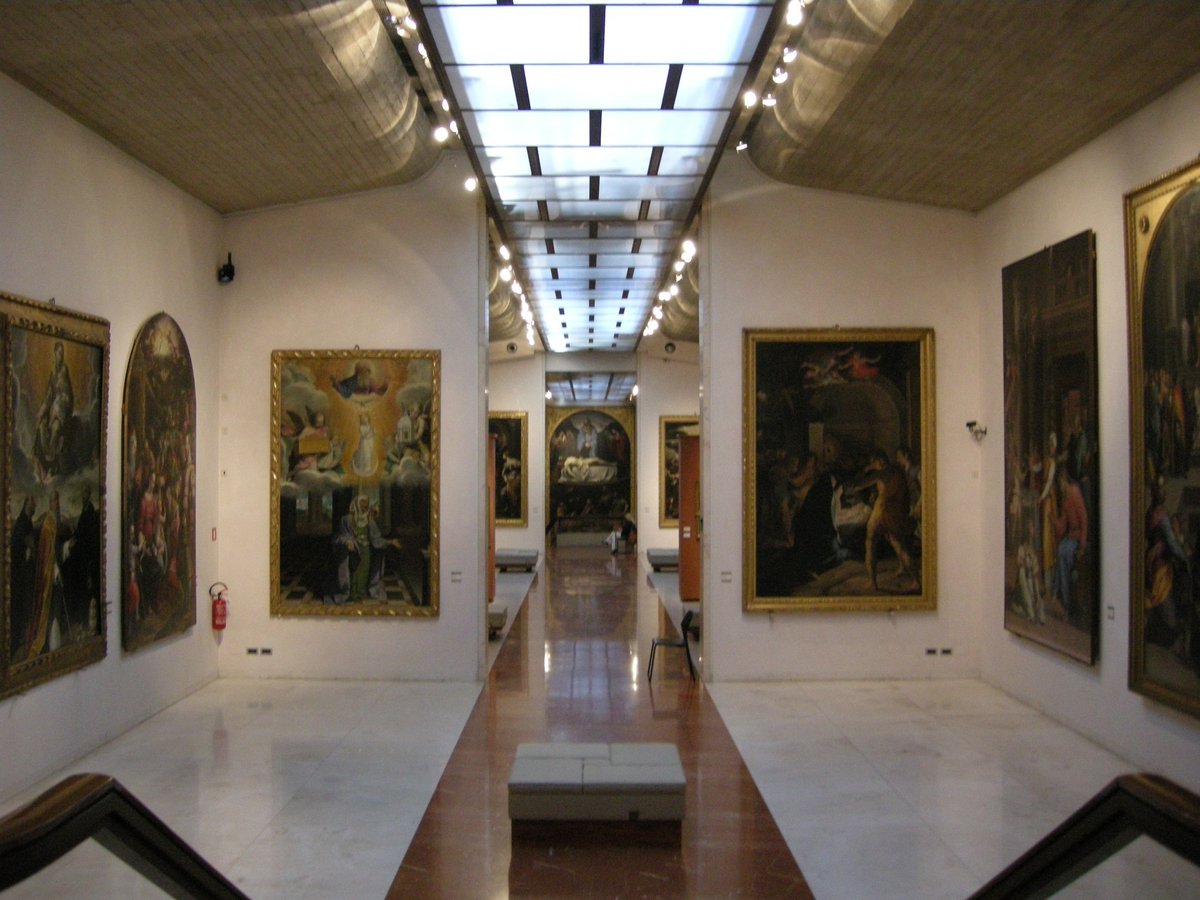
Entering the Pinacoteca means immersing yourself in a subdued atmosphere. The 17th-century building retains its convent soul, with silent corridors and rooms unfolding like an initiatory path. Natural light filters through the windows, and the colors of the paintings stand out against the neutral walls. It’s easy to get lost in contemplation, and often you find yourself alone in front of a work of art. The bookshop is small but well-curated. No café, but there are great places nearby for a break.
The Atmosphere: Art and Silence in the Former Convent
Entering the Pinacoteca means immersing yourself in a subdued atmosphere. The 17th-century building retains its convent soul, with silent corridors and rooms unfolding like an initiatory path. Natural light filters through the windows, and the colors of the paintings stand out against the neutral walls. It’s easy to get lost in contemplation, and often you find yourself alone in front of a work of art. The bookshop is small but well-curated. No café, but there are great places nearby for a break.
3 Good Reasons to Visit
1. It is one of Italy’s most important art galleries, but less touristy: no long queues. 2. The ticket costs only 12 euros, and if you have the Bologna Welcome Card, entry is free. Every first Sunday of the month it is free for everyone. 3. The collection is concentrated and varied: in a couple of hours you can see masterpieces from the Middle Ages to the Baroque, with a unique focus on the Bolognese school.
3 Good Reasons to Visit
1. It is one of Italy’s most important art galleries, but less touristy: no long queues. 2. The ticket costs only 12 euros, and if you have the Bologna Welcome Card, entry is free. Every first Sunday of the month it is free for everyone. 3. The collection is concentrated and varied: in a couple of hours you can see masterpieces from the Middle Ages to the Baroque, with a unique focus on the Bolognese school.
When to go: early morning or weekday afternoon
The Pinacoteca opens at 9, and early morning is the best time to enjoy the silence. The sun’s rays illuminate some rooms in a suggestive way. During the week it’s almost deserted; on Saturday and Sunday there’s more movement, but never as much as in the most famous museums. Avoid Monday, it’s closed. If you’re in Bologna during a temporary exhibition, check the special hours.
When to go: early morning or weekday afternoon
The Pinacoteca opens at 9, and early morning is the best time to enjoy the silence. The sun’s rays illuminate some rooms in a suggestive way. During the week it’s almost deserted; on Saturday and Sunday there’s more movement, but never as much as in the most famous museums. Avoid Monday, it’s closed. If you’re in Bologna during a temporary exhibition, check the special hours.
Nearby: Two Towers and Piazza Maggiore
Just a few minutes’ walk away, you’ll find the Two Towers (Garisenda and Asinelli) and Piazza Maggiore with the Basilica of San Petronio. If you have time, also visit the Morandi Museum, dedicated to the great Bolognese painter, or take a stroll through the Quadrilatero to taste local specialties. The Pinacoteca is in the university area, full of bookshops and historic cafes. A tip: after your visit, treat yourself to a gelato at Cremeria Cavour.
Nearby: Two Towers and Piazza Maggiore
Just a few minutes’ walk away, you’ll find the Two Towers (Garisenda and Asinelli) and Piazza Maggiore with the Basilica of San Petronio. If you have time, also visit the Morandi Museum, dedicated to the great Bolognese painter, or take a stroll through the Quadrilatero to taste local specialties. The Pinacoteca is in the university area, full of bookshops and historic cafes. A tip: after your visit, treat yourself to a gelato at Cremeria Cavour.