Introduction: A Castle Overlooking the Village
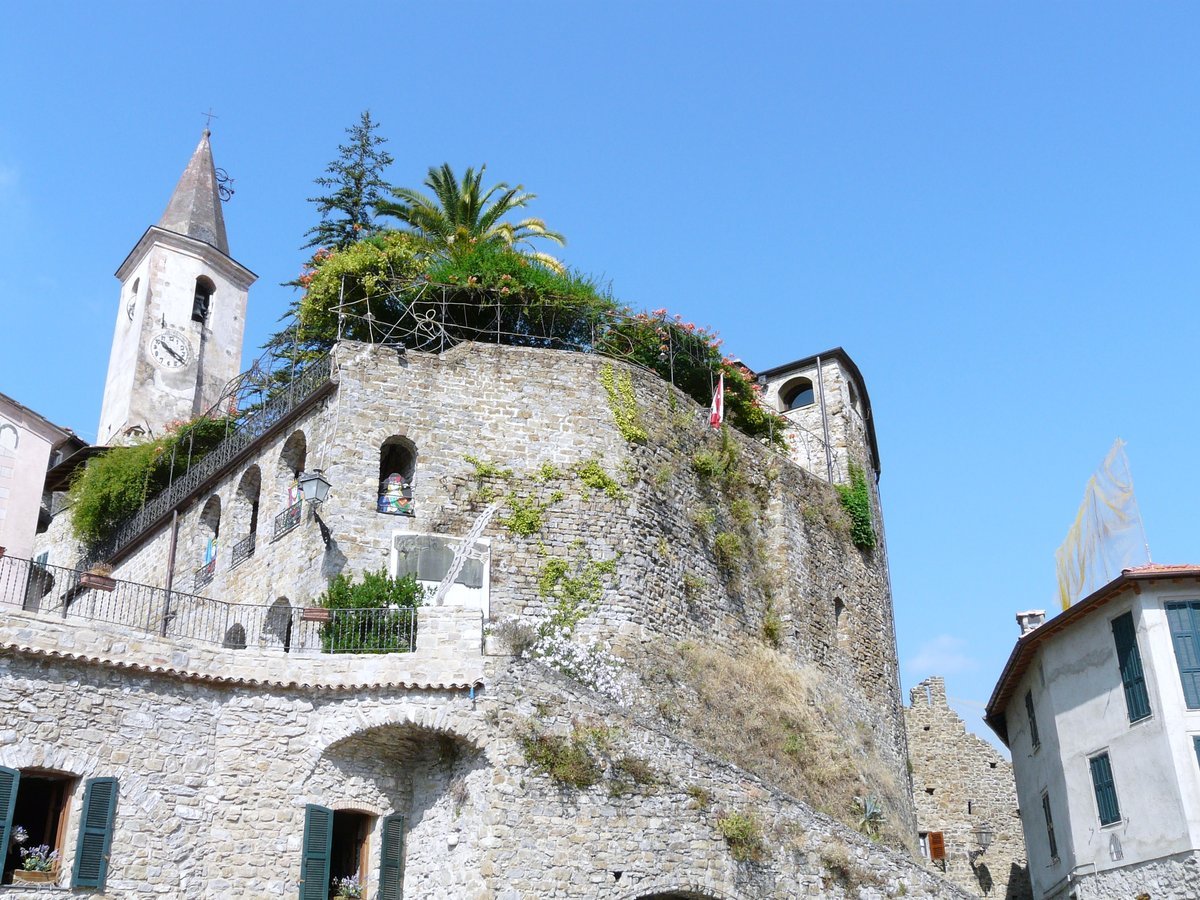
Perched on a rocky spur, the Castle of the Lizard dominates Apricale like a stone guardian. The name evokes mystery, but it’s its striking presence that leaves you breathless: climbing up the narrow alleys of the village, you see it emerge among the houses, with its hanging garden suspended over the square. It’s not a gigantic castle, but it envelops you with an intimate, almost cozy atmosphere. Entering, the scent of history is strong: ancient walls, rooms that speak of the past. It is the beating heart of Apricale, a place where time seems to have stood still.
Introduction: A Castle Overlooking the Village
Perched on a rocky spur, the Castle of the Lizard dominates Apricale like a stone guardian. The name evokes mystery, but it’s its striking presence that leaves you breathless: climbing up the narrow alleys of the village, you see it emerge among the houses, with its hanging garden suspended over the square. It’s not a gigantic castle, but it envelops you with an intimate, almost cozy atmosphere. Entering, the scent of history is strong: ancient walls, rooms that speak of the past. It is the beating heart of Apricale, a place where time seems to have stood still.
Historical Notes: A Thousand Years of History
Built in the 10th century by the Counts of Ventimiglia, the castle soon passed to the Doria family, who ruled it for centuries. It had two square towers (one is now the church bell tower). In 1523, it was besieged and partially destroyed by Bishop Agostino Grimaldi to capture Bartolomeo Doria. Rebuilt, it lost its military function. It passed to the Savoy in 1634, then back to the Doria, and in 1806 it was sold to the Cassini family, who turned it into a residence. In the 20th century, surgeon Fruttuoso Cassini added the hanging garden and frescoes. Today it belongs to the municipality and houses a museum.
Historical Notes: A Thousand Years of History
Built in the 10th century by the Counts of Ventimiglia, the castle soon passed to the Doria family, who ruled it for centuries. It had two square towers (one is now the church bell tower). In 1523, it was besieged and partially destroyed by Bishop Agostino Grimaldi to capture Bartolomeo Doria. Rebuilt, it lost its military function. It passed to the Savoy in 1634, then back to the Doria, and in 1806 it was sold to the Cassini family, who turned it into a residence. In the 20th century, surgeon Fruttuoso Cassini added the hanging garden and frescoes. Today it belongs to the municipality and houses a museum.
The Museum: Seven Rooms of History and Culture
Inside the walls, the Museum of the History of Apricale is a dive into the past. Seven themed rooms tell the story of the village: there is a model of the town, memorabilia from the band, and ancient tools for olive oil (olive cultivation here is ancient, brought by Benedictine monks). The statutes room displays the document from 1267, among the oldest in Liguria. And then the room dedicated to Cristina Anna Bellomo, the “countess of the Tower,” who went from being a laundress to a spy. The corridor, meanwhile, is a theater gallery with posters from 1990 onward: the castle also serves as a stage.
The Museum: Seven Rooms of History and Culture
Inside the walls, the Museum of the History of Apricale is a dive into the past. Seven themed rooms tell the story of the village: there is a model of the town, memorabilia from the band, and ancient tools for olive oil (olive cultivation here is ancient, brought by Benedictine monks). The statutes room displays the document from 1267, among the oldest in Liguria. And then the room dedicated to Cristina Anna Bellomo, the “countess of the Tower,” who went from being a laundress to a spy. The corridor, meanwhile, is a theater gallery with posters from 1990 onward: the castle also serves as a stage.
Legends and Mysteries: The Ghost of the Countess
They say the ghost of Countess Cristina Anna Bellomo roams the castle. Her story reads like a novel: a former laundress who married a count, inherited the title, and became a spy for the tsar during the Russo-Japanese War. She met a tragic end, and legend has it that her spirit never left these walls. Walking through the underground passages, among ancient cellars once used for oil, the atmosphere grows dense—could it be true? Even the executioner of the village, who once lived in a tower-house nearby, leaves an aura of mystery. A place that stirs the imagination.
Legends and Mysteries: The Ghost of the Countess
They say the ghost of Countess Cristina Anna Bellomo roams the castle. Her story reads like a novel: a former laundress who married a count, inherited the title, and became a spy for the tsar during the Russo-Japanese War. She met a tragic end, and legend has it that her spirit never left these walls. Walking through the underground passages, among ancient cellars once used for oil, the atmosphere grows dense—could it be true? Even the executioner of the village, who once lived in a tower-house nearby, leaves an aura of mystery. A place that stirs the imagination.
Why Visit It
For the view and the garden: the rooftop garden offers a unique perspective on the square and the village, perfect for stunning photos. For the mix of history and culture: the museum tells a thousand years in an engaging way, with unique artifacts. For the atmosphere: among the mysterious undergrounds and frescoed halls, it’s an experience that stays with you. And then, every August, the Teatro della Tosse enlivens the castle with performances: if you happen to be there at the right time, it’s a bonus.
Why Visit It
For the view and the garden: the rooftop garden offers a unique perspective on the square and the village, perfect for stunning photos. For the mix of history and culture: the museum tells a thousand years in an engaging way, with unique artifacts. For the atmosphere: among the mysterious undergrounds and frescoed halls, it’s an experience that stays with you. And then, every August, the Teatro della Tosse enlivens the castle with performances: if you happen to be there at the right time, it’s a bonus.
When to Go
The best time? Late afternoon, when the low sun lights up the stone and the village empties out. In summer, the air is warm and the alleys smell of herbs; in autumn, the colors of the surrounding woods frame the scene. If you want an even more magical atmosphere, choose a feast day: events at the castle bring a special vitality. But be careful: some reviews say it is sometimes closed, so it’s better to call ahead.
When to Go
The best time? Late afternoon, when the low sun lights up the stone and the village empties out. In summer, the air is warm and the alleys smell of herbs; in autumn, the colors of the surrounding woods frame the scene. If you want an even more magical atmosphere, choose a feast day: events at the castle bring a special vitality. But be careful: some reviews say it is sometimes closed, so it’s better to call ahead.
Nearby
Apricale is a gem, but if you have time, make a quick trip to Dolceacqua, famous for its castle and Rossese wine. Or, for hiking enthusiasts, follow a trail in the Nervia Valley: among olive groves and panoramic views, you’ll discover an authentic Ligurian hinterland. Both are just a few kilometers away and pair perfectly with a day dedicated to history and nature.
Nearby
Apricale is a gem, but if you have time, make a quick trip to Dolceacqua, famous for its castle and Rossese wine. Or, for hiking enthusiasts, follow a trail in the Nervia Valley: among olive groves and panoramic views, you’ll discover an authentic Ligurian hinterland. Both are just a few kilometers away and pair perfectly with a day dedicated to history and nature.