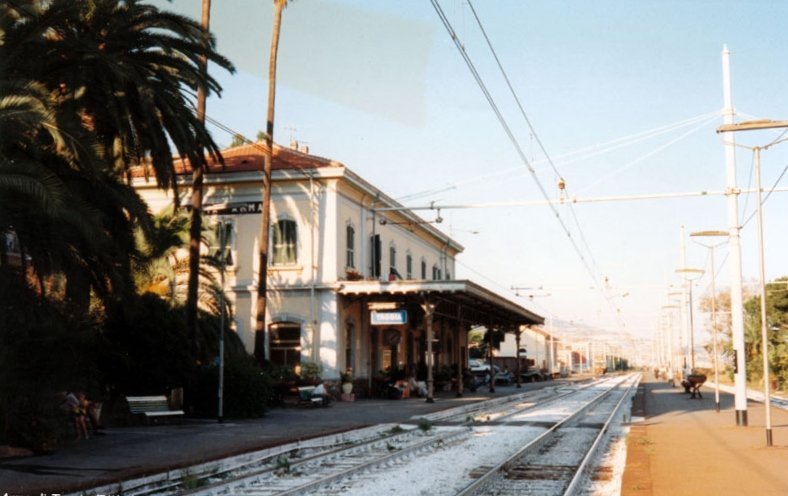
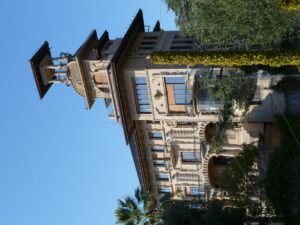
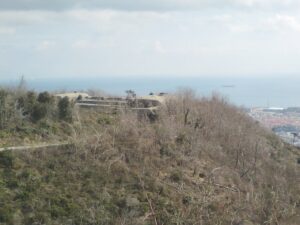
The former Taggia-Arma station, active from 1872 to 2001, is now at the heart of an ambitious regeneration project. The area, abandoned after the railway line was moved uphill, is being reborn with a cycling path, an urban park, and a public square. Here’s what to expect:
– Cycling path on the old track, with lighting sourced from the catenary poles
– Urban park of high environmental value and underground parking
– Railway history with the Ospedaletti-Sanremo-Taggia tramway (1914-1942)
– Proximity to the sea and the center of Arma di Taggia, with beaches and a medieval village
Introduction
If you’re passing through Arma di Taggia, you’ll come across a place that looks like a construction site, but is actually a piece of history in transformation. The former Taggia-Arma station, closed since 2001, is about to become an urban park with a cycle path, parking lots, and a square. A project worth 3.5 million euros that aims to give back to the community a long-forgotten space. I saw it in photos: a reinforced concrete building a bit melancholic, but with enormous potential. The best part is that the old catenary poles have been reused for the cycle path’s lighting: a great example of repurposing.
Introduction
If you’re passing through Arma di Taggia, you’ll come across a place that looks like a construction site, but is actually a piece of history in transformation. The former Taggia-Arma station, closed since 2001, is about to become an urban park with a cycle path, parking lots, and a square. A project worth 3.5 million euros that aims to give back to the community a long-forgotten space. I saw it in photos: a reinforced concrete building a bit melancholic, but with enormous potential. The best part is that the old catenary poles have been reused for the cycle path’s lighting: a great example of repurposing.
Historical Overview
The original station was inaugurated in 1872 on the Genoa-Ventimiglia line. For decades it was the junction for Taggia and Arma, with a track that from 1914 to 1942 also served the Ospedaletti-Sanremo-Taggia tramway. In the 1980s it became the site of the Ligurian Railway Museum, later relocated in 2018. On September 24, 2001, the line was moved inland and the old station was decommissioned. Since then, the area has remained in a state of abandonment, with some projects never realized. Here are the key steps:
Historical Overview
The original station was inaugurated in 1872 on the Genoa-Ventimiglia line. For decades it was the junction for Taggia and Arma, with a track that from 1914 to 1942 also served the Ospedaletti-Sanremo-Taggia tramway. In the 1980s it became the site of the Ligurian Railway Museum, later relocated in 2018. On September 24, 2001, the line was moved inland and the old station was decommissioned. Since then, the area has remained in a state of abandonment, with some projects never realized. Here are the key steps:
Historical Notes (Timeline)
- 1872: station inaugurated
- 1914-1942: stop on the Ospedaletti-Sanremo-Taggia tramway
- 1988-2018: home of the Ligurian Railway Museum
- September 24, 2001: station closed
- 2023: renovation works begin (first phase: €1.8 million)
- 2025: final design approved for underground parking and urban park
Historical Notes (Timeline)
- 1872: station inaugurated
- 1914-1942: stop on the Ospedaletti-Sanremo-Taggia tramway
- 1988-2018: home of the Ligurian Railway Museum
- September 24, 2001: station closed
- 2023: renovation works begin (first phase: €1.8 million)
- 2025: final design approved for underground parking and urban park
The Redevelopment Project
Today, the former station is a construction site that promises to revolutionize the area. The overall project is worth 3.5 million euros and includes the construction of an underground parking lot beneath the building, a large public square on top of the structure, and an urban park between the former station and the old level crossing. The first phase, worth 1.8 million euros, started in September 2023 and will last 9 months, involving structural upgrades and a new connecting road. When completed, the bike path will be integrated, and the area will become a small green lung overlooking the sea. I think it’s a fantastic idea: making functional a place that had become a symbol of decay.
The Redevelopment Project
Today, the former station is a construction site that promises to revolutionize the area. The overall project is worth 3.5 million euros and includes the construction of an underground parking lot beneath the building, a large public square on top of the structure, and an urban park between the former station and the old level crossing. The first phase, worth 1.8 million euros, started in September 2023 and will last 9 months, involving structural upgrades and a new connecting road. When completed, the bike path will be integrated, and the area will become a small green lung overlooking the sea. I think it’s a fantastic idea: making functional a place that had become a symbol of decay.
From Railway to Bike Path
One of the most interesting things is seeing how the old railway has been transformed. The former track bed is now a bike path connecting Arma di Taggia to Sanremo and beyond. The catenary poles, instead of being dismantled, have been reused as supports for public lighting: a touch of industrial design that tells the story of the place. Walking or cycling, you can still see the remains of the freight yard, with its loading platform and warehouse, and the old 1931 electrical substation. It’s a mix of past and future that makes the spot unique. If you’re a fan of railway archaeology, you’ll find plenty of photo opportunities here.
From Railway to Bike Path
One of the most interesting things is seeing how the old railway has been transformed. The former track bed is now a bike path connecting Arma di Taggia to Sanremo and beyond. The catenary poles, instead of being dismantled, have been reused as supports for public lighting: a touch of industrial design that tells the story of the place. Walking or cycling, you can still see the remains of the freight yard, with its loading platform and warehouse, and the old 1931 electrical substation. It’s a mix of past and future that makes the spot unique. If you’re a fan of railway archaeology, you’ll find plenty of photo opportunities here.
Why Visit It
Three good reasons: first, it’s a concrete example of urban regeneration you can see in progress – a construction site turning into a park. Second, the bike path is perfect for a scenic ride along the coast, with a section that uses the former railway track. Third, the area is strategic: a few steps from the center of Arma di Taggia and the beaches, and close to the medieval village of Taggia with its ancient alleyways. If you like discovering places off the beaten path, this former station undergoing transformation is worth a stop, perhaps for a coffee at the nearby bar while you watch the work.
Why Visit It
Three good reasons: first, it’s a concrete example of urban regeneration you can see in progress – a construction site turning into a park. Second, the bike path is perfect for a scenic ride along the coast, with a section that uses the former railway track. Third, the area is strategic: a few steps from the center of Arma di Taggia and the beaches, and close to the medieval village of Taggia with its ancient alleyways. If you like discovering places off the beaten path, this former station undergoing transformation is worth a stop, perhaps for a coffee at the nearby bar while you watch the work.
When to Go
The best time? In my opinion, spring or autumn, when the climate is mild and the sea has stunning colors. In summer it’s hot, but the sea breeze helps. If you can, choose late afternoon: the warm light illuminates the catenary poles and the concrete of the building, creating a special atmosphere. Avoid peak construction hours if any, but really there’s no wrong time. Even in winter, with fewer tourists, the area has a melancholic charm. The important thing is to come with the desire to see a place in evolution.
When to Go
The best time? In my opinion, spring or autumn, when the climate is mild and the sea has stunning colors. In summer it’s hot, but the sea breeze helps. If you can, choose late afternoon: the warm light illuminates the catenary poles and the concrete of the building, creating a special atmosphere. Avoid peak construction hours if any, but really there’s no wrong time. Even in winter, with fewer tourists, the area has a melancholic charm. The important thing is to come with the desire to see a place in evolution.
Nearby
Don’t stop at the old station. Just a stone’s throw away is the medieval village of Taggia, with narrow alleys and a lovely atmosphere to explore. If you like history, look for the Roman Bridge, which dates back to Roman times and is worth a photo. And then there’s Monte Foll, perfect for a light walk among olive groves and sea views. For a swim, the beaches of Arma di Taggia are sandy and well-equipped. In short, you can turn a half-hour visit into a full day of sea, culture, and nature.
Nearby
Don’t stop at the old station. Just a stone’s throw away is the medieval village of Taggia, with narrow alleys and a lovely atmosphere to explore. If you like history, look for the Roman Bridge, which dates back to Roman times and is worth a photo. And then there’s Monte Foll, perfect for a light walk among olive groves and sea views. For a swim, the beaches of Arma di Taggia are sandy and well-equipped. In short, you can turn a half-hour visit into a full day of sea, culture, and nature.