
Locri Epizephiri is one of the most important colonies of Magna Graecia, with an archaeological park spanning over 300 hectares. Here you can admire the 4th-century BC Greco-Roman theater and the 12-meter-high Ionic Temple of Marasà. The museum displays the famous pinakes and the archive of Zeus Olympios.
Greco-Roman Theater with 4,500 seats
Ionic Temple of Marasà (19×45 meters)
Museum with Pinakes and Greek pottery
Sanctuary of Persephone and Centocamere area
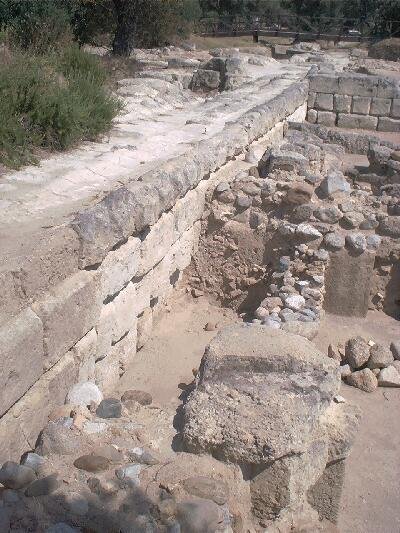
The National Archaeological Park of Locri Epizephiri preserves the Greco-Roman theater, the Temple of Marasà, and the museum. A journey into Magna Graecia among unique artifacts and family activities.
- https://www.locriantica.it/
- Strada Statale 106 Jonica, Reggio di Calabria (RC)
- Open in Google Maps
- View on Google Images Locri Epizephiri a Reggio di Calabria
Good to know
Introduction
Imagine walking among the remains of an ancient Greek colony, with the Ionian Sea gleaming in the distance. Welcome to Locri Epizephiri, the last foundation of Magna Graecia in Calabria. Here, among olive groves and citrus orchards, the National Archaeological Park welcomes you with a Greek-Roman theater that still seems to echo with voices, a majestic Ionic temple, and a museum rich in artifacts. It’s not just an archaeological site: it’s a journey through time that involves the whole family, with interactive workshops for the little ones.
Introduction
Imagine walking among the remains of an ancient Greek colony, with the Ionian Sea gleaming in the distance. Welcome to Locri Epizephiri, the last foundation of Magna Graecia in Calabria. Here, among olive groves and citrus orchards, the National Archaeological Park welcomes you with a Greek-Roman theater that still seems to echo with voices, a majestic Ionic temple, and a museum rich in artifacts. It’s not just an archaeological site: it’s a journey through time that involves the whole family, with interactive workshops for the little ones.
Historical Background
Founded in the early 7th century BC by Greek colonists, Locri Epizephiri soon became a major power in Magna Graecia. It was home to Zaleucus, Europe’s first lawgiver, and the poetess Nossis. The city thrived until the Roman era, when it was gradually abandoned due to Saracen raids. Today, the archaeological area of over 300 hectares allows visitors to explore 1500 years of history.
- 7th century BC: Foundation of Locri Epizephiri
- 4th century BC: Construction of the Greek theatre
- 2nd century BC: Roman conquest
- 9th-10th century AD: Abandonment and rise of Gerace
Historical Background
Founded in the early 7th century BC by Greek colonists, Locri Epizephiri soon became a major power in Magna Graecia. It was home to Zaleucus, Europe’s first lawgiver, and the poetess Nossis. The city thrived until the Roman era, when it was gradually abandoned due to Saracen raids. Today, the archaeological area of over 300 hectares allows visitors to explore 1500 years of history.
- 7th century BC: Foundation of Locri Epizephiri
- 4th century BC: Construction of the Greek theatre
- 2nd century BC: Roman conquest
- 9th-10th century AD: Abandonment and rise of Gerace
The Greco-Roman Theater and the Temple of Marasà
Two gems not to be missed. The theater, carved into the hill of Pirettina, could hold up to 4,500 spectators. It was remodeled in Roman times but still retains perfect acoustics. The Temple of Marasà, dedicated to Zeus or Aphrodite, is an imposing Ionic building with columns 12 meters high. Diodorus Siculus called it ‘the most famous of the sanctuaries of Magna Graecia’. Walking among the ruins, it’s easy to imagine the processions and performances that animated these places.
The Greco-Roman Theater and the Temple of Marasà
Two gems not to be missed. The theater, carved into the hill of Pirettina, could hold up to 4,500 spectators. It was remodeled in Roman times but still retains perfect acoustics. The Temple of Marasà, dedicated to Zeus or Aphrodite, is an imposing Ionic building with columns 12 meters high. Diodorus Siculus called it ‘the most famous of the sanctuaries of Magna Graecia’. Walking among the ruins, it’s easy to imagine the processions and performances that animated these places.
A dive into daily life: Centocamere and the museum
The Centocamere district is the beating heart of ancient Locri: houses, shops, and craft spaces tell the story of everyday life. Next door, the Museo Nazionale displays the famous pinakes (votive tablets) from the sanctuary of Persephone, bronze mirrors, and ceramics from across the Greek world. For children, there are simulated excavation and pottery workshops, like those organized during the Archaeology Days. An experience that makes history tangible and fun.
A dive into daily life: Centocamere and the museum
The Centocamere district is the beating heart of ancient Locri: houses, shops, and craft spaces tell the story of everyday life. Next door, the Museo Nazionale displays the famous pinakes (votive tablets) from the sanctuary of Persephone, bronze mirrors, and ceramics from across the Greek world. For children, there are simulated excavation and pottery workshops, like those organized during the Archaeology Days. An experience that makes history tangible and fun.
Why Visit
Three good reasons. First: it’s a unique archaeological site spanning over 300 hectares with no modern overlays—you truly walk on history here. Second: family-friendly activities like experimental archaeology workshops that engage both adults and children. Third: its location, just a stone’s throw from the sea, makes it easy to combine culture with relaxation. And then there’s the feeling of discovering hidden corners among the olive trees, far from the crowds, all on your own.
Why Visit
Three good reasons. First: it’s a unique archaeological site spanning over 300 hectares with no modern overlays—you truly walk on history here. Second: family-friendly activities like experimental archaeology workshops that engage both adults and children. Third: its location, just a stone’s throw from the sea, makes it easy to combine culture with relaxation. And then there’s the feeling of discovering hidden corners among the olive trees, far from the crowds, all on your own.
When to Go
The best time? At dawn or sunset. The low light caresses the columns of the Temple of Marasà and the theater turns golden. If you come in spring, the fields blooming with poppies and daisies make the landscape even more evocative. Summer is hot, but sea breezes help. Avoid weekends if you can: on weekdays the park is almost deserted and feels all yours.
When to Go
The best time? At dawn or sunset. The low light caresses the columns of the Temple of Marasà and the theater turns golden. If you come in spring, the fields blooming with poppies and daisies make the landscape even more evocative. Summer is hot, but sea breezes help. Avoid weekends if you can: on weekdays the park is almost deserted and feels all yours.
Nearby
Just a few kilometers away, Gerace awaits with its perched medieval village and Norman cathedral. A leap back in time, among narrow alleys and breathtaking views. Alternatively, treat yourself to a break by the sea: the Calabrian Ionian coast offers pebble beaches and crystal-clear waters. A must is a stop at one of the local farms to taste ‘nduja and Crotonese pecorino cheese.
Nearby
Just a few kilometers away, Gerace awaits with its perched medieval village and Norman cathedral. A leap back in time, among narrow alleys and breathtaking views. Alternatively, treat yourself to a break by the sea: the Calabrian Ionian coast offers pebble beaches and crystal-clear waters. A must is a stop at one of the local farms to taste ‘nduja and Crotonese pecorino cheese.
Itineraries nearby


💡 Did You Know…?
According to tradition, Locri Epizephiri practiced matriarchy, and the legislator Zaleucus wrote Europe’s first code of laws. Even today, the silence of the archaeological park evokes the voices of the ancient Greeks, while the Ionian Sea frames a journey through time.