
The Metropolitan Cathedral of Saints Maximus and George is L’Aquila’s main place of worship, overlooking Piazza Duomo. Established in 1256 with the birth of the diocese, it has been rebuilt several times after earthquakes; the most recent, in 2009, caused the transept to collapse, and it has been unusable since. Despite the closure, the neoclassical facade and the two bell towers from 1928 dominate the square along with the Church of Suffragio.
Key points:
– Ancient history: origins linked to Pope Alexander IV and the suppression of the Diocese of Forcona;
– Lost masterpieces: the tomb of Cardinal Agnifili by Silvestro dell’Aquila and the ‘false dome’ by Venanzio Mascitelli;
– Ongoing restoration: €37 million works started in 2023 to rebuild the apse and transept;
– Devotion to Saint Maximus: the patron saint celebrated on June 10, with relics kept under the high altar.
Events nearby

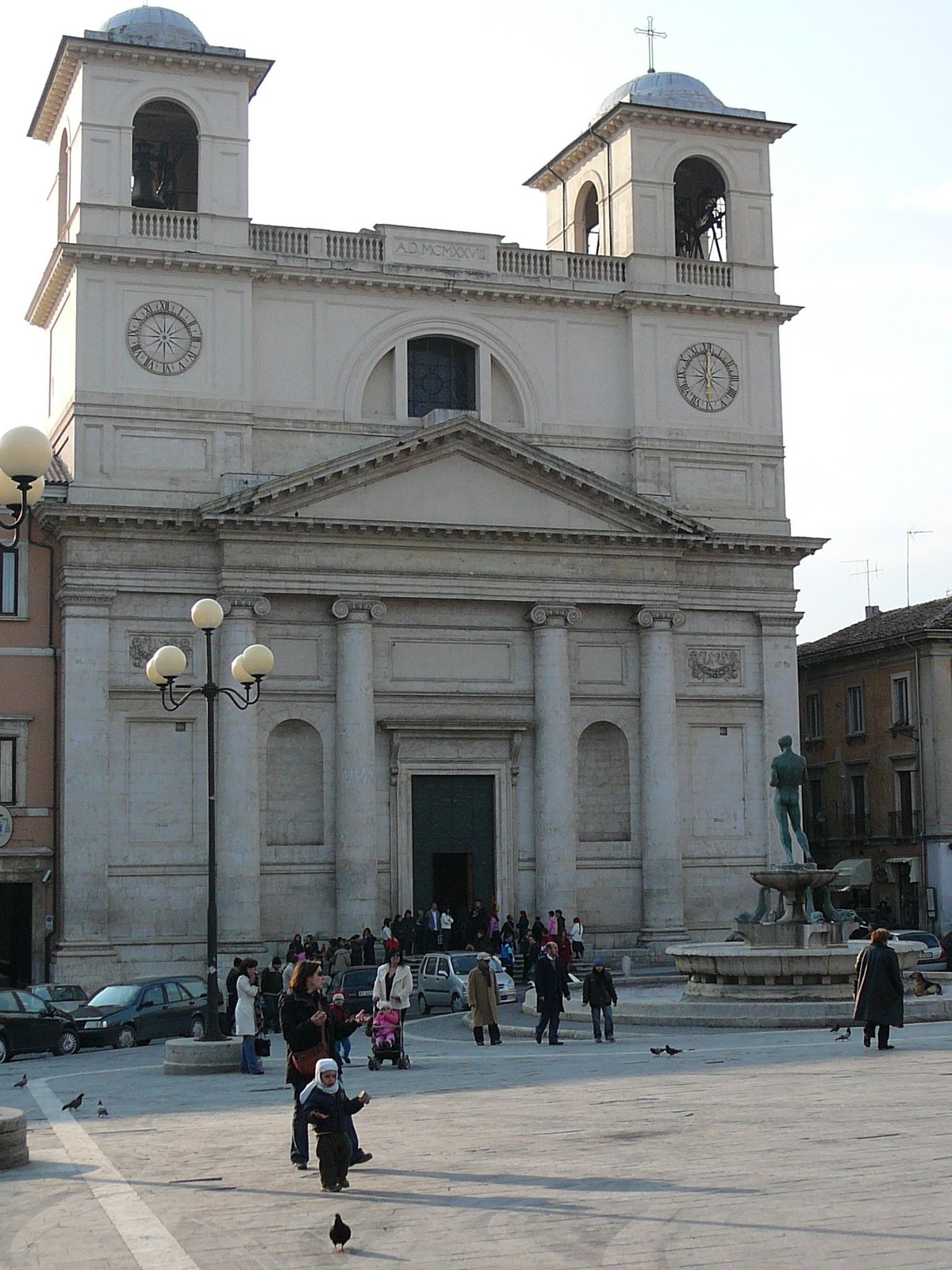
Dedicated to Saints Maximus and George, the cathedral is the religious symbol of L’Aquila. From its 13th-century origins to the 2009 earthquake, it is now under restoration. Here’s what to see in Piazza Duomo and the story of a wounded yet fascinating monument.
- Via degli Scardassieri, L’Aquila (AQ)
- Open in Google Maps
- View on Google Images Cattedrale metropolitana dei Santi Massimo e Giorgio a L’Aquila
Good to know
Introduction: The Wounded Symbol of L’Aquila
Historical Background
- 1256/1257 – Transfer of the episcopal seat from Forcona to L’Aquila
- 1259 – Destruction ordered by Manfredi
- 1315 – Reconstruction after the earthquake
- 1703 – Earthquake: almost total collapse
- 1711 – Beginning of Baroque reconstruction
- 1780 – Reopening for worship
- 1928 – Completion of the neoclassical façade
- 2009 – Earthquake: collapse of the transept
- 2023 – Start of restoration work
Architecture and Restorations: Between Baroque and Building Sites
Artworks: A Museum Inside the Church
Why visit it
When to Go
In the Surroundings
Itineraries nearby


💡 Did You Know…?
Few know that, before the earthquake, the interior housed a false dome painted by Venanzio Mascitelli: a trompe-l’œil that fooled the eye like at Sant’Ignazio in Rome. Today that canvas has collapsed, but the restoration project plans to recreate it with video mapping. And every year on June 10, the city remembers Saint Maximus, whose body arrived from Forcona in the 15th century.