Introduction
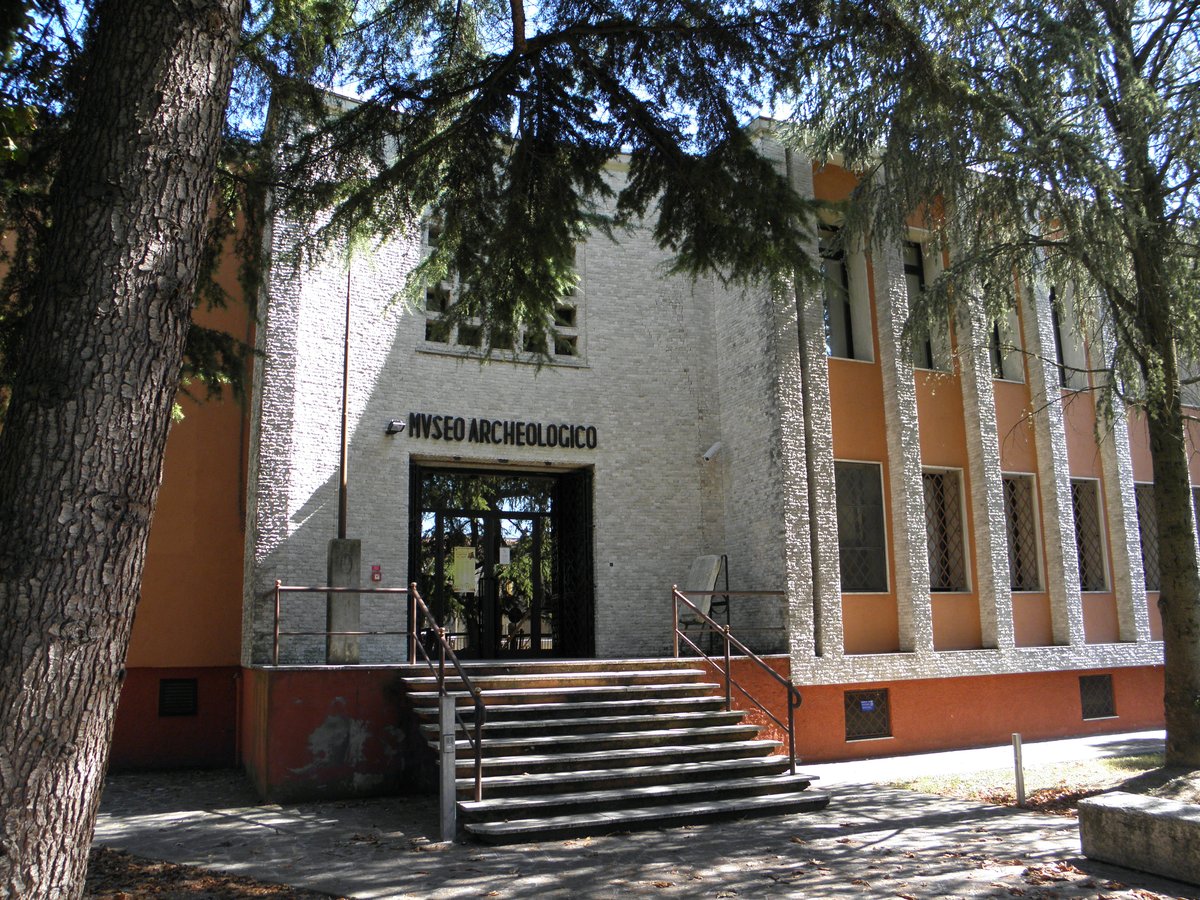
If you think Adria is just a provincial town, you’re in for a surprise. The National Archaeological Museum is a real gem, hidden in a tree-lined park. As soon as you enter, you’re immersed in a world that smells of Etruscans and Romans. The collection is incredible: Attic ceramics, Etruscan bronzes, and a Chariot Tomb that takes your breath away. But the real showstopper is the Roman glassware, so fine and colorful it looks freshly blown. It’s the perfect place to understand how Adria was a bustling port and a crossroads of cultures. You might not expect it, but it’s a journey through time that’s worth every minute.
Introduction
If you think Adria is just a provincial town, you’re in for a surprise. The National Archaeological Museum is a real gem, hidden in a tree-lined park. As soon as you enter, you’re immersed in a world that smells of Etruscans and Romans. The collection is incredible: Attic ceramics, Etruscan bronzes, and a Chariot Tomb that takes your breath away. But the real showstopper is the Roman glassware, so fine and colorful it looks freshly blown. It’s the perfect place to understand how Adria was a bustling port and a crossroads of cultures. You might not expect it, but it’s a journey through time that’s worth every minute.
Historical Notes
The museum’s story begins in
1787, when Francesco Girolamo Bocchi opened a private museum at home. Then in
1903, the Civic Museum was founded, moving several times until it reached its current location, inaugurated in
1961. Since
1972 it has been state-owned. The building was expanded in 2009 with a new wing. But the crown jewel is the
Chariot Tomb, discovered in 1938: a burial with three horses and a war chariot, unique of its kind. Here are the key milestones:
- 1787: first Bocchi museum
- 1903: establishment of the Civic Museum
- 1961: inauguration of the new premises
- 1972: transfer to the State
- 2009: completion of the expansion
Historical Notes
The museum’s story begins in
1787, when Francesco Girolamo Bocchi opened a private museum at home. Then in
1903, the Civic Museum was founded, moving several times until it reached its current location, inaugurated in
1961. Since
1972 it has been state-owned. The building was expanded in 2009 with a new wing. But the crown jewel is the
Chariot Tomb, discovered in 1938: a burial with three horses and a war chariot, unique of its kind. Here are the key milestones:
- 1787: first Bocchi museum
- 1903: establishment of the Civic Museum
- 1961: inauguration of the new premises
- 1972: transfer to the State
- 2009: completion of the expansion
The Tomb of the Chariot: A War Chariot and Three Horses
In the center of the museum, protected by a balcony, lies the Tomb of the Chariot. It is a burial from the first half of the 3rd century BC, containing the remains of a two-wheeled war chariot and three horses. Two are placed opposite each other, while the third rests on the axle with its hooves on the wheel rims. Recent restoration has revealed that the warrior was a young aristocrat, possibly of Celtic culture. The horses? One was a female, the other an enormous stallion of Eastern breed. It offers a glimpse into a world of exchanges and conflicts. A must-see.
The Tomb of the Chariot: A War Chariot and Three Horses
In the center of the museum, protected by a balcony, lies the Tomb of the Chariot. It is a burial from the first half of the 3rd century BC, containing the remains of a two-wheeled war chariot and three horses. Two are placed opposite each other, while the third rests on the axle with its hooves on the wheel rims. Recent restoration has revealed that the warrior was a young aristocrat, possibly of Celtic culture. The horses? One was a female, the other an enormous stallion of Eastern breed. It offers a glimpse into a world of exchanges and conflicts. A must-see.
The Roman Glass Collection: Transparency and Color
On the upper floor, a display case illuminates the Roman glass collection, one of the most important in Italy. There are blown glass jars used as ossuaries, polychrome balsam jars, and blue mold-blown cups by the potter Ennion. One piece that caught my eye? A snail-head drinking horn in yellow glass. And then there are millefiori glasses, engraved plates… They look like they just came out of an artisan’s workshop. These glasses, dating from the 1st century BCE to the 1st century CE, show how wealthy and cosmopolitan Adria was. A spectacle of light and skill.
The Roman Glass Collection: Transparency and Color
On the upper floor, a display case illuminates the Roman glass collection, one of the most important in Italy. There are blown glass jars used as ossuaries, polychrome balsam jars, and blue mold-blown cups by the potter Ennion. One piece that caught my eye? A snail-head drinking horn in yellow glass. And then there are millefiori glasses, engraved plates… They look like they just came out of an artisan’s workshop. These glasses, dating from the 1st century BCE to the 1st century CE, show how wealthy and cosmopolitan Adria was. A spectacle of light and skill.
Why Visit It
First: the Tomb of the Chariot is one of a kind in Italy. You won’t find a burial with horses and chariot so well preserved anywhere else. Second: the Roman glassware is exceptionally beautiful, capable of impressing even non-experts. Third: the museum is the gateway to the Po Delta Park, a UNESCO World Heritage site. A visit here gives you the keys to understanding the region. Plus, the ticket costs only 6 euros – a steal for such a treasure.
Why Visit It
First: the Tomb of the Chariot is one of a kind in Italy. You won’t find a burial with horses and chariot so well preserved anywhere else. Second: the Roman glassware is exceptionally beautiful, capable of impressing even non-experts. Third: the museum is the gateway to the Po Delta Park, a UNESCO World Heritage site. A visit here gives you the keys to understanding the region. Plus, the ticket costs only 6 euros – a steal for such a treasure.
When to Go
The best time? Early morning, when the sun streams through the windows and illuminates the Roman glass. The park is cool and nearly empty. If you come in spring, the garden is in bloom and the air is mild. Avoid Monday, when it’s closed. And if you’re in the area on the first Sunday of the month, take advantage of the extended opening until evening. Late afternoon is evocative for the lapidary in the cloister, with the light fading.
When to Go
The best time? Early morning, when the sun streams through the windows and illuminates the Roman glass. The park is cool and nearly empty. If you come in spring, the garden is in bloom and the air is mild. Avoid Monday, when it’s closed. And if you’re in the area on the first Sunday of the month, take advantage of the extended opening until evening. Late afternoon is evocative for the lapidary in the cloister, with the light fading.
In the Surroundings
After the museum, take a trip to Corte Cavanella di Loreo, a Roman villa rustica that is part of the same museum network. Alternatively, explore the Po Delta Park just a few kilometers away: a maze of canals, fishing valleys, and wild nature. If you have time, also visit the center of Adria with its squares and cathedral. An itinerary through history and landscape that leaves a mark.
In the Surroundings
After the museum, take a trip to Corte Cavanella di Loreo, a Roman villa rustica that is part of the same museum network. Alternatively, explore the Po Delta Park just a few kilometers away: a maze of canals, fishing valleys, and wild nature. If you have time, also visit the center of Adria with its squares and cathedral. An itinerary through history and landscape that leaves a mark.