Introduction
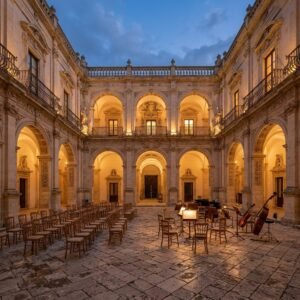
Stepping into the Gallery of Palazzo Bellomo is like taking a leap back in time, into a corner of Ortigia where medieval and Renaissance art envelops you with an almost tangible presence. It’s not just a museum, but an experience that takes you straight to the heart of the most authentic Syracuse. The palace itself, with its fourteenth-century architecture, is already a work of art, and when you stand before the famous Annunciation by Antonello da Messina, you immediately understand why this place is special. The atmosphere is intimate, secluded, far from the crowds of more touristy spots. Personally, I was struck by how light filters through the Gothic windows, illuminating the paintings in an almost magical way. It’s one of those places that makes you feel lucky to have discovered it.
Historical Overview
Palazzo Bellomo boasts a fascinating history that begins in the 13th century, when it was built as a noble residence. Over the centuries, it underwent several transformations, evolving from a stately home to a museum.
The key moment came in 1948, when it became the Galleria Regionale di Palazzo Bellomo, housing artworks rescued from local churches and convents. The collection spans from the Middle Ages to the Renaissance, with pieces that narrate the artistic history of Syracuse. The timeline summary:
- 13th century: construction of the palace as a noble residence
- 15th century: renovation in Catalan Gothic style
- 1948: opening as the Regional Gallery
- Today: home to medieval and Renaissance works, including Antonello’s Annunciation
Antonello’s Annunciation: A Masterpiece to Experience
The Annunciation by Antonello da Messina is the highlight of the gallery, and seeing this 1474 painting in person is an unforgettable experience. It’s not just about its fame: it’s as if the artist captured a moment of divine suspension, with Mary and the angel immersed in a light that feels real. I spent quite some time observing the details, like the folds of Mary’s cloak or the almost human expression of the angel. The room where it’s displayed is small, allowing you to get close without distractions. Sometimes I wonder how Antonello created that depth effect with colors, but perhaps it’s better not to know and just let yourself be carried away.
Beyond Antonello: Hidden Treasures
While everyone focuses on The Annunciation, the gallery conceals other gems worth discovering. The section of Sicilian medieval art is a continuous surprise, with wooden sculptures, panel paintings, and sacred objects showcasing craftsmanship of the highest level. I fell in love with a 15th-century triptych depicting scenes from the life of Saint Francis, with colors still vivid after centuries. Then there are ceramics, liturgical vestments, and even some archaeological finds connecting the palace to the oldest history of Ortigia. It’s a journey into devotion and folk art that helps you understand how rich the local culture was. Don’t skip them to rush to the exit.
Why Visit It
Visiting the Galleria di Palazzo Bellomo is worth it for at least three concrete reasons. First, it’s the only place in the world to see Antonello da Messina’s Annunciation in its original context, away from the crowds of large museums. Second, the palace structure itself is an attraction: climbing the stone stairs and crossing the rooms with cross-vaulted ceilings makes you feel part of history. Third, it’s an excellent cultural break during a day in Ortigia, ideal for those who want to delve deeper without spending hours. I found it perfect for a one-hour visit, enough to absorb the essence without getting tired.
When to Go
The best time to visit the gallery, in my experience, is early afternoon, when natural light streams through the windows and illuminates the artworks spectacularly. I’d avoid peak summer hours because the rooms are small and you might feel a bit cramped. In terms of season, autumn is fantastic: the weather is mild, Ortigia is less crowded, and you can enjoy the visit at a leisurely pace. In winter, the atmosphere becomes more intimate, almost mystical, perfect for immersing yourself in medieval art. In short, any time is good, but with a bit of planning, the experience is even more special.
In the Surroundings
After the visit, I recommend exploring the surroundings to enrich the experience. Just a few steps away is the Syracuse Cathedral, a masterpiece that blends a Greek temple with a Baroque cathedral, perfect for continuing the journey through art and history. Then, for a striking contrast, head to the Fountain of Arethusa, the freshwater spring by the sea where papyrus plants grow, a magical place that seems straight out of a legend. Both are reachable on foot in just a few minutes, with no need for transportation. I usually do it this way: gallery, cathedral, and then a break at the fountain to take it all in.