Introduction
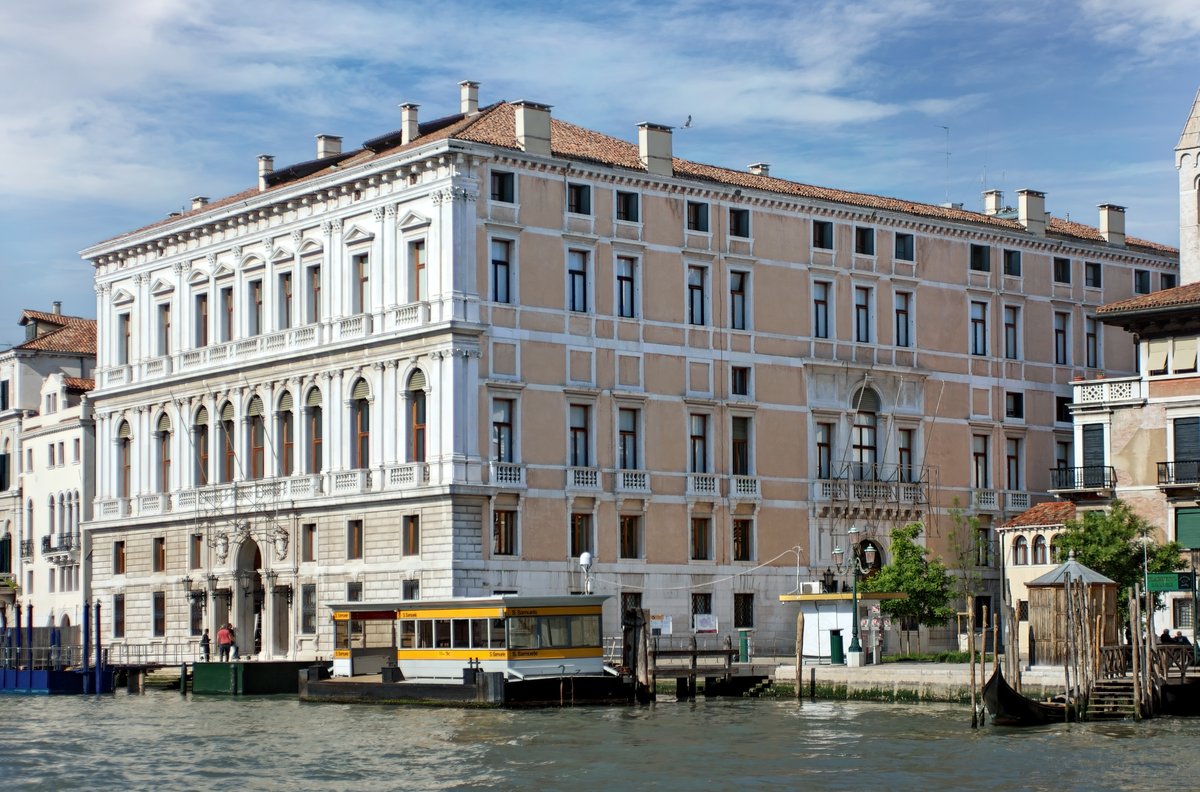
If you think contemporary art is a closed world, Palazzo Grassi will make you think again. Overlooking the Grand Canal, this 18th-century palace is a neoclassical jewel that today breathes modern art. Entering is like taking a time jump: outside historical Venice, inside installations that challenge you. The light filtering through the windows, the play of perspectives, the rarefied air… every time you come, the exhibition is different. There is no fixed collection, but temporary exhibitions from the Pinault Collection, one of the most important in the world. A place where history and contemporaneity merge in a unique way.
Introduction
If you think contemporary art is a closed world, Palazzo Grassi will make you think again. Overlooking the Grand Canal, this 18th-century palace is a neoclassical jewel that today breathes modern art. Entering is like taking a time jump: outside historical Venice, inside installations that challenge you. The light filtering through the windows, the play of perspectives, the rarefied air… every time you come, the exhibition is different. There is no fixed collection, but temporary exhibitions from the Pinault Collection, one of the most important in the world. A place where history and contemporaneity merge in a unique way.
Historical Notes
Palazzo Grassi was commissioned by the Grassi family, wealthy merchants who had purchased a noble title. Between 1748 and 1772, architect Giorgio Massari built it in Neoclassical style, almost a challenge to the dominant Baroque. After the family line died out in 1772, it changed hands: the Swiss industrialist Stuckey, who brought electricity, lived there; later it was turned into a museum (complete with a glass roof over the courtyard). In 1984, Fiat bought it and Gae Aulenti restored it. Since 2005, it has belonged to François Pinault, who called on Tadao Ando for a minimalist restoration. Today it is one of Venice’s most innovative museum hubs.
Historical Notes
Palazzo Grassi was commissioned by the Grassi family, wealthy merchants who had purchased a noble title. Between 1748 and 1772, architect Giorgio Massari built it in Neoclassical style, almost a challenge to the dominant Baroque. After the family line died out in 1772, it changed hands: the Swiss industrialist Stuckey, who brought electricity, lived there; later it was turned into a museum (complete with a glass roof over the courtyard). In 1984, Fiat bought it and Gae Aulenti restored it. Since 2005, it has belonged to François Pinault, who called on Tadao Ando for a minimalist restoration. Today it is one of Venice’s most innovative museum hubs.
Architecture and Restoration
Massari played with spaces: a trapezoidal floor plan around a central courtyard, with a garden at the back. The Istrian stone façade is slender, with openings reminiscent of Venetian Gothic style. Inside, the journey from the entrance to the staircase is a theater: you have to cross the entire ground floor before going up. Tadao Ando, in his intervention, managed to preserve the historical essence while discreetly adding concrete and glass. Natural light is the true protagonist: it changes throughout the day and makes the artworks breathe. The Teatrino (2013) is a gem: 225 seats, perfect acoustics, used for conferences and concerts.
Architecture and Restoration
Massari played with spaces: a trapezoidal floor plan around a central courtyard, with a garden at the back. The Istrian stone façade is slender, with openings reminiscent of Venetian Gothic style. Inside, the journey from the entrance to the staircase is a theater: you have to cross the entire ground floor before going up. Tadao Ando, in his intervention, managed to preserve the historical essence while discreetly adding concrete and glass. Natural light is the true protagonist: it changes throughout the day and makes the artworks breathe. The Teatrino (2013) is a gem: 225 seats, perfect acoustics, used for conferences and concerts.
Pinault Collection and Exhibitions
François Pinault’s collection is one of the top five in the world for contemporary art. There is no fixed route here: each exhibition is temporary and often specially designed for the spaces. Artists of the caliber of Damien Hirst, Cindy Sherman, and Maurizio Cattelan have exhibited. Recent shows? ‘Tatiana Trouvé. The Strange Life of Things’ and ‘Michael Armitage. The Promise of Change.’ Every visit is a unique experience, as the works dialogue with the palace’s architecture. If you like art that makes you think, this is the right place.
Pinault Collection and Exhibitions
François Pinault’s collection is one of the top five in the world for contemporary art. There is no fixed route here: each exhibition is temporary and often specially designed for the spaces. Artists of the caliber of Damien Hirst, Cindy Sherman, and Maurizio Cattelan have exhibited. Recent shows? ‘Tatiana Trouvé. The Strange Life of Things’ and ‘Michael Armitage. The Promise of Change.’ Every visit is a unique experience, as the works dialogue with the palace’s architecture. If you like art that makes you think, this is the right place.
Why Visit
First: the architecture. Even if you’re not into art, entering this 18th-century palace restored by Ando is worth the ticket. Second: the exhibitions change often, so you can come back every year and find something completely different. Third: the combined ticket with Punta della Dogana costs only 20 euros and allows you to see two museums in one day. If you are a student under 26, you pay only 10 euros for a single museum: a bargain. And then, the location: you are a stone’s throw from Campo San Samuele, a quiet corner of Venice away from the crowds.
Why Visit
First: the architecture. Even if you’re not into art, entering this 18th-century palace restored by Ando is worth the ticket. Second: the exhibitions change often, so you can come back every year and find something completely different. Third: the combined ticket with Punta della Dogana costs only 20 euros and allows you to see two museums in one day. If you are a student under 26, you pay only 10 euros for a single museum: a bargain. And then, the location: you are a stone’s throw from Campo San Samuele, a quiet corner of Venice away from the crowds.
When to Go
Early morning, just as it opens at 10: that’s when the soft light filters through the windows and the rooms are nearly empty. If you can, avoid Tuesday: it’s closed. For atmosphere, autumn is perfect: the city is less crowded and exhibitions often start in September. But even a winter afternoon has its charm: fog and silence outside, warm light and art inside. Check the website before coming: between exhibitions the museum remains closed for setup.
When to Go
Early morning, just as it opens at 10: that’s when the soft light filters through the windows and the rooms are nearly empty. If you can, avoid Tuesday: it’s closed. For atmosphere, autumn is perfect: the city is less crowded and exhibitions often start in September. But even a winter afternoon has its charm: fog and silence outside, warm light and art inside. Check the website before coming: between exhibitions the museum remains closed for setup.
Nearby
Just a few minutes’ walk away is Punta della Dogana, the other venue of the Pinault Collection: a former customs warehouse restored by Ando, overlooking the St. Mark’s Basin. If you like contemporary art, it’s worth getting the combined ticket. After the visit, a walk to the Basilica della Salute offers one of the most beautiful views of Venice. If you’re in the mood for classical art, the Gallerie dell’Accademia are nearby: a dive into Venetian art from the 14th to the 18th century.
Nearby
Just a few minutes’ walk away is Punta della Dogana, the other venue of the Pinault Collection: a former customs warehouse restored by Ando, overlooking the St. Mark’s Basin. If you like contemporary art, it’s worth getting the combined ticket. After the visit, a walk to the Basilica della Salute offers one of the most beautiful views of Venice. If you’re in the mood for classical art, the Gallerie dell’Accademia are nearby: a dive into Venetian art from the 14th to the 18th century.