Syracuse Cathedral, in the heart of Ortigia, is a unique monument that tells over 2,500 years of history. Built on the remains of the Greek temple of Athena (5th century BC), it preserves the original monumental Doric columns. Transformed into a Christian church, an Arab mosque, and then a Norman cathedral, after the 1693 earthquake it acquired its spectacular Baroque façade. Today it is a UNESCO World Heritage site.
Why visit it:
Original Doric columns: 36 columns from the Greek temple visible both inside and out.
Baroque façade: Masterpiece by Andrea Palma with statues by Ignazio Marabitti.
Effigy of Saint Lucy: Silver statue of the patron saint, heart of the city’s devotion.
Piazza Duomo: One of Sicily’s most beautiful squares, surrounded by noble palaces.
Introduction
Entering the Cathedral of Syracuse is like flipping through a 2,500-year-old book of stone. In Piazza Duomo, on Ortigia, this church is unique: it stands on the ancient Temple of Athena and preserves its mighty Doric columns, visible both inside and out. The Baroque façade, with its statues and volutes, contrasts with Greek austerity, creating a breathtaking mix. It’s a UNESCO World Heritage site, and you can tell immediately: every corner tells a different story, from the Byzantines to the Normans, from the Arabs to the Bourbons. It’s not just a place of worship; it’s a journey through time.
Introduction
Entering the Cathedral of Syracuse is like flipping through a 2,500-year-old book of stone. In Piazza Duomo, on Ortigia, this church is unique: it stands on the ancient Temple of Athena and preserves its mighty Doric columns, visible both inside and out. The Baroque façade, with its statues and volutes, contrasts with Greek austerity, creating a breathtaking mix. It’s a UNESCO World Heritage site, and you can tell immediately: every corner tells a different story, from the Byzantines to the Normans, from the Arabs to the Bourbons. It’s not just a place of worship; it’s a journey through time.
Historical Overview
The cathedral’s history begins in
480 BC, when the tyrant Gelon built the Temple of Athena to celebrate victory over Carthage. In the
7th century, the Byzantines turned it into a Christian church by opening arches between the columns. During Arab rule (
878-1091), it became a mosque, then the Normans reconsecrated it (
1085). The earthquakes of
1542 and
1693 devastated the structure, leading to the Baroque reconstruction of the façade (
1728-1753). Between
1900 and 1927, a restoration brought the Greek elements to light. Key moments:
- 480 BC – Temple of Athena
- 7th century – Conversion into a church
- 878-1091 – Arab mosque
- 1085 – Norman reconsecration
- 1693 – Earthquake and Baroque reconstruction
- 2005 – UNESCO
Historical Overview
The cathedral’s history begins in
480 BC, when the tyrant Gelon built the Temple of Athena to celebrate victory over Carthage. In the
7th century, the Byzantines turned it into a Christian church by opening arches between the columns. During Arab rule (
878-1091), it became a mosque, then the Normans reconsecrated it (
1085). The earthquakes of
1542 and
1693 devastated the structure, leading to the Baroque reconstruction of the façade (
1728-1753). Between
1900 and 1927, a restoration brought the Greek elements to light. Key moments:
- 480 BC – Temple of Athena
- 7th century – Conversion into a church
- 878-1091 – Arab mosque
- 1085 – Norman reconsecration
- 1693 – Earthquake and Baroque reconstruction
- 2005 – UNESCO
The Doric Columns of the Temple of Athena
The true soul of the cathedral is the 36 surviving Doric columns from the Greek temple, over 8 meters high and almost 2 meters in diameter. You’ll find them both inside, embedded in the walls of the nave, and on the left external side. Walking through the aisles, you feel as if you’re inside a pagan temple – and in a sense, you are. The Byzantines walled up the spaces between the columns but left them visible, creating a spectacular effect. The wooden ceiling from 1528 and the polychrome floor from the 18th century add warmth, but your eyes immediately go to those carved shafts, witnesses of a distant past.
The Doric Columns of the Temple of Athena
The true soul of the cathedral is the 36 surviving Doric columns from the Greek temple, over 8 meters high and almost 2 meters in diameter. You’ll find them both inside, embedded in the walls of the nave, and on the left external side. Walking through the aisles, you feel as if you’re inside a pagan temple – and in a sense, you are. The Byzantines walled up the spaces between the columns but left them visible, creating a spectacular effect. The wooden ceiling from 1528 and the polychrome floor from the 18th century add warmth, but your eyes immediately go to those carved shafts, witnesses of a distant past.
The Baroque Facade and Artworks
The facade, a masterpiece of Sicilian Baroque, is a triumph of Corinthian columns, broken pediments, and statues. At the top, the Immaculate, Saint Marcian and Saint Lucy (by Ignazio Marabitti) watch over the square. Inside, the chapel of Saint Lucy holds the silver simulacrum of the patron saint, carried in procession in December and May. Don’t miss the Madonna della Neve by Antonello Gagini, very sweet, and the Chapel of the Sacrament with the ciborium by Luigi Vanvitelli. The contrast between Greek sobriety and Baroque exuberance makes every visit unique.
The Baroque Facade and Artworks
The facade, a masterpiece of Sicilian Baroque, is a triumph of Corinthian columns, broken pediments, and statues. At the top, the Immaculate, Saint Marcian and Saint Lucy (by Ignazio Marabitti) watch over the square. Inside, the chapel of Saint Lucy holds the silver simulacrum of the patron saint, carried in procession in December and May. Don’t miss the Madonna della Neve by Antonello Gagini, very sweet, and the Chapel of the Sacrament with the ciborium by Luigi Vanvitelli. The contrast between Greek sobriety and Baroque exuberance makes every visit unique.
Why Visit It
Three concrete reasons. First: the stratification is unique in the world – there is no other place where a Greek temple became a church, mosque, and cathedral, all in one building. Second: the devotion to Saint Lucia is palpable; the silver effigy and relic make you realize how much the people of Syracuse love their saint. Third: it is in the heart of Ortigia, one of the most beautiful islands in the Mediterranean, and after the visit you can get lost in the alleys or sit at a café in Piazza Duomo. In short, a dive into history that never gets old.
Why Visit It
Three concrete reasons. First: the stratification is unique in the world – there is no other place where a Greek temple became a church, mosque, and cathedral, all in one building. Second: the devotion to Saint Lucia is palpable; the silver effigy and relic make you realize how much the people of Syracuse love their saint. Third: it is in the heart of Ortigia, one of the most beautiful islands in the Mediterranean, and after the visit you can get lost in the alleys or sit at a café in Piazza Duomo. In short, a dive into history that never gets old.
When to Go
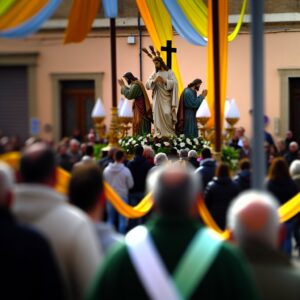
The best time? Early in the morning, right when it opens at 9 a.m., as the sun’s rays stream through the windows and light up the Doric columns. Or at sunset, when the Baroque façade turns orange and the square empties out. Avoid Sundays, since the cathedral is closed for services—unless you want to attend the 11:30 a.m. mass, which is an experience in itself. If you’re passing through in December, don’t miss the Santa Lucia procession on the 13th: the entire city comes to a standstill.
When to Go
The best time? Early in the morning, right when it opens at 9 a.m., as the sun’s rays stream through the windows and light up the Doric columns. Or at sunset, when the Baroque façade turns orange and the square empties out. Avoid Sundays, since the cathedral is closed for services—unless you want to attend the 11:30 a.m. mass, which is an experience in itself. If you’re passing through in December, don’t miss the Santa Lucia procession on the 13th: the entire city comes to a standstill.
Nearby
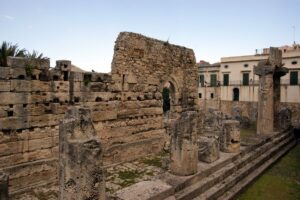
Just a few steps away, still in Ortigia, I recommend two stops. The Fonte Aretusa, a freshwater spring where papyrus grows, with a sea view. And Castello Maniace, a 13th-century Swabian fortress overlooking the harbor: from here the panorama is stunning, and you can breathe in history. Both are a 10-minute walk from the cathedral. If you have time, continue to the Temple of Apollo, older than the Temple of Athena, but in ruins.
Nearby
Just a few steps away, still in Ortigia, I recommend two stops. The Fonte Aretusa, a freshwater spring where papyrus grows, with a sea view. And Castello Maniace, a 13th-century Swabian fortress overlooking the harbor: from here the panorama is stunning, and you can breathe in history. Both are a 10-minute walk from the cathedral. If you have time, continue to the Temple of Apollo, older than the Temple of Athena, but in ruins.