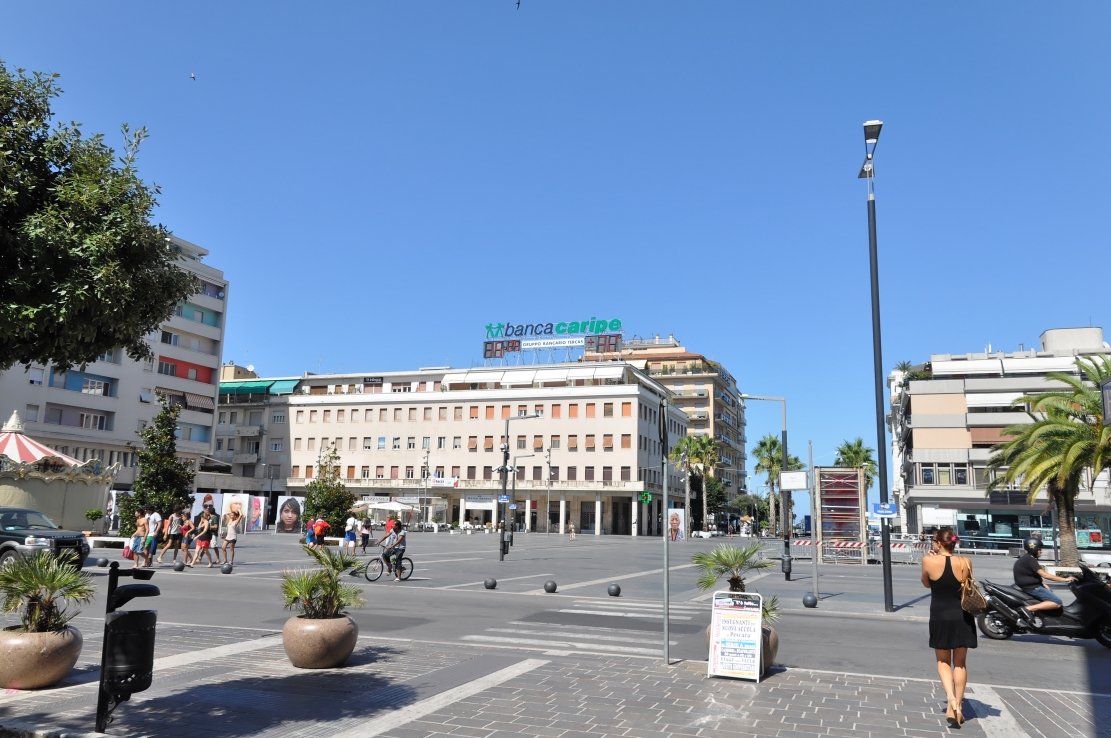
Piazza della Rinascita is the nerve center of Pescara, a place where history and modernity meet. After the bombings of 1943, urban planner Luigi Piccinato redesigned the space, which today is a pedestrian area frequented by locals and tourists. Here you’ll find monuments like Palazzo Arlecchino and the Elephant by Vicentino Michetti, as well as musical and cultural events throughout the year.
– Central location: in the heart of the historic center, connected to Corso Umberto I.
– Unique architecture: lava stone and white stone paving, arcades, and rationalist buildings.
– Events and concerts: has hosted artists like Daniele Silvestri and Bandabardò.
– Services: boutiques, bars, and Urban Center for tourist info.
Introduction
If there is a place that embodies the soul of Pescara, it is Piazza della Rinascita. Everyone calls it Piazza Salotto, and for good reason: it’s the city’s living room, a huge pedestrian area where people meet, stroll, sip a coffee. After the bombings of 1943, it was reborn from the rubble as a symbol of rebirth. Today, among elegant boutiques and crowded outdoor cafes, you breathe a lively and youthful atmosphere. It is the ideal starting point to explore the city center.
Introduction
If there is a place that embodies the soul of Pescara, it is Piazza della Rinascita. Everyone calls it Piazza Salotto, and for good reason: it’s the city’s living room, a huge pedestrian area where people meet, stroll, sip a coffee. After the bombings of 1943, it was reborn from the rubble as a symbol of rebirth. Today, among elegant boutiques and crowded outdoor cafes, you breathe a lively and youthful atmosphere. It is the ideal starting point to explore the city center.
Historical Notes
The square was built after World War II. On August 31, 1943, a bombing destroyed the area, and between 1947 and 1950, urban planner Luigi Piccinato designed the new square on the ruins. Initially called Piazza della Libertà, it was renamed Piazza della Rinascita to symbolize reconstruction. The only surviving building is Palazzo Muzii (1928-1930). In the 1970s, the local press nicknamed it Piazza Salotto, as it became the quintessential meeting place. In the 2000s, a renovation by Japanese architect Toyo Ito gave it its current appearance, with paving in black and white lava stone.
Historical Notes
The square was built after World War II. On August 31, 1943, a bombing destroyed the area, and between 1947 and 1950, urban planner Luigi Piccinato designed the new square on the ruins. Initially called Piazza della Libertà, it was renamed Piazza della Rinascita to symbolize reconstruction. The only surviving building is Palazzo Muzii (1928-1930). In the 1970s, the local press nicknamed it Piazza Salotto, as it became the quintessential meeting place. In the 2000s, a renovation by Japanese architect Toyo Ito gave it its current appearance, with paving in black and white lava stone.
Historical Timeline
- 1943 – Bombardment on August 31 destroys the area
- 1947-1950 – Luigi Piccinato’s project, Piazza della Libertà is born
- 1970s – Nicknamed ‘Piazza Salotto’ by a local journalist
- 2006 – Renovation by Toyo Ito: new paving and pedestrianization
- 2008 – Installation of the Huge Wineglass (collapsed in 2009)
- 2010 – Removal of the palm trees affected by red palm weevil, replaced with magnolias
Historical Timeline
- 1943 – Bombardment on August 31 destroys the area
- 1947-1950 – Luigi Piccinato’s project, Piazza della Libertà is born
- 1970s – Nicknamed ‘Piazza Salotto’ by a local journalist
- 2006 – Renovation by Toyo Ito: new paving and pedestrianization
- 2008 – Installation of the Huge Wineglass (collapsed in 2009)
- 2010 – Removal of the palm trees affected by red palm weevil, replaced with magnolias
Architecture and Design: A Blend of Past and Present
The square is an interesting contrast between old and new. On one side, the Palazzo dei Portici in rationalist style, the first modern building of the postwar period. On the other, Palazzo Arlecchino with its mosaic facades reminiscent of the Harlequin mask. And then there’s Palazzo Testa, which holds sculptures by Vicentino Michetti. At the center, until 2009, stood Toyo Ito’s Huge Wineglass, a giant glass and steel chalice that unfortunately collapsed. Today, the square is dominated by Michetti’s Elefante, a provocative cement sculpture in bright colors.
Architecture and Design: A Blend of Past and Present
The square is an interesting contrast between old and new. On one side, the Palazzo dei Portici in rationalist style, the first modern building of the postwar period. On the other, Palazzo Arlecchino with its mosaic facades reminiscent of the Harlequin mask. And then there’s Palazzo Testa, which holds sculptures by Vicentino Michetti. At the center, until 2009, stood Toyo Ito’s Huge Wineglass, a giant glass and steel chalice that unfortunately collapsed. Today, the square is dominated by Michetti’s Elefante, a provocative cement sculpture in bright colors.
Life in the Square: Events and Atmosphere
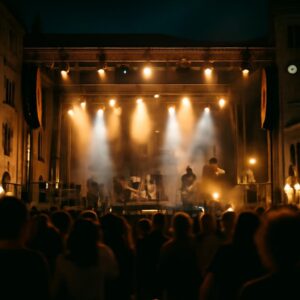
Piazza della Rinascita is an open-air stage. It hosts concerts by artists like Daniele Silvestri, Bandabardò, Negrita, and Afterhours. The square also features cultural events, sports activities, and the musical Primo Maggio celebration. During the day, bars and boutiques make it lively; in the evening, the lights of the venues create a welcoming atmosphere. Lose yourself among the outdoor tables and enjoy the bustling crowd. The Urban Center provides tourist info and temporary exhibitions.
Life in the Square: Events and Atmosphere
Piazza della Rinascita is an open-air stage. It hosts concerts by artists like Daniele Silvestri, Bandabardò, Negrita, and Afterhours. The square also features cultural events, sports activities, and the musical Primo Maggio celebration. During the day, bars and boutiques make it lively; in the evening, the lights of the venues create a welcoming atmosphere. Lose yourself among the outdoor tables and enjoy the bustling crowd. The Urban Center provides tourist info and temporary exhibitions.
Why Visit It
1. Heart of the city: the quintessential meeting point, perfect to start sightseeing or take a break. 2. Unique architecture: the blend of historic buildings and contemporary additions (by Toyo Ito) offers great photo opportunities. 3. Year-round events: from concerts to markets, there’s always something to do. Plus, it’s surrounded by all kinds of shops, ideal for shopping.
Why Visit It
1. Heart of the city: the quintessential meeting point, perfect to start sightseeing or take a break. 2. Unique architecture: the blend of historic buildings and contemporary additions (by Toyo Ito) offers great photo opportunities. 3. Year-round events: from concerts to markets, there’s always something to do. Plus, it’s surrounded by all kinds of shops, ideal for shopping.
When to go
To experience the square at its best, choose a weekday afternoon, when it’s less crowded and you can enjoy the architecture calmly. If you love the energy of the crowd, Saturday evening or during a summer event are perfect. Spring and autumn offer ideal temperatures for sitting at outdoor tables. In winter, the atmosphere becomes more intimate, with Christmas lights.
When to go
To experience the square at its best, choose a weekday afternoon, when it’s less crowded and you can enjoy the architecture calmly. If you love the energy of the crowd, Saturday evening or during a summer event are perfect. Spring and autumn offer ideal temperatures for sitting at outdoor tables. In winter, the atmosphere becomes more intimate, with Christmas lights.
Nearby
Just steps away, you’ll find Corso Umberto I, the shopping street with historic buildings and shops. For a stroll along the seafront, head to Lungomare Giovanni Paolo II (about 10 minutes on foot), with the beach and seaside venues. If you love art, the Museo delle Genti d’Abruzzo is a 15-minute walk away and tells the story of the region.
Nearby
Just steps away, you’ll find Corso Umberto I, the shopping street with historic buildings and shops. For a stroll along the seafront, head to Lungomare Giovanni Paolo II (about 10 minutes on foot), with the beach and seaside venues. If you love art, the Museo delle Genti d’Abruzzo is a 15-minute walk away and tells the story of the region.