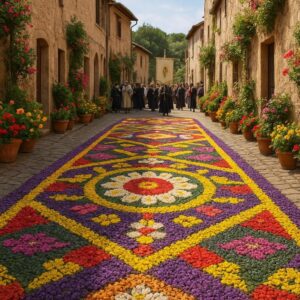
Piazza Navona is the Baroque heart of Rome, an open-air living room where art and daily life merge. Its elliptical shape follows that of the ancient Stadium of Domitian, and its three monumental fountains – Bernini’s Fountain of the Four Rivers, the Moor Fountain, and the Neptune Fountain – make it a unique masterpiece. Here’s what not to miss: Admire the Fountain of the Four Rivers with its statues of continents and obelisk, visit Borromini’s Church of Sant’Agnese in Agone, take a break at historic cafes among street artists, and discover the Befana Christmas market (from December 24 to January 6).
Introduction: The Beloved Baroque Square
Piazza Navona is the symbol of Roman Baroque: an open-air museum where art, history, and daily life merge. Its elliptical shape mirrors the ancient Stadium of Domitian, and at its center soars Bernini’s Fountain of the Four Rivers. Amid historic cafés, street artists, and three monumental fountains, every corner tells centuries of history. It’s the perfect spot for a stroll that blends beauty and authenticity.
Introduction: The Beloved Baroque Square
Piazza Navona is the symbol of Roman Baroque: an open-air museum where art, history, and daily life merge. Its elliptical shape mirrors the ancient Stadium of Domitian, and at its center soars Bernini’s Fountain of the Four Rivers. Amid historic cafés, street artists, and three monumental fountains, every corner tells centuries of history. It’s the perfect spot for a stroll that blends beauty and authenticity.
Historical Background
Built on the Stadium of Domitian (86 AD, capacity 30,000 spectators), Piazza Navona has undergone a long evolution. In 1477, Pope Sixtus IV moved the market there. In the 17th century, under Innocent X Pamphilj, it became a Baroque masterpiece with Bernini and Borromini. Here are the key moments:
- 86 AD: Construction of the Stadium.
- 1477: Market moved to Piazza Navona.
- 1648-1651: Fountain of the Four Rivers.
- 1652: Sant’Agnese in Agone.
- 1869: Market moved from Piazza Navona.
Today it is a vibrant cultural center.
Historical Background
Built on the Stadium of Domitian (86 AD, capacity 30,000 spectators), Piazza Navona has undergone a long evolution. In 1477, Pope Sixtus IV moved the market there. In the 17th century, under Innocent X Pamphilj, it became a Baroque masterpiece with Bernini and Borromini. Here are the key moments:
- 86 AD: Construction of the Stadium.
- 1477: Market moved to Piazza Navona.
- 1648-1651: Fountain of the Four Rivers.
- 1652: Sant’Agnese in Agone.
- 1869: Market moved from Piazza Navona.
Today it is a vibrant cultural center.
The Three Fountains: Art and Symbolism
Three monumental fountains adorn the square. At the center, the Fountain of the Four Rivers (Bernini, 1651): a travertine cliff with statues of the Nile, Danube, Ganges, and Rio de la Plata, topped by a 16-meter obelisk. To the south, the Fountain of the Moor (Giacomo della Porta, retouched by Bernini) depicts an Ethiopian struggling with a dolphin. To the north, the Fountain of Neptune (completed in the 19th century) shows Neptune with a trident. Every detail carries symbolic meaning related to the then-known continents.
The Three Fountains: Art and Symbolism
Three monumental fountains adorn the square. At the center, the Fountain of the Four Rivers (Bernini, 1651): a travertine cliff with statues of the Nile, Danube, Ganges, and Rio de la Plata, topped by a 16-meter obelisk. To the south, the Fountain of the Moor (Giacomo della Porta, retouched by Bernini) depicts an Ethiopian struggling with a dolphin. To the north, the Fountain of Neptune (completed in the 19th century) shows Neptune with a trident. Every detail carries symbolic meaning related to the then-known continents.
Architecture and Atmosphere: Among Churches and Palaces
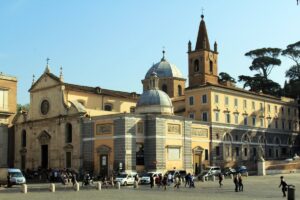
Baroque masterpieces line the square. The Church of Sant’Agnese in Agone (Borromini) stands on the site of the saint’s martyrdom, with a concave façade that seems to embrace the piazza. Nearby Palazzo Pamphilj, now the Brazilian embassy, houses frescoes by Pietro da Cortona. Don’t miss Palazzo Braschi, home to the Museum of Rome. With street artists and outdoor cafés, the atmosphere is unique: the square is alive at every hour of the day.
Architecture and Atmosphere: Among Churches and Palaces
Baroque masterpieces line the square. The Church of Sant’Agnese in Agone (Borromini) stands on the site of the saint’s martyrdom, with a concave façade that seems to embrace the piazza. Nearby Palazzo Pamphilj, now the Brazilian embassy, houses frescoes by Pietro da Cortona. Don’t miss Palazzo Braschi, home to the Museum of Rome. With street artists and outdoor cafés, the atmosphere is unique: the square is alive at every hour of the day.
Why Visit It
Three reasons not to miss it: 1. Admire Bernini’s masterpiece and the other fountains, symbols of the Baroque. 2. Enjoy the atmosphere among street performers, musicians, and historic cafés: an authentic experience. 3. The Christmas market from late November to Epiphany, with stalls of sweets and toys. The square is free and open 24/7, perfect for a stop in the center.
Why Visit It
Three reasons not to miss it: 1. Admire Bernini’s masterpiece and the other fountains, symbols of the Baroque. 2. Enjoy the atmosphere among street performers, musicians, and historic cafés: an authentic experience. 3. The Christmas market from late November to Epiphany, with stalls of sweets and toys. The square is free and open 24/7, perfect for a stop in the center.
When to Go
The best time is at dawn or dusk: the golden light enhances the sculptures and the crowds thin out. If you love festive atmosphere, visit in December for the Christmas market. Avoid the central hours of the day when the square is most crowded. Even in the evening, with the fountains lit, it is magical.
When to Go
The best time is at dawn or dusk: the golden light enhances the sculptures and the crowds thin out. If you love festive atmosphere, visit in December for the Christmas market. Avoid the central hours of the day when the square is most crowded. Even in the evening, with the fountains lit, it is magical.
Nearby
Piazza Navona is in the heart of Rome. A few steps away you’ll find the Pantheon (5 minutes on foot), Campo de’ Fiori (15 minutes), and Fontana di Trevi (20 minutes). Don’t miss the underground excavations of the Stadium of Domitian (ticket required), accessible from Piazza di Tor Sanguigna. Another recommended stop is the Doria Pamphilj Gallery on via del Corso.
Nearby
Piazza Navona is in the heart of Rome. A few steps away you’ll find the Pantheon (5 minutes on foot), Campo de’ Fiori (15 minutes), and Fontana di Trevi (20 minutes). Don’t miss the underground excavations of the Stadium of Domitian (ticket required), accessible from Piazza di Tor Sanguigna. Another recommended stop is the Doria Pamphilj Gallery on via del Corso.